


Primary sourcePainting1781
Political cartoon of the Yorktown surrender, 1781
1781
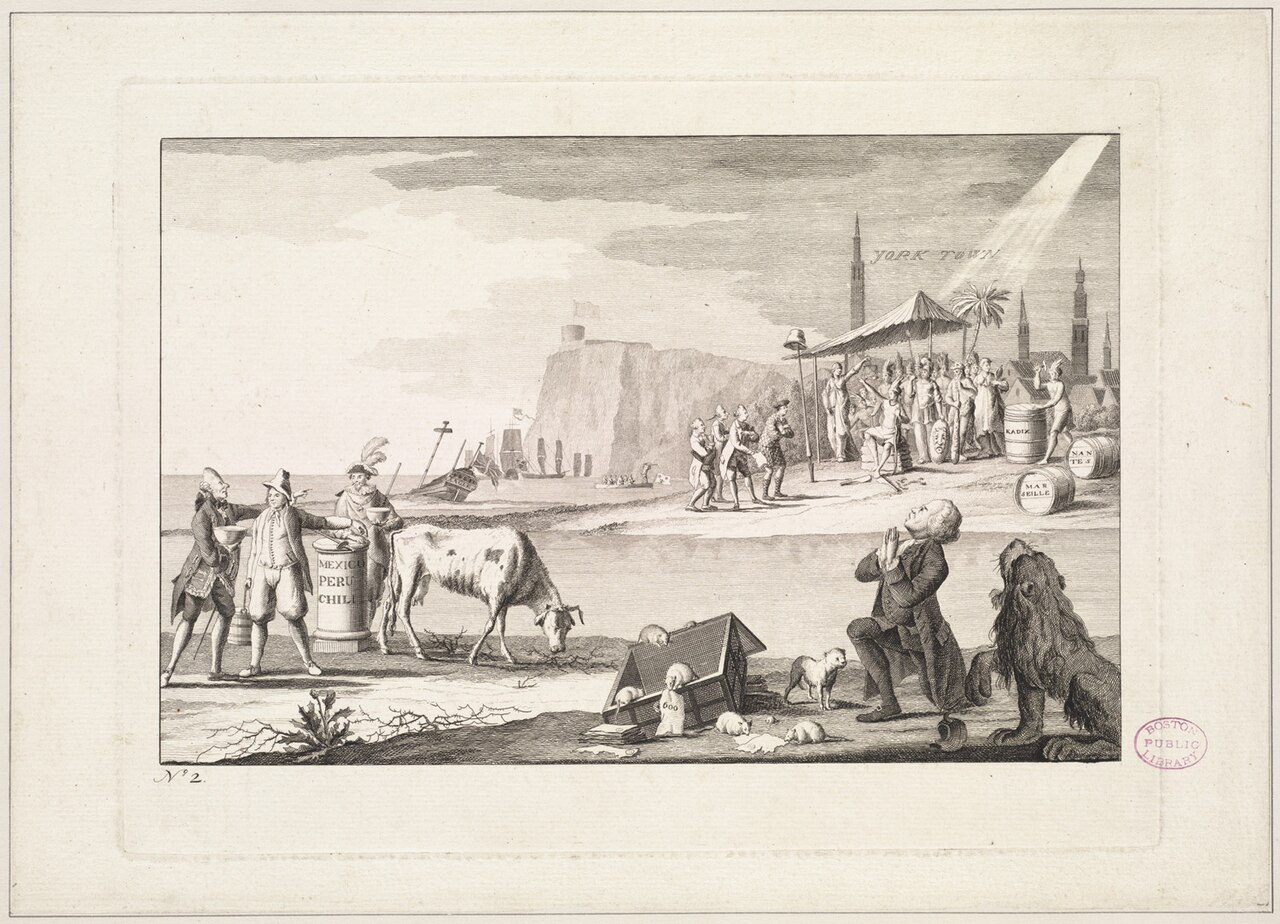
An engraved political cartoon from 1781 that mocks British commerce and shows a symbolic Yorktown surrender in the background. It connects to Cornwallis because his surrender at Yorktown is shown.
Cornwallis appears in the background as the surrendering commander at Yorktown, showing how the British defeat was turned into political satire.
About this source
What it is
This is an engraved political cartoon from 1781, held in the Boston Public Library print collection. Its summary describes a thin cow representing British commerce grazing on Scottish thistles, while men representing France, Spain and Holland have just milked it. The British lion howls because he has hurt his foot on a broken tea pot. In the background, four Englishmen humbly approach an American Indian on a throne, surrounded by Justice, Mars and Hercules, in a symbolic surrender at Yorktown. Out at sea, Howe's flagship, the Eagle, has sunk.
Why it matters
The cartoon is propaganda. It turns the British defeat at Yorktown into symbols that mock British trade and power. The record does not name its maker, so we cannot be certain who it was meant to persuade. It shows that the war was also fought in print, not only on the battlefield. Howe appears through his sinking ship, and Cornwallis appears through the surrender in the background, so the picture ties together two British commanders and the end of the Yorktown campaign.
Look closer
- Which figures are shown as winners and losers, and what does each pose tell you?
- Who would have bought or viewed a cartoon like this, and what did its makers want them to think?
- What does the cartoon leave out, such as the soldiers and civilians who suffered in the fighting?
This painting is part of the curated material that grounds the AI version of Charles Cornwallis on Humy.ai — when students ask about related events, the AI can quote it and cite it.
More Charles Cornwallis sources
Meet the AI Charles Cornwallis →Primary source
Articles of Capitulation, Yorktown
Charles Cornwallis; George Washington; Comte de Rochambeau; Comte de Barras · 19 October 1781
 Painting
Secondary source
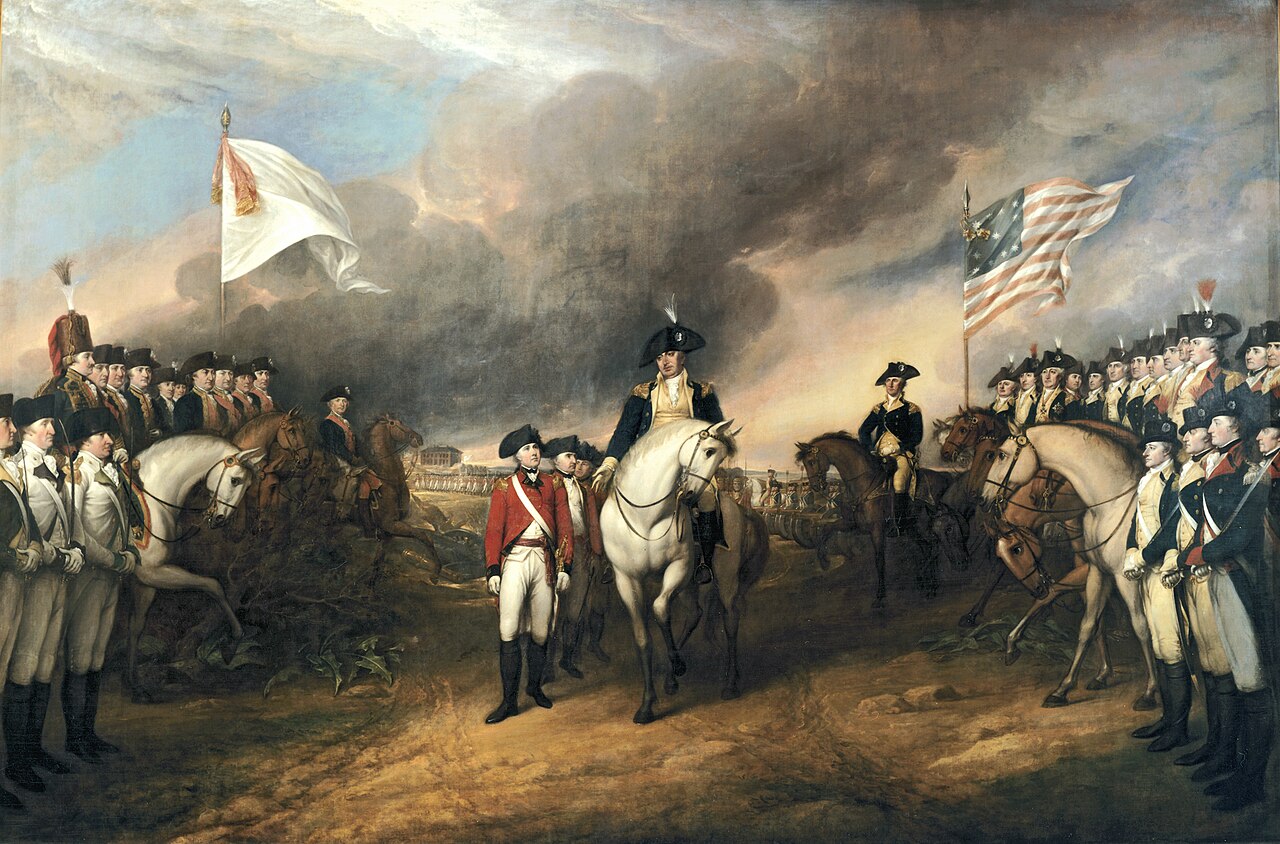
Surrender of Lord Cornwallis
John Trumbull · 1819
 Painting
Primary source
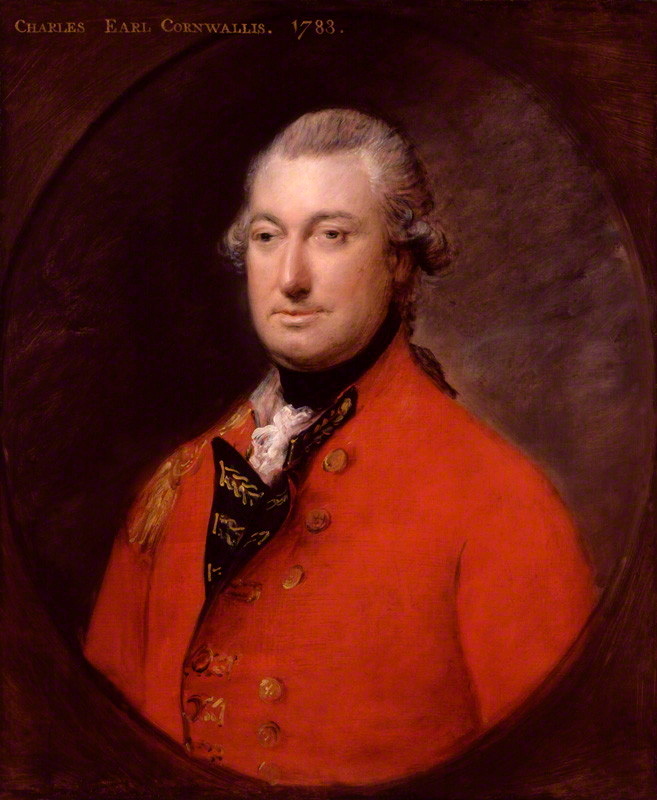
Charles Cornwallis, 1st Marquess Cornwallis
Thomas Gainsborough · 1783
 Painting
Secondary source
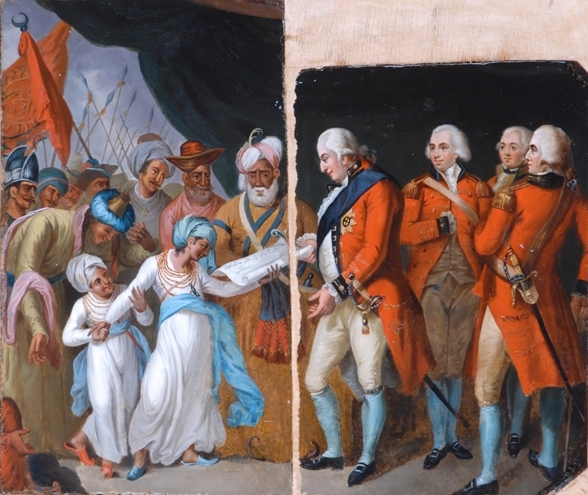
Lord Cornwallis receiving the Hostage Princes
Mather Brown · 1793
 Document
Primary source
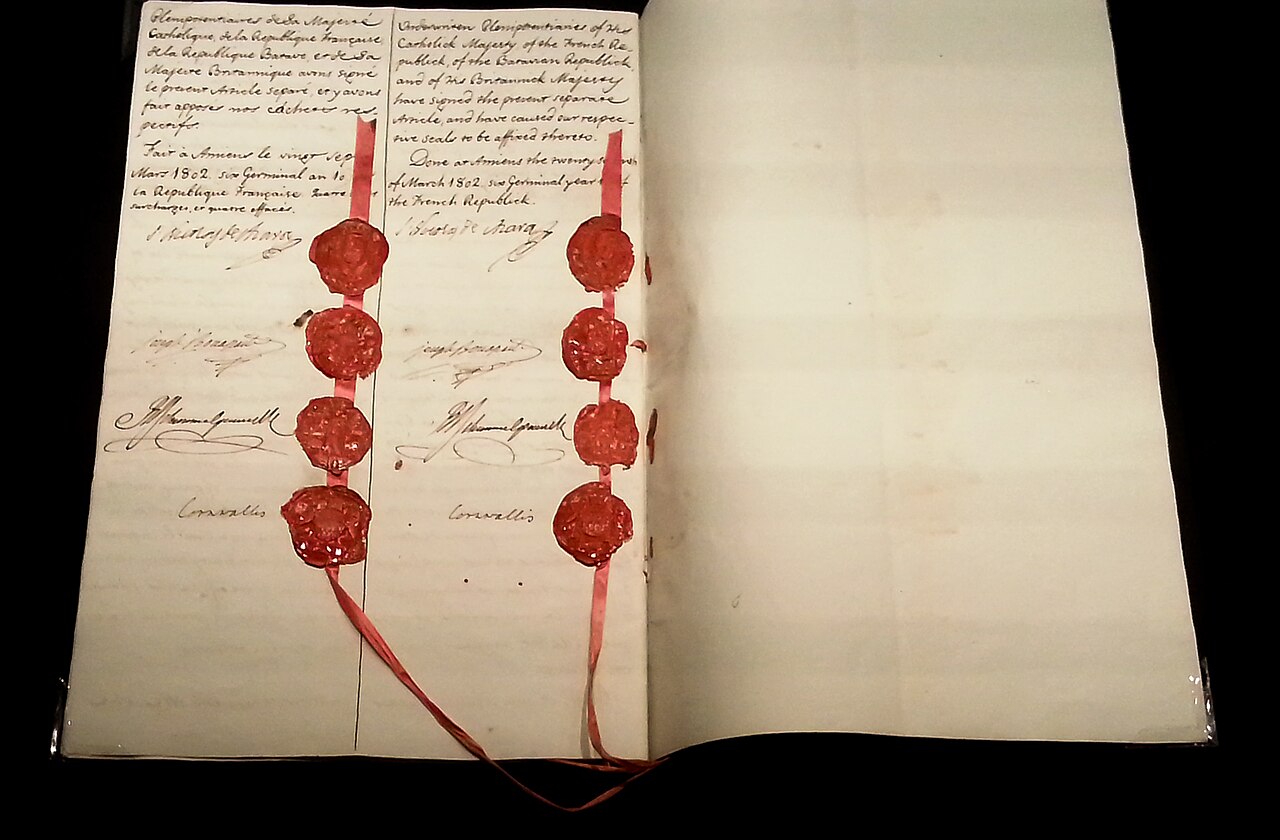
Treaty of Amiens
25 March 1802
Ready when you are
Start chatting with Charles Cornwallis now.
20 messages free · No credit card · Available in 50+ languages.