


Primary sourceSculpturecirca 1760
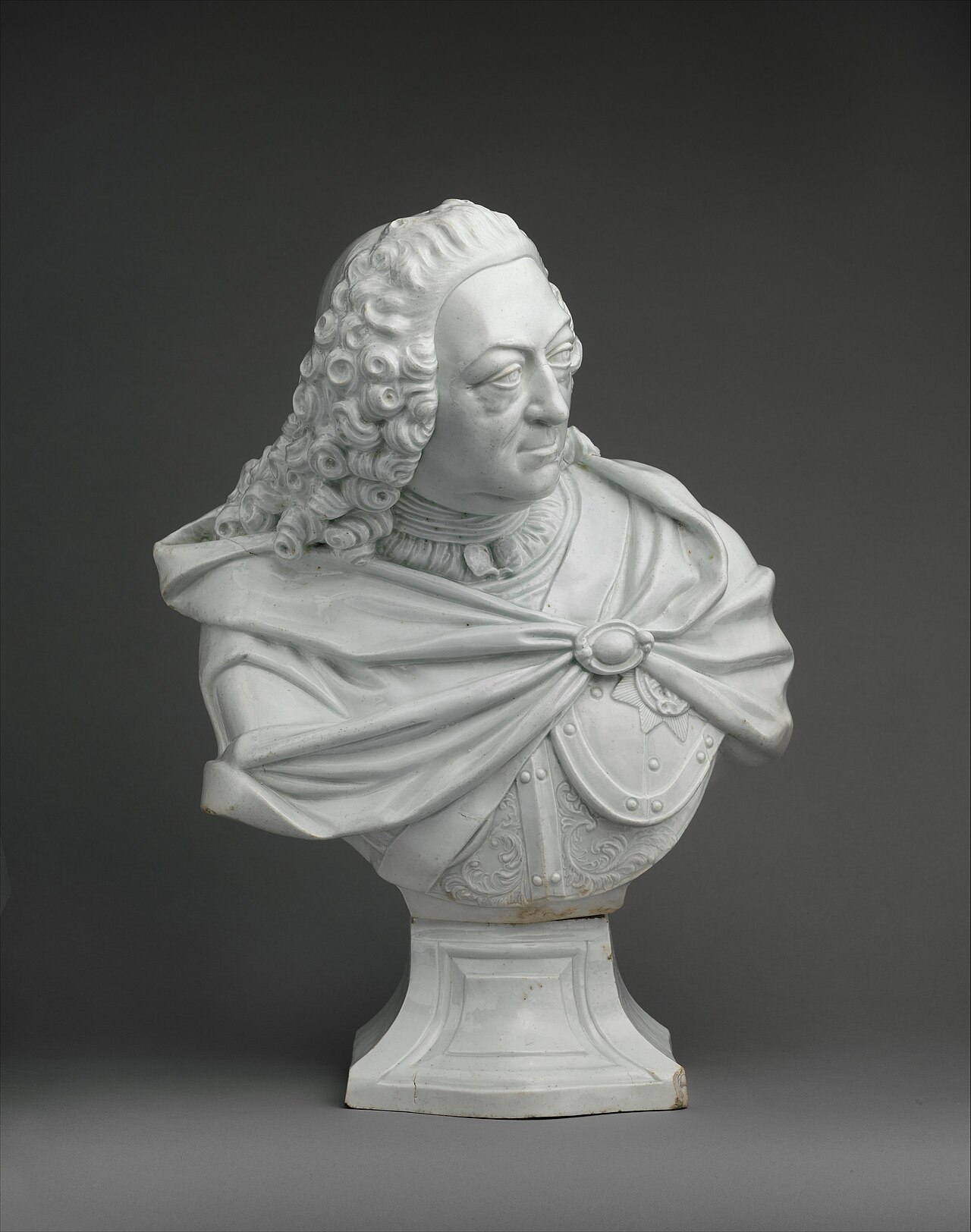
Porcelain bust of King George II
Vauxhall (probable maker) · circa 1760
A white porcelain bust of George II, probably made at Vauxhall around 1760, near the end of his life. It shows the king's likeness in a period style.
A contemporary porcelain likeness of George II made around the time of his death, showing how his image was sold and displayed.
About this source
What it is
This is a photograph of a white porcelain bust of a man in a periwig with curled side locks. He wears a draped mantle fastened with a round brooch over armour decorated with scrollwork. The bust sits on a stepped square pedestal against a plain grey background. The record attributes it to Vauxhall, probably, and dates it to around 1760.
Why it matters
Porcelain busts like this were made as decorative objects for people who wanted images of rulers in their homes. The date places it close to the time of George II's death in 1760, so it reflects how the king was presented to his subjects during his reign.
Look closer
- What details of clothing and hairstyle show that this is meant to be a king?
- Why would a maker choose porcelain, a fragile material, for a portrait of a ruler?
- Does the bust show the king as a real person, or as an idea of royal power? How can you tell?
This sculpture is part of the curated material that grounds the AI version of George II on Humy.ai — when students ask about related events, the AI can quote it and cite it.
More George II sources
Meet the AI George II →Primary source
Charter of the Colony of Georgia
George II / Crown of Great Britain · 1732
Primary source
Zadok the Priest
George Frideric Handel · 1727
 Painting
Primary source
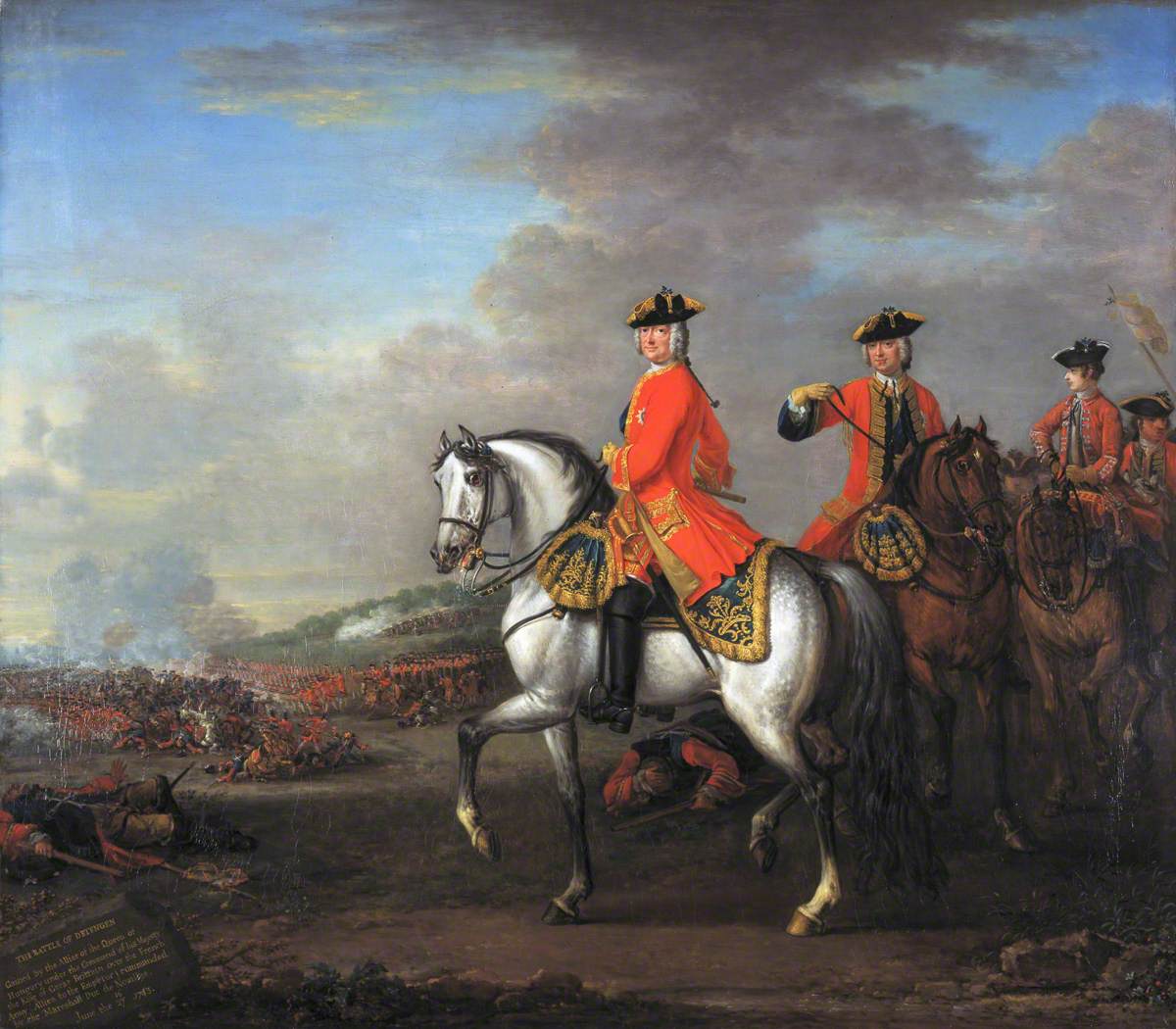
George II at the Battle of Dettingen, with the Duke of Cumberland and Robert, 4th Earl of Holderness
John Wootton · 1743
Primary source
Memoirs of the Reign of George the Second, from his Accession to the Death of Queen Caroline
John Hervey, Baron Hervey
 Document
Primary source
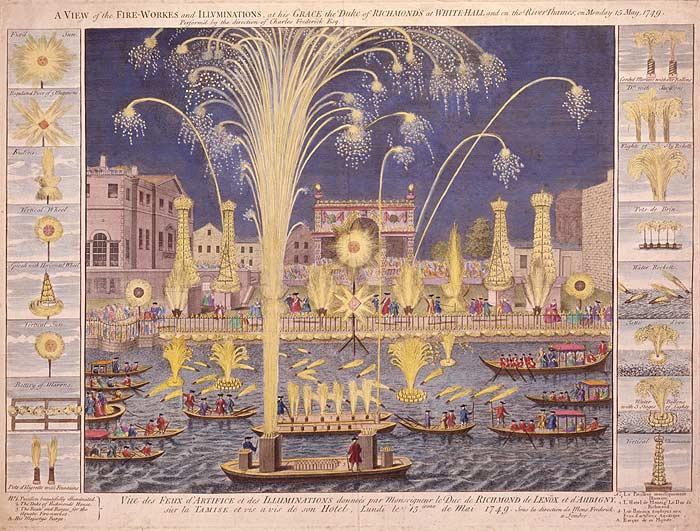
Music for the Royal Fireworks
George Frideric Handel · 1749
Ready when you are
Start chatting with George II now.
20 messages free · No credit card · Available in 50+ languages.