


Primary sourceSculpture212
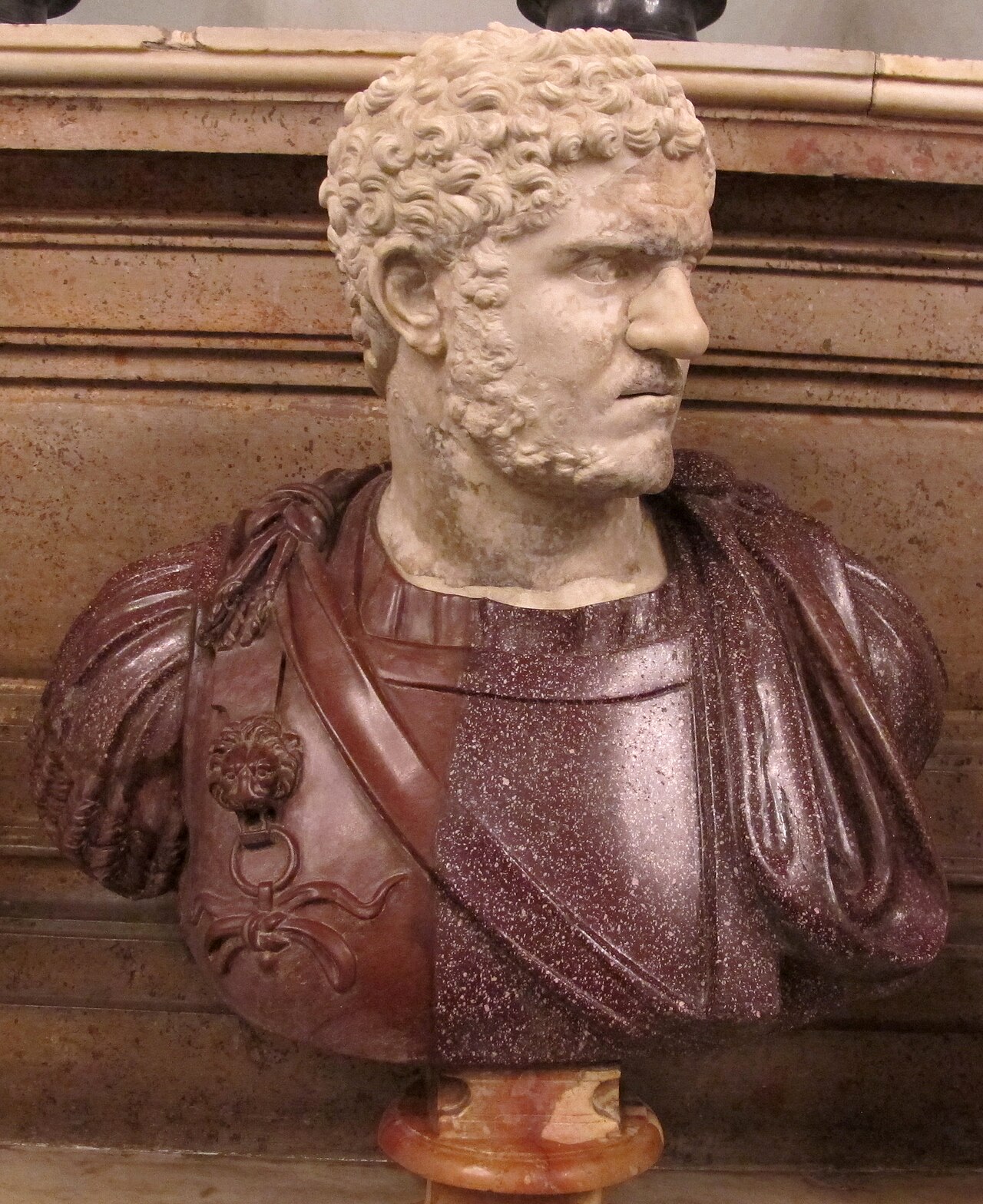
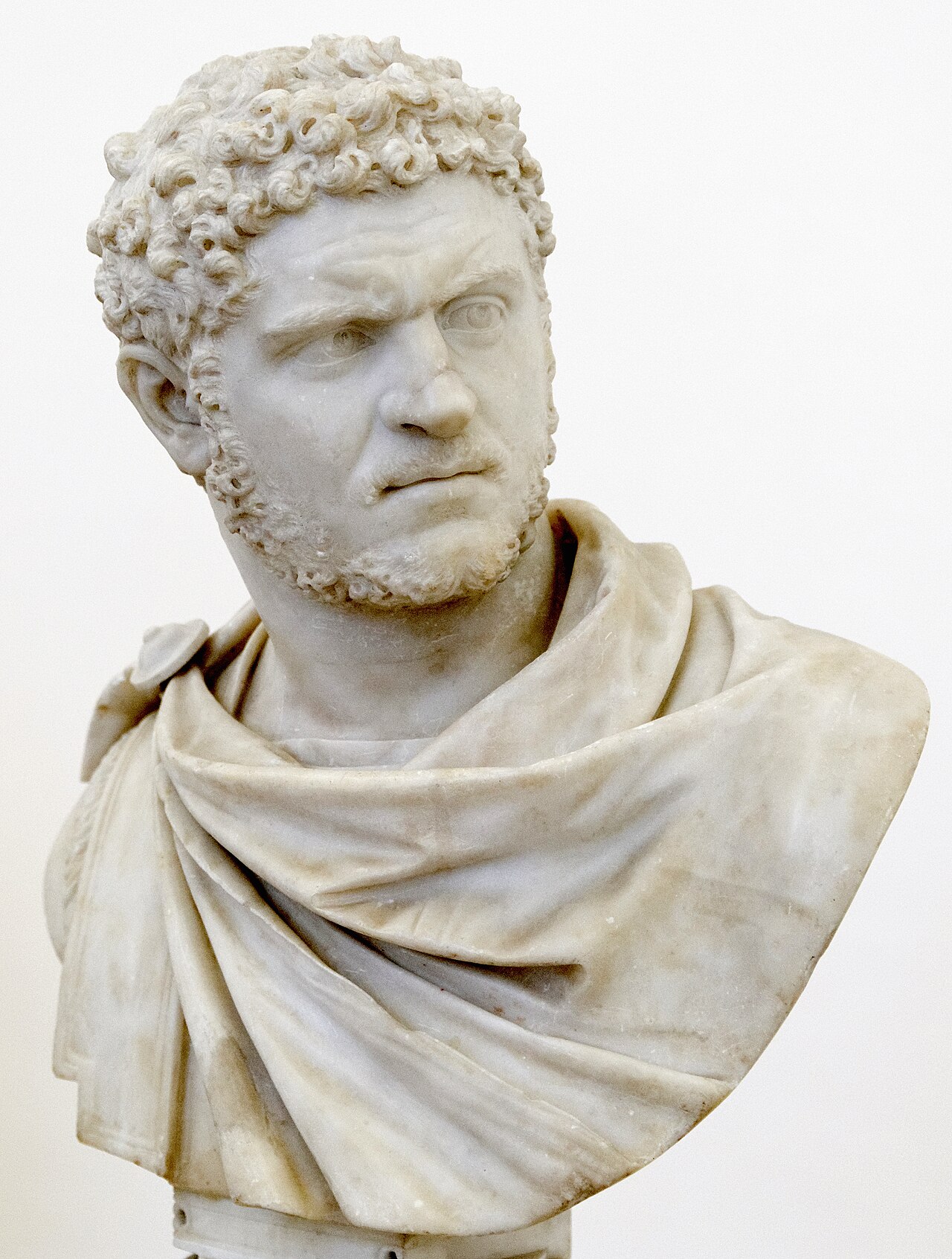
Portrait Bust of Caracalla with Porphyry Base
212
A Capitoline Museums bust showing the mature Caracalla as sole emperor, set on a colored porphyry torso.
A bust from the Capitoline Museums showing the aggressive portrait style Caracalla adopted as sole emperor.
About this source
What it is
This marble bust of Caracalla, combined with a porphyry (reddish stone) torso and base, is held in the Capitoline Museums in Rome. It dates to 212, the period of his sole reign after his brother Geta's death.
Why it matters
The bust belongs to the aggressive portrait style Caracalla adopted once he ruled alone, designed to project strength and dominance rather than calm authority. The combination of marble head and colored stone body shows how Roman sculptors reused and recombined materials over time to preserve or restore imperial images.
Look closer
- What does the bearded, intense face suggest about the image Caracalla wanted to project as sole ruler?
- Why might the head and the stone body be made from different materials?
- What might this kind of portrait leave out about Caracalla's actual rule?
This sculpture is part of the curated material that grounds the AI version of Caracalla on Humy.ai — when students ask about related events, the AI can quote it and cite it.
More Caracalla sources
Browse all 81 →
Ready when you are
Start chatting with Caracalla now.
20 messages free · No credit card · Available in 50+ languages.