


Primary sourcePaintingApril 1912
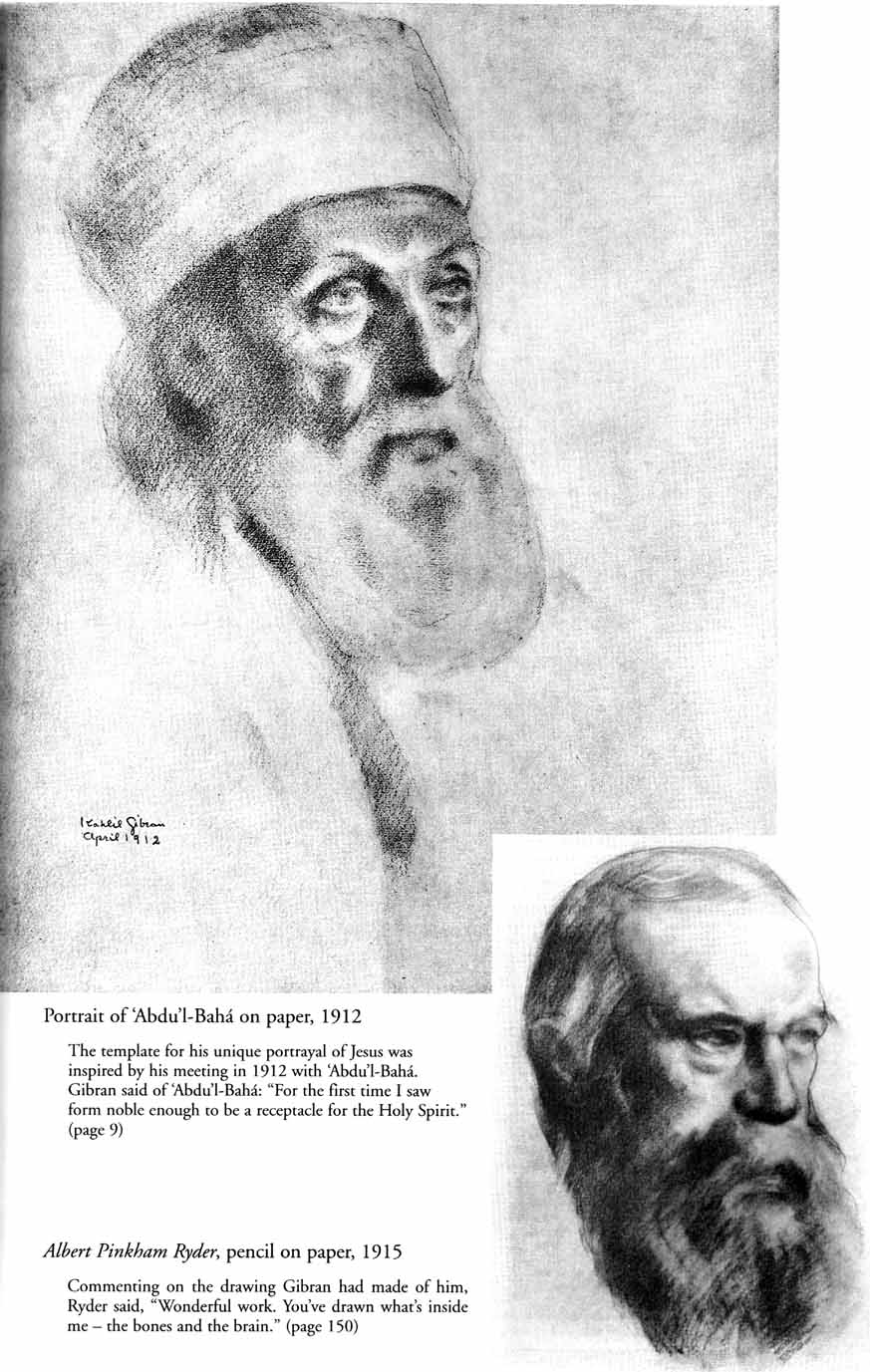
Portrait Drawing of 'Abdu'l-Bahá
Kahlil Gibran · April 1912
Gibran's life drawing of the Baháʼí leader 'Abdu'l-Bahá, made in New York in April 1912, a sitting that influenced Gibran's later religious imagery.
Gibran drew this portrait from life, recording a meeting that shaped his later spiritual imagery of prophetic figures.
About this source
What it is
This pencil or charcoal portrait was drawn by Kahlil Gibran from life in New York in April 1912. It depicts ʻAbdu'l-Bahá, the leader of the Baháʼí Faith, who sat for the drawing at Gibran's request. It shows an elderly bearded man in a white turban and robe, facing right, with the artist's signature and the date.
Why it matters
Gibran's meeting with ʻAbdu'l-Bahá is thought to have influenced his later book The Son of Man and his broader vision of prophetic and Christ-like figures. The drawing is a rare direct record of a meeting between two influential figures of the early 20th century.
Look closer
- Why might Gibran have wanted to draw a religious leader from life rather than from imagination?
- What does the formal pose and dress suggest about how ʻAbdu'l-Bahá wished to be portrayed?
- How might this encounter have shaped the way Gibran later wrote about prophets and holy figures?
This painting is part of the curated material that grounds the AI version of Kahlil Gibran on Humy.ai — when students ask about related events, the AI can quote it and cite it.
More Kahlil Gibran sources
Browse all 87 →
Ready when you are
Start chatting with Kahlil Gibran now.
20 messages free · No credit card · Available in 50+ languages.