


Primary sourceSculpture1st century AD
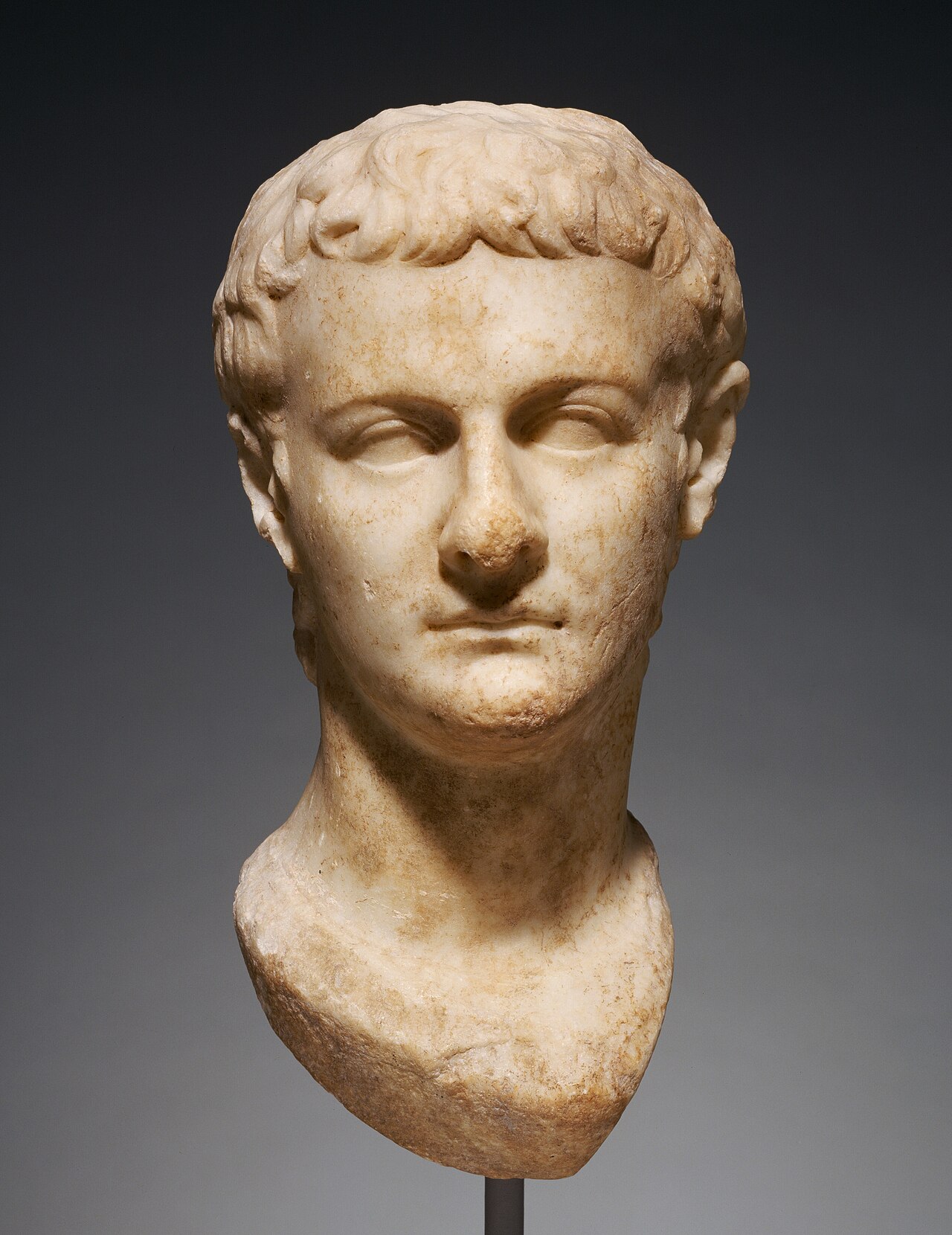
Portrait Head of Caligula
1st century AD
A marble portrait bust of Caligula, carved from life, showing the idealised official image of the young emperor.
This life-carved marble head shows the official, idealised image Caligula projected as emperor.
About this source
What it is
This is a marble portrait head and bust of the emperor Caligula, carved in ancient Rome. It is now held by the J. Paul Getty Museum. The sculptor is unknown, but such portraits were produced by court workshops and distributed across the empire.
Why it matters
Official portraits like this one were part of how Roman emperors controlled their public image. This head presents Caligula as a calm, youthful, dignified ruler, very different from the cruel and unstable figure described in later written accounts such as those of Suetonius. Comparing the sculpture with the texts shows students how image and reputation can pull in opposite directions.
Look closer
- What impression of Caligula does this portrait try to create?
- Why might an emperor want sculptures of himself to look calm and composed rather than lifelike or dramatic?
- How does this image compare with the stories told about Caligula in written sources?
This sculpture is part of the curated material that grounds the AI version of Caligula on Humy.ai — when students ask about related events, the AI can quote it and cite it.
More Caligula sources
Browse all 88 →
Ready when you are
Start chatting with Caligula now.
20 messages free · No credit card · Available in 50+ languages.