


Primary sourcePainting1433
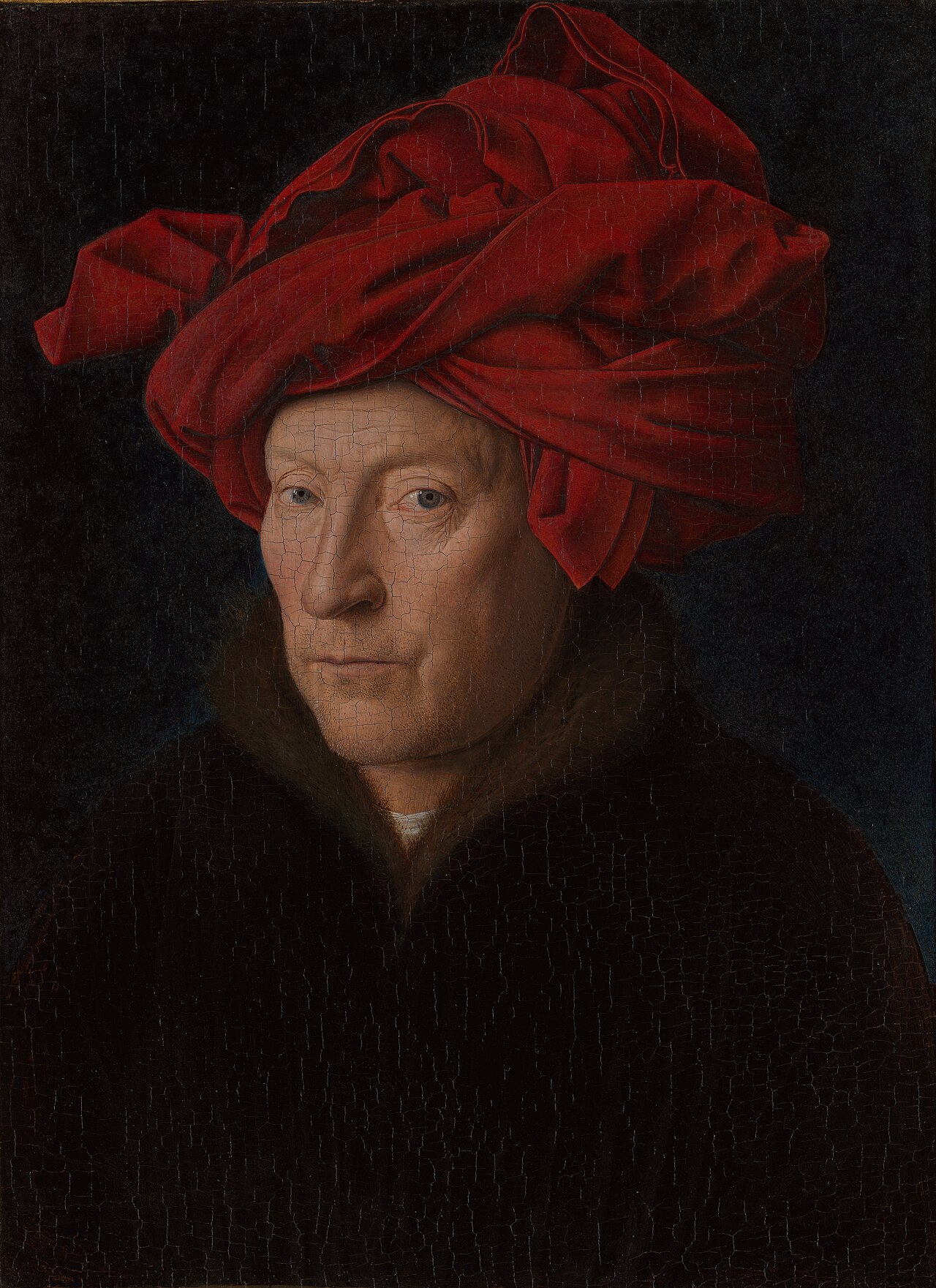
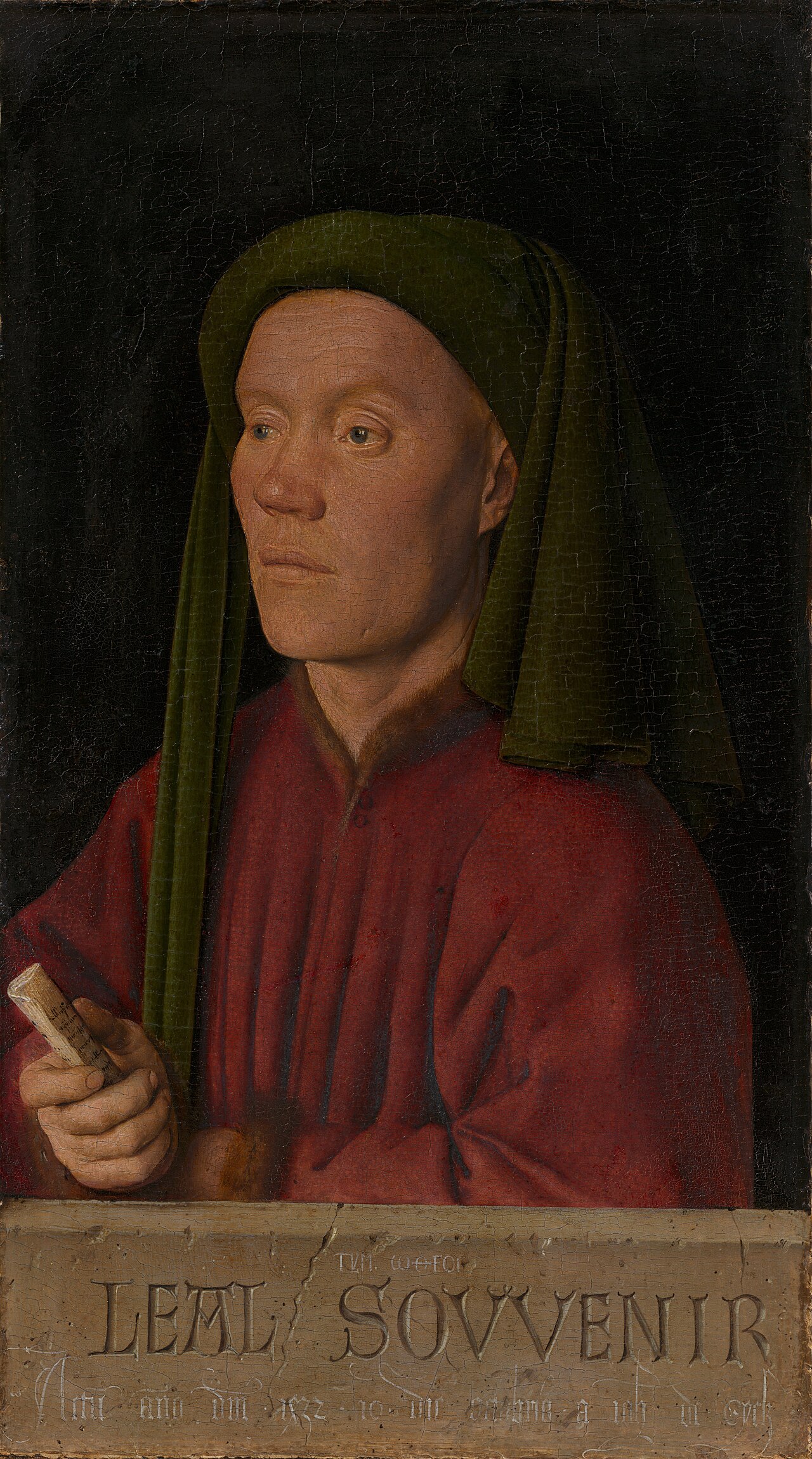
Portrait of a Man (Self Portrait?)
Jan van Eyck · 1433
A small 1433 oil portrait, probably a self-portrait of Jan van Eyck, carrying his first known use of the motto 'Als Ich Can' on its frame.
Likely a self-portrait by van Eyck, carrying his earliest known use of his personal motto.
About this source
What it is
This small oil painting was completed by Jan van Eyck in 1433 in Bruges. The original frame carries the inscription 'Als Ich Can', a pun on his name, used here for the first known time. The direct gaze and prominent motto suggest the sitter is van Eyck himself. It has been in the National Gallery, London, since 1851.
Why it matters
The painting is one of the earliest known self-portraits in Western art and shows van Eyck's unsparing attention to detail, down to stubble and bloodshot eyes. The large, elaborate headdress let him show off his painting skill and, through fine cloth and a gilded frame, his wealth and status. It reveals how an artist of this period could use a portrait to advertise ability and prestige.
Look closer
- What does the man's direct gaze suggest about who he might be?
- Why might van Eyck have painted such an elaborate headdress?
- What does the motto on the frame tell you about how van Eyck saw himself?
This painting is part of the curated material that grounds the AI version of Jan van Eyck on Humy.ai — when students ask about related events, the AI can quote it and cite it.
More Jan van Eyck sources
Browse all 82 →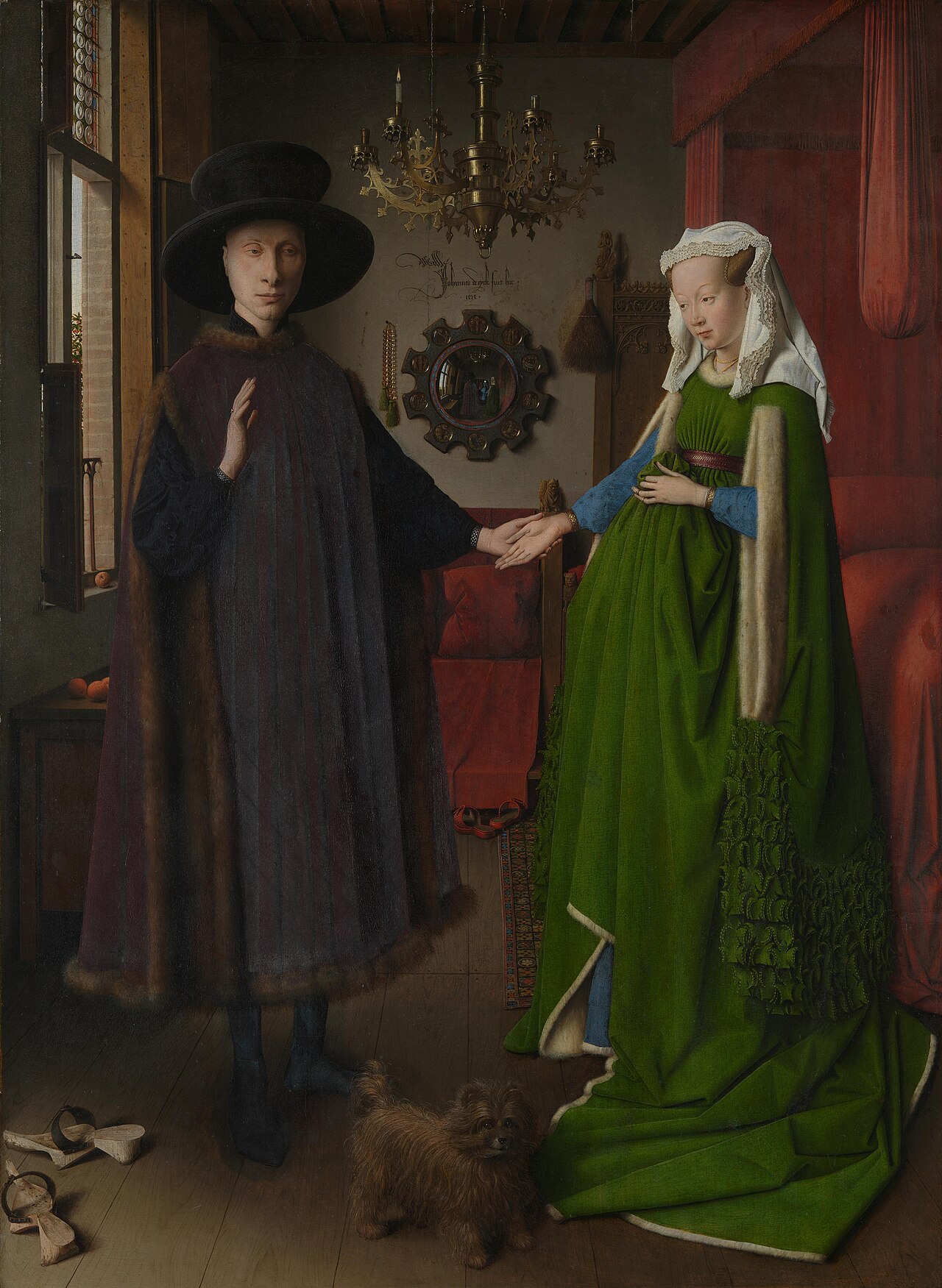 Painting
Primary source
Arnolfini Portrait
Jan van Eyck · 1434
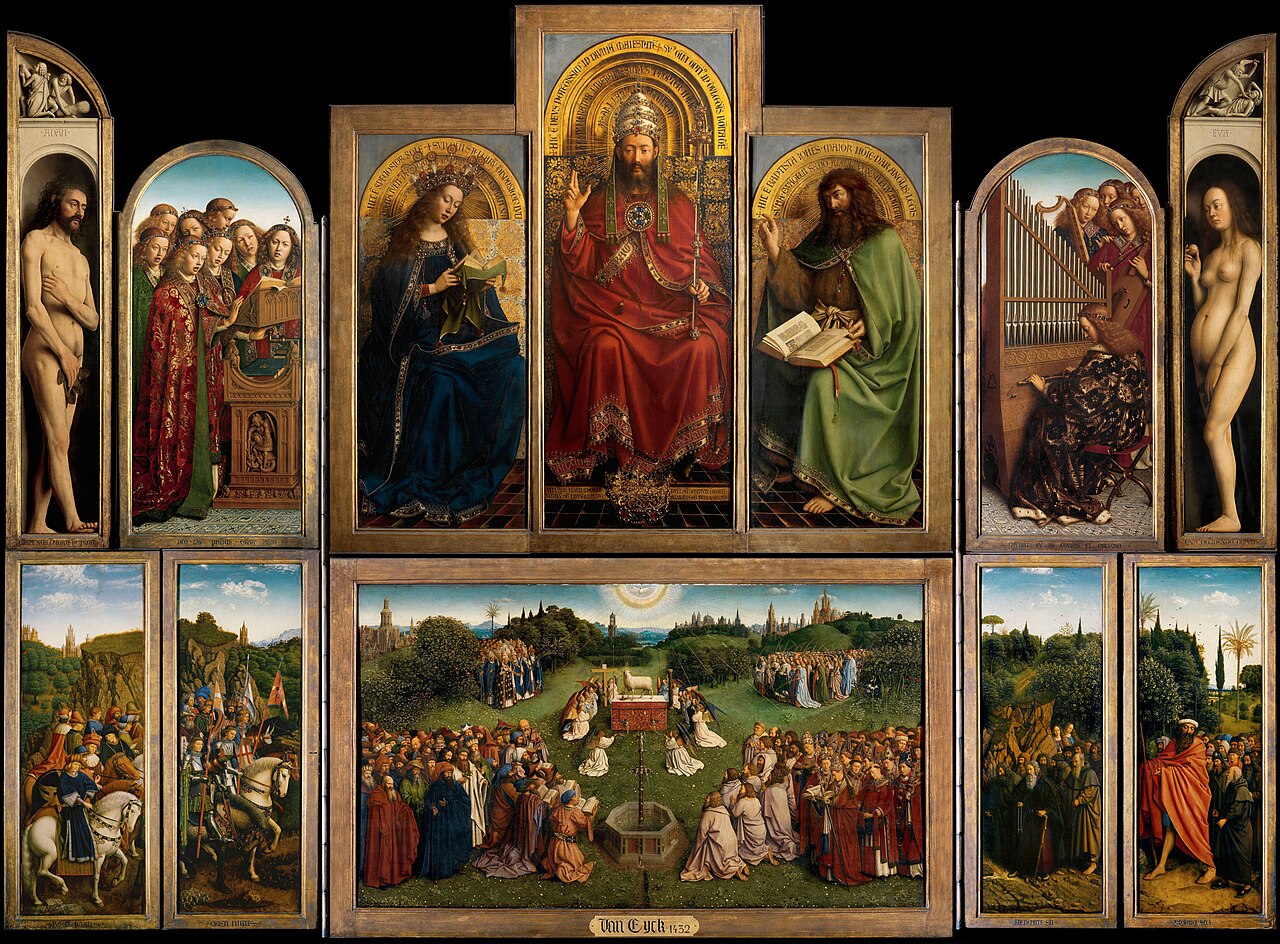 Painting
Secondary source
Ghent Altarpiece
Jan van Eyck and Hubert van Eyck · 1432
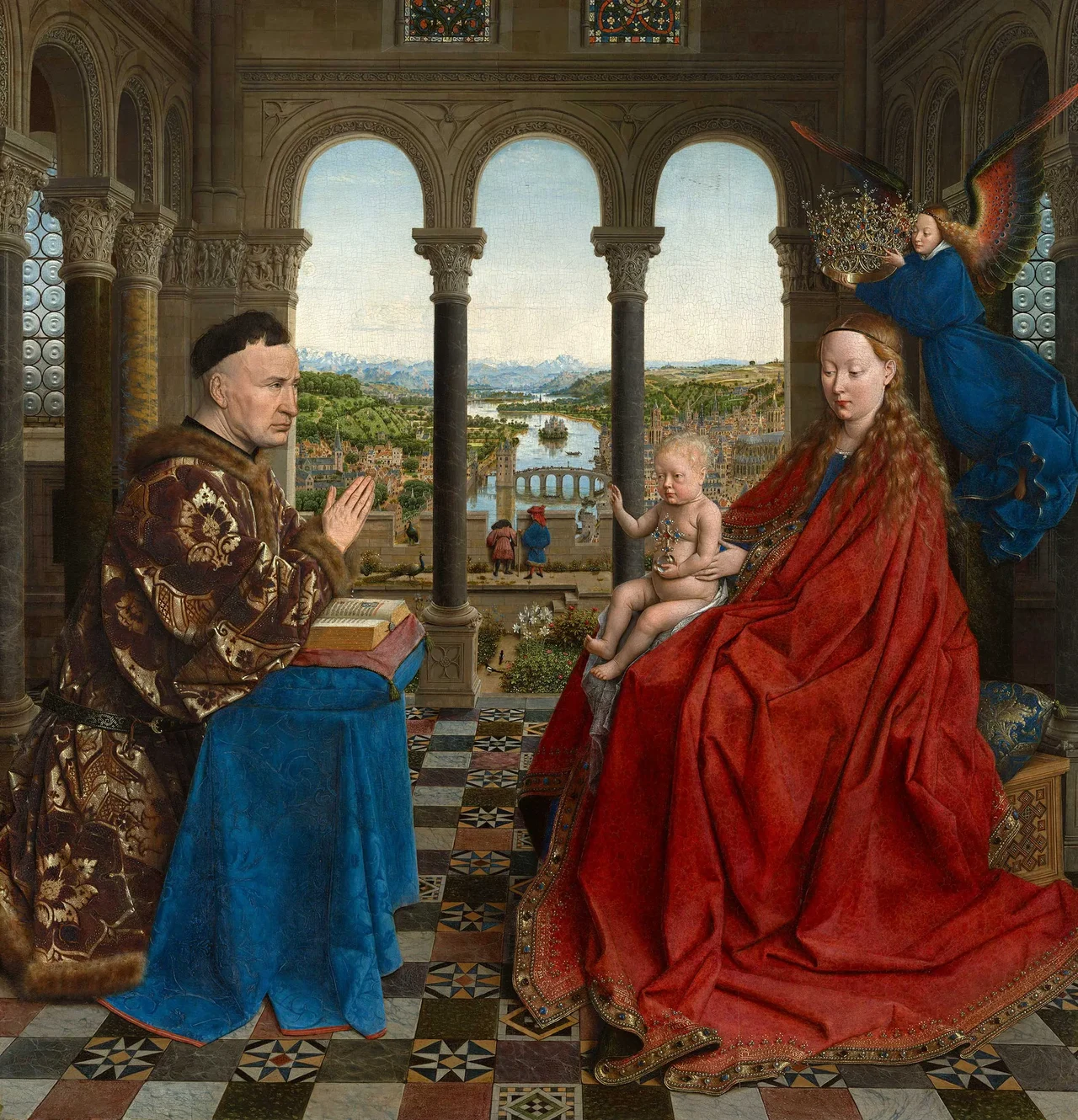 Painting
Secondary source
Madonna of Chancellor Rolin
Jan van Eyck · c. 1435
 Painting
Primary source
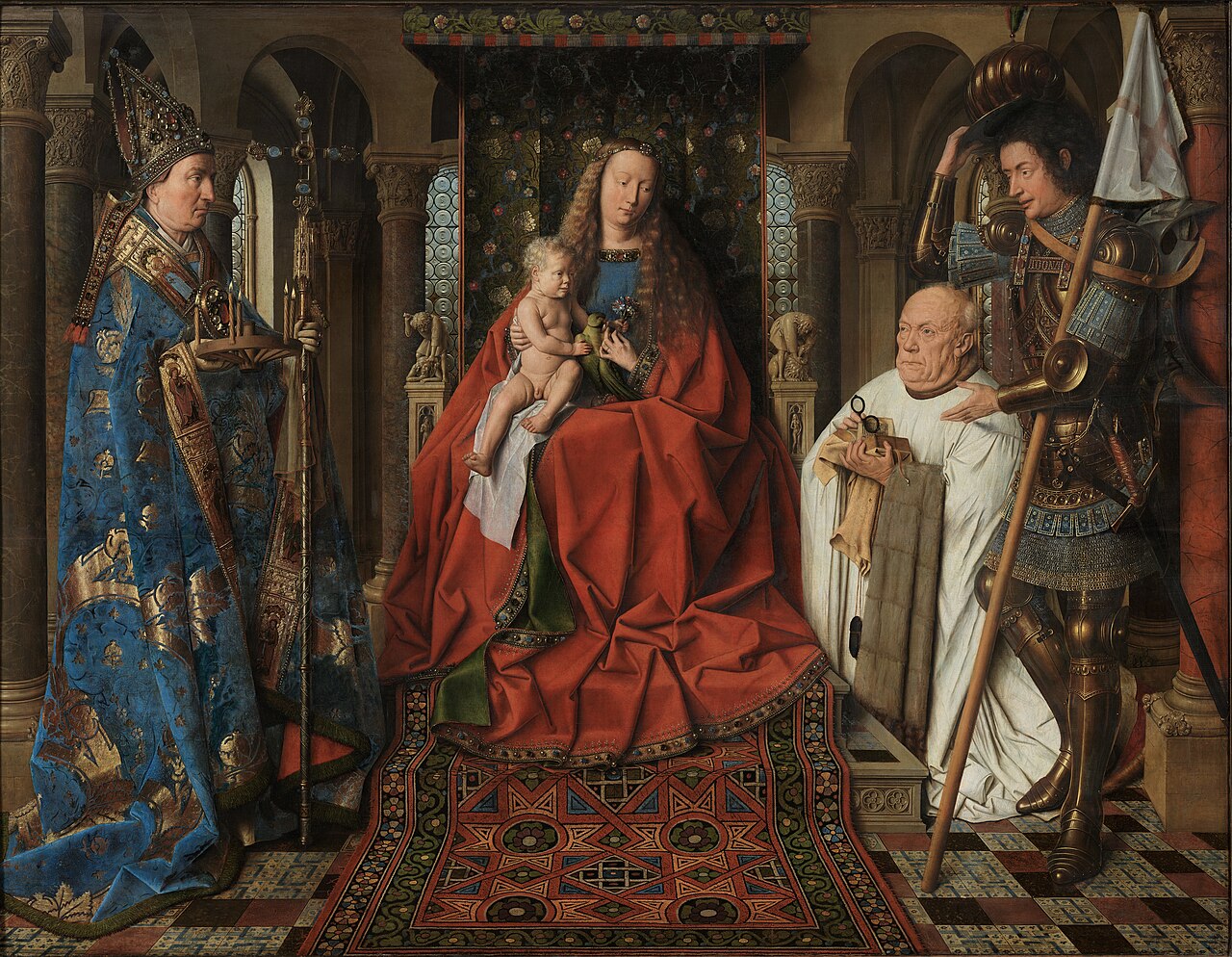
Madonna with Canon Joris van der Paele
Jan van Eyck · c. 1434-1436
Free account
Read every Jan van Eyck source
Sign up free →
Ready when you are
Start chatting with Jan van Eyck now.
20 messages free · No credit card · Available in 50+ languages.