


Secondary sourcePainting15th century
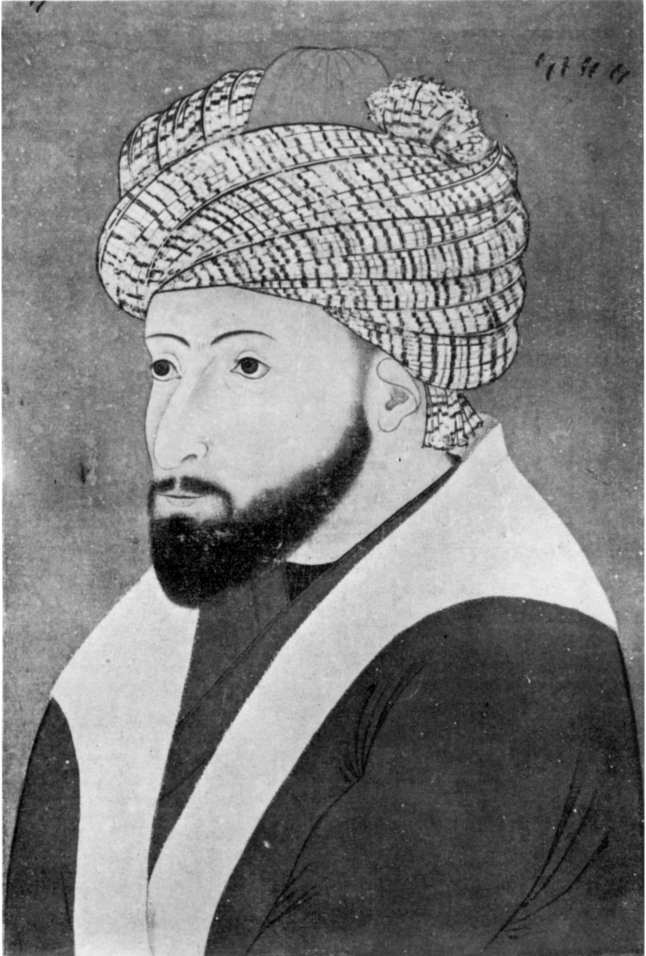
Portrait of a Sultan, Gulistan Palace Library
16th century Ottoman or Safavid artist · 15th century
A 15th-16th century painting likely depicting Mehmed II, held in the Gulistan Palace Library in Tehran, identified by his characteristic garments.
A portrait likely of Mehmed II, identified by scholars from his characteristic garments, now in Tehran.
About this source
What it is
This portrait, held in the Gulistan Palace Library in Tehran, shows a bearded man in three-quarter profile wearing a large striped turban and dark robe. It was likely made in the 16th century by an Ottoman or Safavid artist, though the exact date given here is the 15th century.
Why it matters
A scholarly note explains that the garments shown match those characteristic of Mehmed II, giving good reason to believe this portrait represents him, even though the turban's fabric follows a Safavid style. The painting may have been made in Persia from a portrait sent there, or in Istanbul and later taken east, showing the exchange of royal images between Ottoman and Safavid courts.
Look closer
- How do scholars use clothing details to identify a historical figure in art?
- What might it mean that the turban style and the garments come from different traditions?
- Why might a portrait of an Ottoman sultan have traveled to a Persian royal library?
This painting is part of the curated material that grounds the AI version of Mehmed II on Humy.ai — when students ask about related events, the AI can quote it and cite it.
More Mehmed II sources
Meet the AI Mehmed II →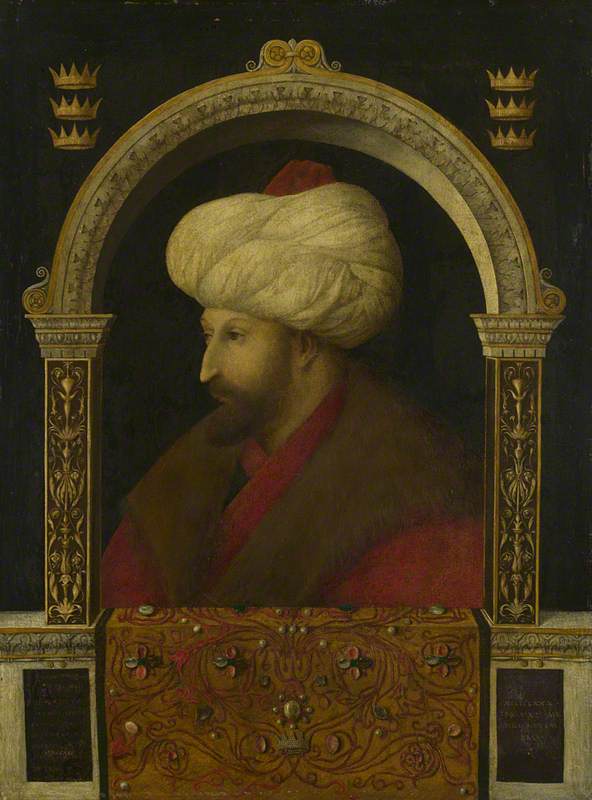 Painting
Primary source
The Sultan Mehmet II
Gentile Bellini · 1480
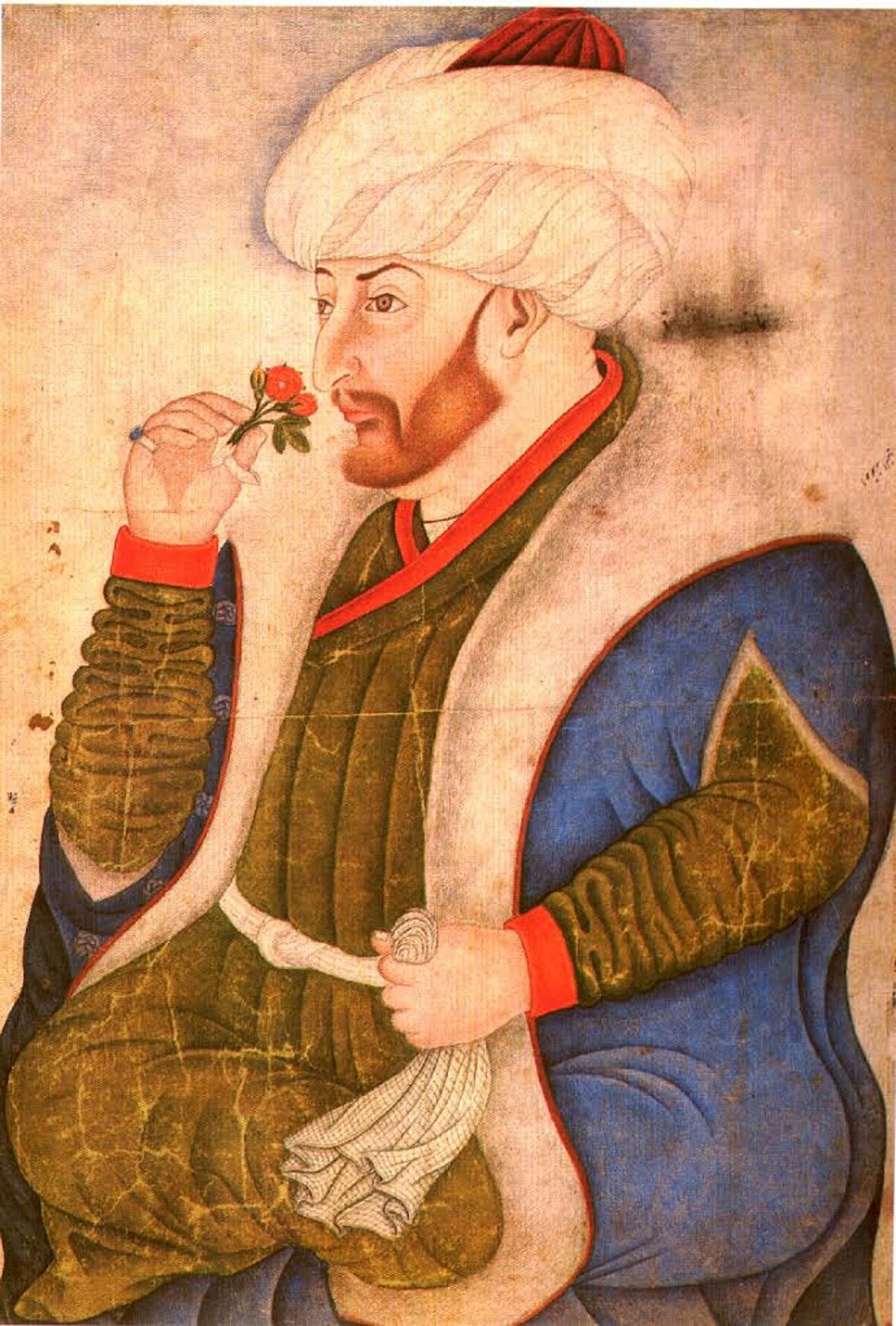 Painting
Primary source
Portrait of Mehmed II Smelling a Rose
Attributed to Nakkaş Sinan Beg · c. 1480-81
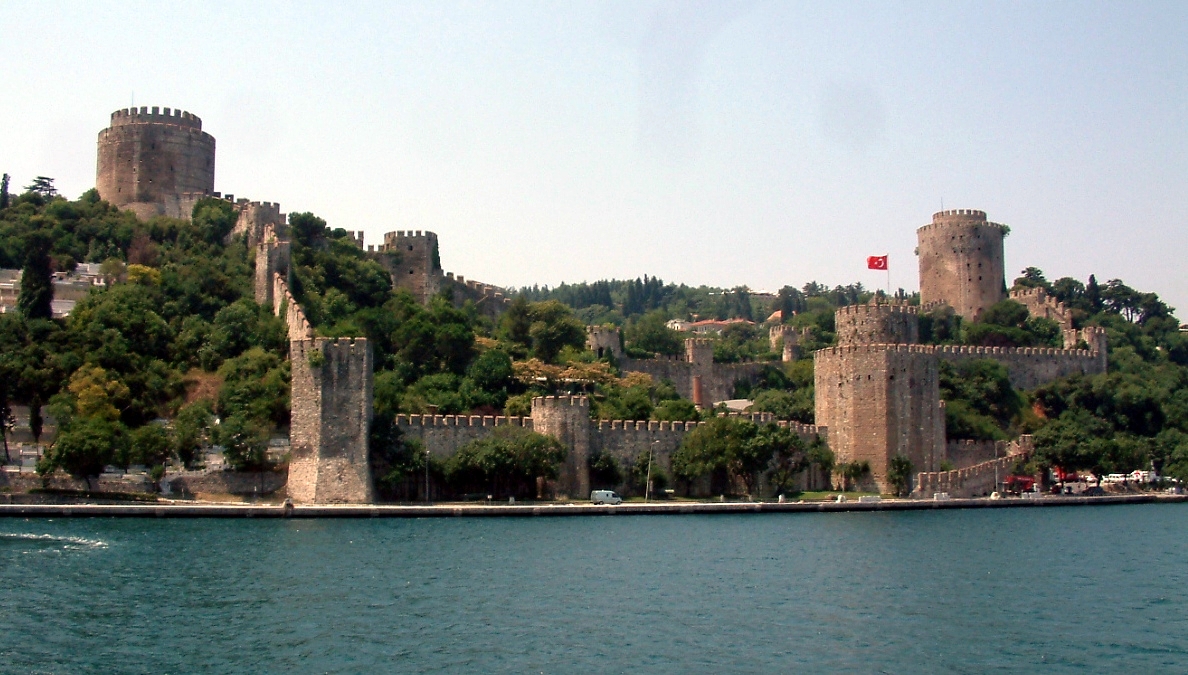 Artifact
Primary source
Rumeli Hisarı
1451-1452
 Artifact
Primary source
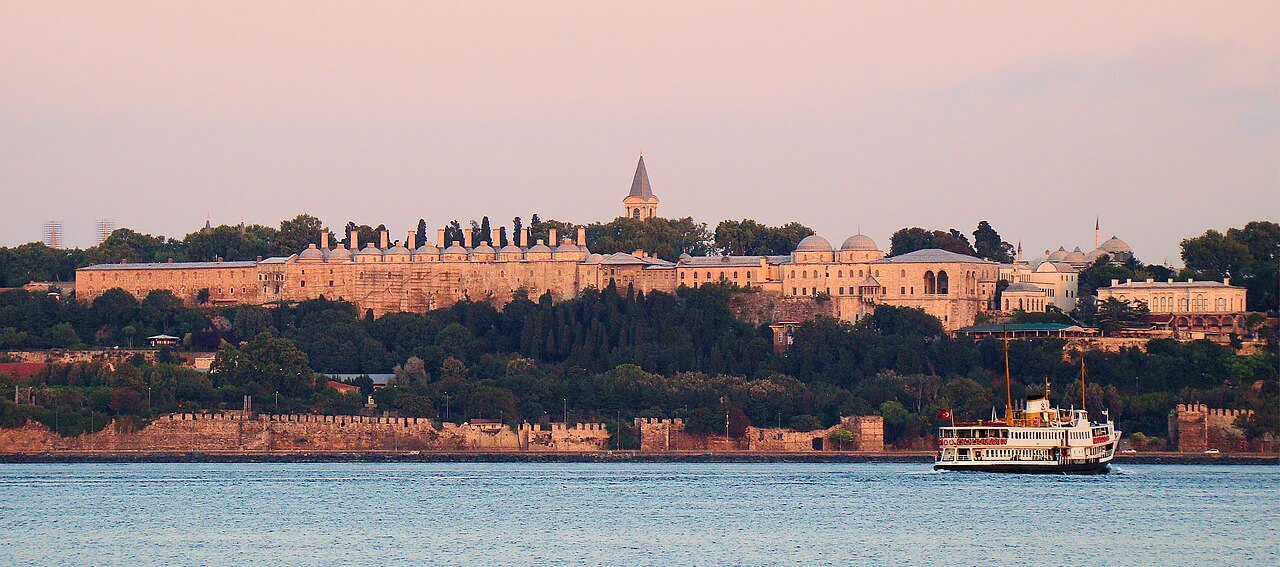
Topkapı Palace
from 1459
 Document
Primary source
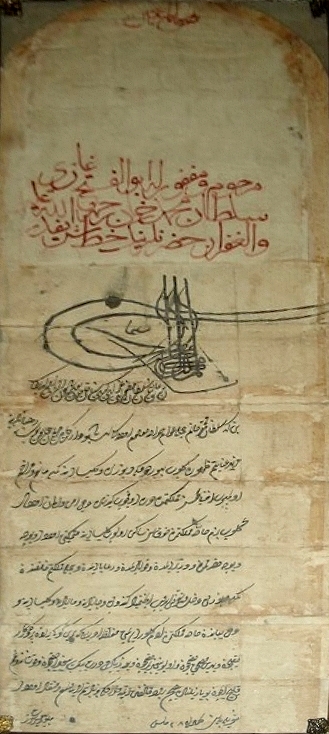
Ahdname of Fojnica
Mehmed II · 1463
Ready when you are
Start chatting with Mehmed II now.
20 messages free · No credit card · Available in 50+ languages.