


Secondary sourceSculpture
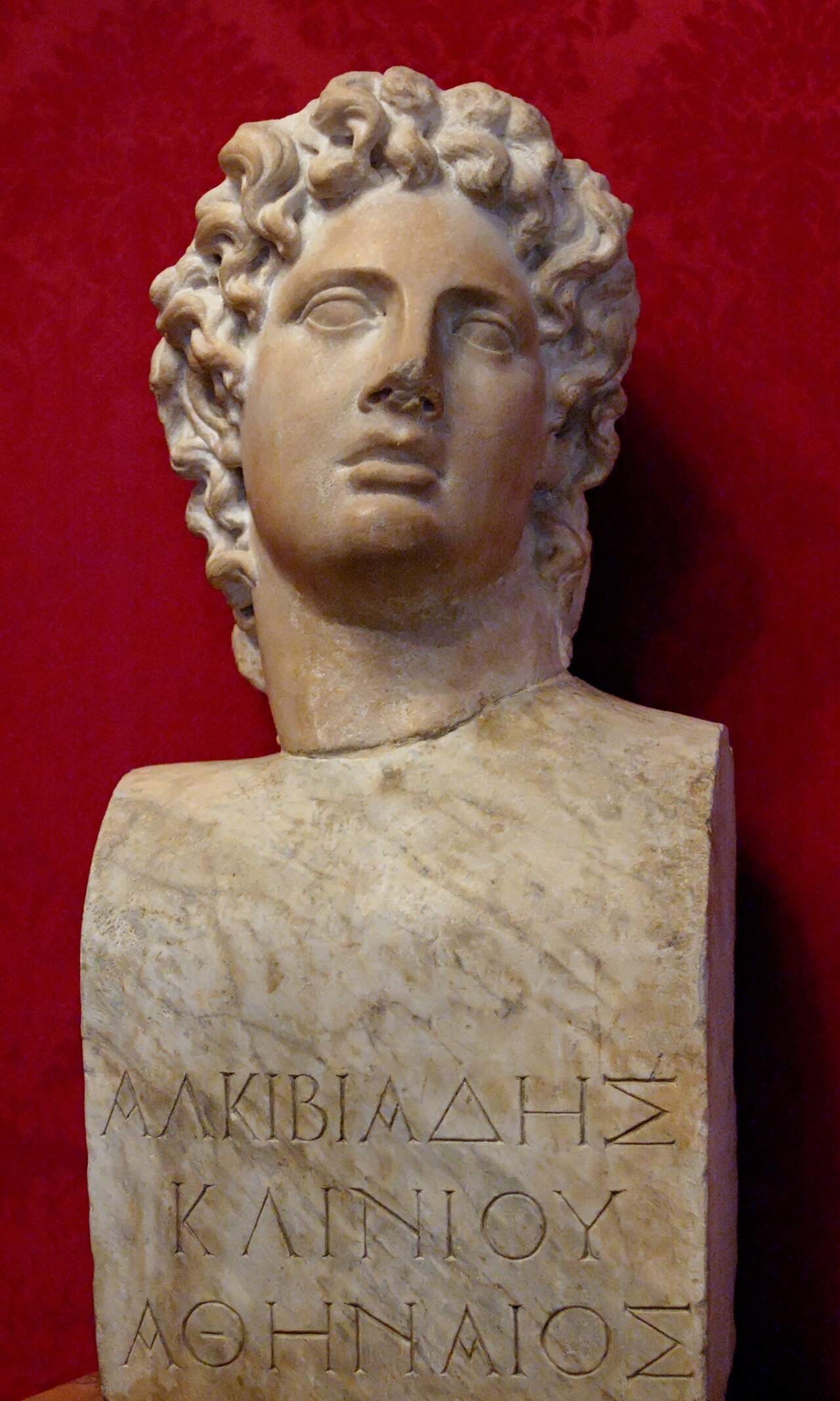
Portrait of Alcibiades
A Roman marble herm bust traditionally identified as Alcibiades, though the identification and inscription are later additions.
This bust, though its identification is uncertain, is the standard image used to represent Alcibiades.
About this source
What it is
This is a Roman marble herm bust in the Capitoline Museums, carved as an idealized male portrait and later inscribed with Alcibiades' name. It is a Roman copy made after a lost Greek original from the Late Classical period.
Why it matters
This bust has become the image most people picture when they think of Alcibiades, even though scholars are not certain it really shows him. The hermaic pillar shape and the Greek inscription naming him are modern additions, not part of the ancient original. It shows how later generations tried to put a face to a famous name from history.
Look closer
- What makes this head look 'ideal' rather than like a specific individual?
- Why might someone centuries later have added an inscription naming a famous Athenian to an unidentified bust?
- What does it mean for a 'portrait' to be used as evidence about a real person if it may not actually depict them?
This sculpture is part of the curated material that grounds the AI version of Alcibiades on Humy.ai — when students ask about related events, the AI can quote it and cite it.
More Alcibiades sources
Browse all 94 →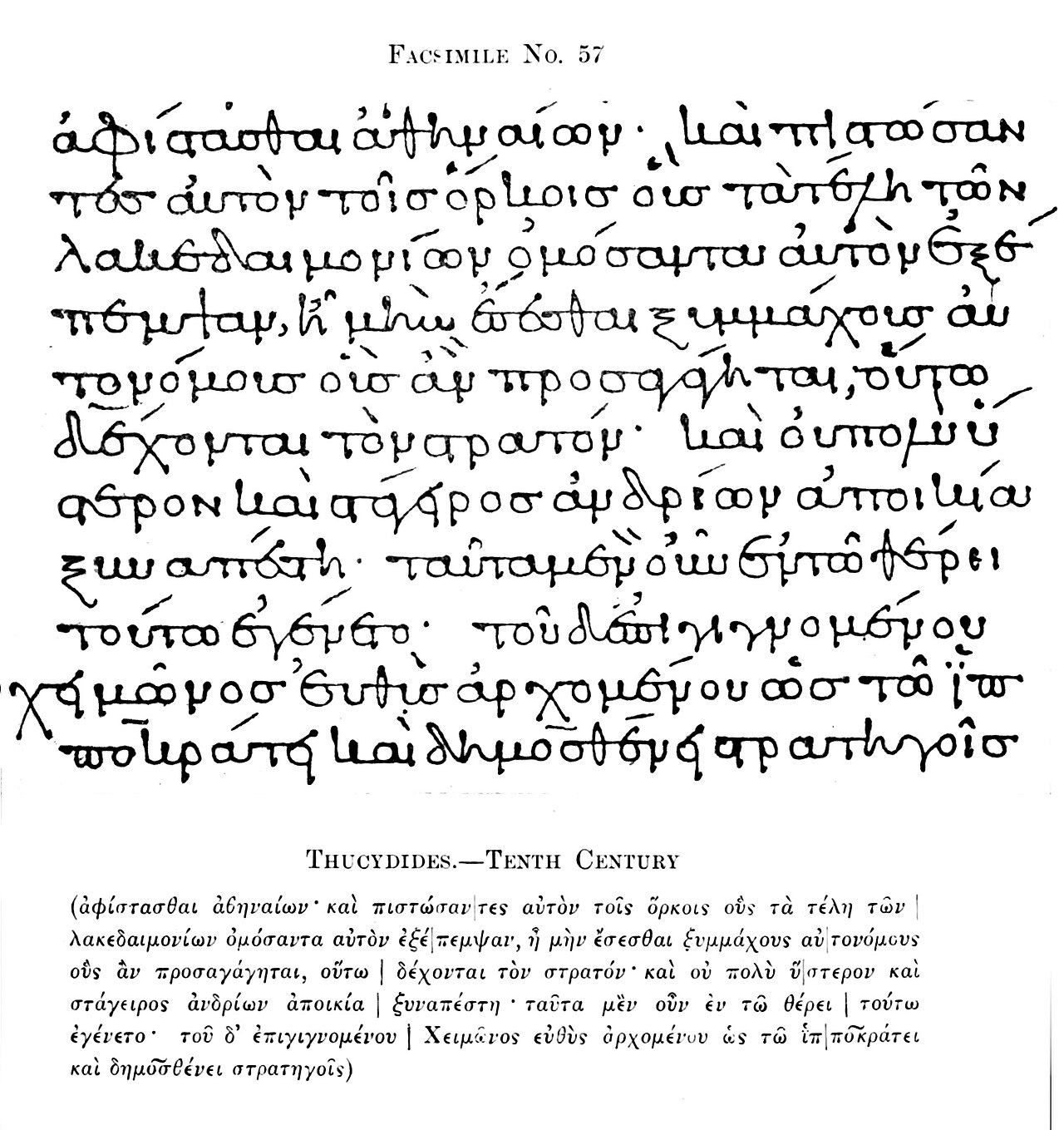 Book
Primary source
History of the Peloponnesian War
Thucydides · 5th century BCE
Secondary source
Life of Alcibiades
Plutarch
 Book
Secondary source
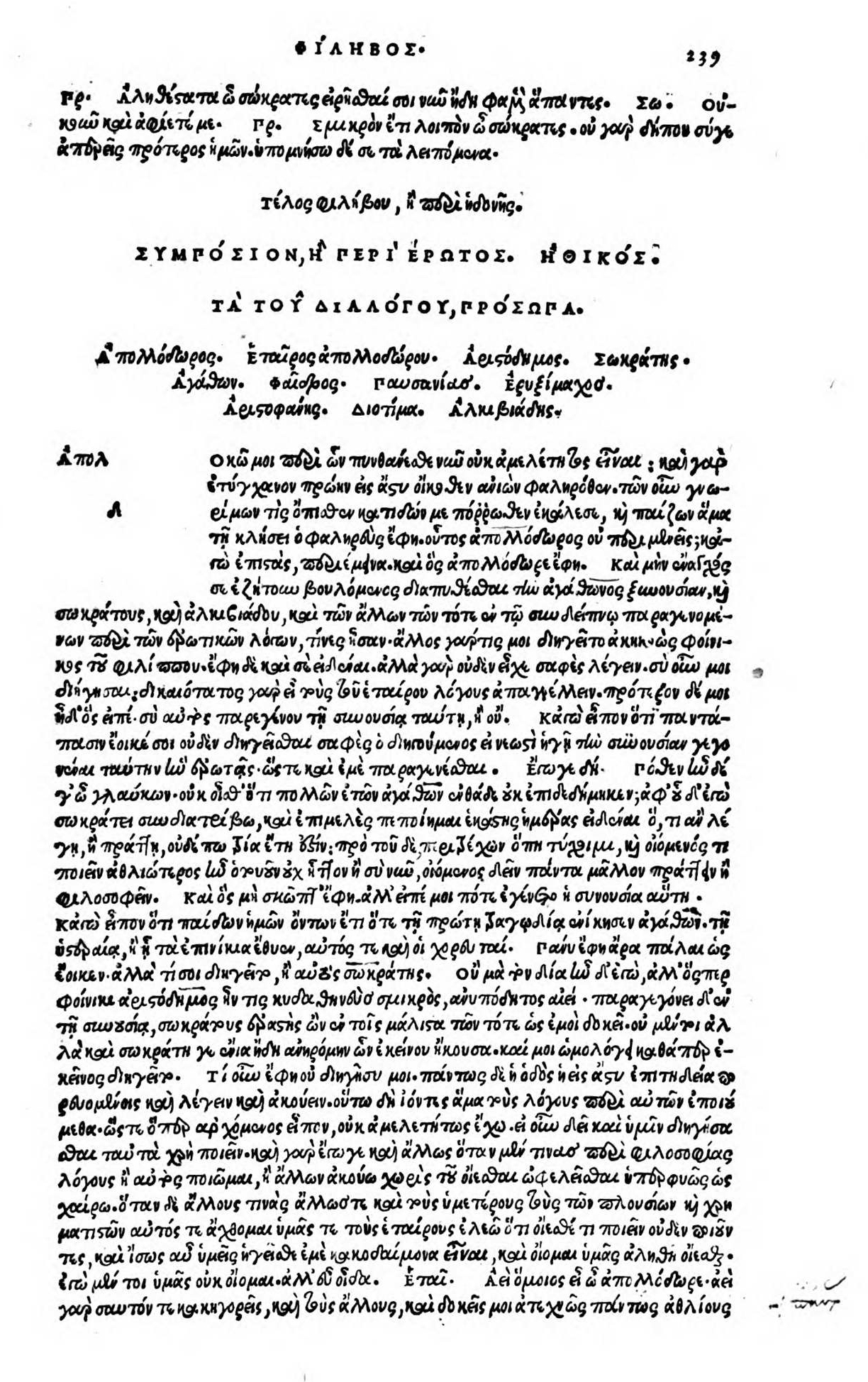
Symposium
Plato · c. 385-370 BC
 Artifact
Primary source
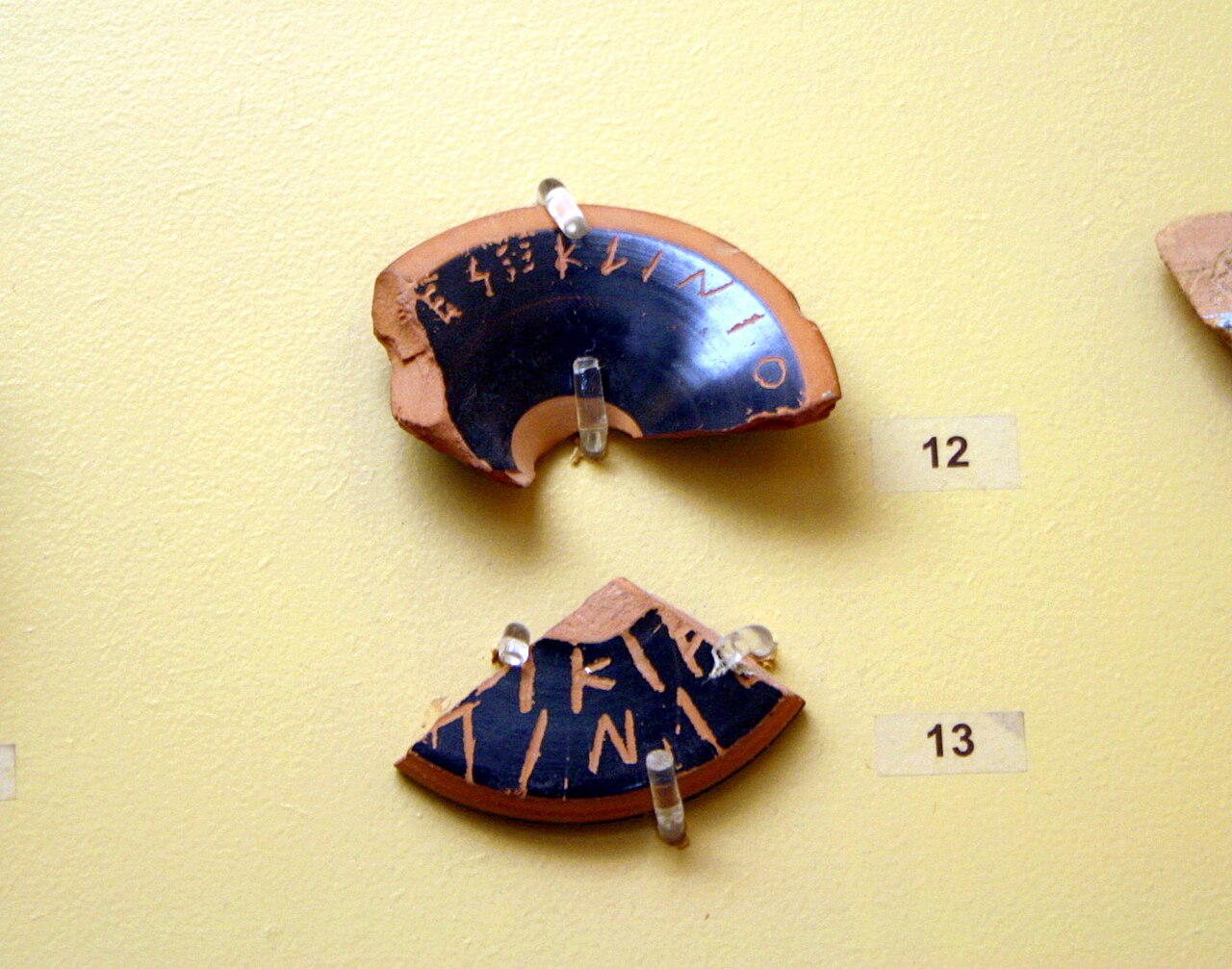
Ostraka inscribed with the name of Alcibiades
Athenian citizens · c. 416-415 BC


Free account
Read every Alcibiades source
Sign up free →
Ready when you are
Start chatting with Alcibiades now.
20 messages free · No credit card · Available in 50+ languages.