


Secondary sourcePainting1768
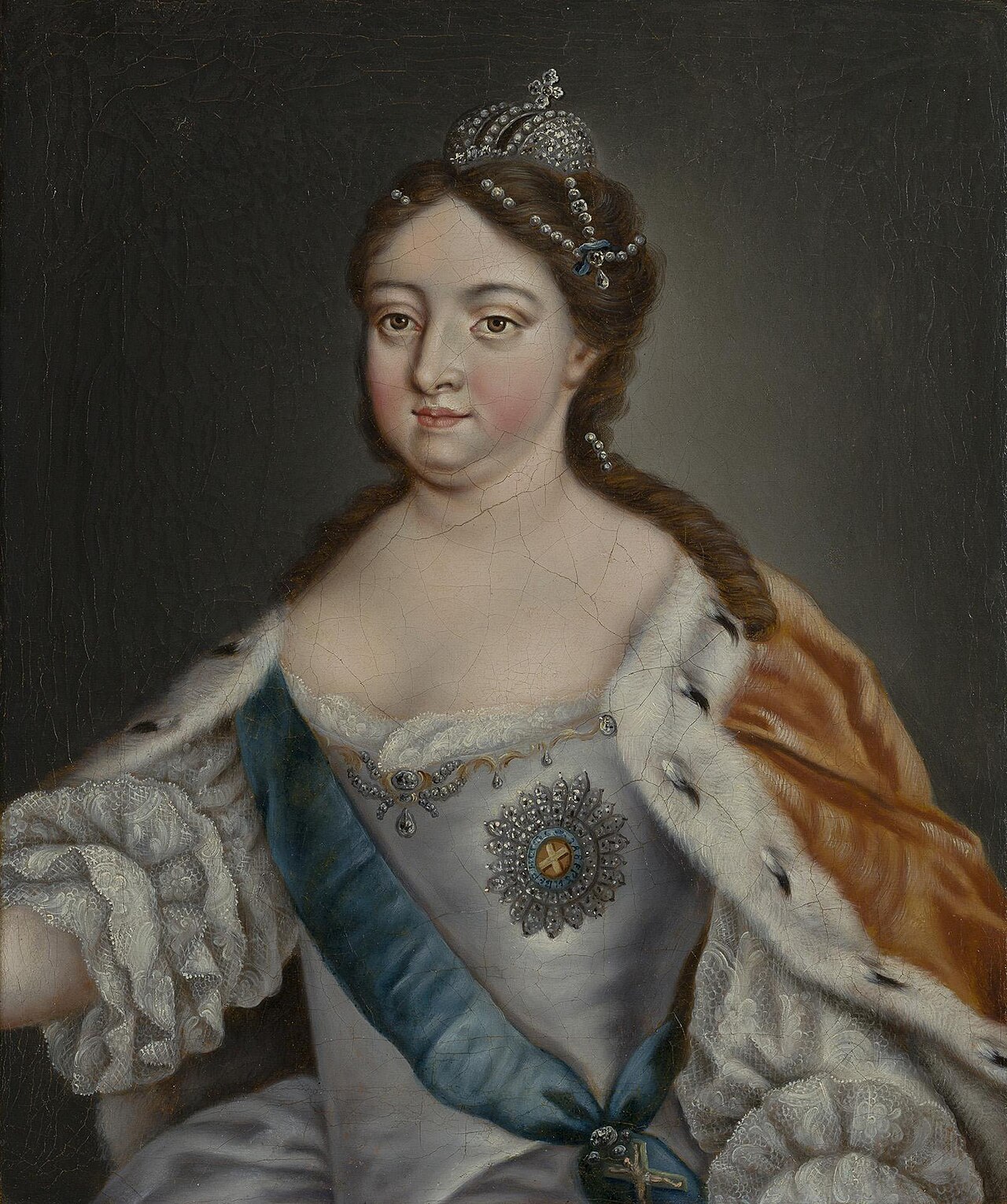
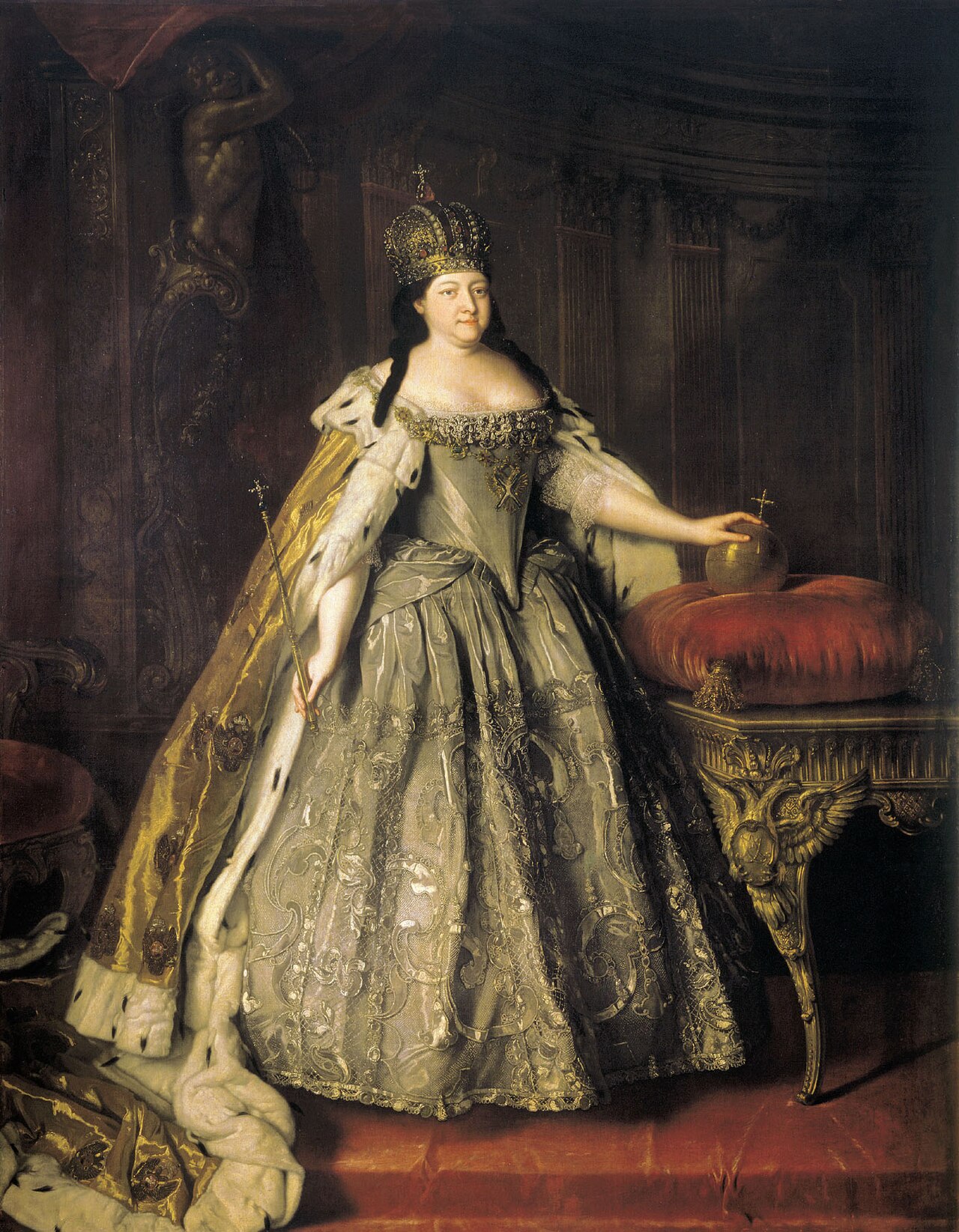
Portrait of Empress Anna Ioannovna, after Jacopo Amigoni
After Jacopo Amigoni · 1768
A 1768 painted copy after Jacopo Amigoni's portrait of Empress Anna, made decades after her death.
A later copy of a court portrait of Anna, showing how her image as empress was preserved after her death.
About this source
What it is
This oil painting is a 1768 copy after a portrait by the painter Jacopo Amigoni, showing Empress Anna Ioannovna in a jeweled diadem, white gown, and ermine-trimmed mantle with an order of chivalry. It was made nearly three decades after Anna died in 1740.
Why it matters
Amigoni was a court painter in Russia during part of Anna's era, and copies of his royal portraits were later made to preserve and spread images of past rulers. This painting shows how the image of an empress could be reproduced long after her reign for display or historical record.
- What does the clothing and jewelry in the portrait suggest about Anna's rank?
- Why might someone commission a copy of a portrait decades after the subject's death?
- What might this formal image not tell us about Anna as a person or ruler?
This painting is part of the curated material that grounds the AI version of Anna of Russia on Humy.ai — when students ask about related events, the AI can quote it and cite it.
More Anna of Russia sources
Browse all 52 →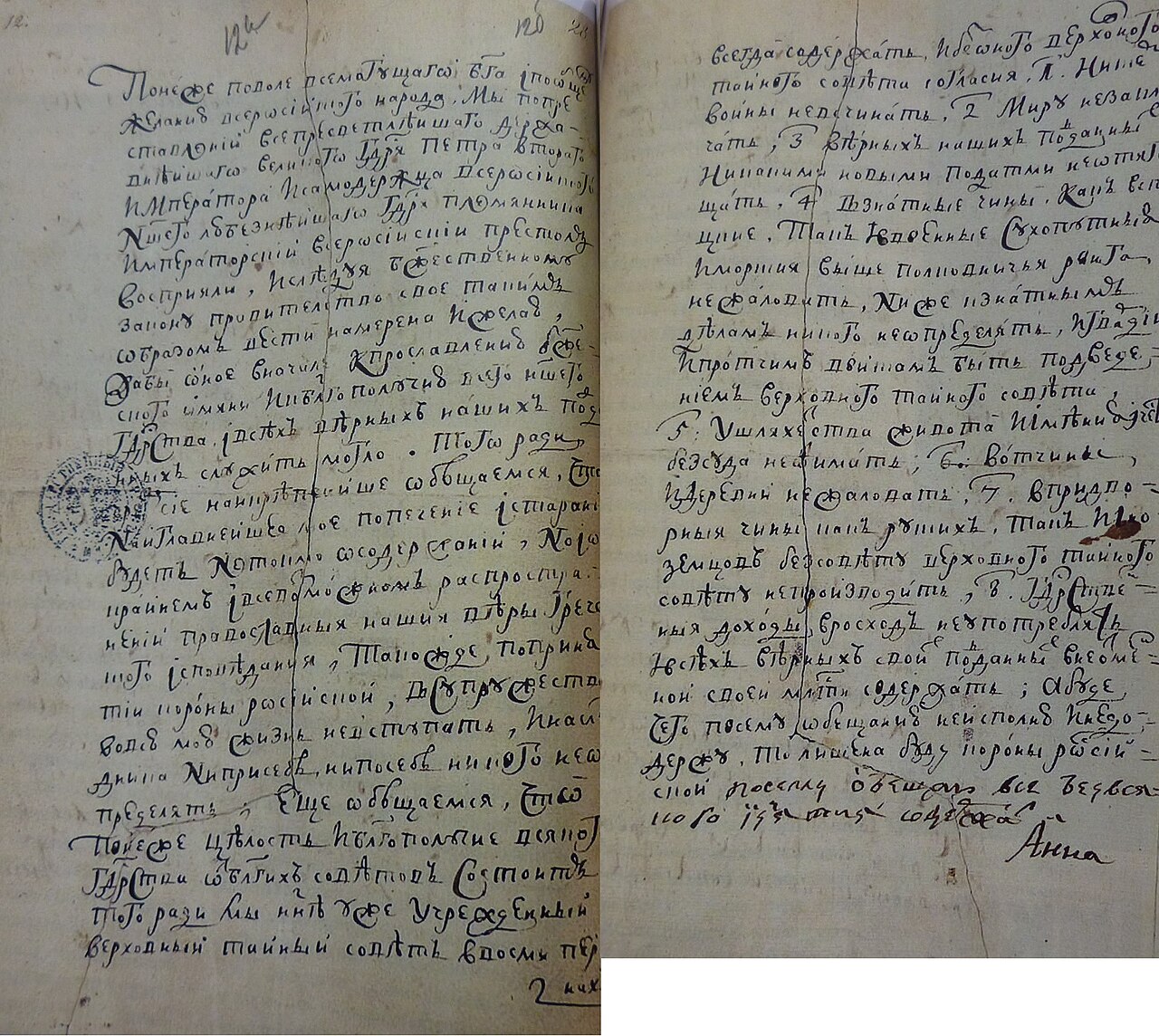 Document
Primary source
Conditions of 1730
Members of the Supreme Privy Council · January 1730
 Painting
Primary source
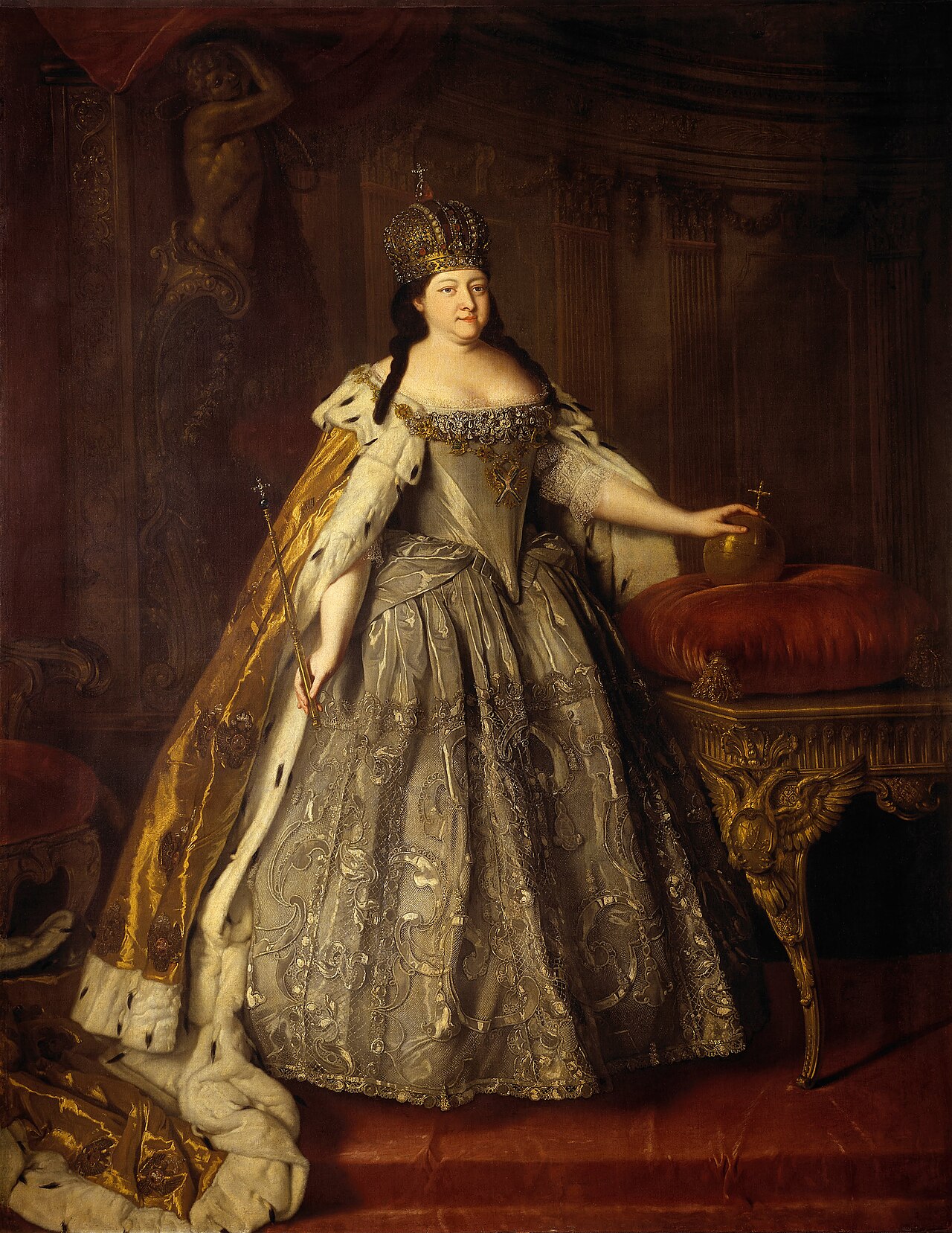
Portrait of Empress Anna Ioannovna
Louis Caravaque · 1730
 Painting
Primary source
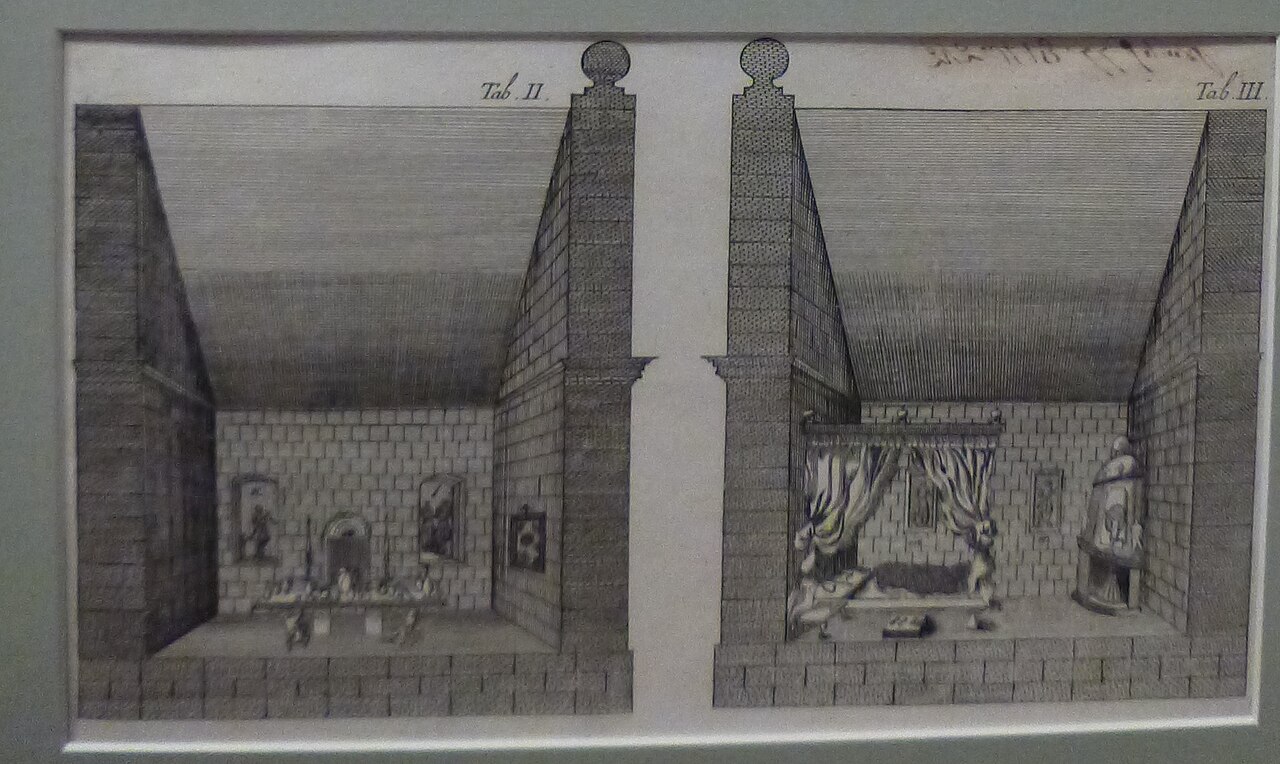
Cross-section of the Ice Palace Dining Room and Bedroom
Unknown engraver · 1741
 Artifact
Primary source
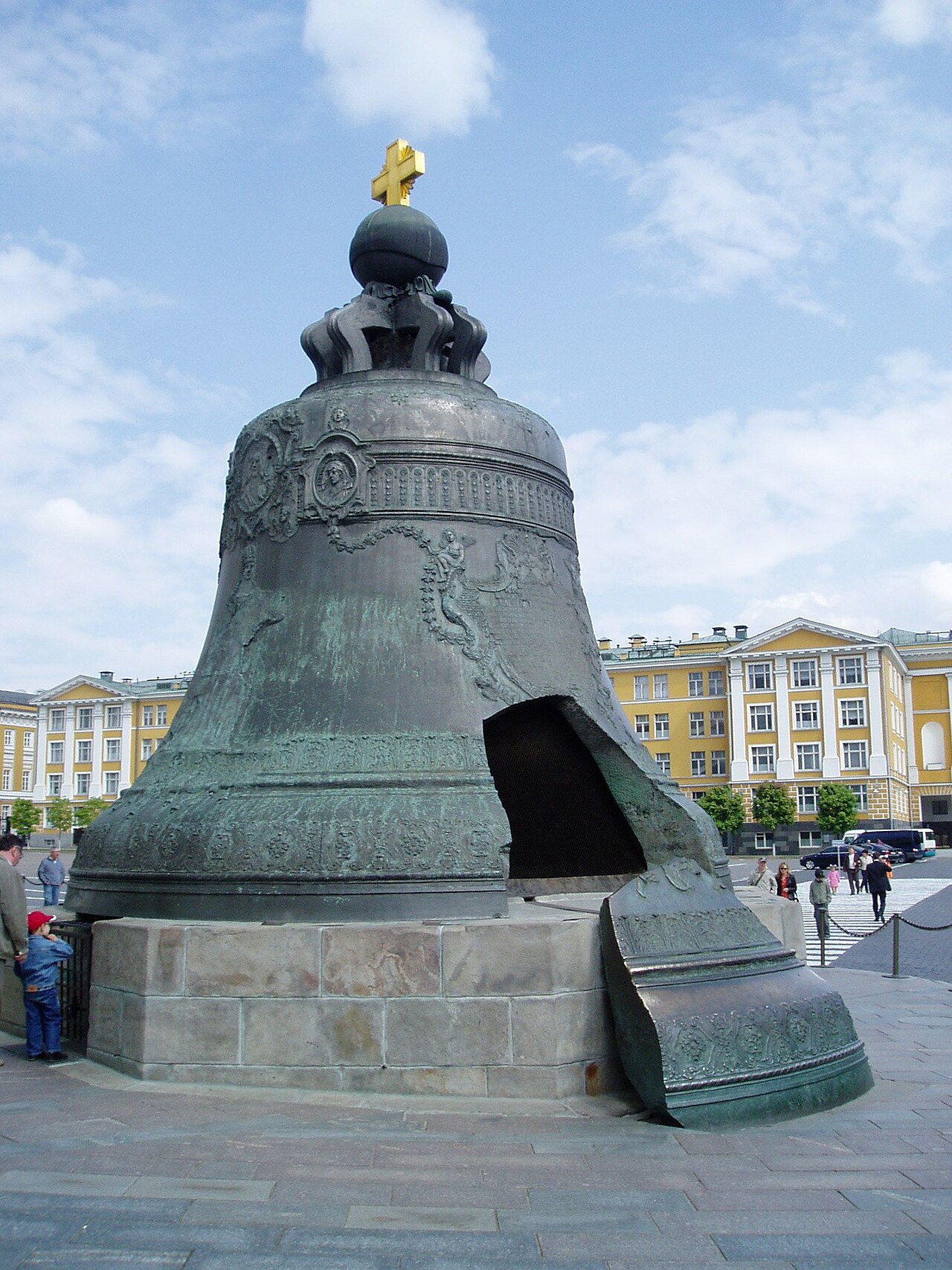
Tsar Bell
Ivan and Mikhail Motorin · 1733
Free account
Read every Anna of Russia source
Sign up free →
Ready when you are
Start chatting with Anna of Russia now.
20 messages free · No credit card · Available in 50+ languages.