


Secondary sourcePaintingcirca 1596
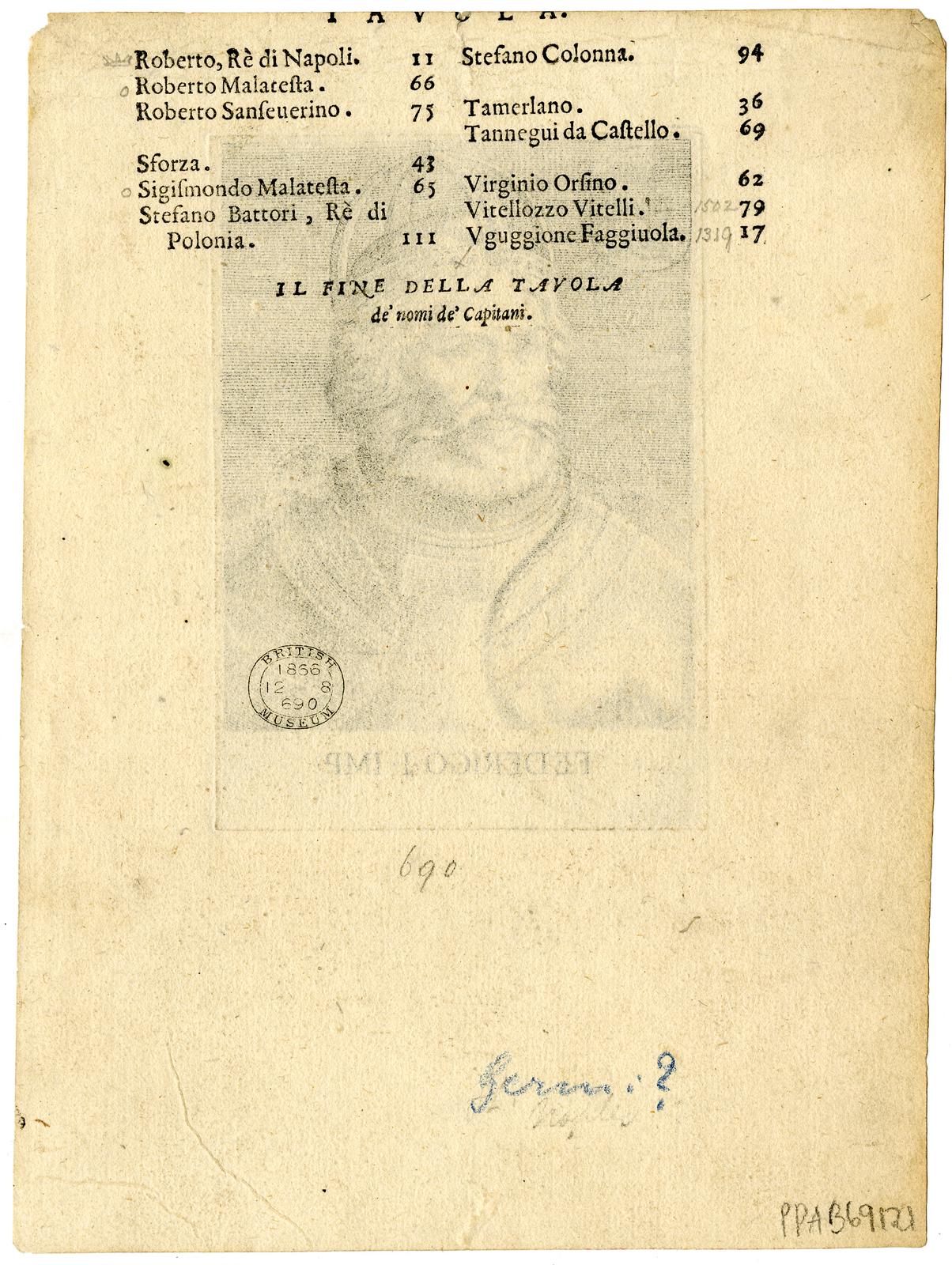
Portrait of Frederick I in Ritratti di cento capitani illustri
circa 1596
An engraved portrait of the emperor, printed in a 1596 Roman book of famous captains. It was made centuries after his death and follows the book's conventions.
Shows how a sixteenth-century Roman book presented Barbarossa as a famous captain, a later image rather than a likeness from life.
About this source
What it is
This is an engraved portrait of Frederick I, Holy Roman Emperor, dated around 1596. It was printed as an illustration in the book Ritratti di cento capitani illustri (Portraits of a Hundred Famous Captains), published in Rome. The portrait shows the emperor from the bust up, turned to the left, and wearing a crown. A small crest within an eagle appears in the upper left. The record notes letterpress text on the back of the page.
Why it matters
The portrait was made more than four centuries after Barbarossa died in 1190, so the face is an imagined likeness. The book presented him as one of a series of famous military leaders. This shows how Renaissance publishers collected and honored rulers of the past, often for their reputations as warriors.
Look closer
- What in the portrait, such as the crown and the eagle crest, tells you that this man is an emperor?
- Why would a book of famous captains include a ruler who lived centuries earlier?
- What does the portrait leave out about the emperor's life and actual appearance?
This painting is part of the curated material that grounds the AI version of Frederick Barbarossa on Humy.ai — when students ask about related events, the AI can quote it and cite it.
More Frederick Barbarossa sources
Browse all 95 →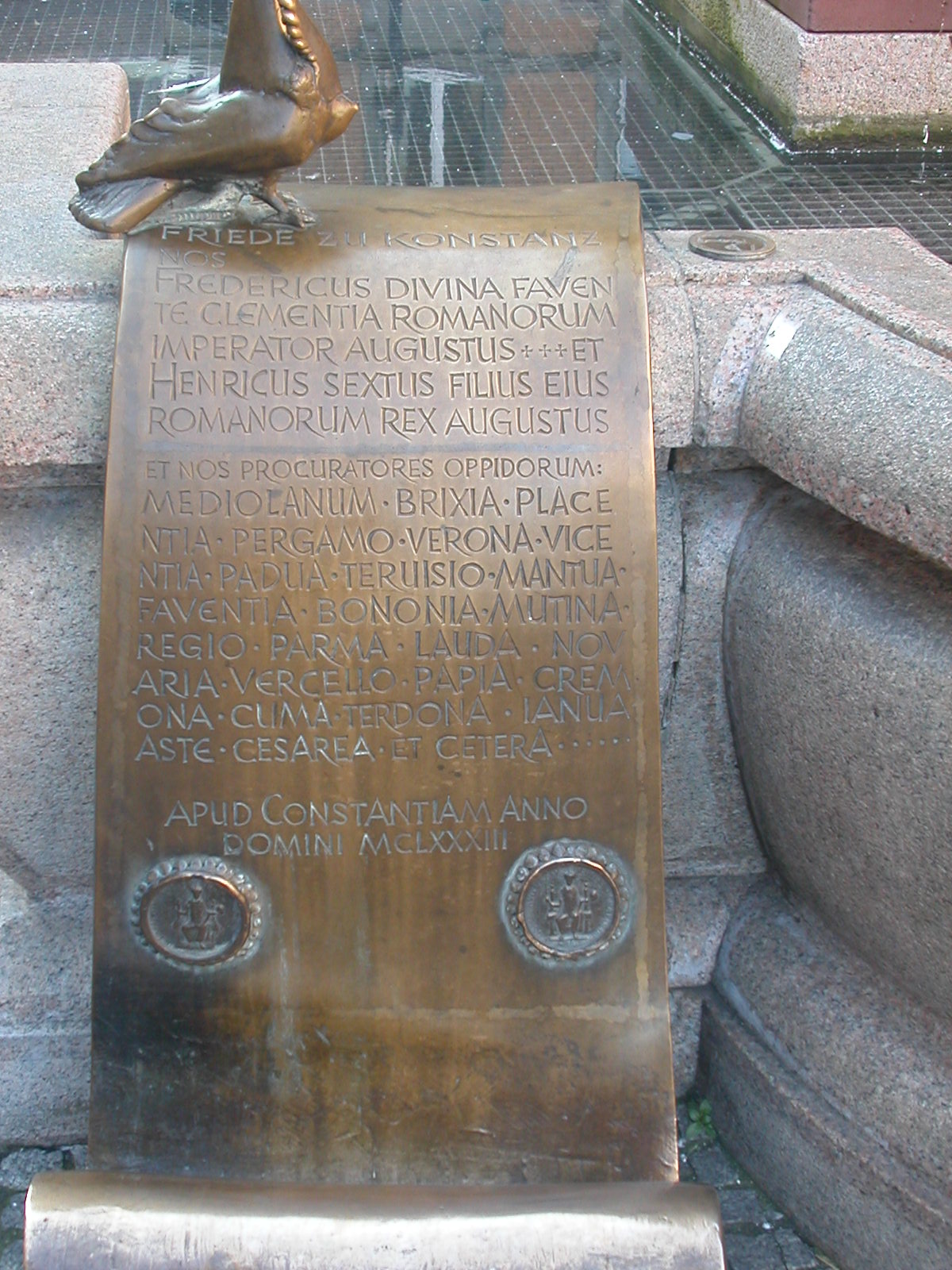 Document
Primary source
Peace of Constance
Frederick I Barbarossa · 25 June 1183
 Sculpture
Primary source
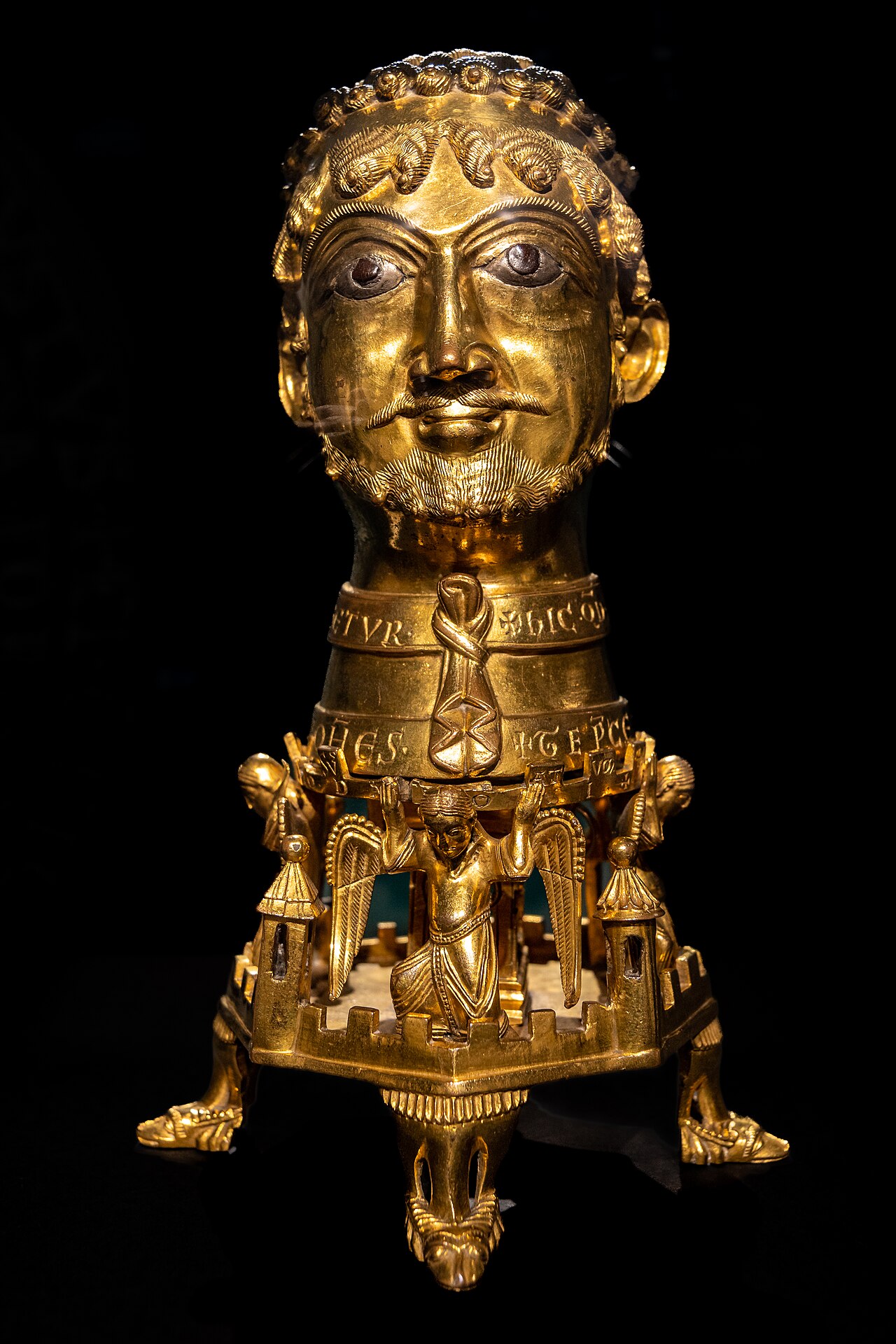
Cappenberg Head
c. 1160
 Artifact
Primary source
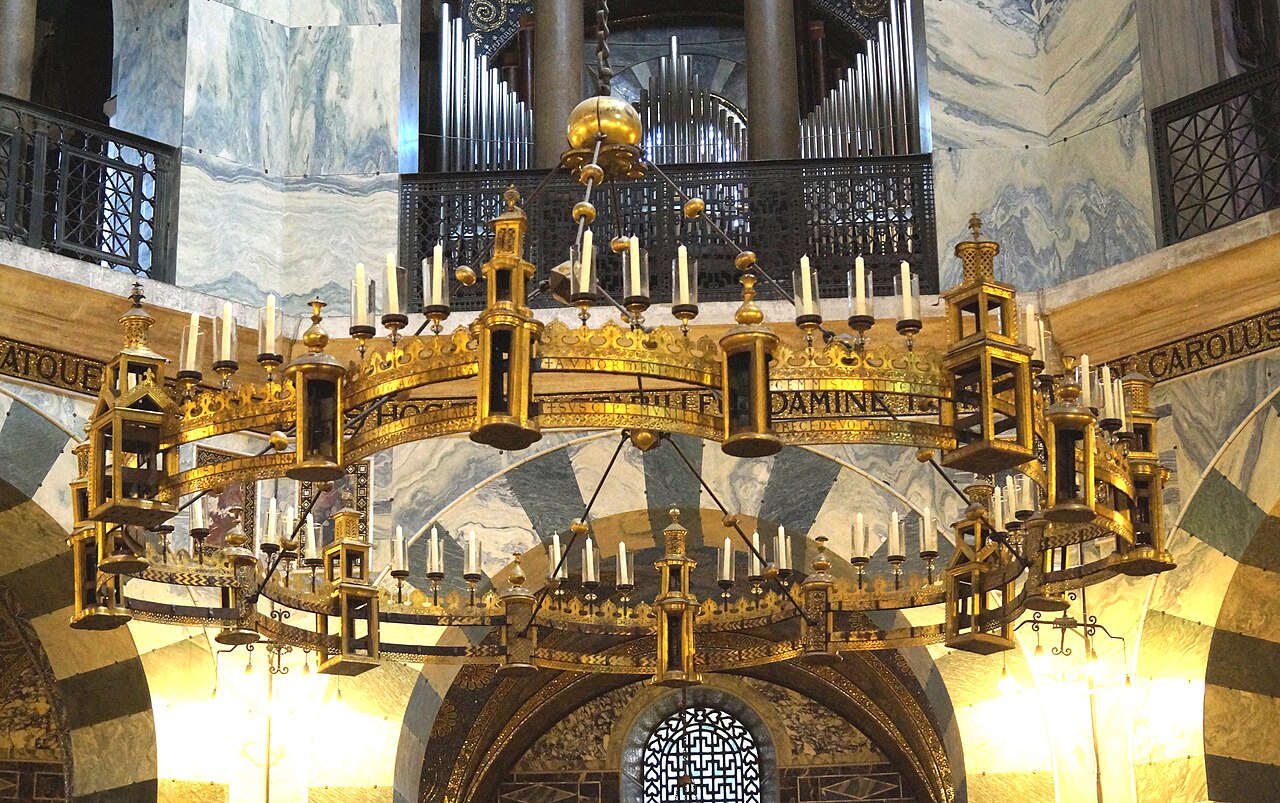
Barbarossa Chandelier
c. 1165-1170
 Document
Primary source
Authentica habita
Frederick I Barbarossa · c. 1155
Free account
Read every Frederick Barbarossa source
Sign up free →
Ready when you are
Start chatting with Frederick Barbarossa now.
20 messages free · No credit card · Available in 50+ languages.