


Secondary sourcePainting1824
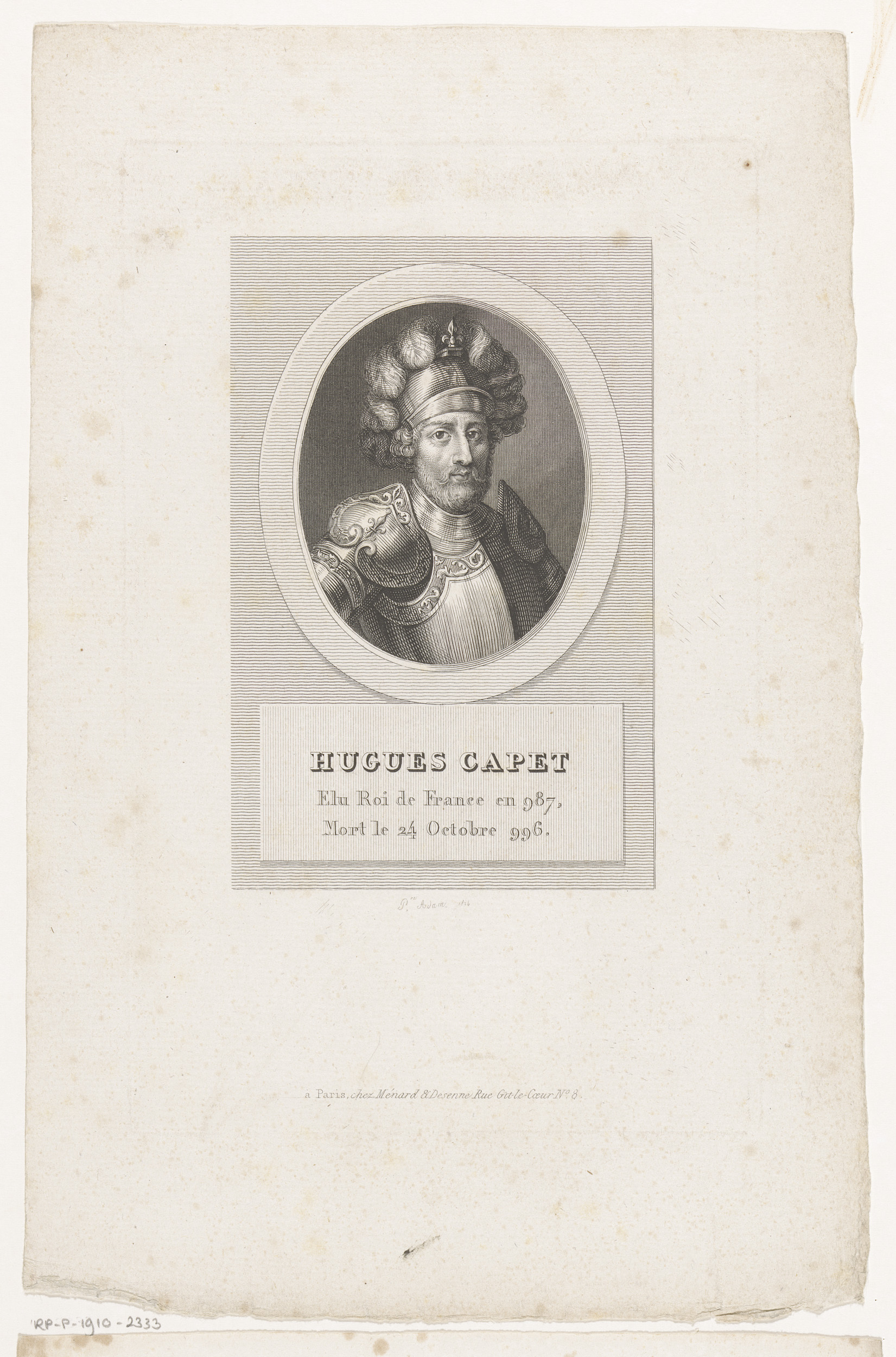
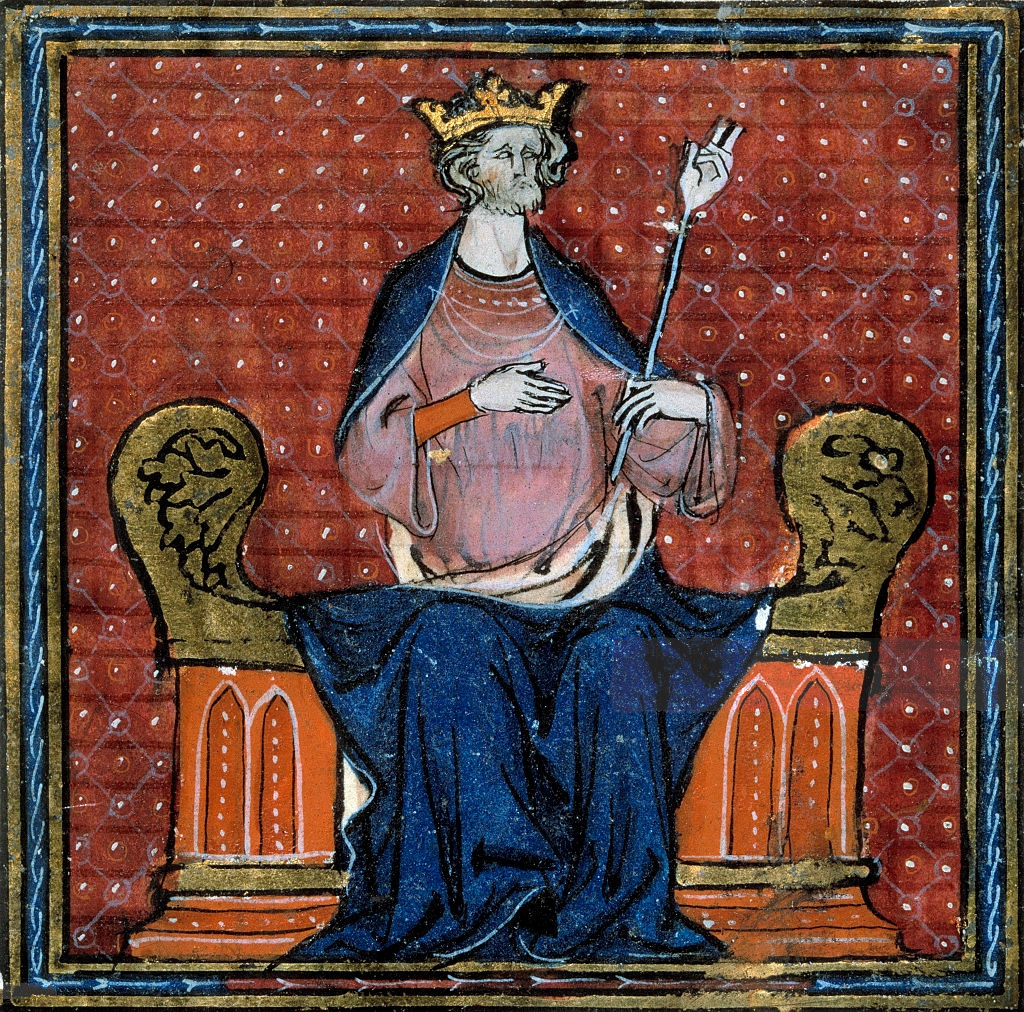
Portrait of Hugo Capet
1824
An 1824 engraved portrait imagining Hugh Capet as a crowned, armoured king, made centuries after his death.
This 1824 imagined portrait presents Hugh Capet as a crowned warrior-king, reflecting his lasting symbolic status.
About this source
What it is
This is an engraved print made in 1824, now held by the Rijksmuseum in the Netherlands. It shows a bearded man in armour wearing a plumed helmet topped with a fleur-de-lis crown, set in an oval frame. The caption below names him as Hugues Capet, elected king of France in 987 and dead on 24 October 996, and the sheet carries a Paris publisher's name.
Why it matters
Made over eight hundred years after Hugh Capet's reign, this portrait is not a true likeness but an imagined image created to honor his place as founder of a long line of French kings. It shows how later generations used portraits to connect their own idea of monarchy to distant historical rulers.
Look closer
- What clues in the armour and crown tell you this is not a contemporary portrait?
- Why might the printmaker choose to show Hugh Capet as a soldier-king?
- What does the inscribed caption add that the image itself cannot show?
This painting is part of the curated material that grounds the AI version of Hugh Capet on Humy.ai — when students ask about related events, the AI can quote it and cite it.
More Hugh Capet sources
Browse all 43 →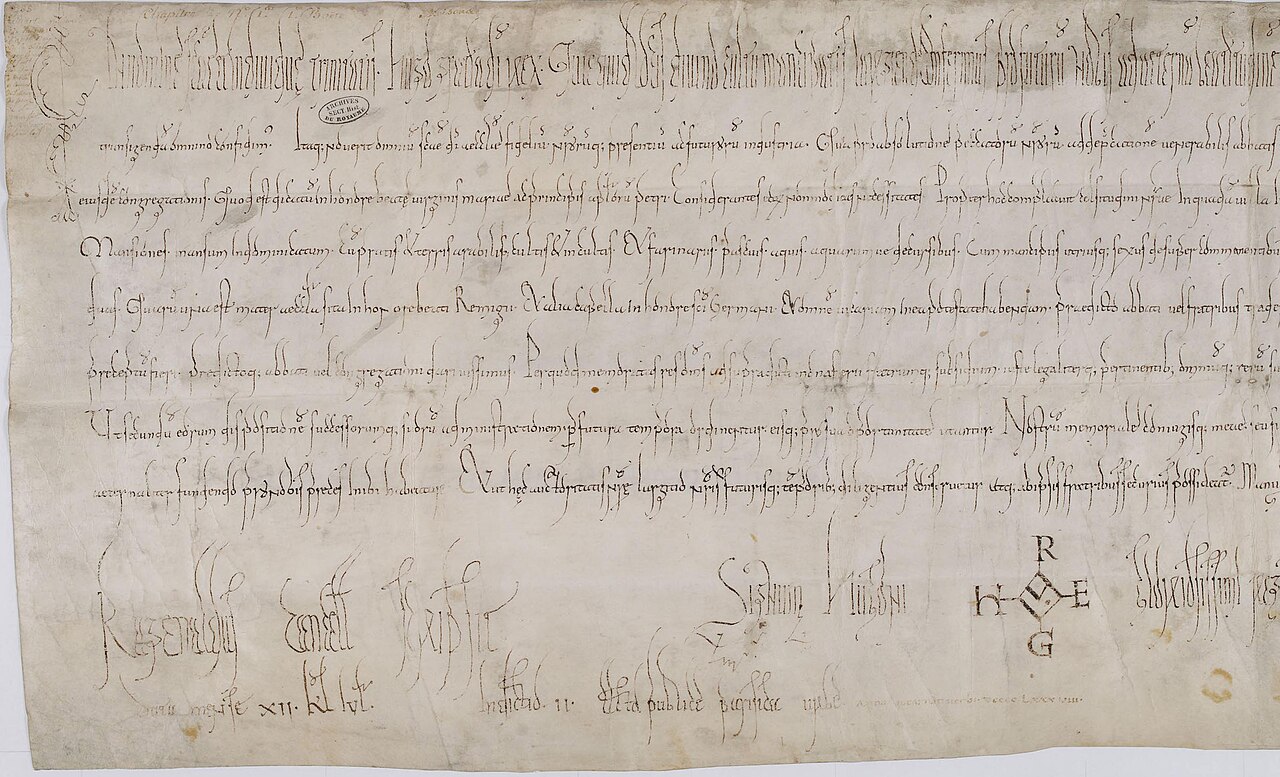 Document
Primary source
Donation by Hugh Capet to Saint-Maur-des-Fossés
Hugh Capet · 988
 Document
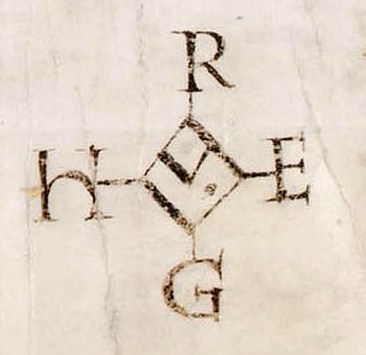
Primary source
Signature Monogram of Hugh Capet
Hugh Capet · 988
 Artifact
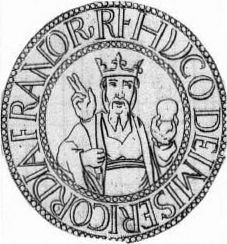
Primary source
Seal of Hugh Capet
 Artifact
Primary source
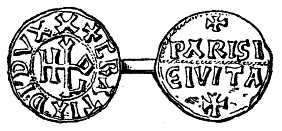
Silver Denier of Hugh Capet
Free account
Read every Hugh Capet source
Sign up free →
Ready when you are
Start chatting with Hugh Capet now.
20 messages free · No credit card · Available in 50+ languages.