


Secondary sourcePainting1904
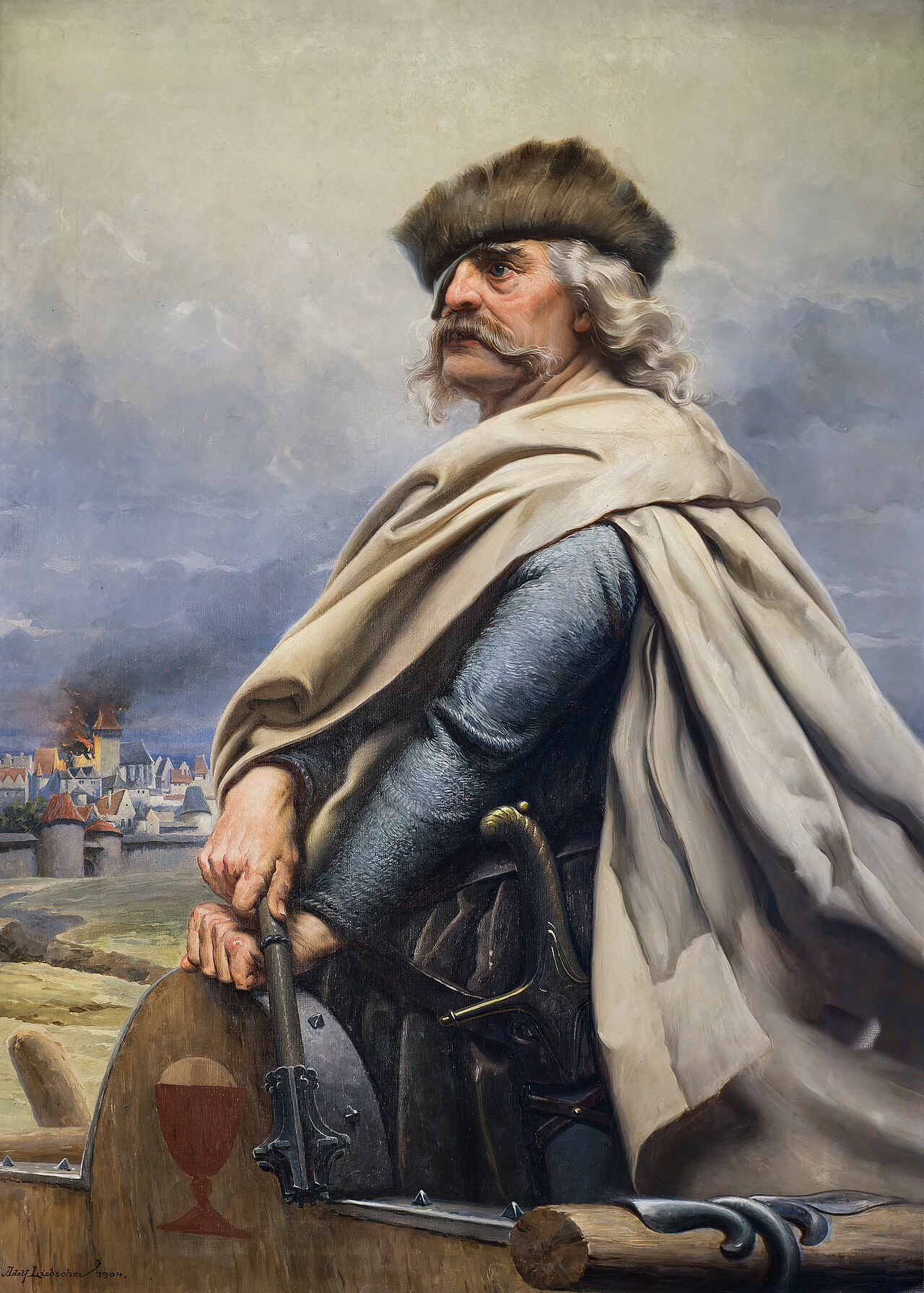
Portrait of Jan Žižka
Adolf Liebscher · 1904
An oil painting by Adolf Liebscher from 1904 imagining Žižka as an armored, eye-patched commander before a burning town.
This national-revival painting imagines Žižka as the armored Hussite commander, reflecting how he was remembered centuries later.
About this source
What it is
This oil painting, made in 1904 by the Czech artist Adolf Liebscher, shows an older man with white hair and a fur hat, wearing mail and carrying a weapon and a shield marked with a chalice emblem. Behind him a walled town burns. The painting is held in the exposition of the Hussite Museum in Tábor.
Why it matters
Painted centuries after Žižka's death, this image is part of the Czech national revival's effort to create heroic images of historical figures. The chalice on the shield was a Hussite symbol, linking Žižka visually to the religious movement he led, while the burning town suggests the warfare associated with his campaigns.
Look closer
- Why do you think the artist chose to show a burning town in the background?
- What does the chalice symbol on the shield tell you about Žižka's cause?
- How does this 1904 image differ from what a 15th-century portrait might have looked like?
This painting is part of the curated material that grounds the AI version of Jan Žižka on Humy.ai — when students ask about related events, the AI can quote it and cite it.
More Jan Žižka sources
Browse all 82 →Primary source
Žižka's Regulations of War
Jan Žižka · 1423
 Letter
Primary source
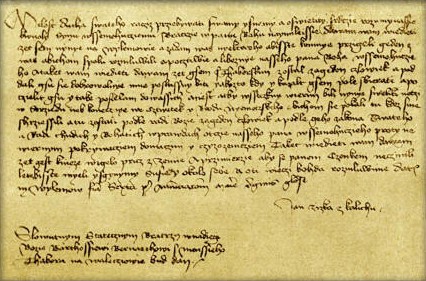
Letter of Jan Žižka of Trocnov
Jan Žižka
 Artifact
Primary source
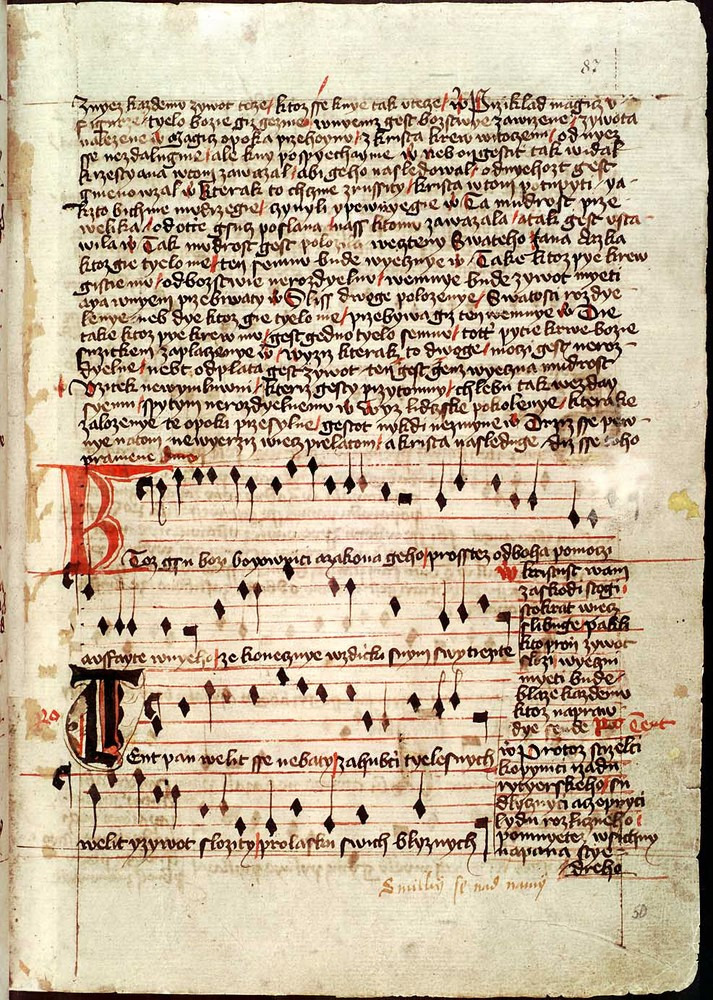
Ktož jsú boží bojovníci
1420
 Artifact
Secondary source
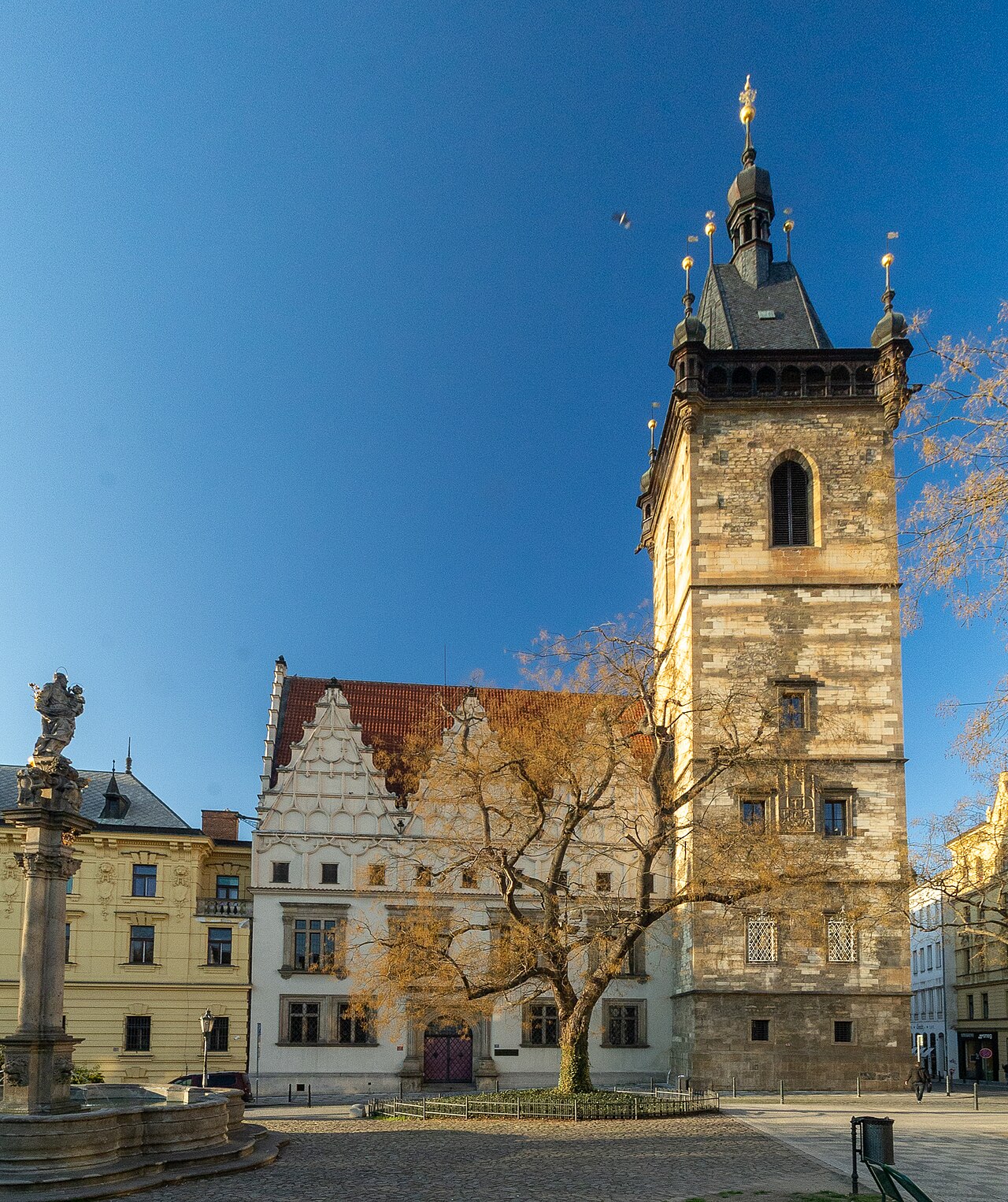
New Town Hall, Prague
1370 (building); 1419 (defenestration)
Free account
Read every Jan Žižka source
Sign up free →
Ready when you are
Start chatting with Jan Žižka now.
20 messages free · No credit card · Available in 50+ languages.