


Primary sourcePainting1690
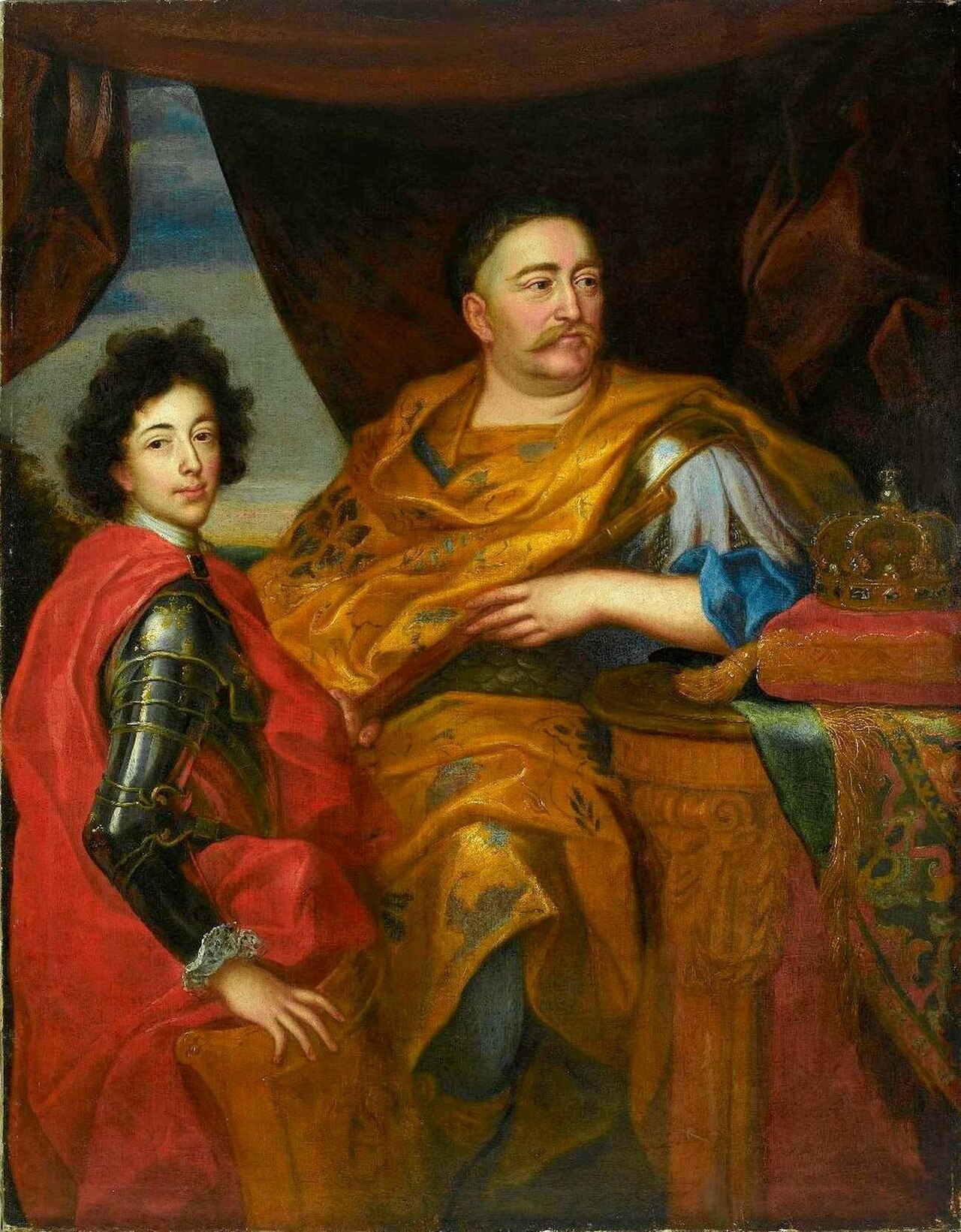
Portrait of John III Sobieski with his son James
Jerzy Siemiginowski-Eleuter · 1690
A double portrait of King John III Sobieski and his son Jakub, reflecting his hopes for a hereditary dynasty.
Shows Sobieski with his son James, reflecting his unfulfilled hope of founding a hereditary dynasty.
About this source
What it is
Painted by Jerzy Siemiginowski-Eleuter in 1690, this portrait shows King John III Sobieski seated beside his son James (Jakub), who wears armor as a young heir. It is held at the Palace Museum in Wilanów, once the king's own residence.
A crown rests nearby on a cushion, and the painting was created as a pendant to a matching portrait of Queen Marie Casimire with her daughter.
Why it matters
Poland's monarchy was elective, meaning the throne did not automatically pass to a ruler's children. This painting reflects Sobieski's wish to establish his son as his successor and found a lasting royal dynasty, a hope that ultimately failed.
Look closer
- Why is the crown placed on a cushion rather than on anyone's head?
- What does the pairing of father and son suggest about succession?
- Why might this portrait have been paired with one of the queen and her daughter?
This painting is part of the curated material that grounds the AI version of John III Sobieski on Humy.ai — when students ask about related events, the AI can quote it and cite it.
More John III Sobieski sources
Browse all 94 → Artifact
Primary source
Wilanów Palace
Augustyn Wincenty Locci · 1677–1696
 Painting
Primary source
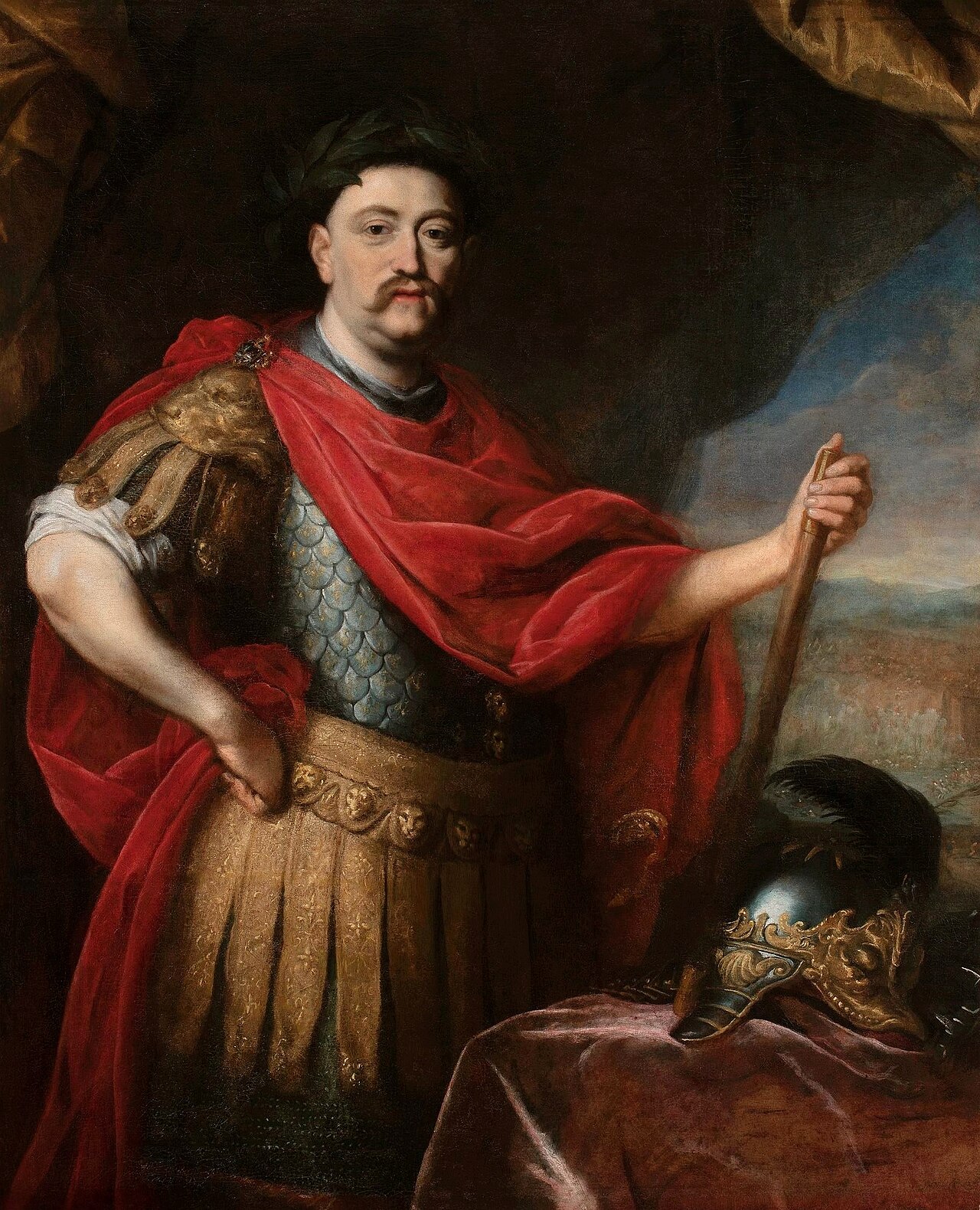
Portrait of John III Sobieski in Roman Costume
Daniel Schultz · 1673
 Painting
Primary source
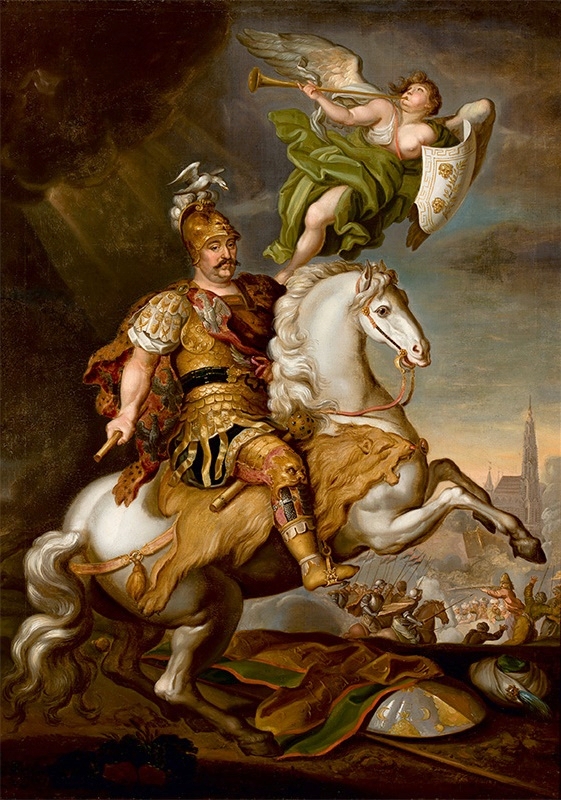
John III Sobieski at the Battle of Vienna
Jerzy Siemiginowski-Eleuter · 1686
 Artifact
Primary source
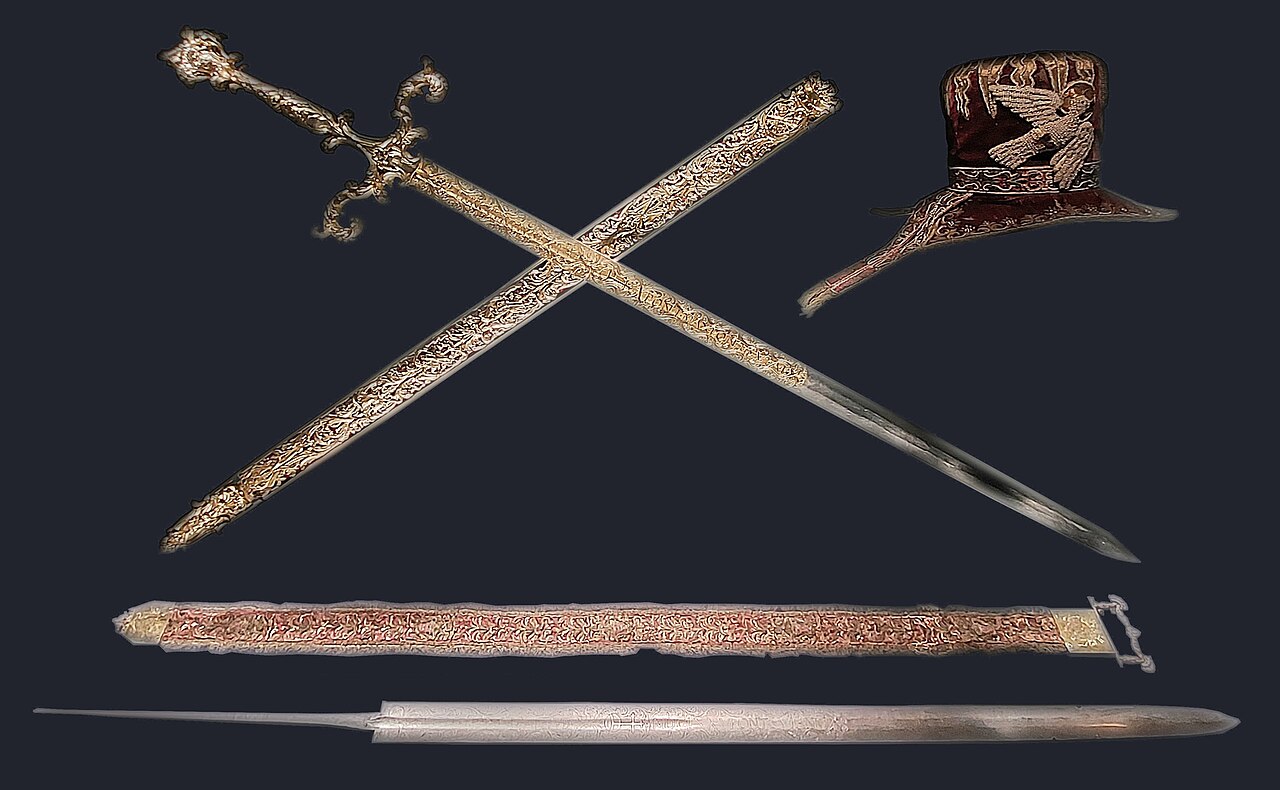
Blessed Sword and Hat of John III Sobieski
1684
Free account
Read every John III Sobieski source
Sign up free →
Ready when you are
Start chatting with John III Sobieski now.
20 messages free · No credit card · Available in 50+ languages.