


Secondary sourcePainting1648
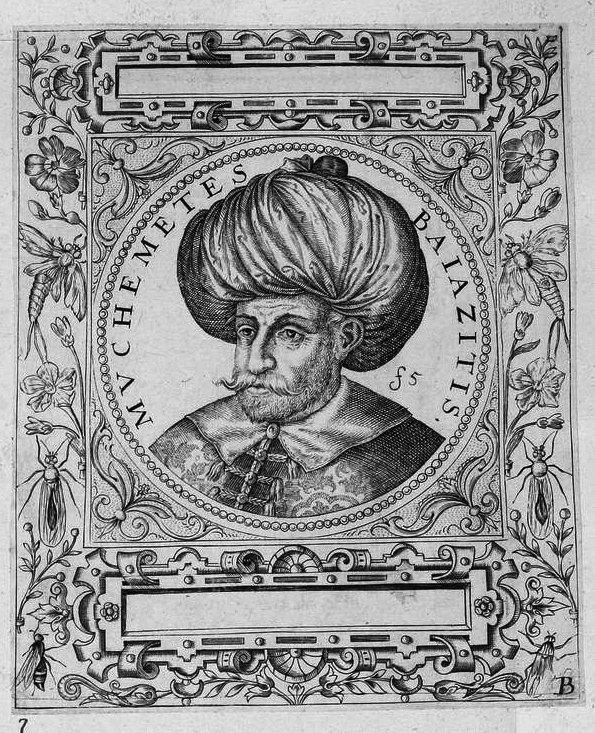
Portrait of Mahometes Baiazitis
Johann Theodor de Bry · 1648
A late-sixteenth/seventeenth-century European engraved portrait of the sultan, part of a series imagining Ottoman rulers for Western audiences.
This imagined European engraving shows how later printmakers pictured the sultan long after his death.
About this source
What it is
This is a black-and-white engraving by Johann Theodor de Bry, part of a decorated series of imagined portraits of Ottoman rulers. It comes from a book of 'true pictures' of Turkish emperors and Persian princes printed in Frankfurt in 1648, and is kept today as part of a bound collection (Klebeband) in the Fürstlich Waldecksche Hofbibliothek Arolsen.
Why it matters
European printmakers like de Bry never saw Ottoman sultans in person. These portraits tell us less about how the sultan actually looked and more about how Europeans imagined and marketed the 'exotic' Ottoman world long after he died.
Look closer
- What details (turban, clothing, frame) make this look 'Ottoman' to a European eye?
- Why might the publisher label this image with the sultan's name even without ever meeting him?
- What does the decorative framing suggest about who the book was made for?
This painting is part of the curated material that grounds the AI version of Mehmed I on Humy.ai — when students ask about related events, the AI can quote it and cite it.
More Mehmed I sources
Browse all 77 →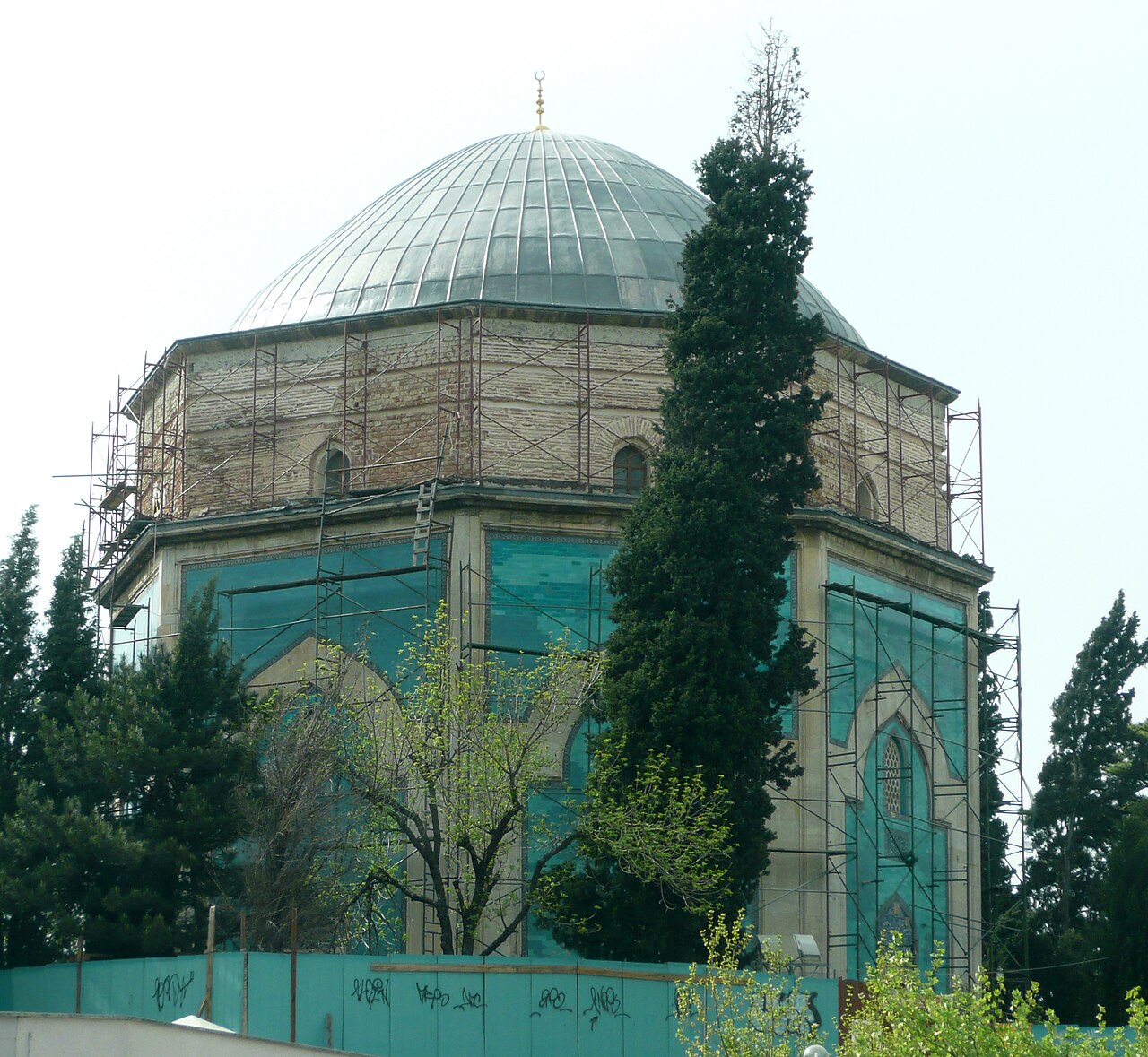 Artifact
Primary source
Green Mosque, Bursa
Hacı İvaz Pasha (architect) · completed c. 1420
 Artifact
Primary source
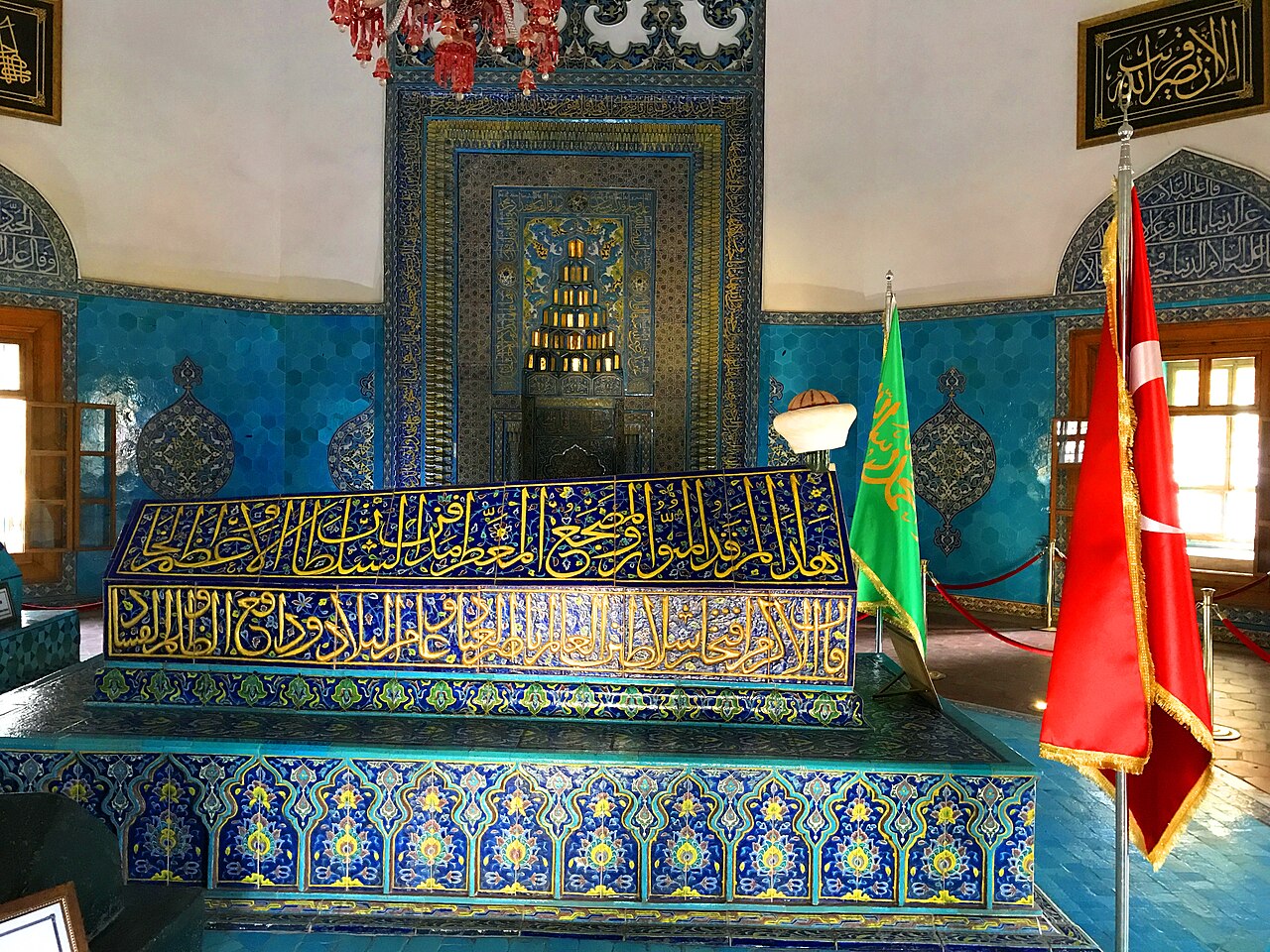
Green Tomb of Mehmed I
Hacı İvaz Pasha (architect) · after 1421
 Document
Primary source
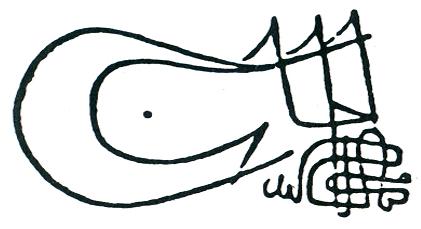
Tughra of Mehmed I
Unknown court calligrapher · 1413–1421
 Artifact
Primary source
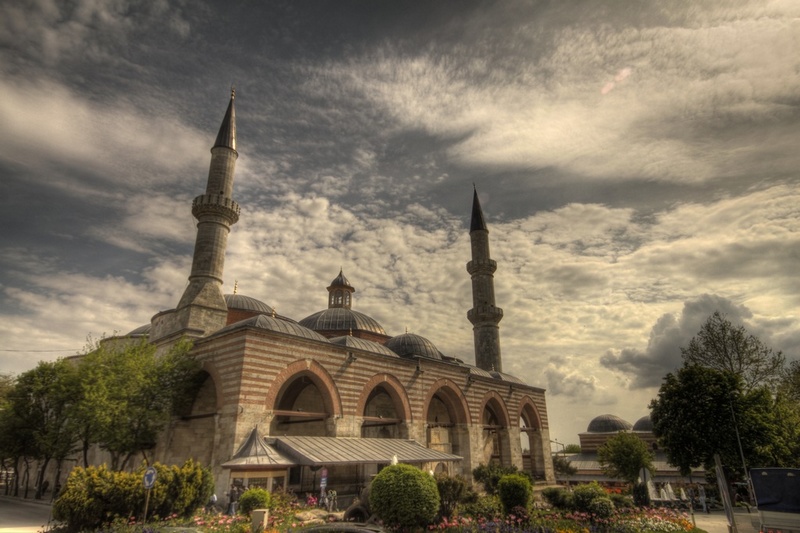
Old Mosque of Edirne
completed 1414
Free account
Read every Mehmed I source
Sign up free →
Ready when you are
Start chatting with Mehmed I now.
20 messages free · No credit card · Available in 50+ languages.