


Secondary sourcePainting1579
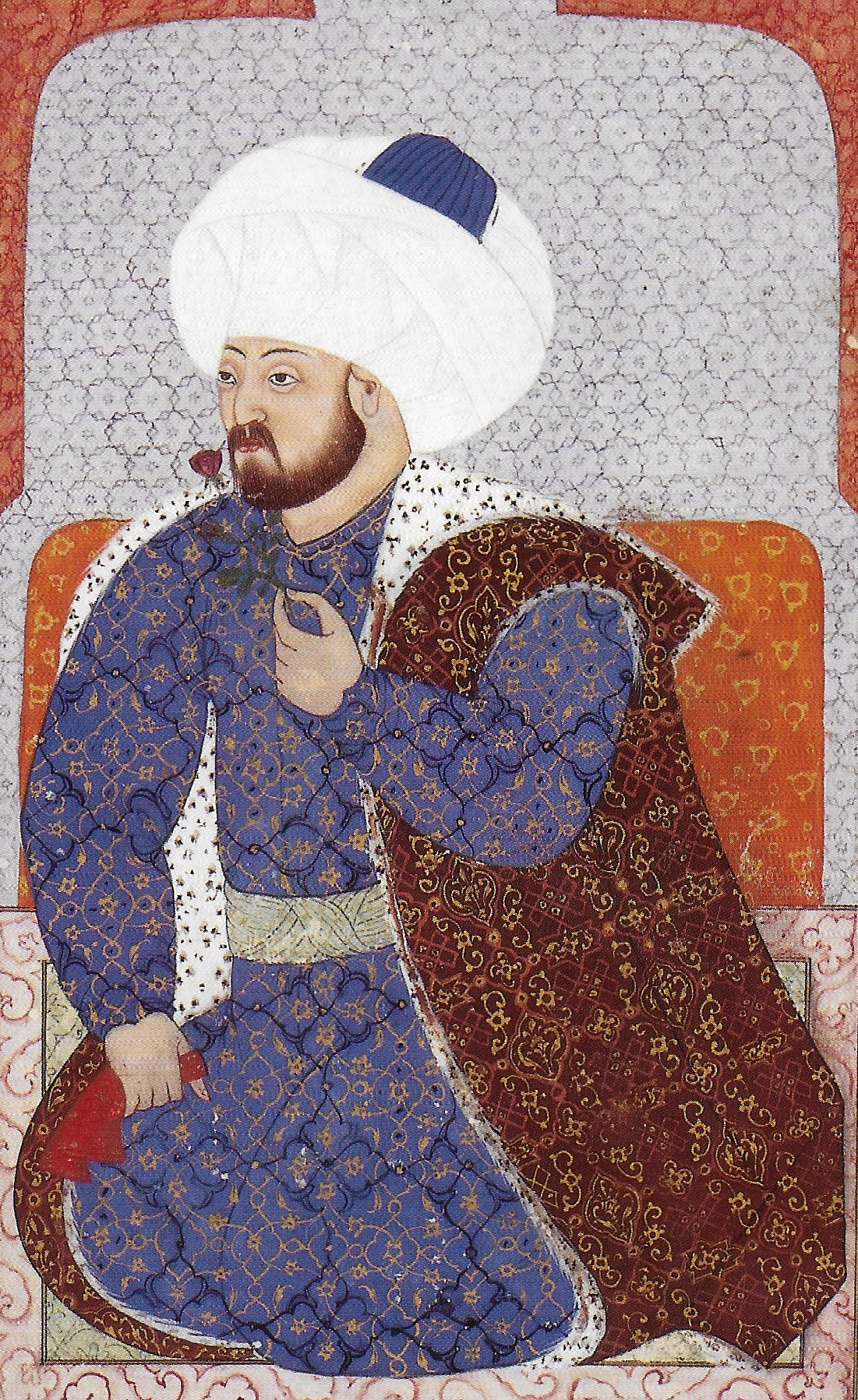
Portrait of Mehmed II from the Physiognomy Manuscript
Nakkaş Osman · 1579
A 1579 Ottoman miniature portrait of Mehmed II, painted long after his death to fix his image in dynastic art.
This later, idealized portrait shows how Ottoman court painters shaped the lasting visual image of Mehmed II.
About this source
What it is
This miniature portrait of Mehmed II appears in a manuscript called Human Physiognomy Concerning the Personal Dispositions of the Ottomans, created in 1579 by the court painter Nakkaş Osman. It shows Mehmed seated on a throne, wearing a large turban and rich robes, and is held today in the Topkapı Palace Museum Library.
Why it matters
Painted almost a century after Mehmed II's death, this portrait was not made from life but shaped the standard image later generations used to picture him. It shows how Ottoman court painters like Nakkaş Osman created an official, idealized look for past sultans, reinforcing the dynasty's visual memory.
Look closer
- Since this was painted long after Mehmed died, what can and can't it tell us about his real appearance?
- Why might later sultans want a fixed, flattering image of their ancestor?
- What symbols or objects in the painting suggest power and status?
This painting is part of the curated material that grounds the AI version of Mehmed II on Humy.ai — when students ask about related events, the AI can quote it and cite it.
More Mehmed II sources
Meet the AI Mehmed II →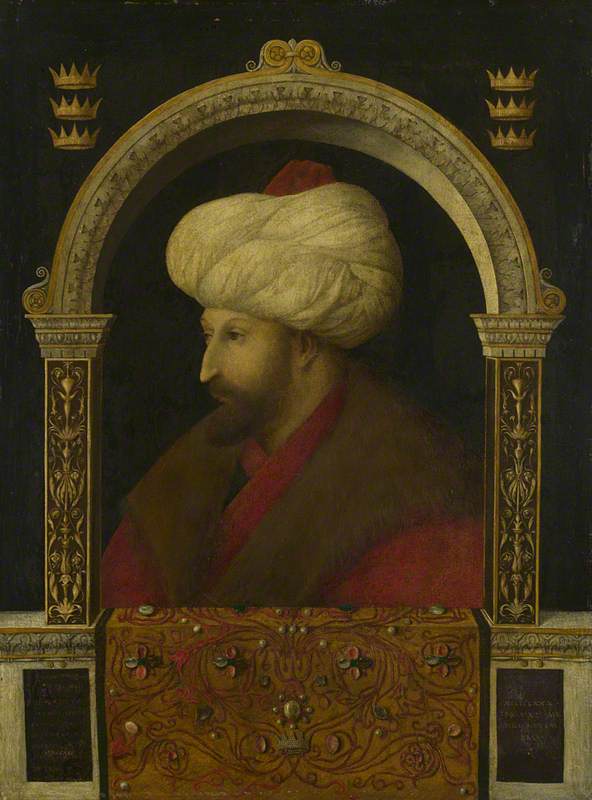 Painting
Primary source
The Sultan Mehmet II
Gentile Bellini · 1480
 Painting
Primary source
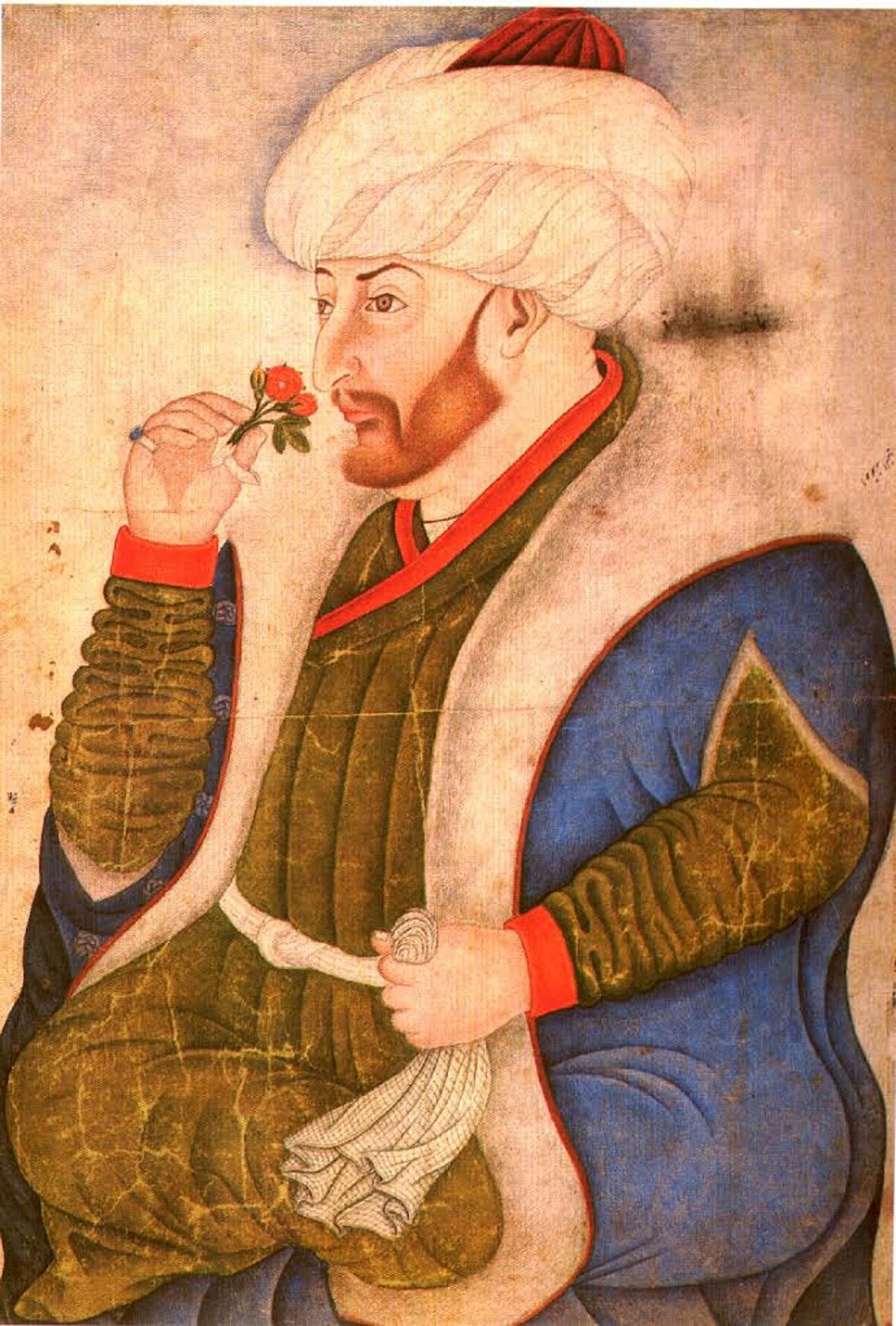
Portrait of Mehmed II Smelling a Rose
Attributed to Nakkaş Sinan Beg · c. 1480-81
 Artifact
Primary source
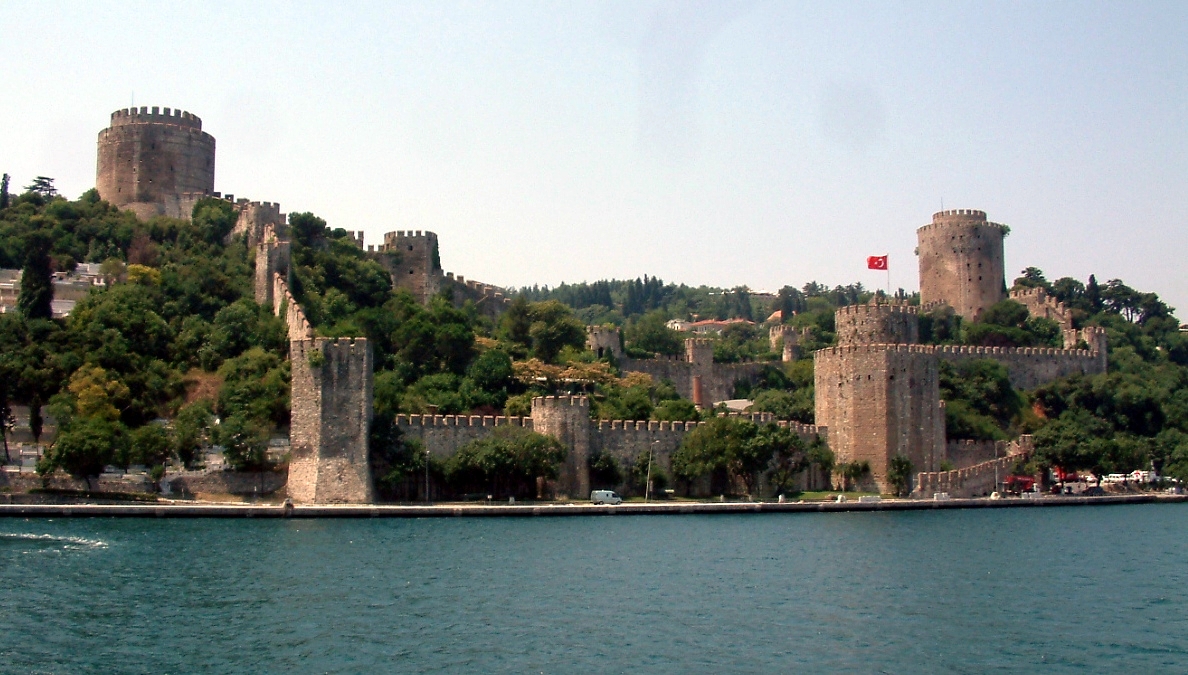
Rumeli Hisarı
1451-1452
 Artifact
Primary source
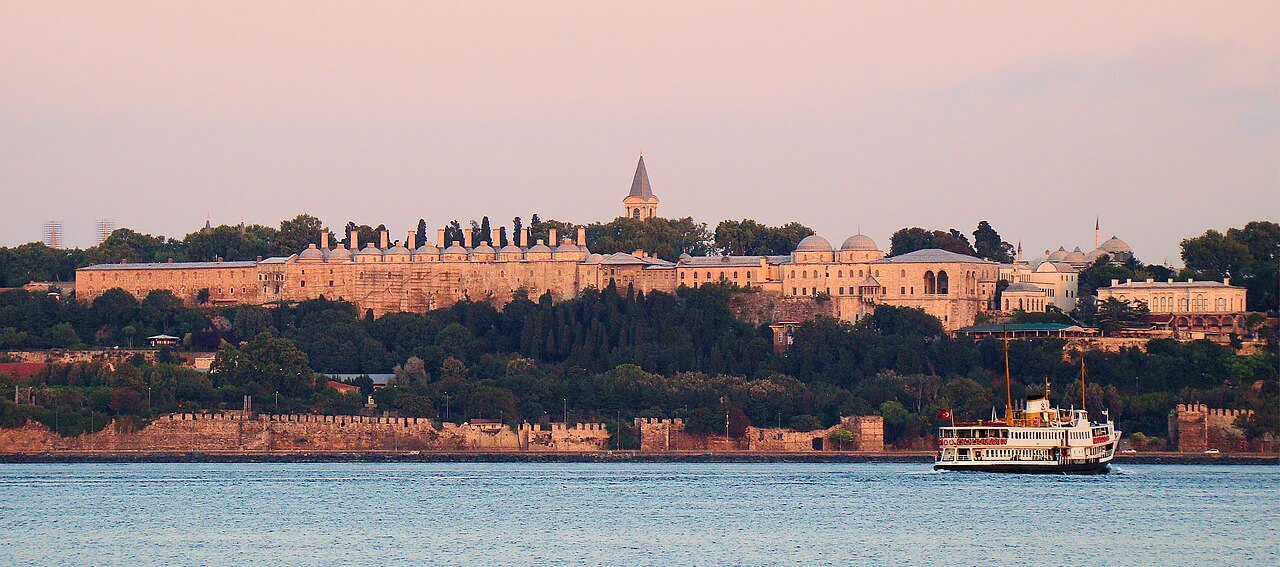
Topkapı Palace
from 1459
 Document
Primary source
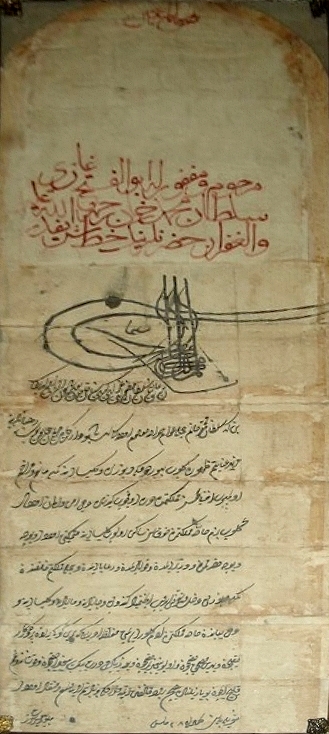
Ahdname of Fojnica
Mehmed II · 1463
Ready when you are
Start chatting with Mehmed II now.
20 messages free · No credit card · Available in 50+ languages.