


Secondary sourcePainting
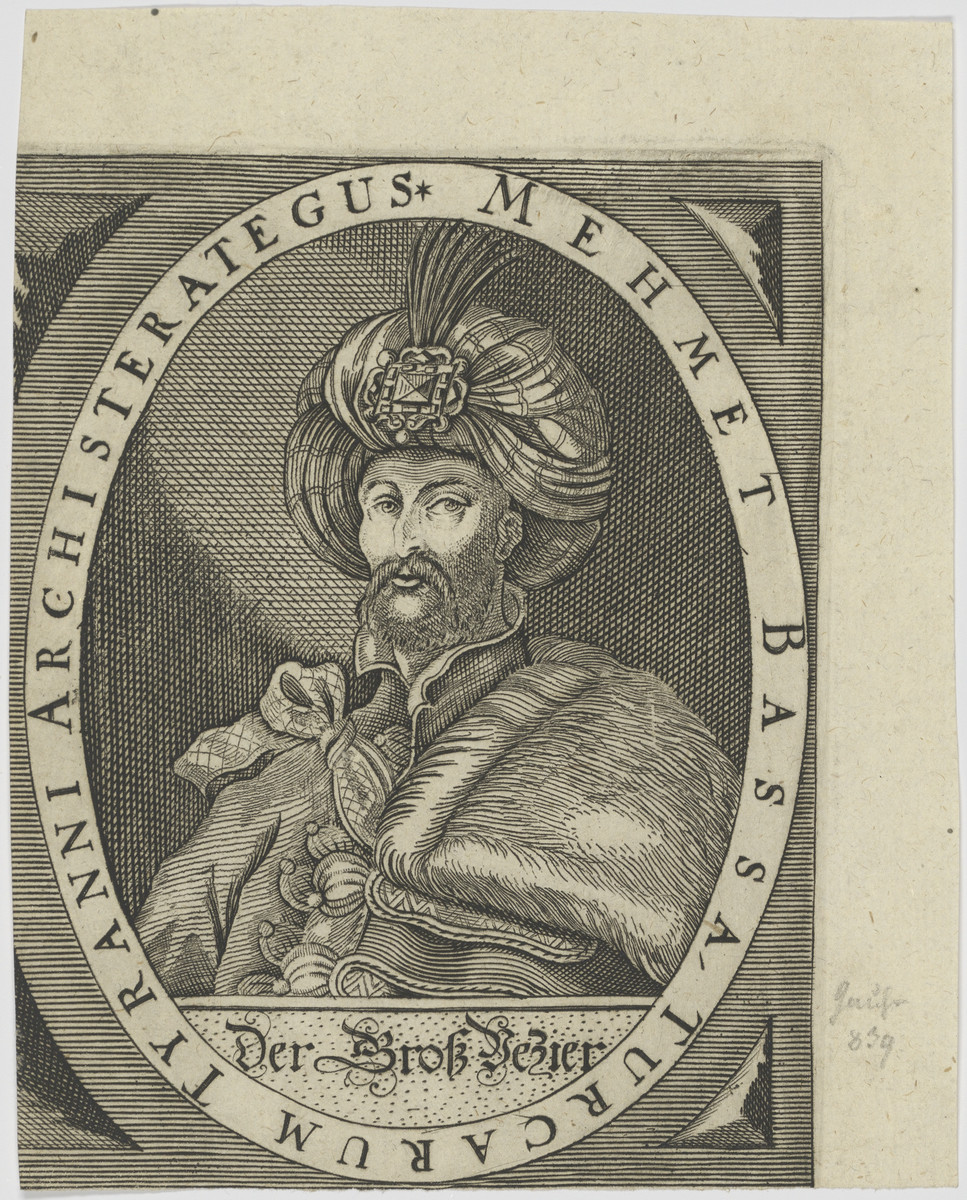
Portrait of Mehmet Bassa, Turcarum Tyranni
An early-modern European engraved portrait labelling Mehmed II as the 'Turkish tyrant,' held at Leipzig University Library.
A hostile European print labelling Mehmed II a 'tyrant,' showing how he was viewed by his enemies.
About this source
What it is
This is an engraved oval portrait print labelled 'Mehmet Bassa Turcarum Tyranni Archistrategus,' meaning something like 'Mehmet, tyrant and commander of the Turks.' A label below reads 'Der Groß Vezier' (The Grand Vizier). It is held by Leipzig University Library and was made long after Mehmed II's lifetime.
The print shows a bearded man in a tall feathered turban with a jeweled clasp, wearing a fur-trimmed robe.
Why it matters
This image was made by Europeans, not Ottomans, and the Latin label calling him a 'tyrant' shows the hostile way many Christian Europeans viewed Mehmed II after his conquests. It is a useful example of how enemies portrayed a powerful ruler, mixing fact with fear and propaganda.
Look closer
- What does the word 'Tyranni' in the inscription tell you about the attitude of whoever made this print?
- Does the clothing and turban look historically accurate, or more like a European idea of a 'Turk'?
- Why might this portrait mislabel him as 'Grand Vizier' rather than sultan?
This painting is part of the curated material that grounds the AI version of Mehmed II on Humy.ai — when students ask about related events, the AI can quote it and cite it.
More Mehmed II sources
Meet the AI Mehmed II →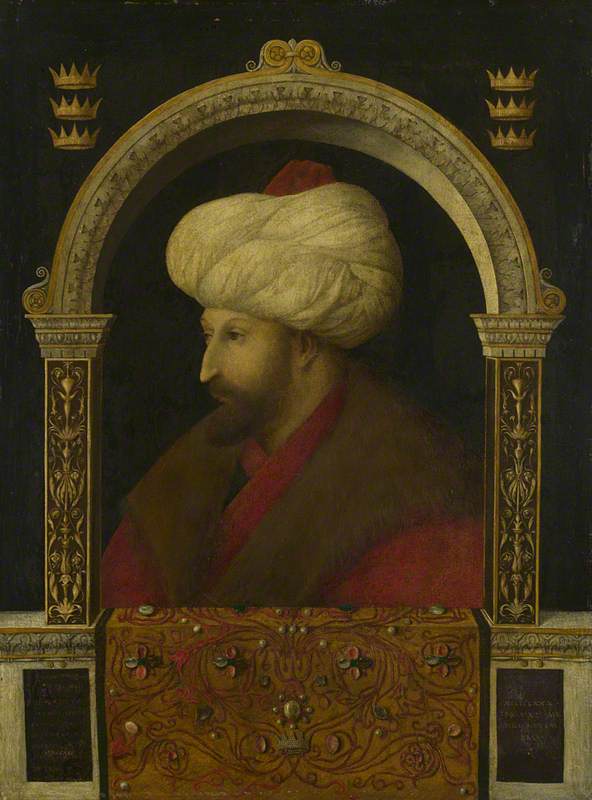 Painting
Primary source
The Sultan Mehmet II
Gentile Bellini · 1480
 Painting
Primary source
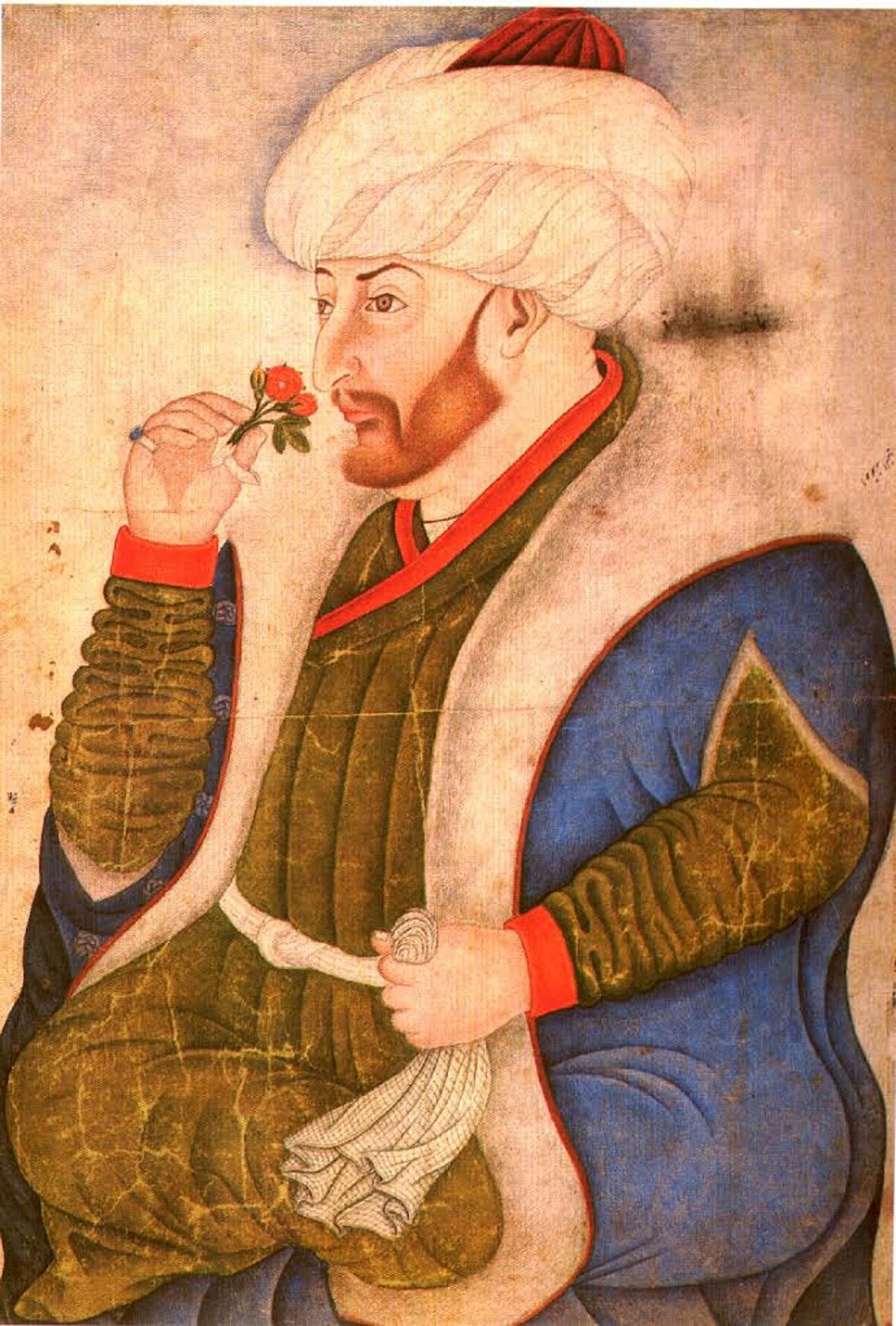
Portrait of Mehmed II Smelling a Rose
Attributed to Nakkaş Sinan Beg · c. 1480-81
 Artifact
Primary source
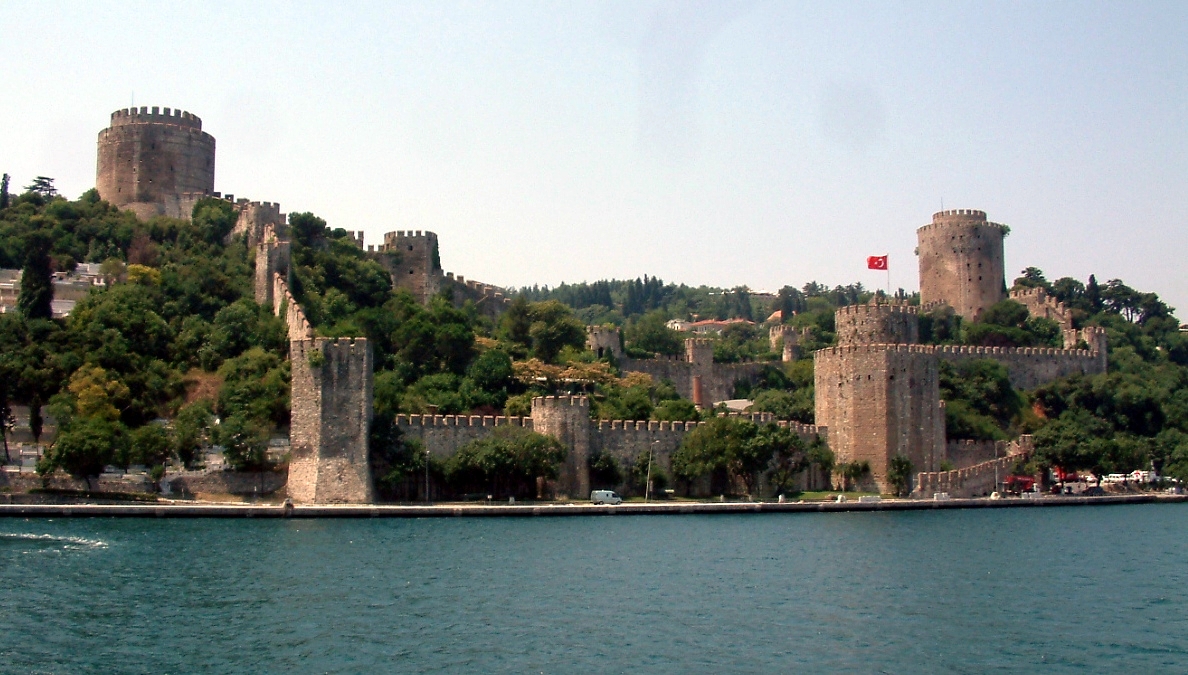
Rumeli Hisarı
1451-1452
 Artifact
Primary source
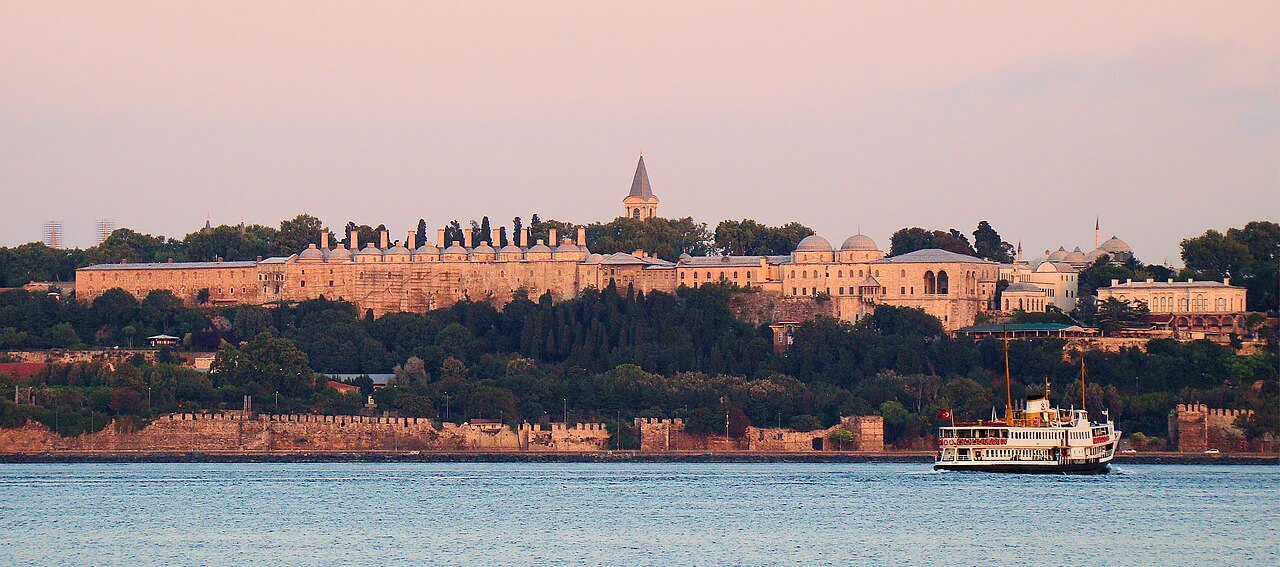
Topkapı Palace
from 1459
 Document
Primary source
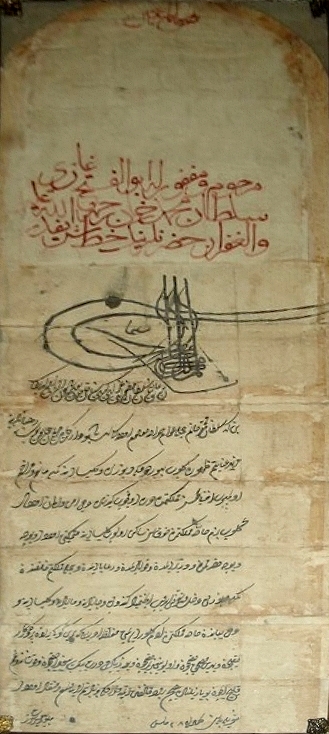
Ahdname of Fojnica
Mehmed II · 1463
Ready when you are
Start chatting with Mehmed II now.
20 messages free · No credit card · Available in 50+ languages.