


Secondary sourcePaintingEdo period
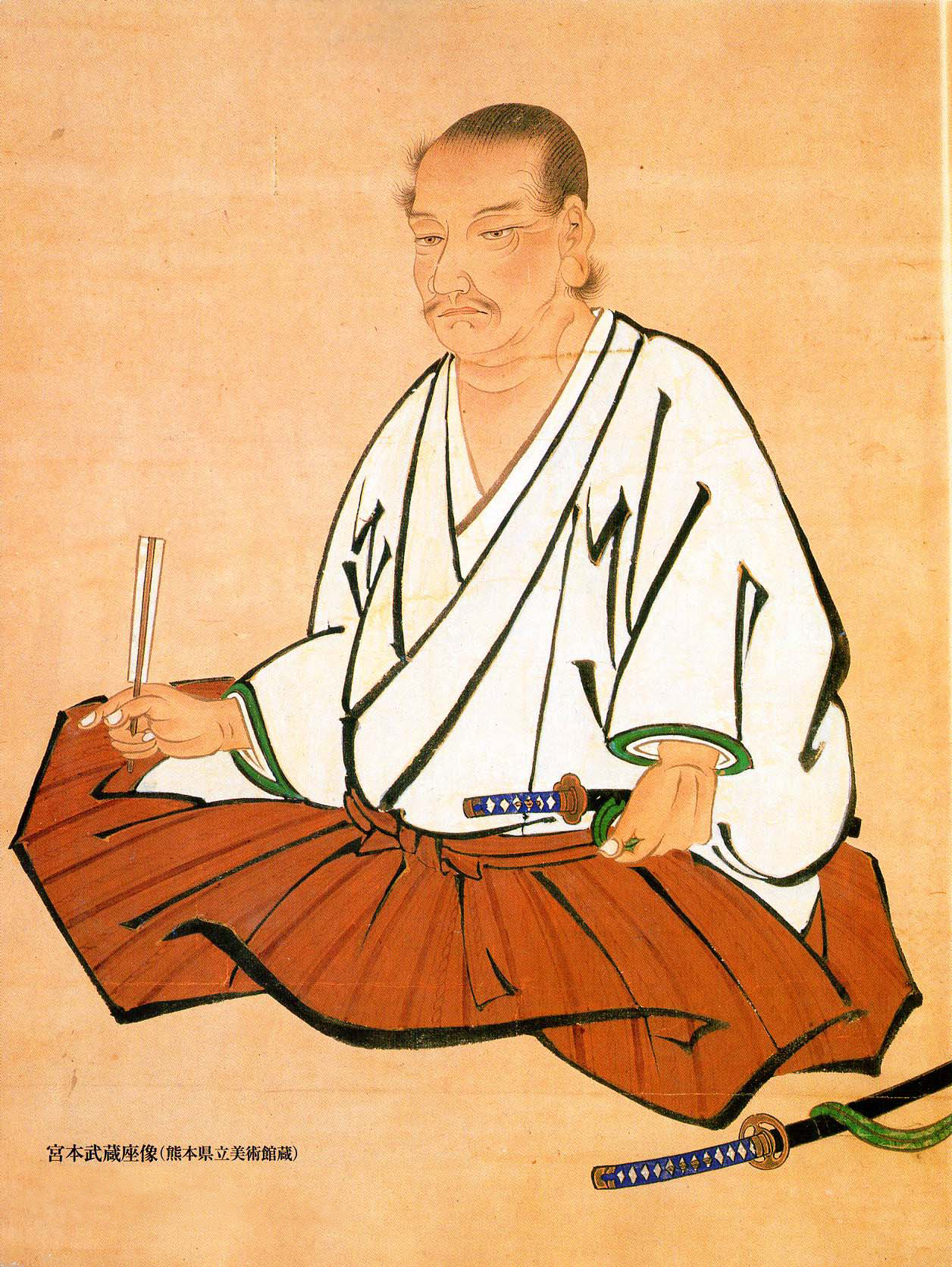
Portrait of Miyamoto Musashi
Edo period
An Edo-period painted portrait of Musashi seated with two swords, the classic image that shaped how he is remembered.
The classic painted likeness of Musashi, showing his two-sword style and shaping his later image.
About this source
What it is
This painting from the Edo period shows Miyamoto Musashi seated, holding chopsticks in one hand while a sword hilt rests in the other, with a katana laid across his lap. It is held by the Kumamoto Prefectural Museum of Art, and a caption on the portrait describes his fierce personality and unusual appearance.
Why it matters
This is the standard likeness through which generations have pictured Musashi, including his famous two-sword fighting style. Painted after his lifetime, it reflects how later Edo-period society imagined and remembered the swordsman rather than a direct record from life.
Look closer
- What does the painter choose to show us about Musashi's character through his pose and objects?
- Why might swords be included even in a quiet, seated scene?
- Since this was likely painted after Musashi's death, how reliable is it as evidence of his real appearance?
This painting is part of the curated material that grounds the AI version of Musashi Miyamoto on Humy.ai — when students ask about related events, the AI can quote it and cite it.
More Musashi Miyamoto sources
Meet the AI Musashi Miyamoto →

Ready when you are
Start chatting with Musashi Miyamoto now.
20 messages free · No credit card · Available in 50+ languages.