


Secondary sourcePainting18th century
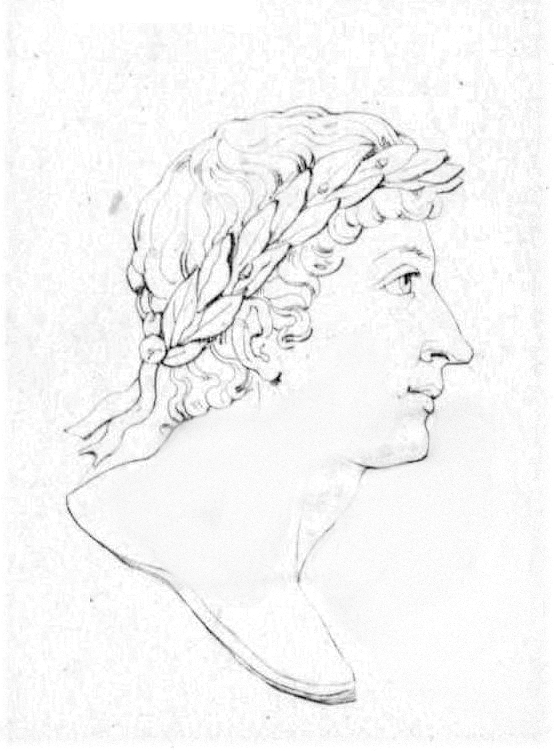
Portrait of Ovid, 18th-century print
18th century
A black-and-white 18th-century print showing Ovid in profile with a laurel wreath. It was made long after his death and shows how later ages imagined him.
A later print imagining Ovid's appearance, showing how he was remembered as a poet long after his lifetime.
About this source
What it is
This is a black-and-white line print of Ovid (Ovidius Naso), the Roman poet, shown in right-facing profile. He has curly hair and a laurel wreath tied with a ribbon at the back. His neck and shoulders are bare, set against a pale background. The record dates the print to the 18th century, and its creator is unknown.
Why it matters
Ovid lived from 43 BCE to 17 or 18 CE. This portrait was made about seventeen centuries after his death, so it shows how people in a later age pictured a famous Roman poet. The laurel wreath marks him as a poet. Printmakers in the 1700s often gave classical writers such symbols to present them as honoured ancient authors.
Look closer
- Which details, such as the wreath, hair and profile, show that the artist wanted Ovid to look like a poet?
- Who would have bought or looked at a print like this, and why?
- What does this portrait leave out about Ovid's life, such as his exile?
This painting is part of the curated material that grounds the AI version of Ovid on Humy.ai — when students ask about related events, the AI can quote it and cite it.
Ready when you are
Start chatting with Ovid now.
20 messages free · No credit card · Available in 50+ languages.