


Secondary sourceSculpture1st century AD
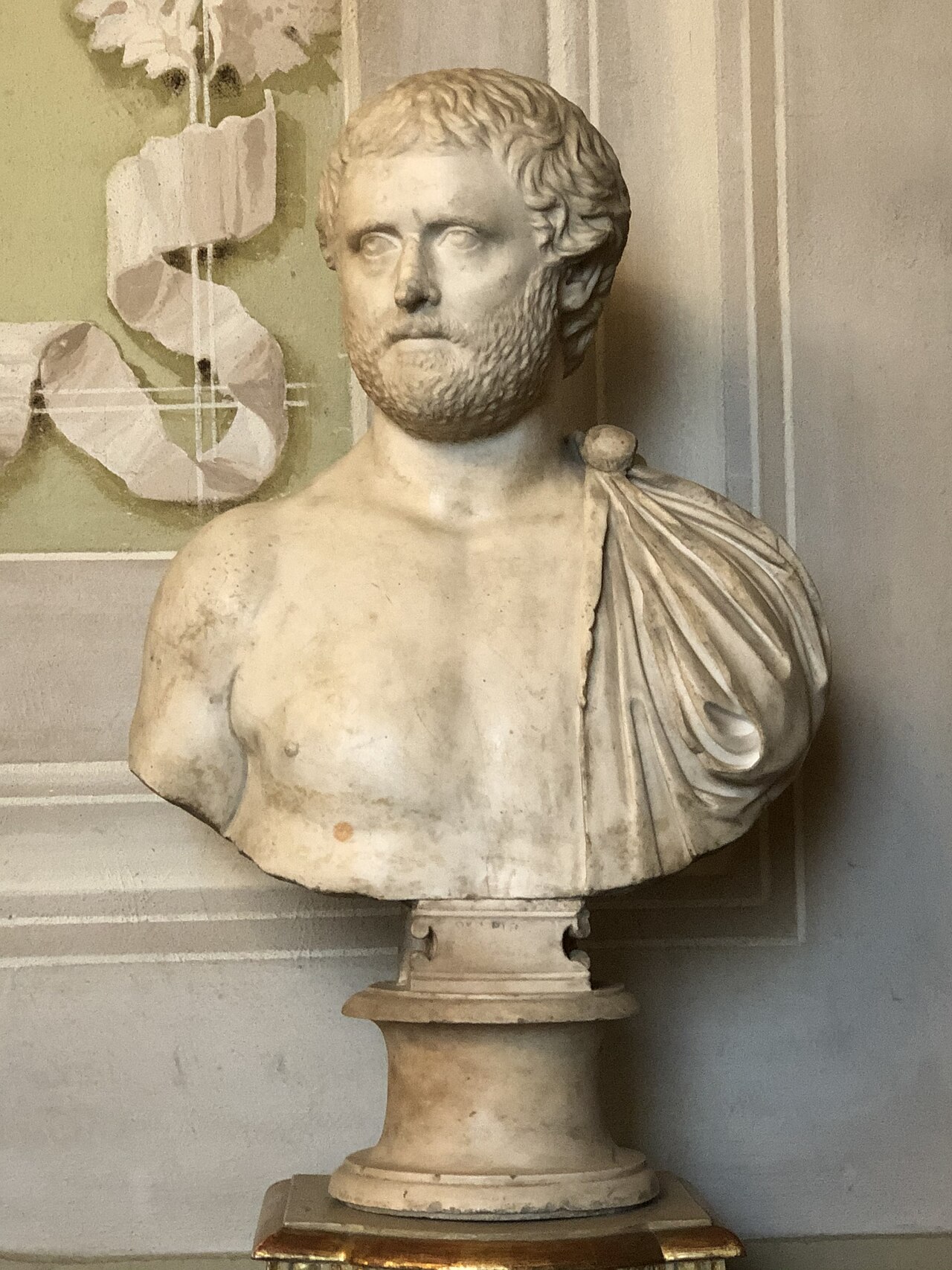
Portrait of Ovid
1st century AD
A marble bust traditionally identified as Ovid, commonly used as his likeness though no confirmed lifetime portrait survives.
The bust conventionally used to represent Ovid's face, though its identification is uncertain.
About this source
What it is
This marble bust, dated to the 1st century AD and held at the Uffizi Gallery in Florence, shows a bearded man with short curly hair and a draped garment over one shoulder. It is conventionally called a portrait of Ovid, though the identification is not certain.
Why it matters
No confirmed portrait of Ovid made during his lifetime survives. This bust is widely used as his image anyway, which makes it a useful case study in how historians and museums sometimes attach names to ancient artworks without full proof.
Look closer
- What details in the bust might have led someone to call it 'Ovid'?
- Why do you think museums display objects like this with a name attached, even when uncertain?
- How might our idea of Ovid's appearance change if this identification turned out to be wrong?
This sculpture is part of the curated material that grounds the AI version of Ovid on Humy.ai — when students ask about related events, the AI can quote it and cite it.

Ready when you are
Start chatting with Ovid now.
20 messages free · No credit card · Available in 50+ languages.