


Secondary sourcePainting1572 (date inscribed on the print)
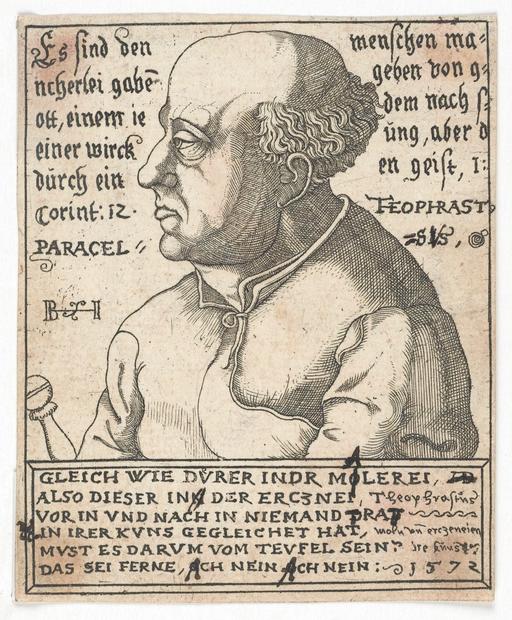
Portrait of Paracelsus captioned alchemist, physician and astrologer
Augustin Hirschvogel · 1572 (date inscribed on the print)
An engraved profile portrait of Paracelsus with German verse and a date of 1572, attributed to Augustin Hirschvogel's design. It is a later print with a reference-style caption.
A later print that presents Paracelsus as alchemist, physician and astrologer, showing how his reputation was summarised for readers.
About this source
What it is
This is an engraved print in profile, facing left, showing a bald older man with curly hair above the ears and a wrinkled face. He wears a loose collar with a cord and holds a small object near the bottom left. German verse surrounds him at the top, and a boxed inscription of verses carries the date 1572. The print is credited to Augustin Hirschvogel, and its caption describes Paracelsus as alchemist, physician and astrologer. The print is held by the Wellcome Collection.
Why it matters
Paracelsus lived from about 1493 to 1541, so the 1572 date on this print falls several decades after his death. The curator notes that it is probably based on Hirschvogel's design, which means the image reflects how the figure was remembered rather than a record made from life. The caption's three labels show that his reputation in later centuries rested on alchemy, medicine and astrology. Students can compare these labels with his own writings to see which parts of his life later readers chose to emphasise.
Look closer
- Why do you think the print uses verses and a caption that name three different roles for Paracelsus?
- What does the small object in his hand suggest about his work, and what could it mean to a viewer?
- Who might have commissioned or bought a print like this in 1572, and what would they have wanted to show?
This painting is part of the curated material that grounds the AI version of Paracelsus on Humy.ai — when students ask about related events, the AI can quote it and cite it.
More Paracelsus sources
Browse all 93 →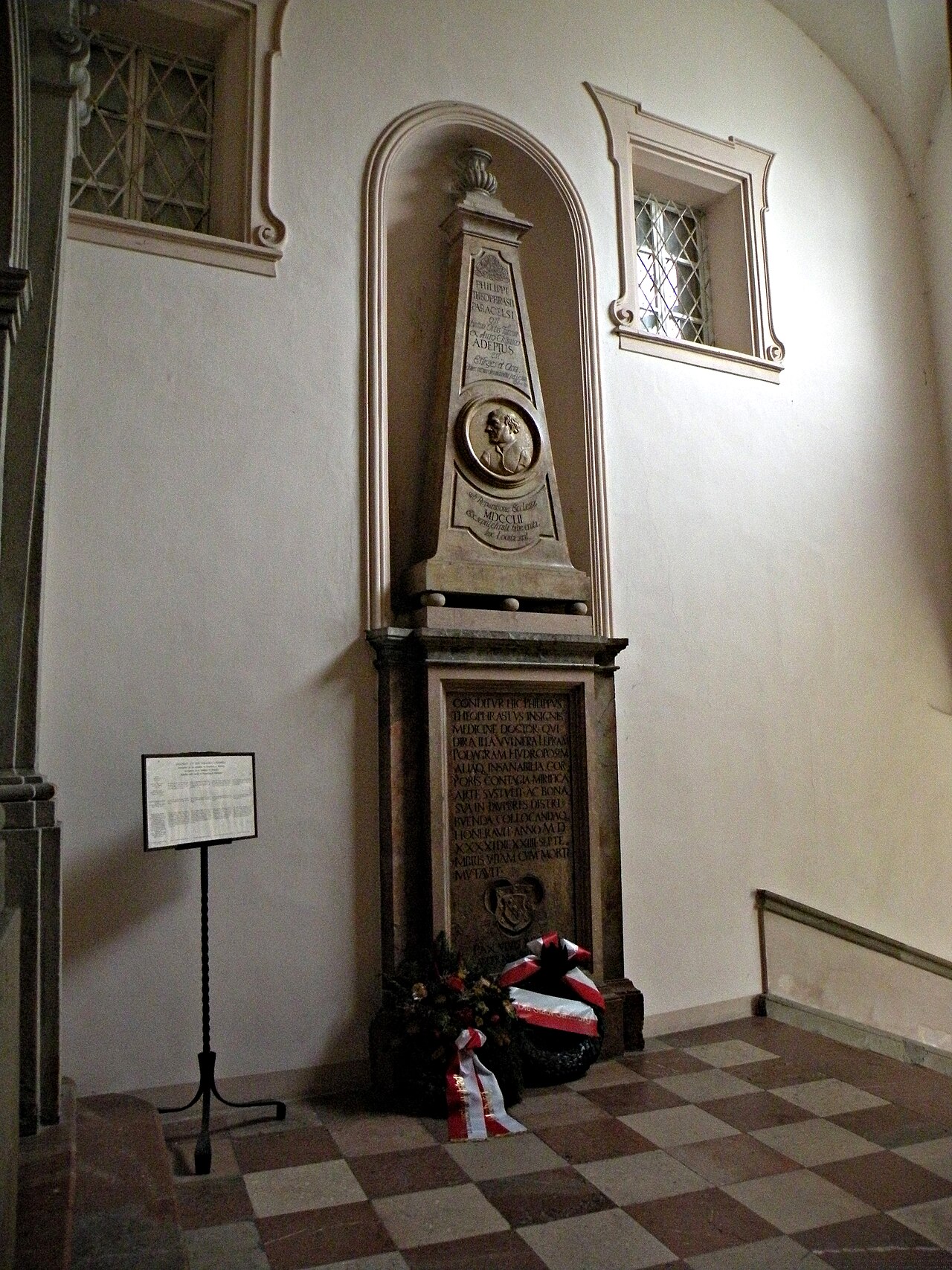 Artifact
Secondary source
Grave of Paracelsus
 Book
Secondary source
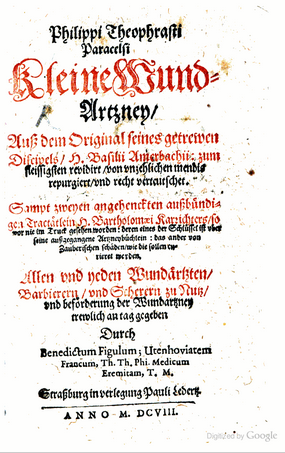
Kleine Wundarzney
Benedictus Figulus (editor), Paracelsus · 1608
 Painting
Secondary source
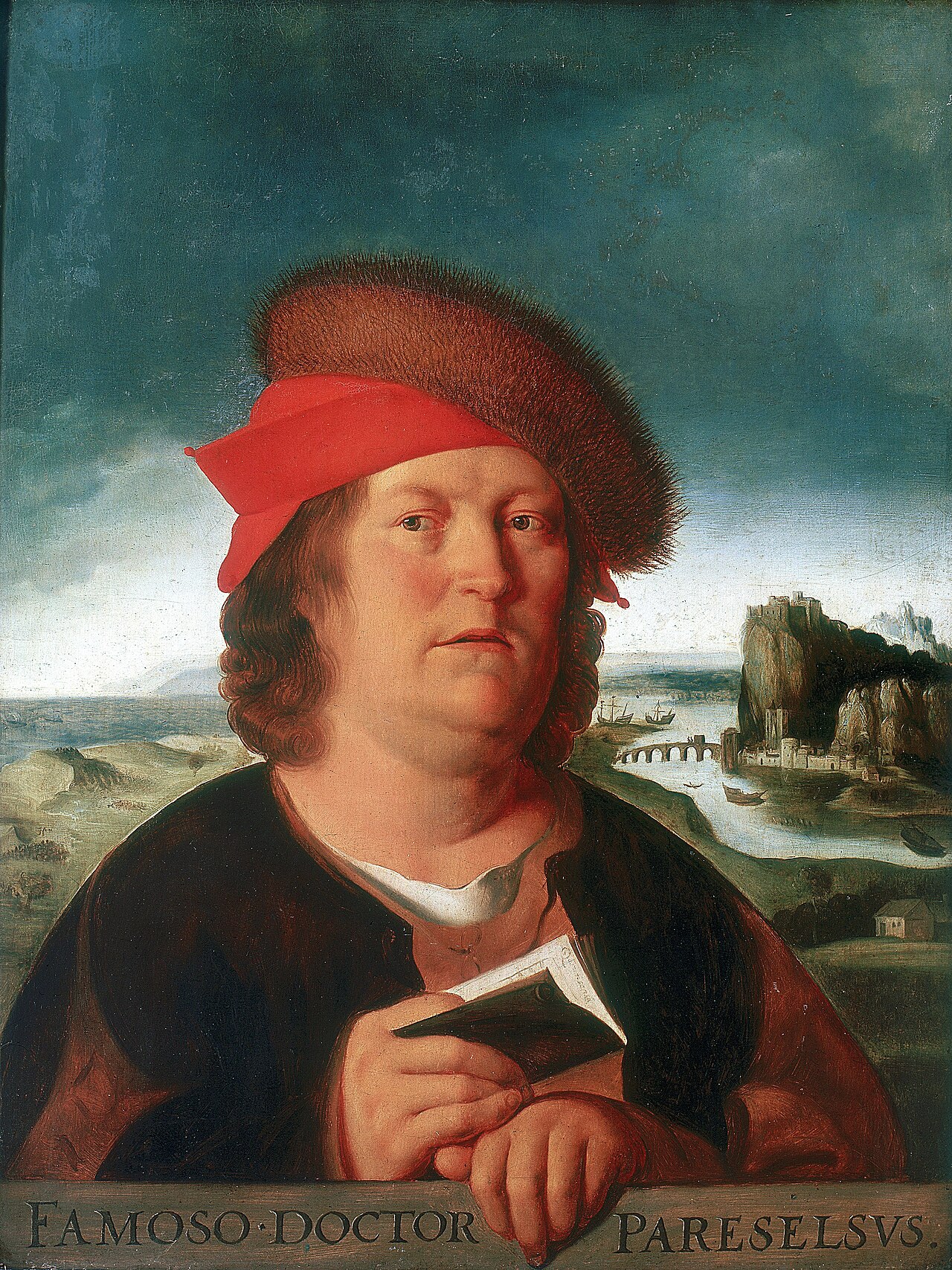
Portrait of een man voor een landschap, zogenaamd de arts Paracelsus
1650
 Painting
Secondary source
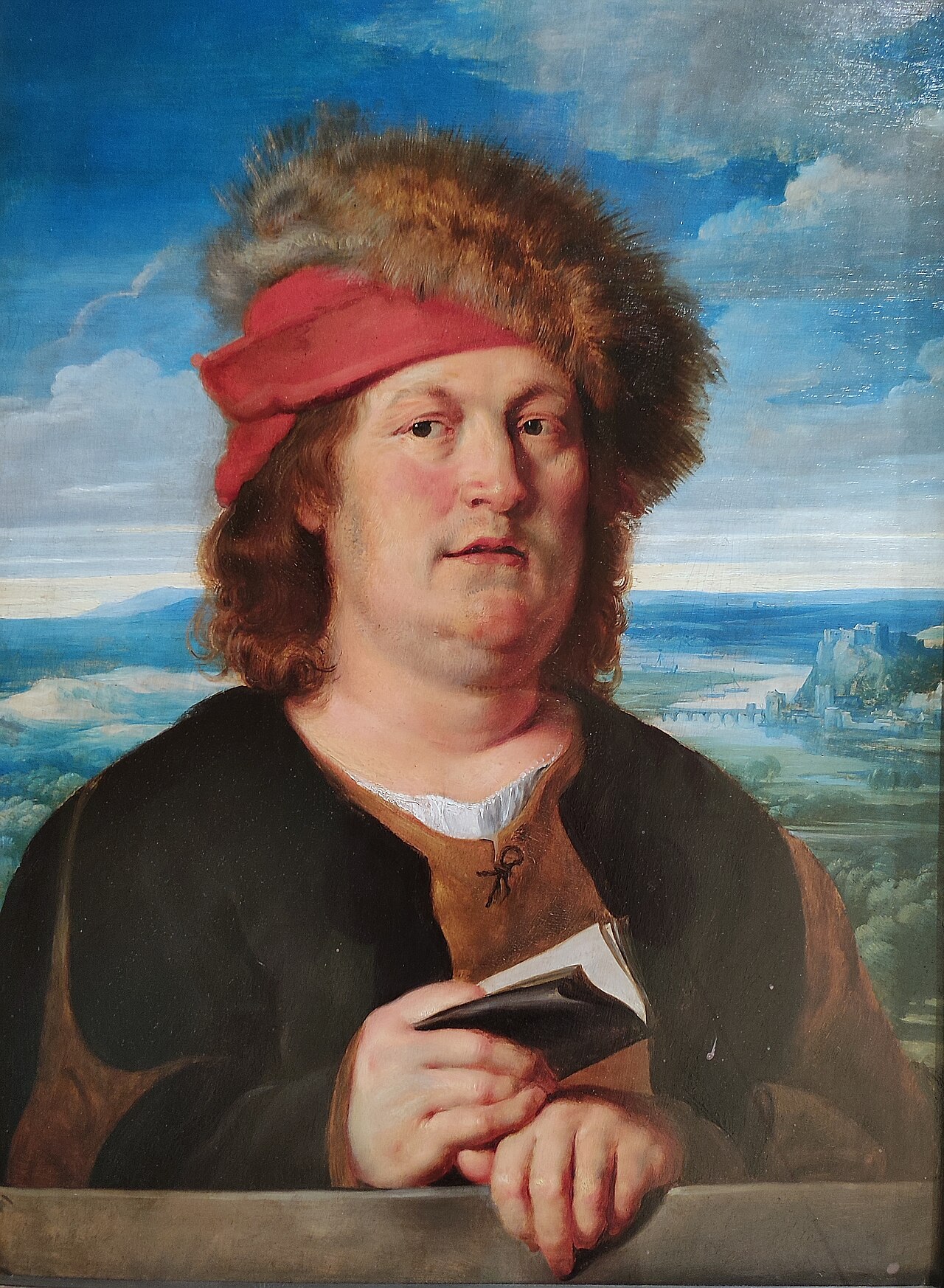
Portrait of Paracelsus
Peter Paul Rubens · 1625
Free account
Read every Paracelsus source
Sign up free →
Ready when you are
Start chatting with Paracelsus now.
20 messages free · No credit card · Available in 50+ languages.