


Secondary sourcePainting
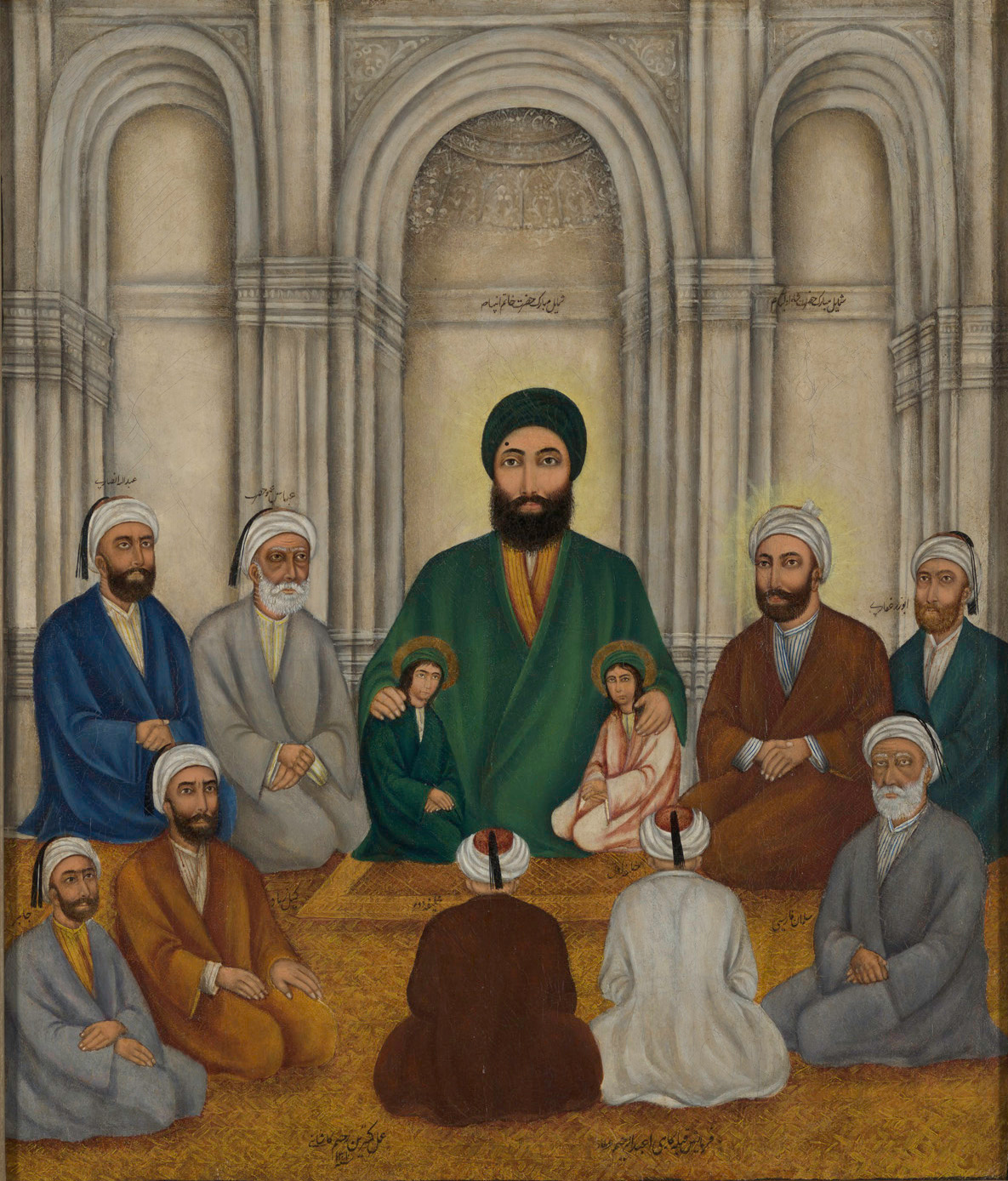
Portrait of Prophet Muhammad, Imam Ali and His Sons and Closest Companions
Rahim Kashani
A Qajar-era Iranian group painting showing Muhammad with his family and companions, including Abu Bakr among the gathered men.
Shows Abu Bakr grouped among the Prophet's companions in later Iranian devotional art.
About this source
What it is
This is a painting from the Qajar period in Iran, now held at the Metropolitan Museum. It shows a seated group in an arched hall: a central haloed figure in green, two haloed children beside him, and men in colored robes and white turbans around them, with Arabic inscriptions on the walls and floor.
Why it matters
The painting reflects how later Iranian artists imagined the Prophet Muhammad surrounded by his family and companions. Abu Bakr, one of the Prophet's closest companions and later the first caliph, is placed among this gathered group, showing how he was remembered in devotional art centuries after his life.
Look closer
- Who is given a halo, and what might that signal about their importance?
- How does the artist use color and position to show relationships between figures?
- What does this image tell us about how later generations pictured early Islamic history?
This painting is part of the curated material that grounds the AI version of Abu Bakr, Caliph Umar ibn al-Khattab and Hasan ibn Ali on Humy.ai — when students ask about related events, the AI can quote it and cite it.
More Abu Bakr sources
Browse all 66 →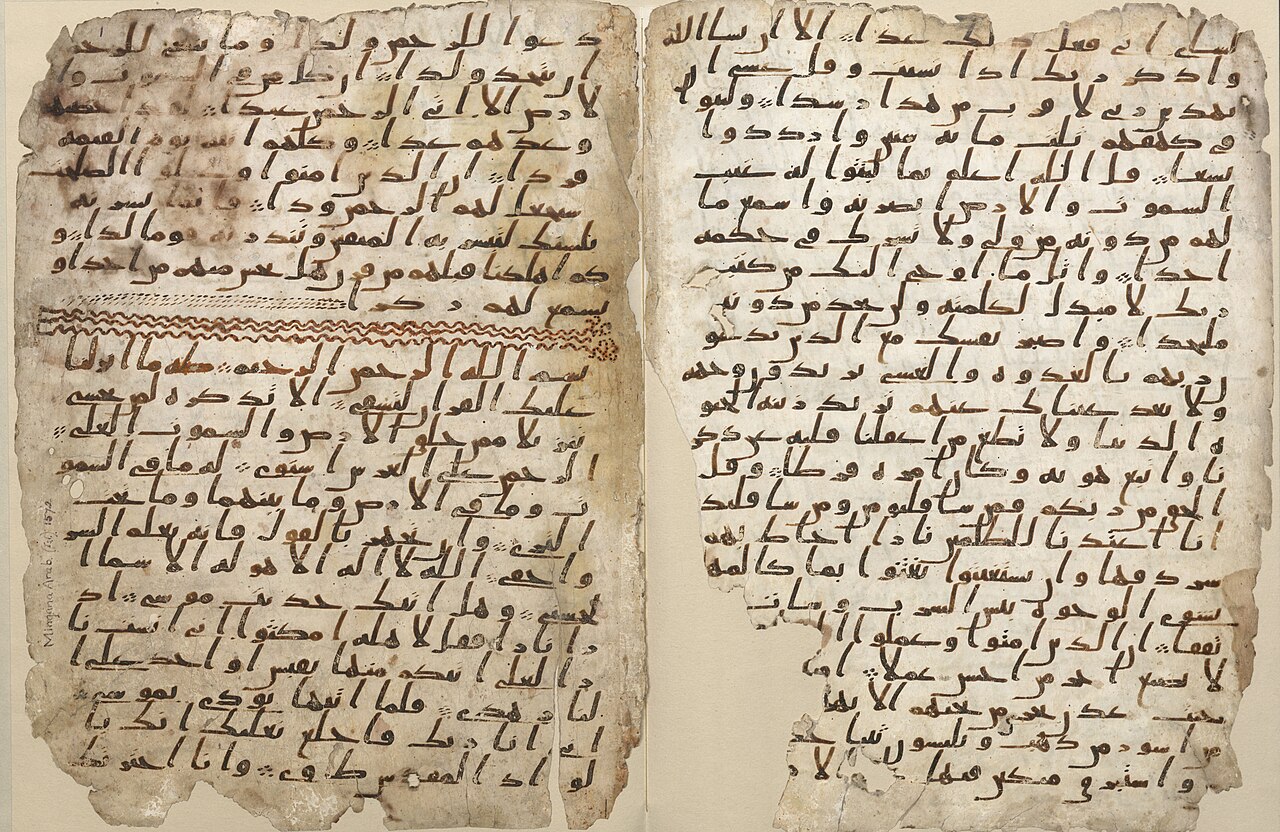 Document
Primary source
Birmingham Quran Manuscript
568–645 CE
 Book
Secondary source
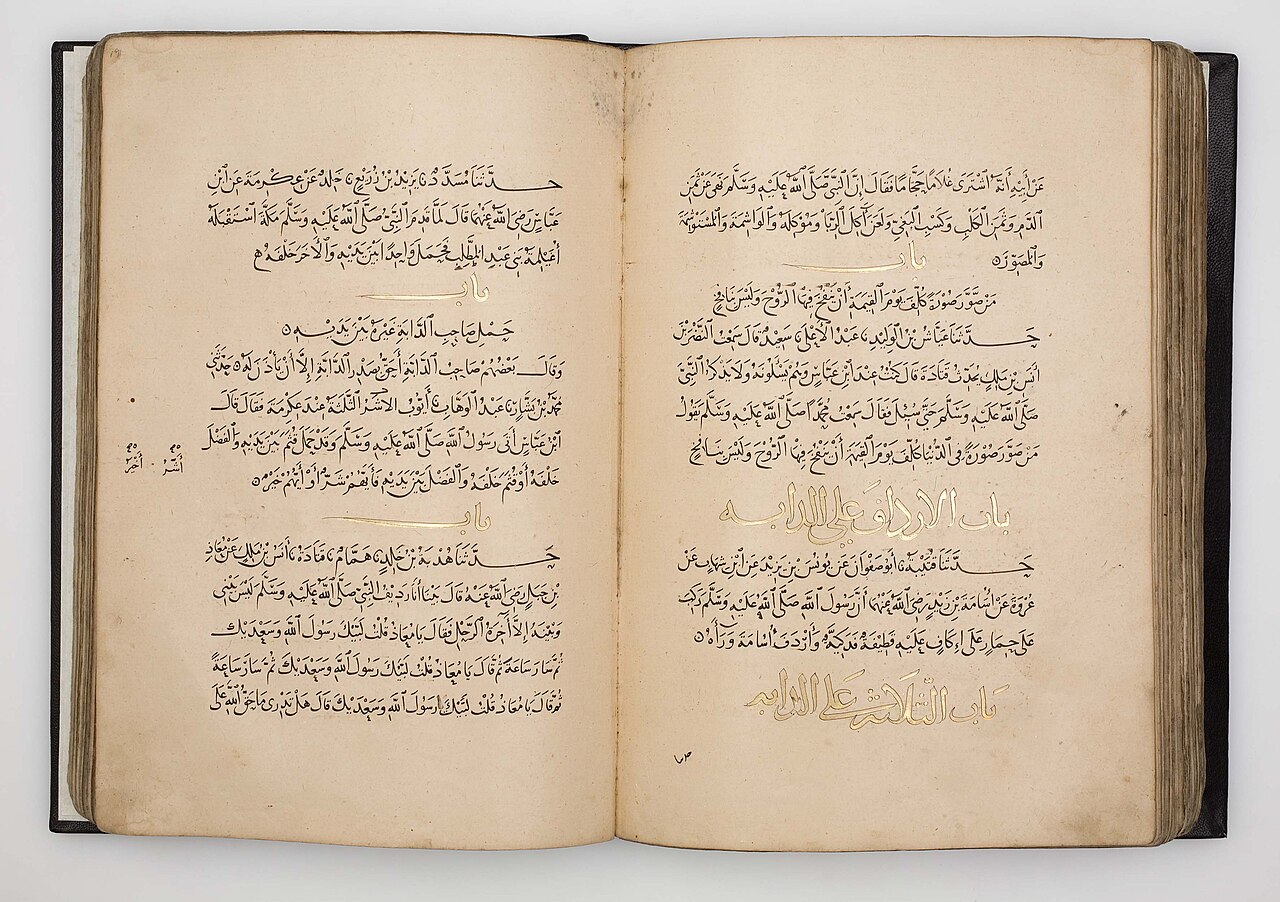
Sahih al-Bukhari
Muhammad ibn Isma'il al-Bukhari · c. 846 CE
 Book
Primary source
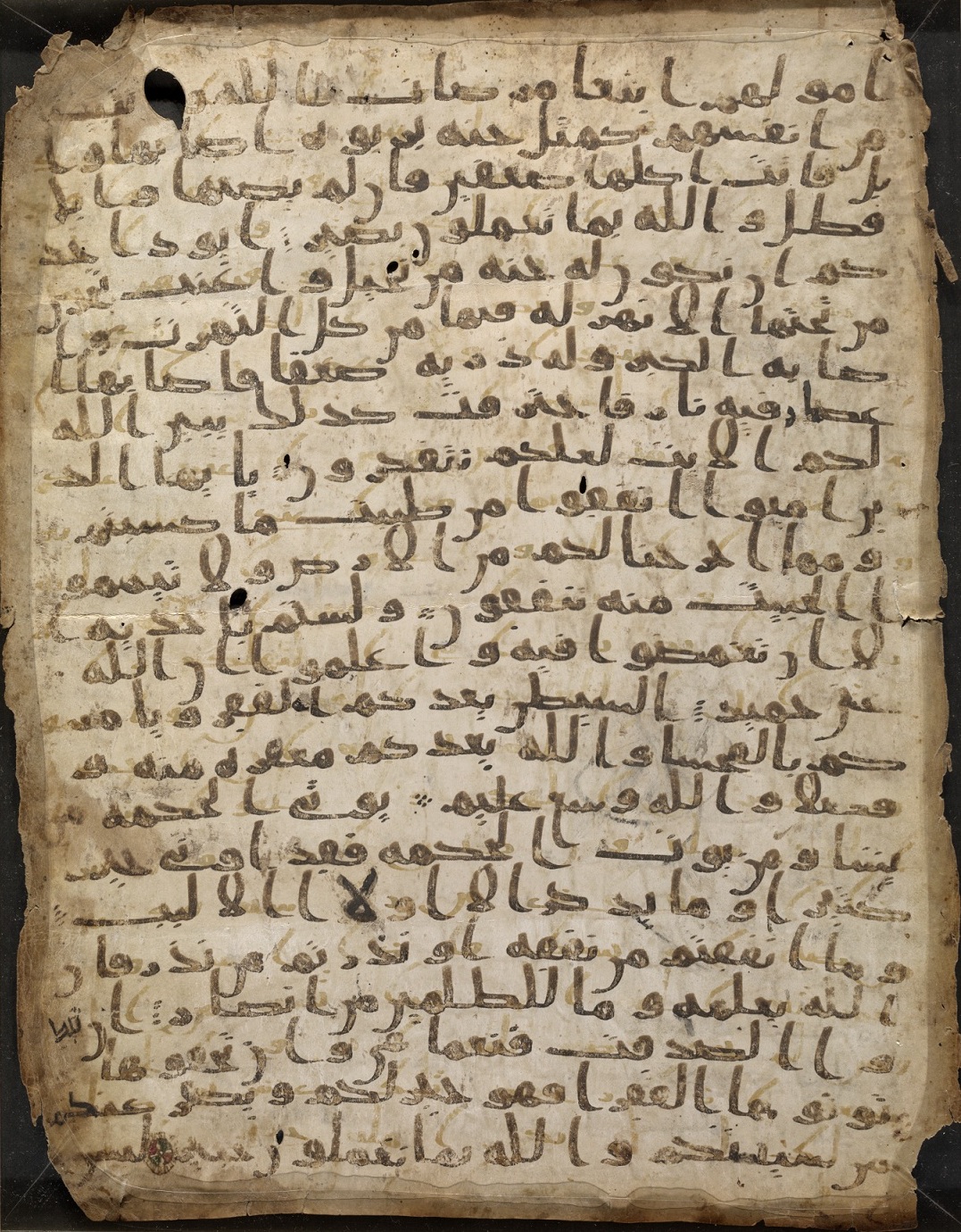
Sana'a Manuscript
c. 650 CE
 Book
Secondary source
Futuh al-Buldan
Al-Baladhuri · 9th century
Free account
Read every Abu Bakr source
Sign up free →
Ready when you are
Start chatting with Abu Bakr now.
20 messages free · No credit card · Available in 50+ languages.