


Secondary sourceSculpture
Portrait of Rollo
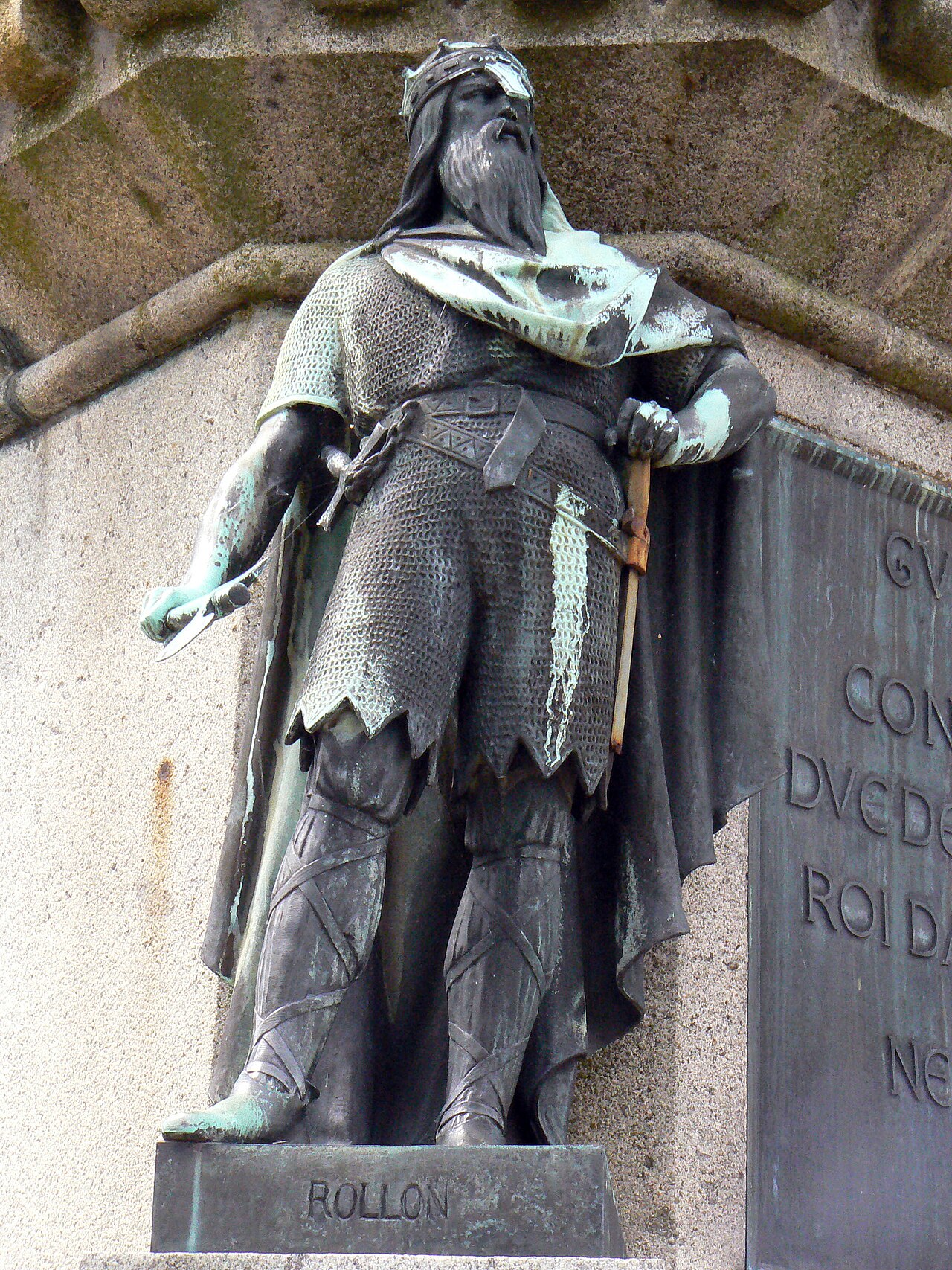
A 19th-century bronze statue of Rollo at Falaise, showing how Normandy later honoured him as its founding duke.
This statue of Rollo among the dukes of Normandy at Falaise shows how later Normandy commemorated him as its founder.
About this source
What it is
This bronze statue depicts Rollo as a bearded, crowned warrior in chain mail, holding a sword, set in a stone niche at Falaise, Normandy. It is part of a monument showing William the Conqueror and the six dukes of Normandy who came before him.
Why it matters
Rollo is remembered here not as a Viking raider but as the first duke of Normandy, founder of a line that led to William the Conqueror. The 19th-century statue reveals how Normandy later chose to commemorate its origins, turning a Viking leader into a dignified, crowned ruler.
Look closer
- How does the statue's crown and armour shape the way we imagine Rollo, compared to a Viking raider?
- Why might 19th-century Normandy want to celebrate its Viking founder in this way?
- What does placing Rollo alongside later dukes suggest about how history connects rulers across centuries?
This sculpture is part of the curated material that grounds the AI version of Rollo on Humy.ai — when students ask about related events, the AI can quote it and cite it.
More Rollo sources
Browse all 41 →

Ready when you are
Start chatting with Rollo now.
20 messages free · No credit card · Available in 50+ languages.