


Secondary sourceSculpture
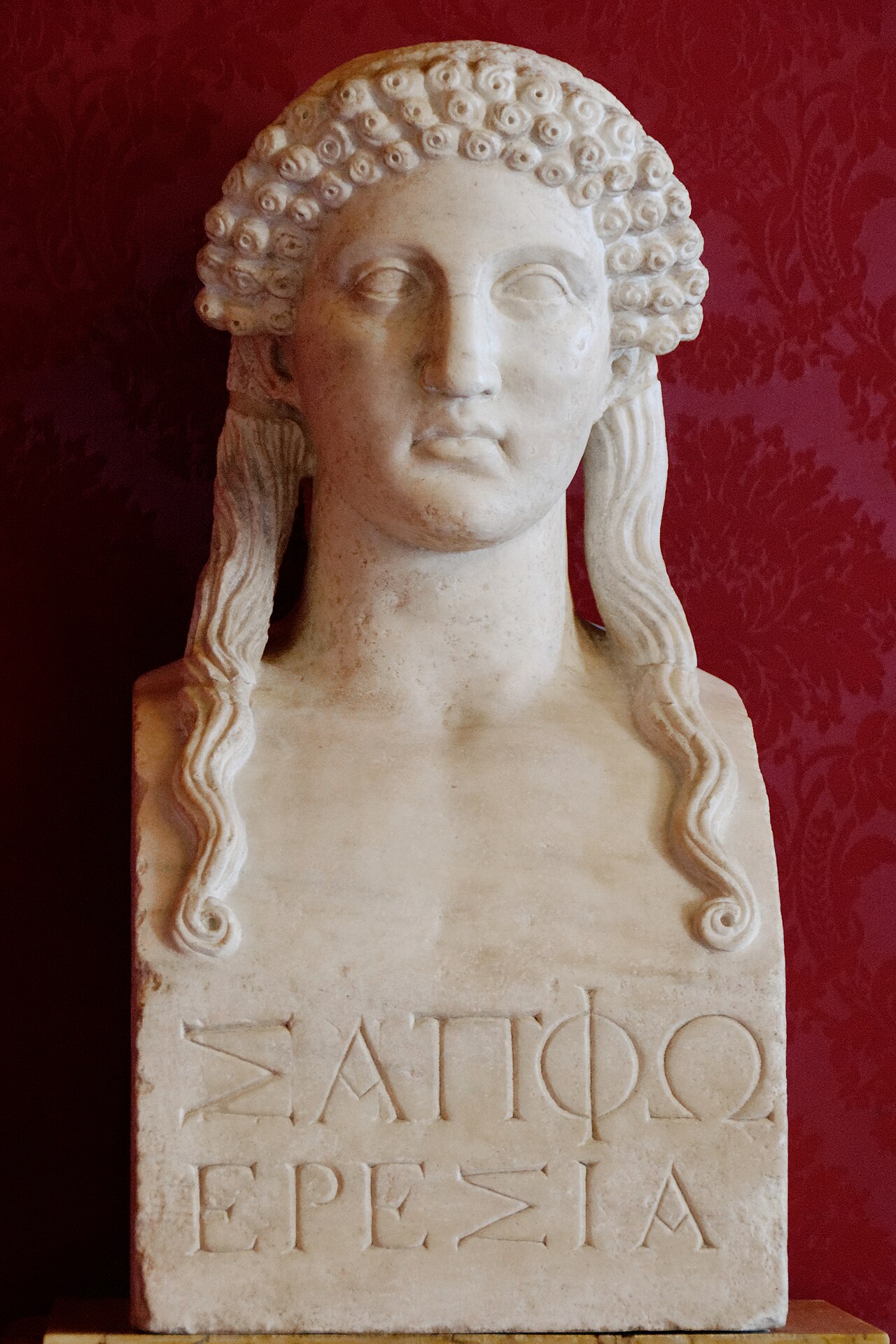
Portrait of Sappho
A Roman marble bust inscribed with Sappho's name, showing how later antiquity imagined her appearance, since no portrait made during her life survives.
A later imagined likeness of Sappho, inscribed with her name, showing how antiquity pictured her.
About this source
What it is
This is a marble bust, now in the Capitoline Museums, inscribed in Greek letters with the words "Sappho of Eresia." It is a Roman copy of a Greek portrait type.
Why it matters
No image of Sappho made during her own lifetime in the 7th or 6th century BC survives. This bust shows how people living centuries later pictured her, as part of a tradition of portraying famous poets with idealised faces. It tells us more about how later Greeks and Romans wanted to remember Sappho than about what she actually looked like.
Look closer
- Why do you think this bust was carved centuries after Sappho lived?
- What does the inscription tell us that the sculpture alone could not?
- How might an imagined portrait shape the way people think about a historical figure?
This sculpture is part of the curated material that grounds the AI version of Sappho on Humy.ai — when students ask about related events, the AI can quote it and cite it.
More Sappho sources
Browse all 89 →



Ready when you are
Start chatting with Sappho now.
20 messages free · No credit card · Available in 50+ languages.