


Secondary sourcePainting
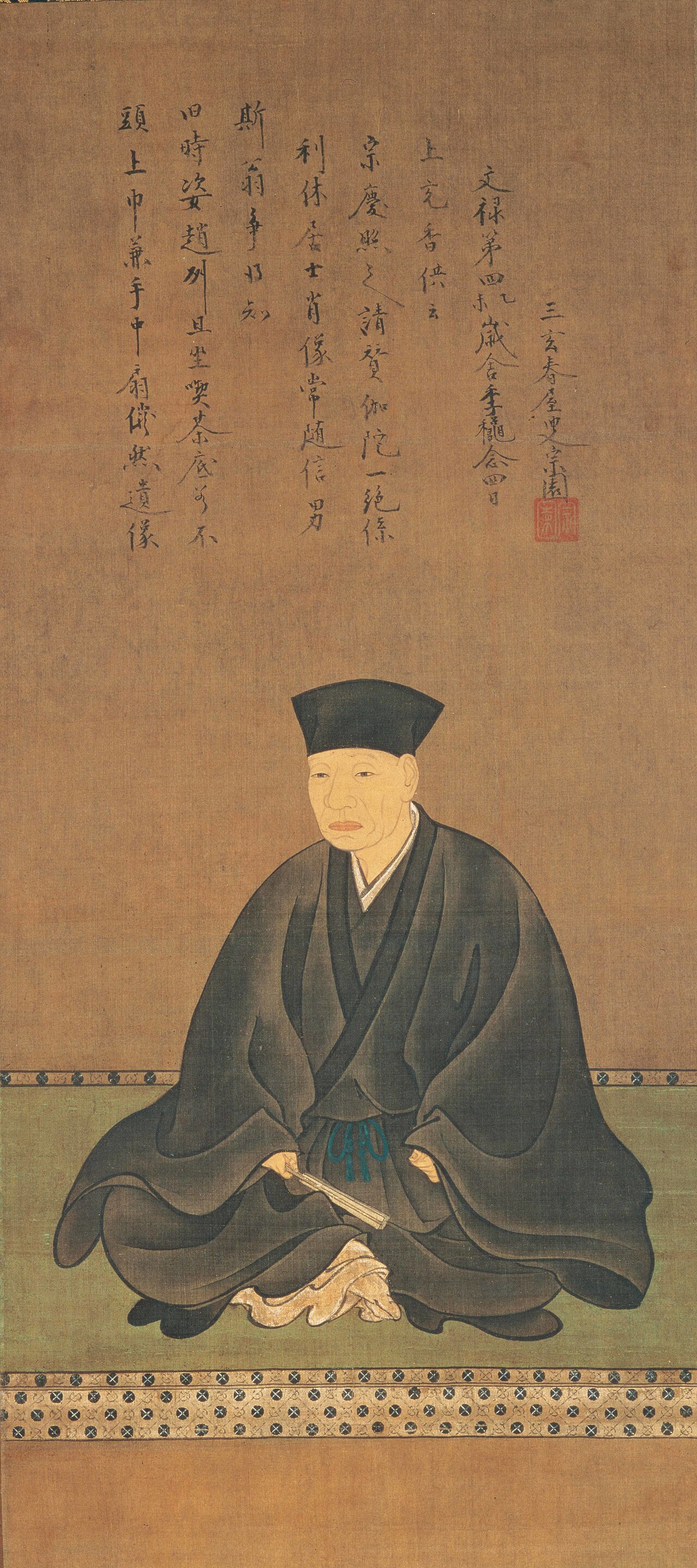
Portrait of Sen no Rikyū
Hasegawa Tōhaku (attributed)
A hanging scroll portrait of Sen no Rikyū in monk's robes, the standard early likeness of the tea master.
This portrait is the standard surviving likeness of Rikyū, shaping how he has been remembered.
About this source
What it is
This hanging scroll shows Sen no Rikyū seated in dark monk's robes holding a folding fan, with calligraphy above him. It is traditionally attributed to the circle of the painter Hasegawa Tōhaku, with calligraphy by the Zen monk Shunoku Sōen.
Why it matters
This portrait has become the standard image by which Rikyū is remembered, showing him as a lay Zen practitioner rather than a warrior or courtier. The combination of a painted likeness with Zen calligraphy reflects how tea masters of his time were closely tied to Zen Buddhist culture, and how later generations wanted to preserve his memory as a figure of discipline and simplicity.
Look closer
- What does the clothing and pose suggest about how Rikyū wanted to be seen, or how others wanted him remembered?
- Why might calligraphy by a Zen monk be added above the portrait?
- What can't a painted portrait tell us about a real person's life?
This painting is part of the curated material that grounds the AI version of Sen no Rikyū on Humy.ai — when students ask about related events, the AI can quote it and cite it.
More Sen no Rikyū sources
Browse all 27 →
Ready when you are
Start chatting with Sen no Rikyū now.
20 messages free · No credit card · Available in 50+ languages.