


Primary sourceSculpture
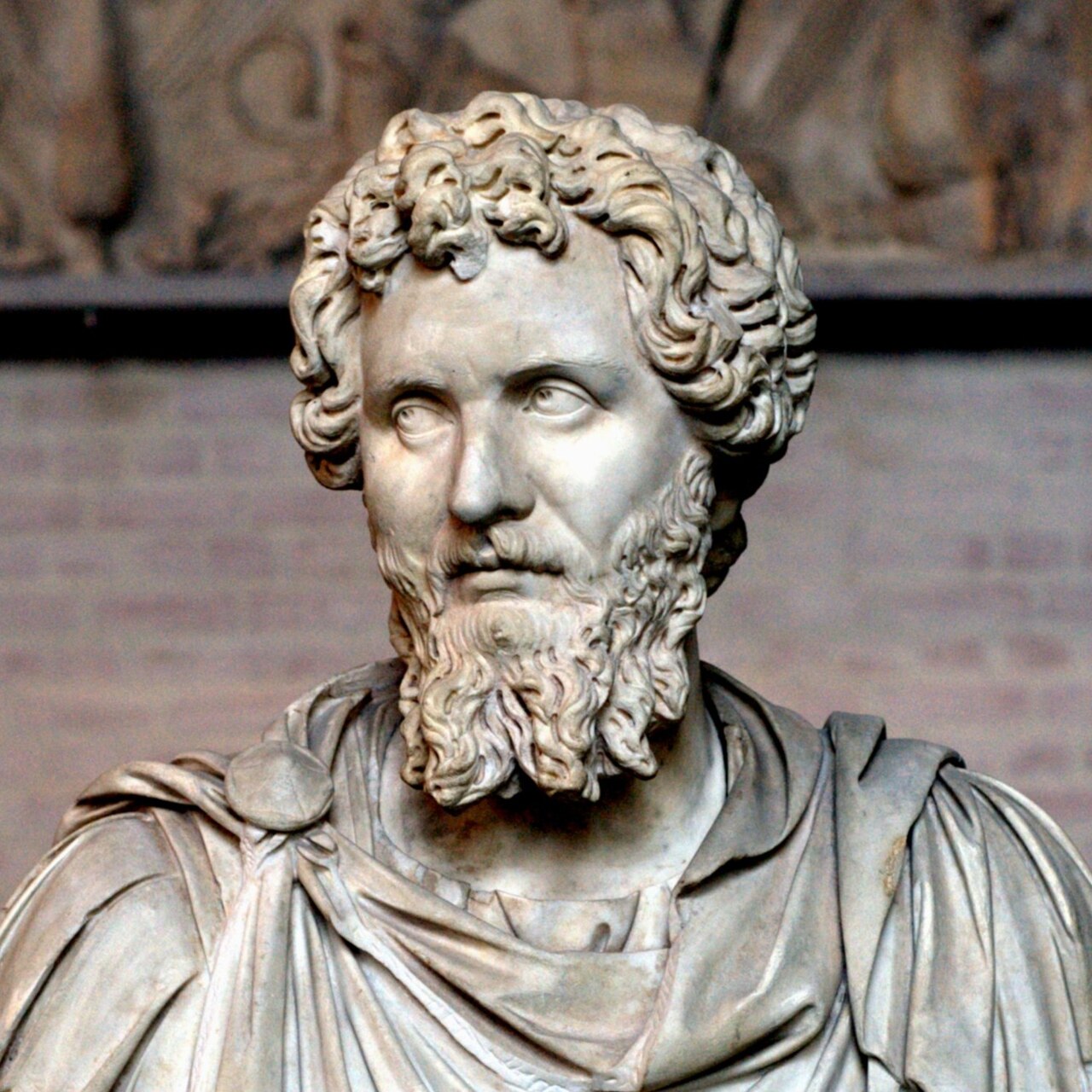
Portrait of Septimius Severus
A marble bust showing Severus's standard imperial image, with curled hair and a forked beard.
This bust represents the standard official image of Severus used throughout the empire.
About this source
What it is
This marble bust portrays Emperor Septimius Severus, who ruled from 193 to 211. It shows him with curly, layered hair and a short, forked beard, following what scholars call the "Serapis type" of imperial portraiture. The bust has some modern restorations, including the nose and parts of the beard, and is held in the Munich Glyptothek.
Why it matters
Portraits like this were produced and copied widely across the Roman Empire to spread a standard, recognizable image of the emperor. The beard and hairstyle associated Severus with the god Serapis, linking his rule to divine authority. Busts such as this one helped shape how people across the empire would have recognized and thought about their ruler.
Look closer
- What does the choice of hairstyle and beard suggest about how Severus wanted to be seen?
- Why might an emperor want his image to look similar to a god's?
- How might a restored part of a statue affect how we understand the original?
This sculpture is part of the curated material that grounds the AI version of Septimius Severus on Humy.ai — when students ask about related events, the AI can quote it and cite it.
More Septimius Severus sources
Browse all 85 →
Ready when you are
Start chatting with Septimius Severus now.
20 messages free · No credit card · Available in 50+ languages.