


Primary sourcePainting1726
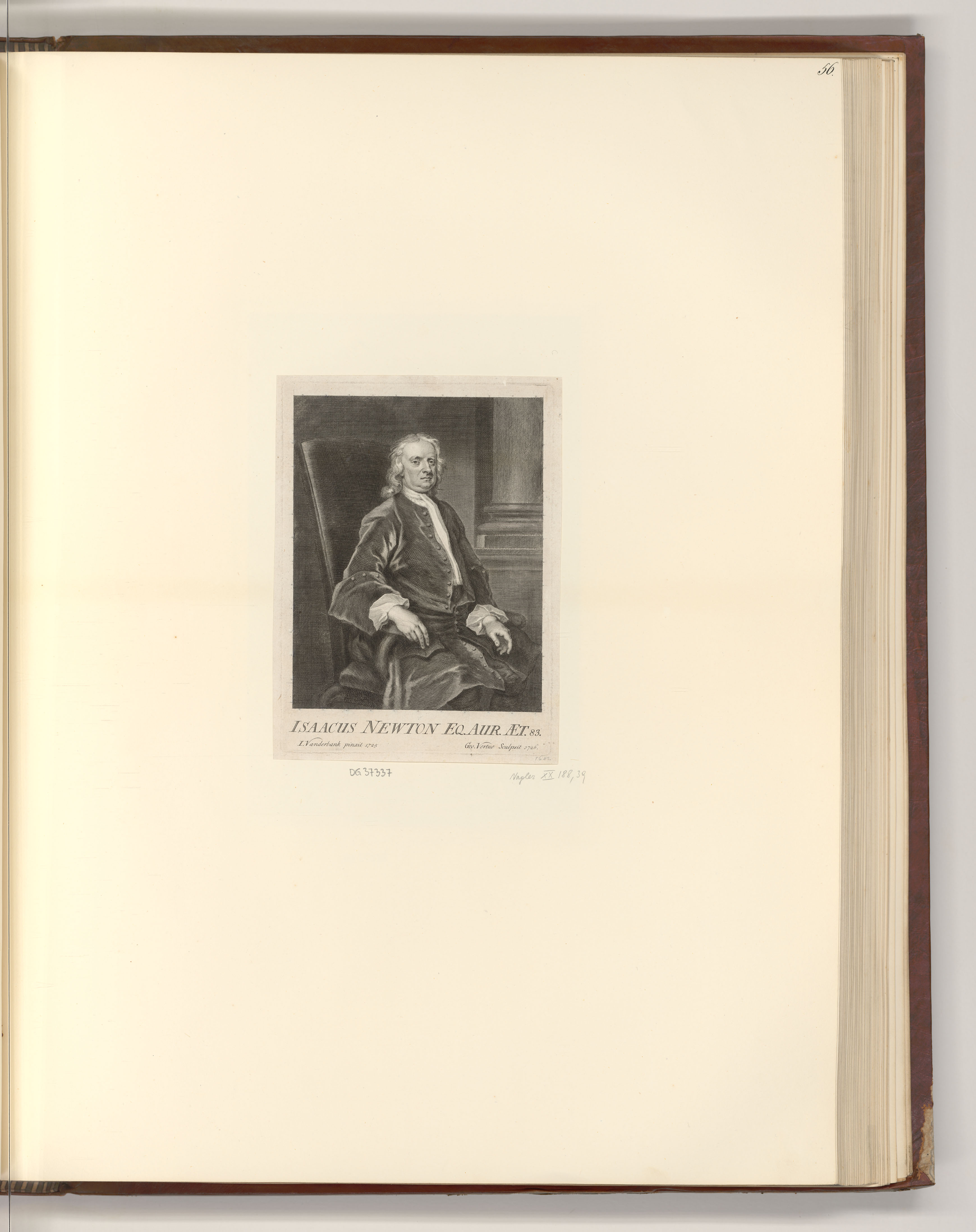
Portrait of Sir Isaac Newton
George Vertue, after I. Vanderbank · 1726
An engraved portrait of Isaac Newton made in 1726, the year before he died, showing him seated in a chair beside a classical column.
This portrait of Newton, made in 1726 while he was alive, is a contemporary image of his appearance in old age.
About this source
What it is
This is an engraving showing Isaac Newton seated in a high-backed chair beside a classical column, wearing a long coat with white cuffs. It was painted by I. Vanderbank in 1725 and engraved by George Vertue in 1726, when Newton was 83 years old. The print is now held by the Albertina Museum.
Why it matters
Because it was made while Newton was still alive, it counts as a direct record of how he looked near the end of his life, created by artists who could have seen him in person. Portraits like this helped spread Newton's image as a famous scientist across Europe.
Look closer
- What does the chair, the column, and his clothing suggest about how the artists wanted Newton to be seen?
- Why might an engraver copy a painting, rather than drawing Newton directly?
- What does the caption, with Newton's age, tell you about when this was made?
This painting is part of the curated material that grounds the AI version of Isaac Newton on Humy.ai — when students ask about related events, the AI can quote it and cite it.
More Isaac Newton sources
Meet the AI Isaac Newton →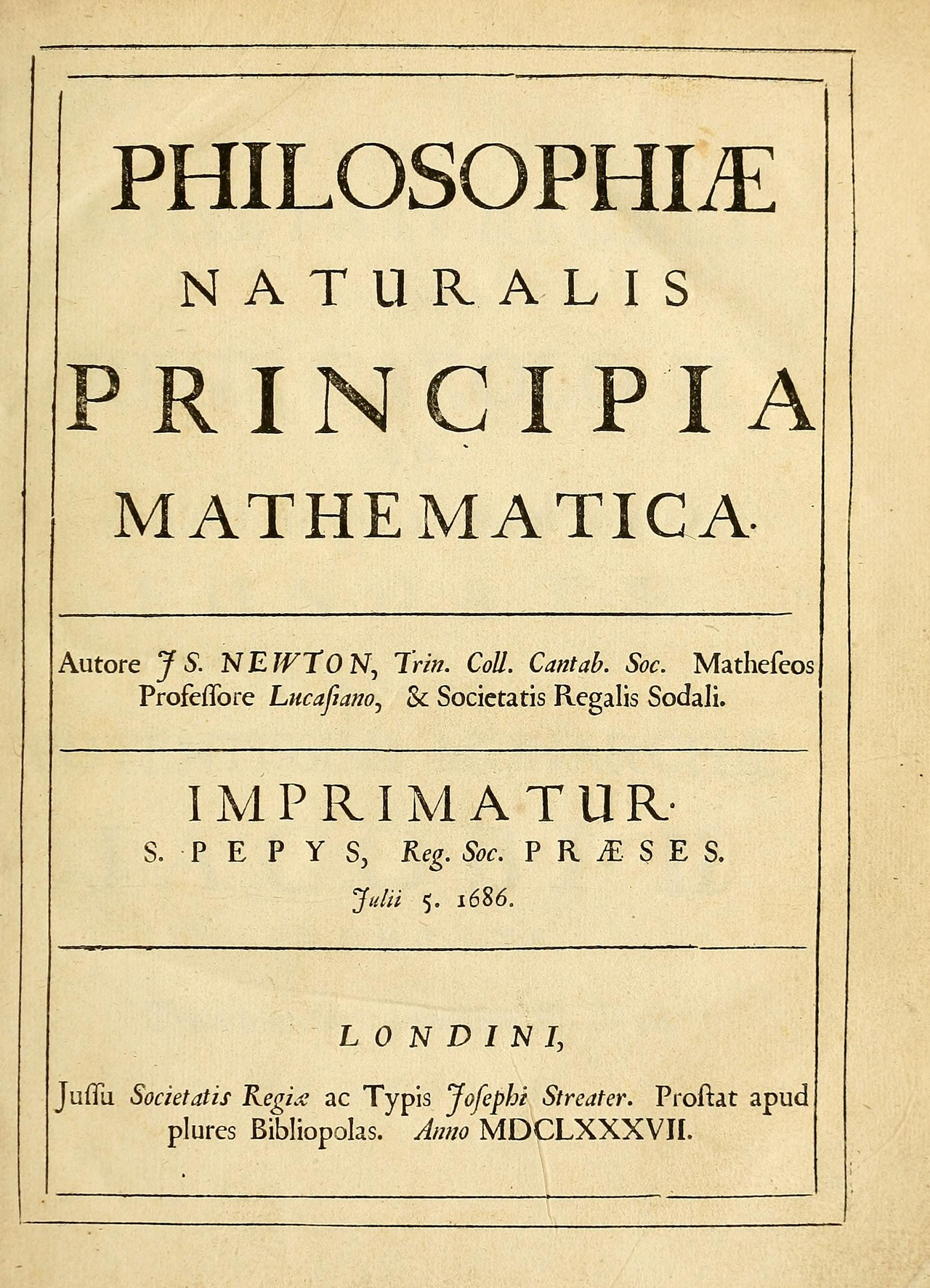 Book
Primary source
Philosophiæ Naturalis Principia Mathematica
Isaac Newton · 1687
 Book
Primary source
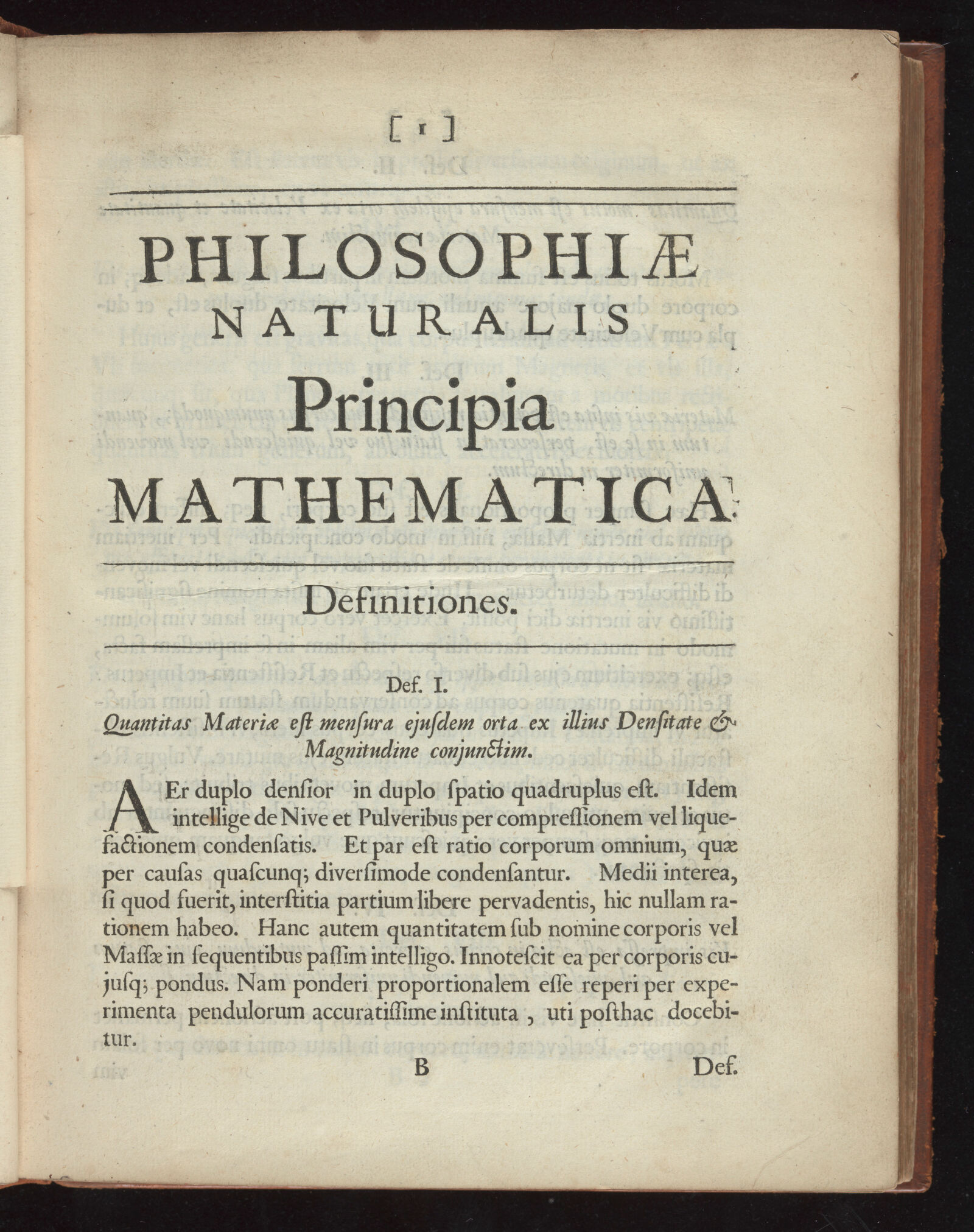
Principia Mathematica, Page 1: Definitions
Isaac Newton · 1687
 Painting
Primary source
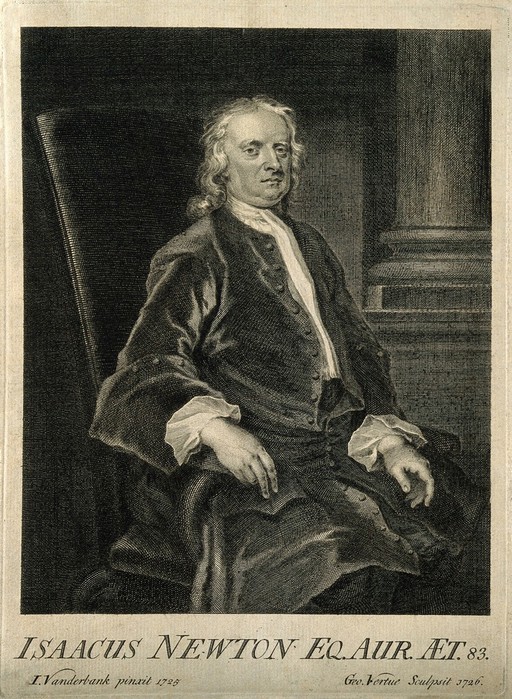
Sir Isaac Newton, line engraving by Vertue, 1726
George Vertue · 1726
 Document
Primary source
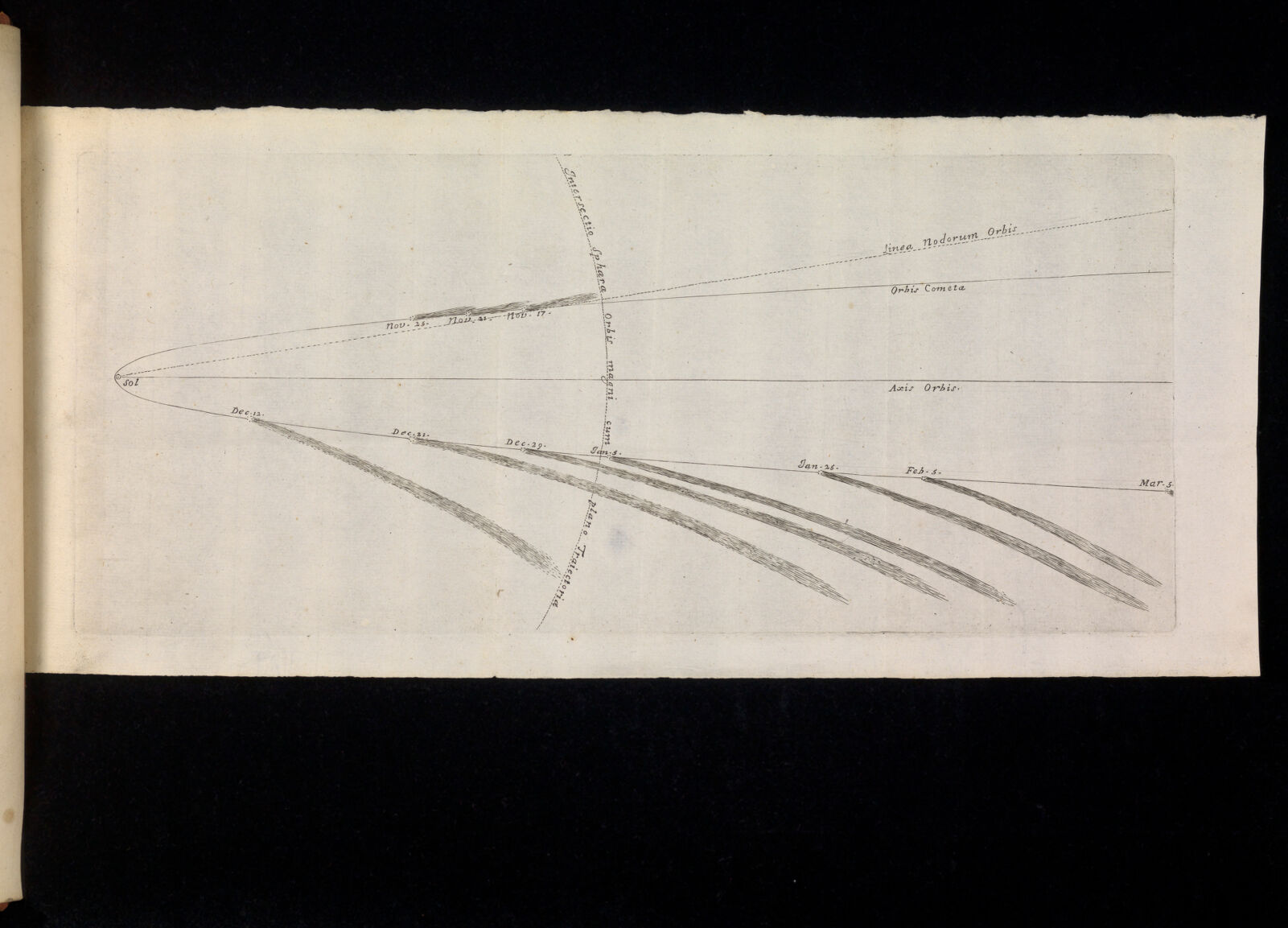
Principia Mathematica, Fold-out Diagram
Isaac Newton · 1687
 Painting
Primary source
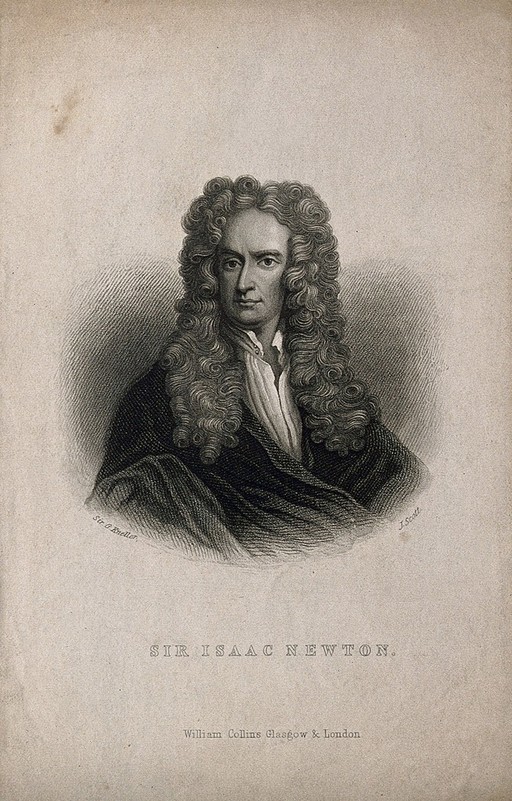
Sir Isaac Newton, stipple engraving by J. Scott after Kneller, 1702
J. Scott, after Sir Godfrey Kneller · 1702 (print made later)
Ready when you are
Start chatting with Isaac Newton now.
20 messages free · No credit card · Available in 50+ languages.