


Secondary sourcePainting1750
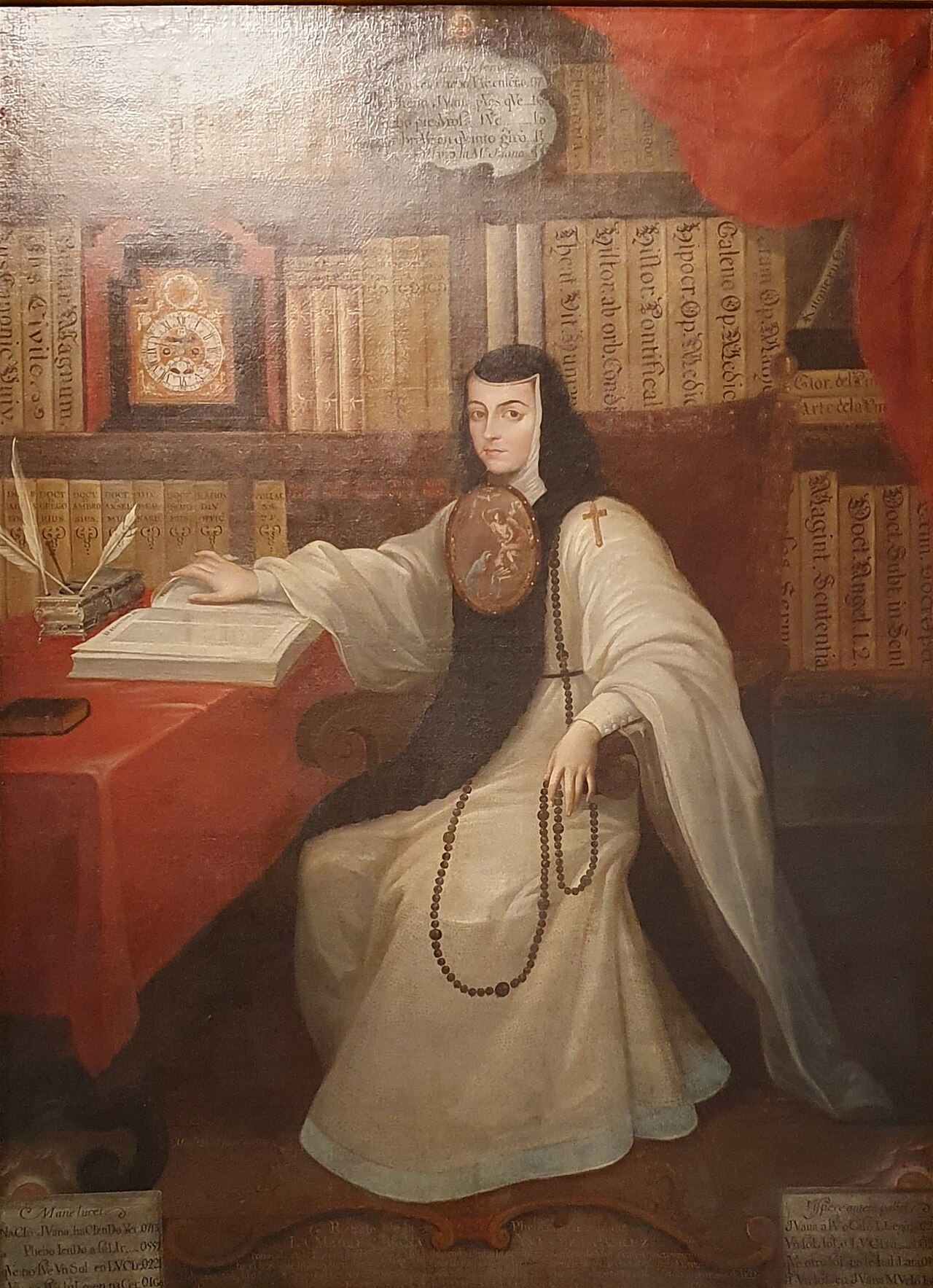
Portrait of Sor Juana Inés de la Cruz
Miguel Cabrera · 1750
A 1750 painting by Miguel Cabrera showing Sor Juana as a learned nun surrounded by books, made decades after her death.
A posthumous portrait imagining Sor Juana as a scholarly nun, shaping how she has been remembered.
About this source
What it is
This painting by Miguel Cabrera, dated 1750, shows a woman in a black veil and white habit seated at a table, holding a rosary and a medallion, with an open book, quill, inkwell, and shelves of books behind her. It is held at the Museo Nacional de Historia in Mexico.
Why it matters
Painted more than fifty years after Sor Juana's death, this portrait shows how later generations imagined and honored her as a scholar and writer. The books, quill, and ink surrounding her emphasize her identity as an intellectual, something unusual for how women were portrayed at the time.
Look closer
- Why might Cabrera have included so many books and writing tools around her?
- What does the rosary and habit tell you about her religious life, alongside her intellectual one?
- Since Cabrera never met her, what choices might he have made in imagining her appearance?
This painting is part of the curated material that grounds the AI version of Juana Inés de la Cruz on Humy.ai — when students ask about related events, the AI can quote it and cite it.
More Juana Inés de la Cruz sources
Meet the AI Juana Inés de la Cruz →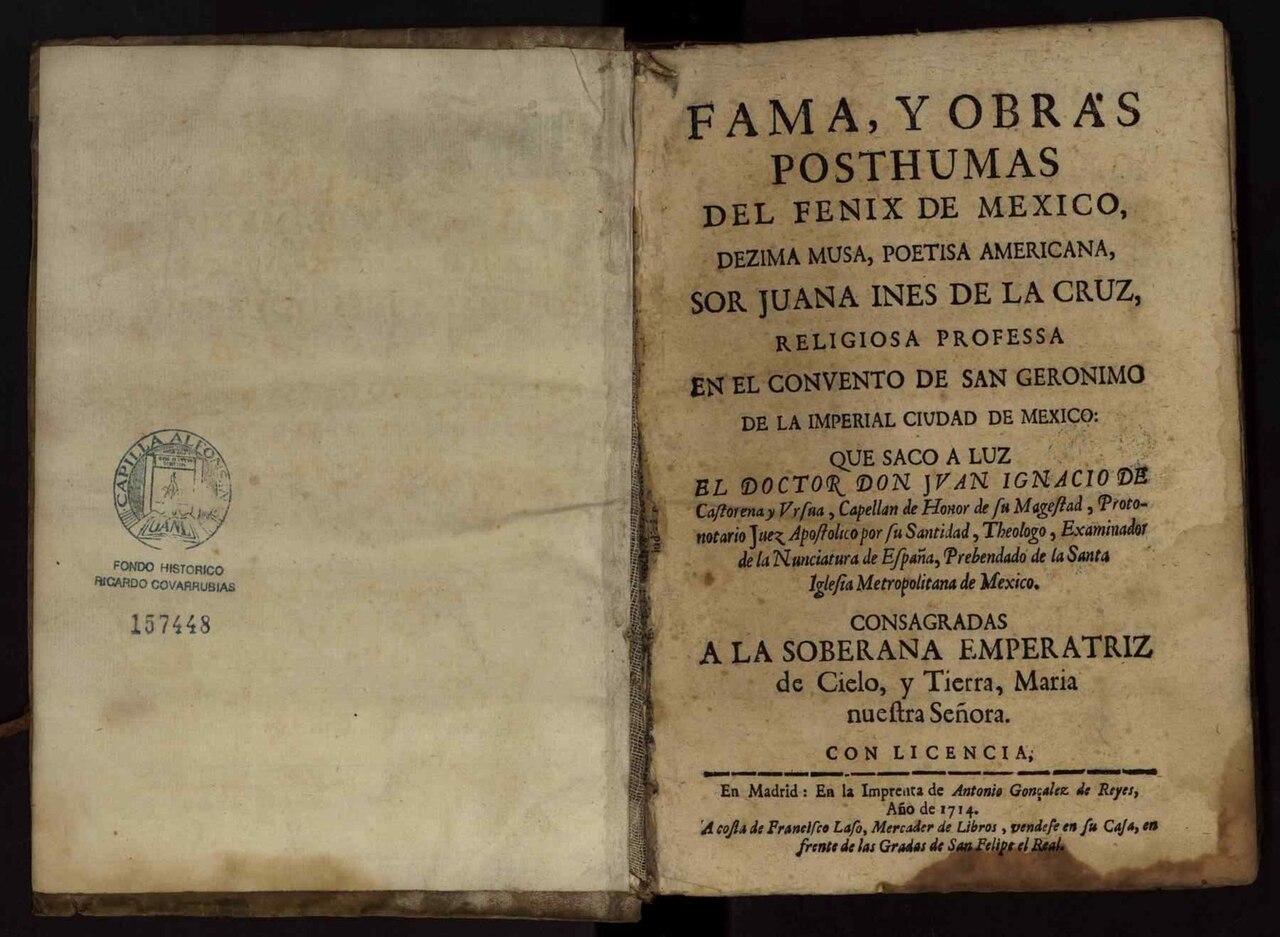 Letter
Primary source
Respuesta a Sor Filotea de la Cruz
Sor Juana Inés de la Cruz · 1691
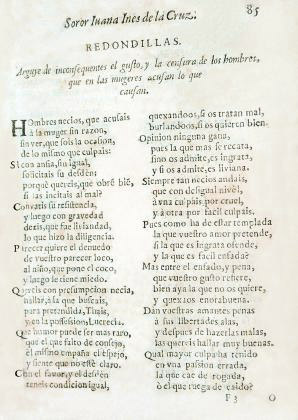 Book
Primary source
Hombres necios
Sor Juana Inés de la Cruz
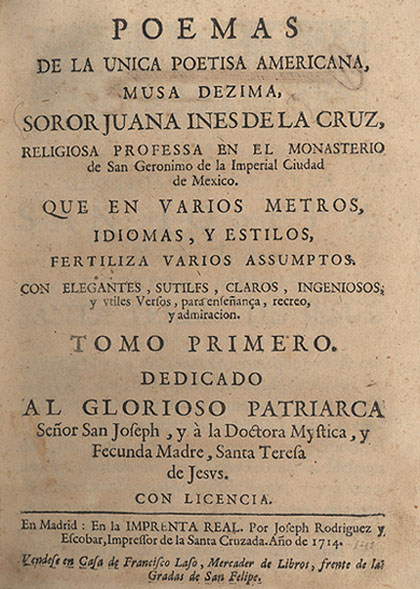 Book
Primary source
Primero sueño
Sor Juana Inés de la Cruz · 1692
 Document
Primary source
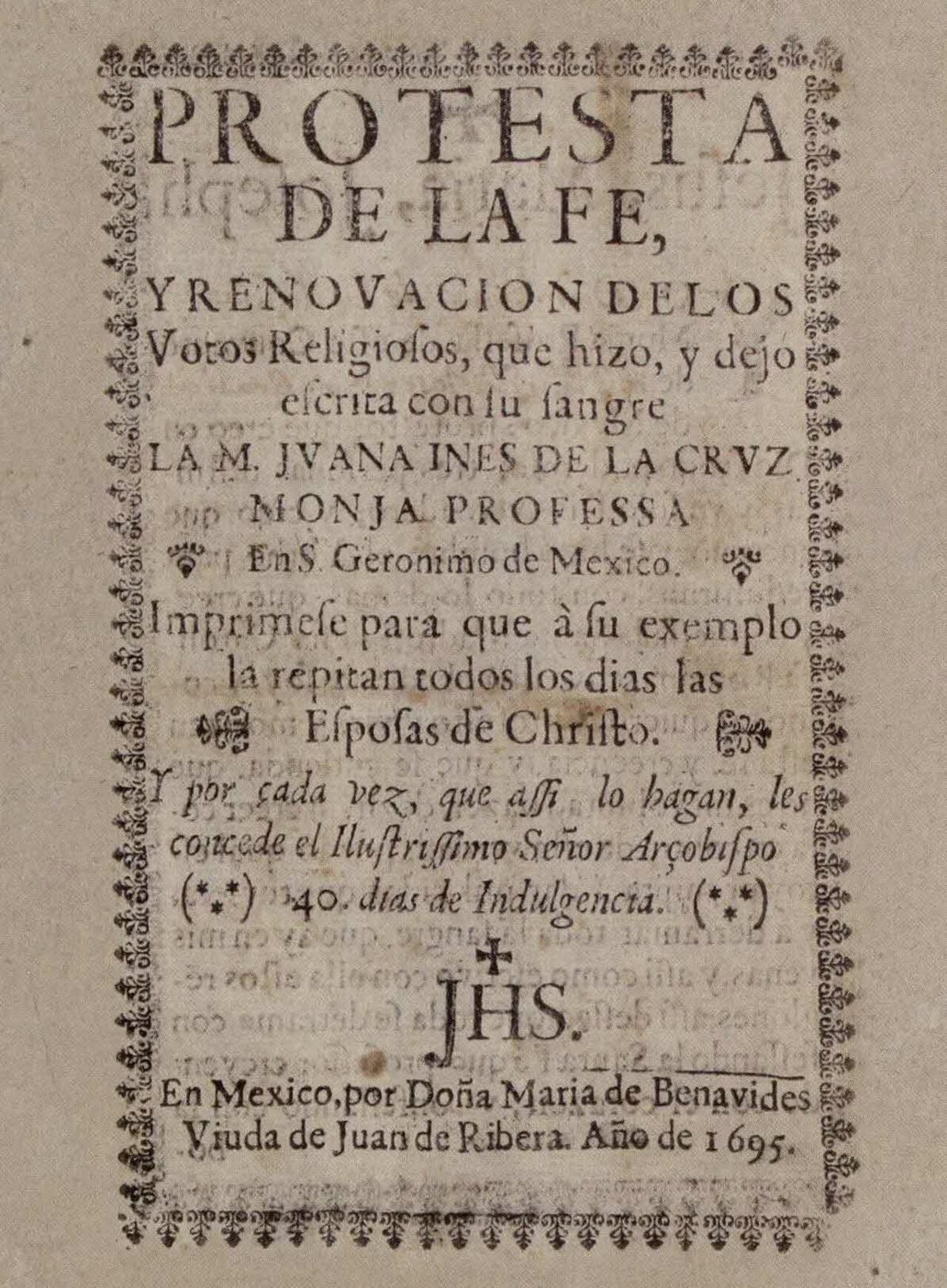
Protesta de la fe y renovación de los votos religiosos
Sor Juana Inés de la Cruz · 1695
 Book
Primary source
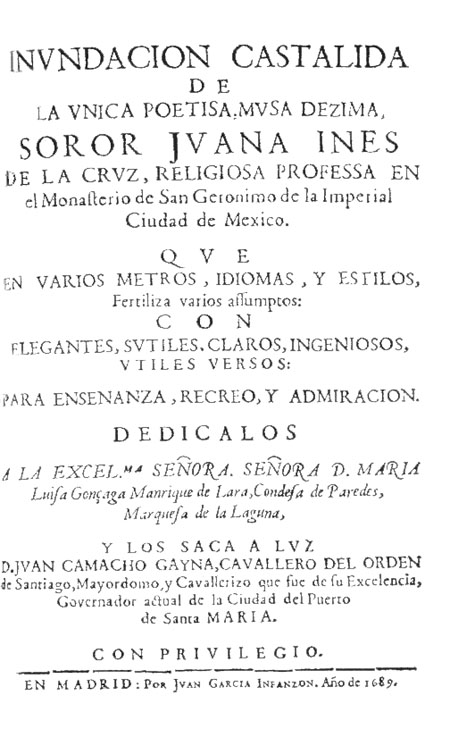
Inundación castálida
Sor Juana Inés de la Cruz · 1689
Ready when you are
Start chatting with Juana Inés de la Cruz now.
20 messages free · No credit card · Available in 50+ languages.