


Secondary sourcePaintingc. 1640-1650
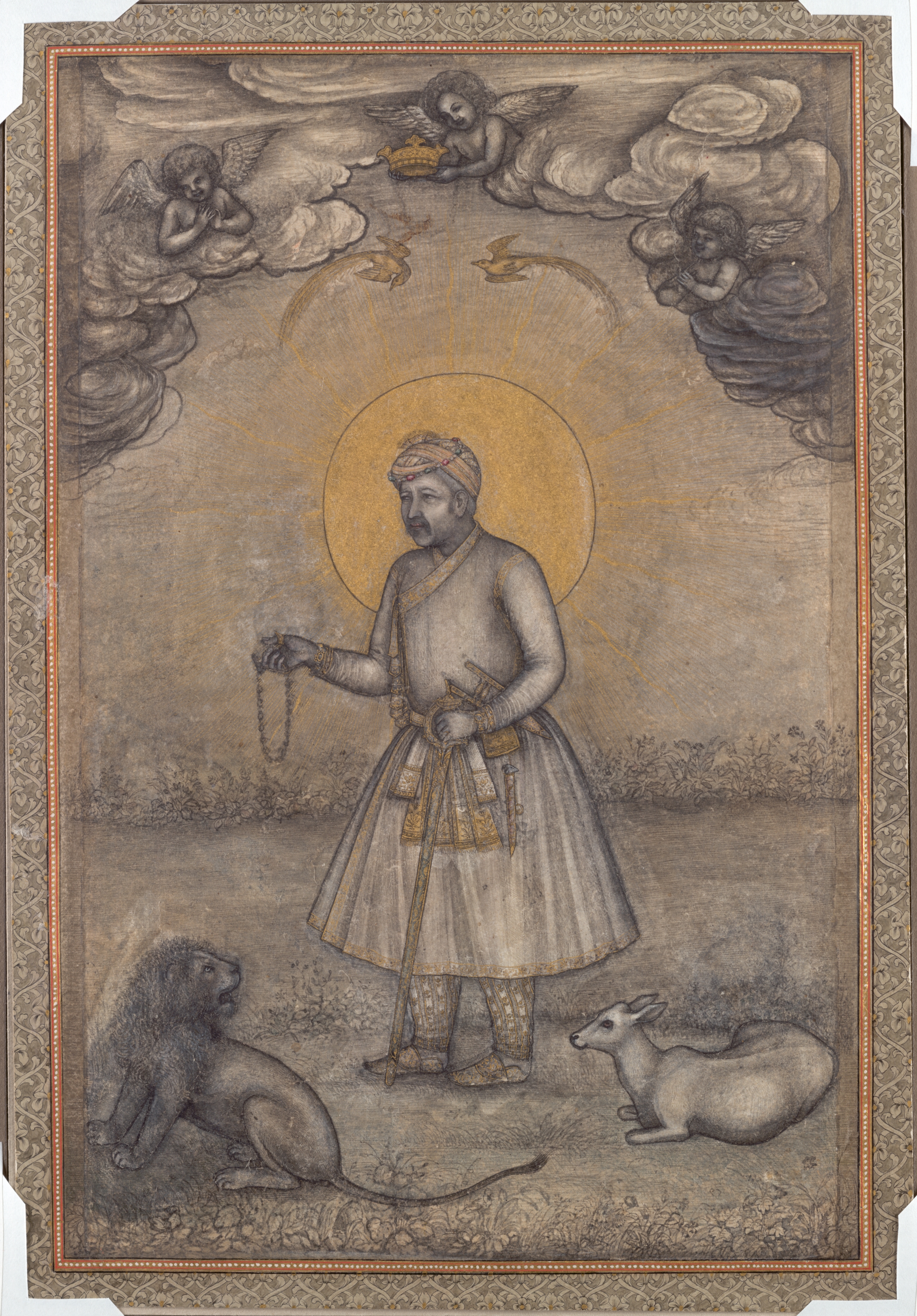
Portrait of the Aged Akbar
Govardhan · c. 1640-1650
A posthumous painting by the Mughal court artist Govardhan imagining Akbar in old age, commissioned decades after his death for his grandson Shah Jahan.
A posthumous idealized portrait of Akbar in old age, commissioned by his grandson Shah Jahan to glorify the Mughal lineage.
About this source
What it is
This painting, attributed to the imperial court artist Govardhan, shows Akbar as an old man with a halo, holding a string of beads, surrounded by symbolic animals and angels. It was made around 1640-50, decades after Akbar's death, and is now held by the Cleveland Museum of Art.
Why it matters
The portrait was likely created for Akbar's grandson, Shah Jahan, who ruled from 1626 to 1648. By honoring his grandfather in a grand, symbolic style—complete with European-style angels and mythical birds—Shah Jahan glorified his own family line. This formal, idealized image is very different from how Akbar himself might have chosen to be shown, revealing more about Shah Jahan's priorities than about Akbar's real appearance.
Look closer
- What symbols in the painting (the halo, the lion, the angels) are meant to suggest about Akbar's importance?
- Why might Shah Jahan have wanted this portrait made long after Akbar died?
- How does this image differ from how Akbar might have presented himself during his own lifetime?
This painting is part of the curated material that grounds the AI version of Akbar the Great on Humy.ai — when students ask about related events, the AI can quote it and cite it.
More Akbar the Great sources
Meet the AI Akbar the Great →
Ready when you are
Start chatting with Akbar the Great now.
20 messages free · No credit card · Available in 50+ languages.