


Secondary sourcePainting1919
Portraits of Ten British Physicists from Macfarlane's 1919 Lectures
1919
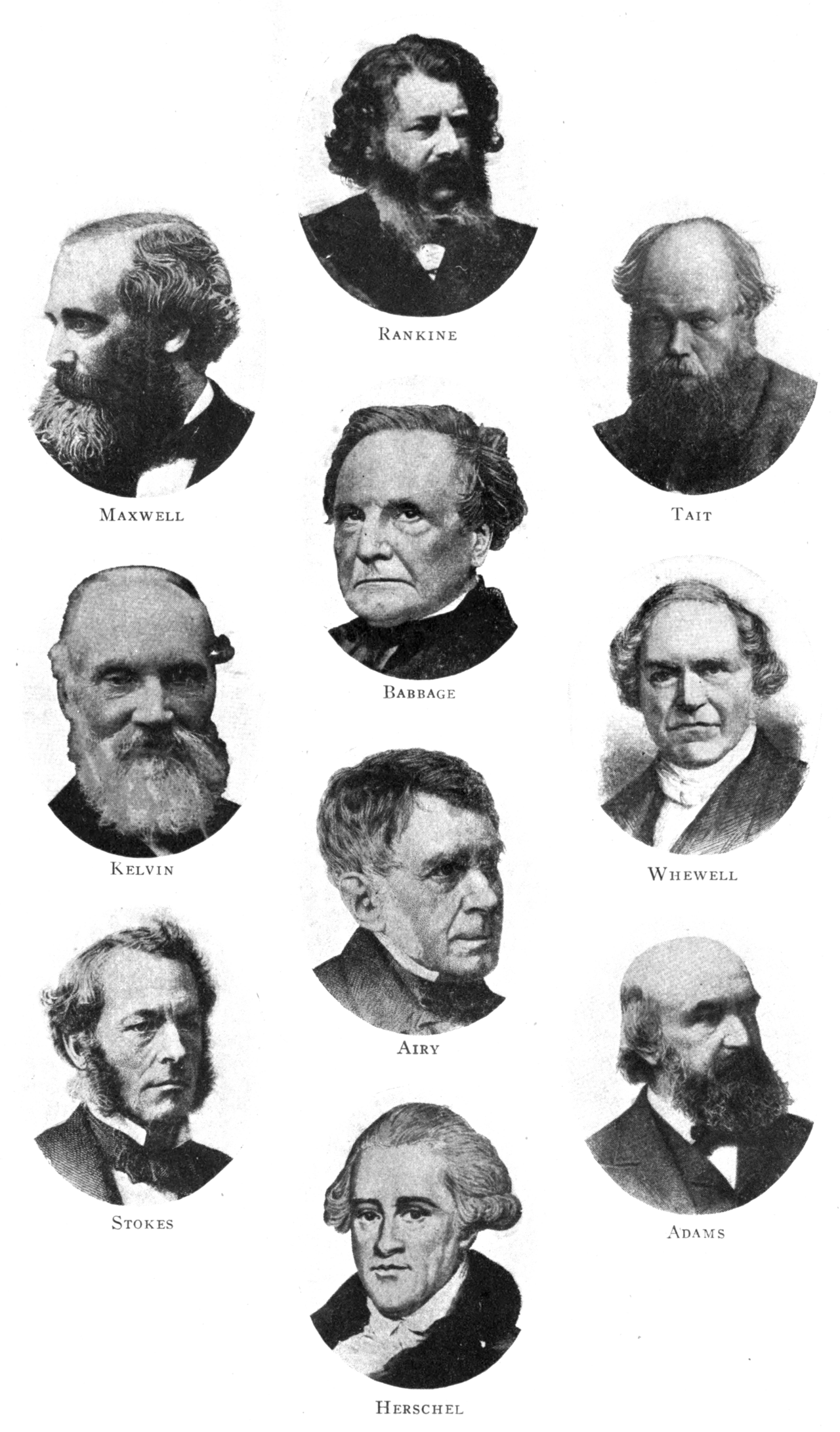
A grid of ten engraved oval portraits of nineteenth-century British physicists and mathematicians, reproduced from Alexander Macfarlane's 1919 book, including Maxwell.
Shows Maxwell's appearance as presented in a 1919 book of portraits of British physicists, placing him among his peers.
About this source
What it is
This image reproduces ten oval engraved portraits of British physicists from Alexander Macfarlane's 1919 book Lectures on Ten British Physicists of the Nineteenth Century. The portraits are arranged in a grid, each labelled with a name, and include James Clerk Maxwell. The image is dated 1919, and its individual makers are not recorded.
Why it matters
Macfarlane's book gathered portraits of the men he discussed, including Maxwell, William Thomson (Lord Kelvin), Peter Guthrie Tait, William John Macquorn Rankine, Charles Babbage, William Whewell, George Gabriel Stokes, George Biddell Airy, John Couch Adams and John Frederick William Herschel. Together they show the group of physicists and mathematicians whose work shaped physics in Britain in the nineteenth century. Because the book was published in 1919, after most of these men had died, the portraits show how they were presented to readers of that later time rather than how they were seen by their contemporaries.
Look closer
- What do the portraits have in common in dress, pose and framing, and what might that suggest about how they were presented?
- Why might Macfarlane have grouped these particular men together in one book about physicists?
- Whose faces are shown here, and whose work is left out of this group of ten?
This painting is part of the curated material that grounds the AI version of James Clerk Maxwell on Humy.ai — when students ask about related events, the AI can quote it and cite it.
More James Clerk Maxwell sources
Browse all 90 →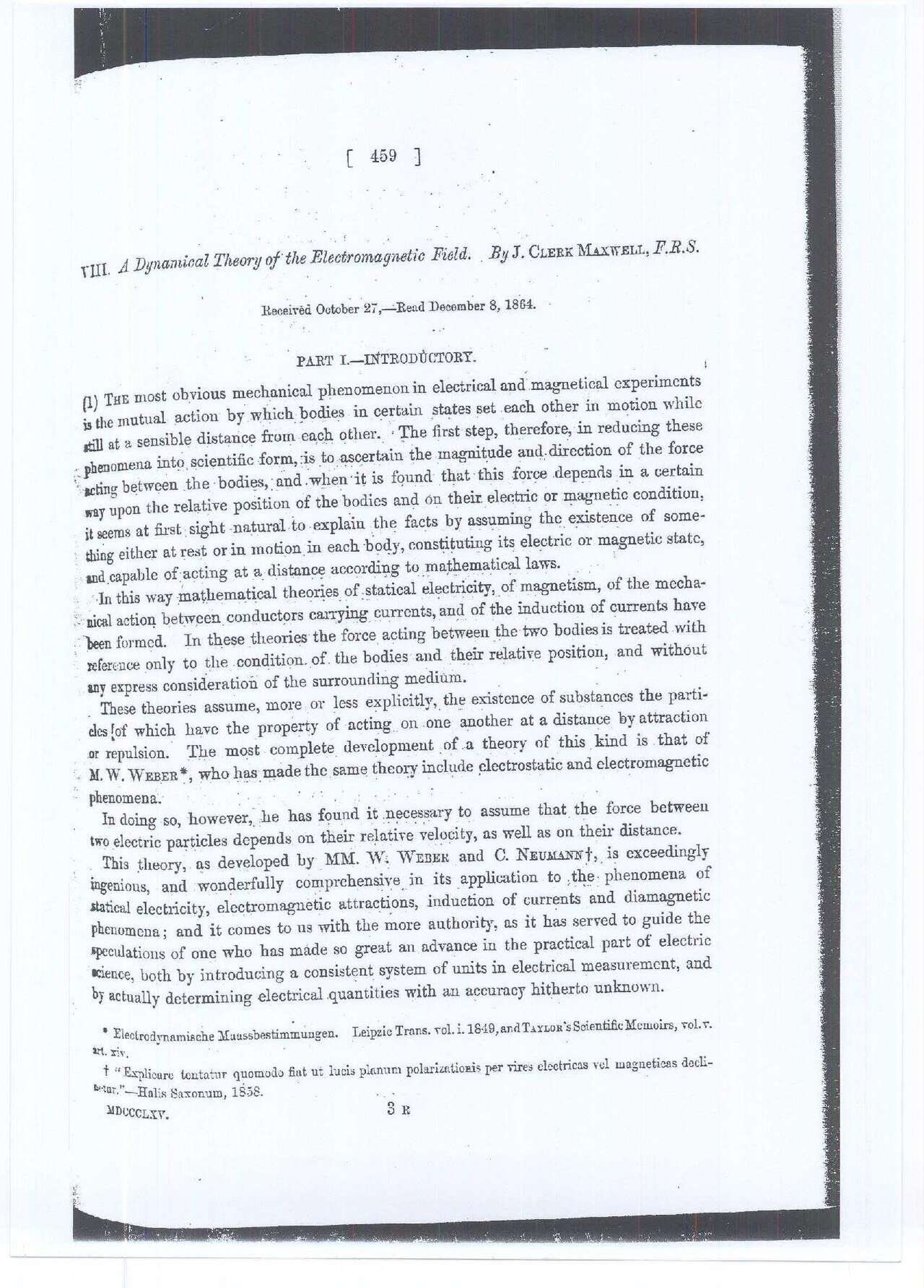 Document
Primary source
A Dynamical Theory of the Electromagnetic Field
James Clerk Maxwell · 1865 (read 8 December 1864)
 Photograph
Primary source
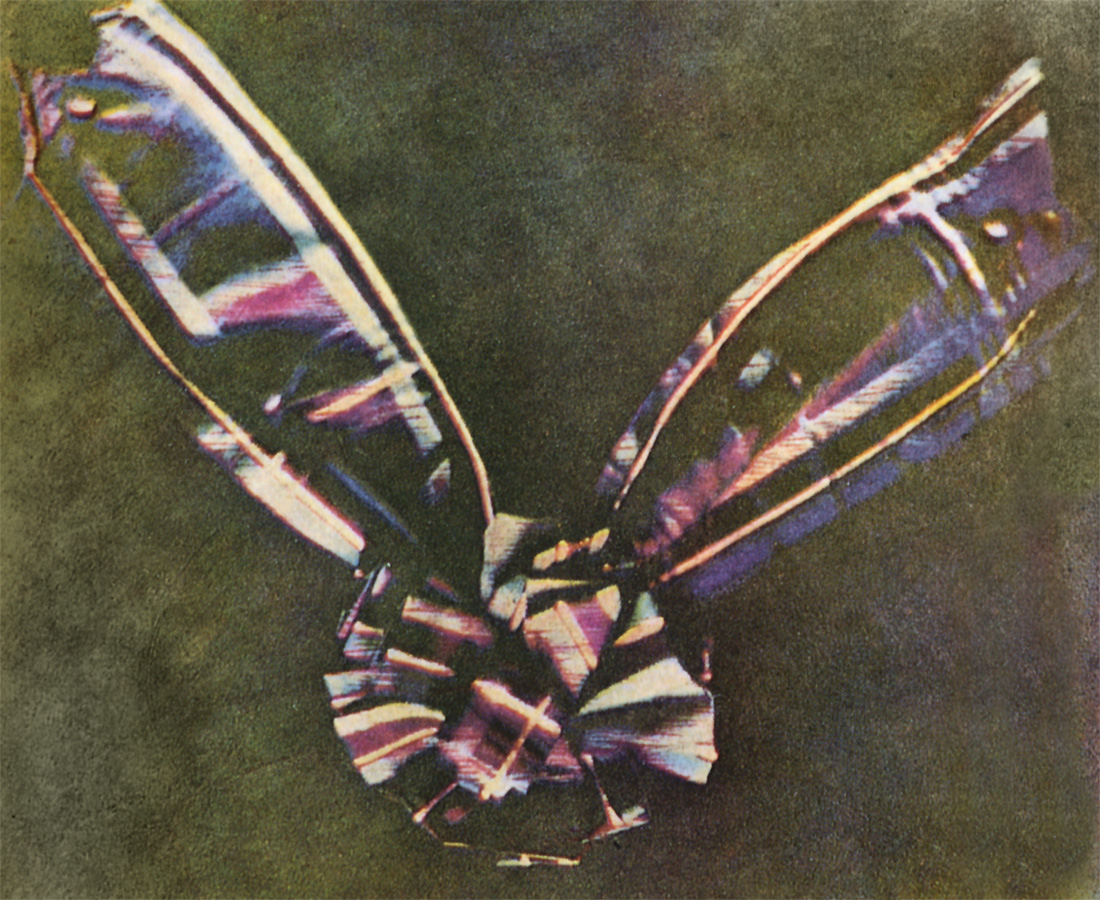
Tartan Ribbon Colour Photograph
James Clerk Maxwell with Thomas Sutton · 1861
 Document
Primary source
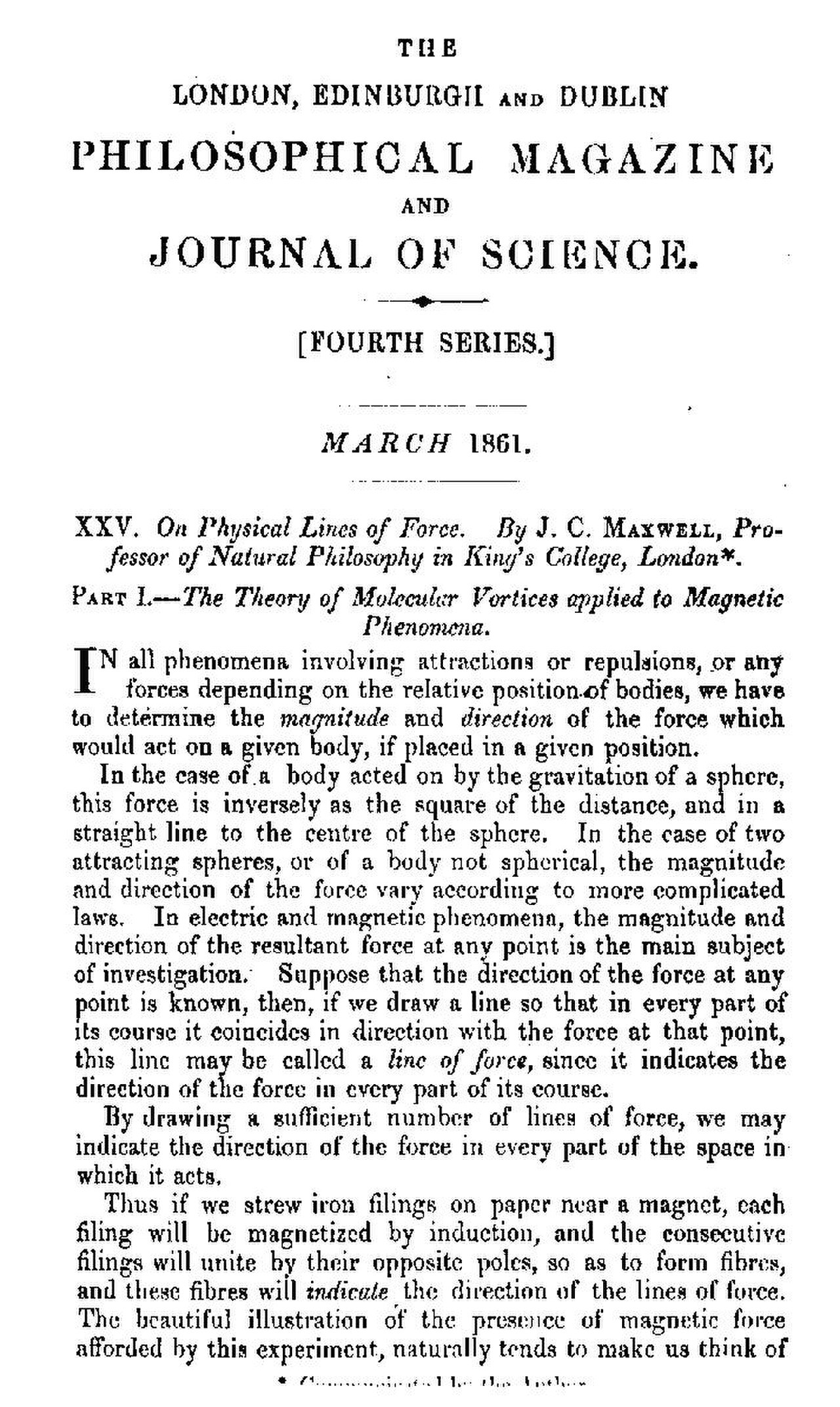
On Physical Lines of Force
James Clerk Maxwell · 1861–1862
 Document
Secondary source
On Faraday's Lines of Force
James Clerk Maxwell · 1855-1856
Free account
Read every James Clerk Maxwell source
Sign up free →
Ready when you are
Start chatting with James Clerk Maxwell now.
20 messages free · No credit card · Available in 50+ languages.