


Primary sourceArtifactPost-medieval (as catalogued)
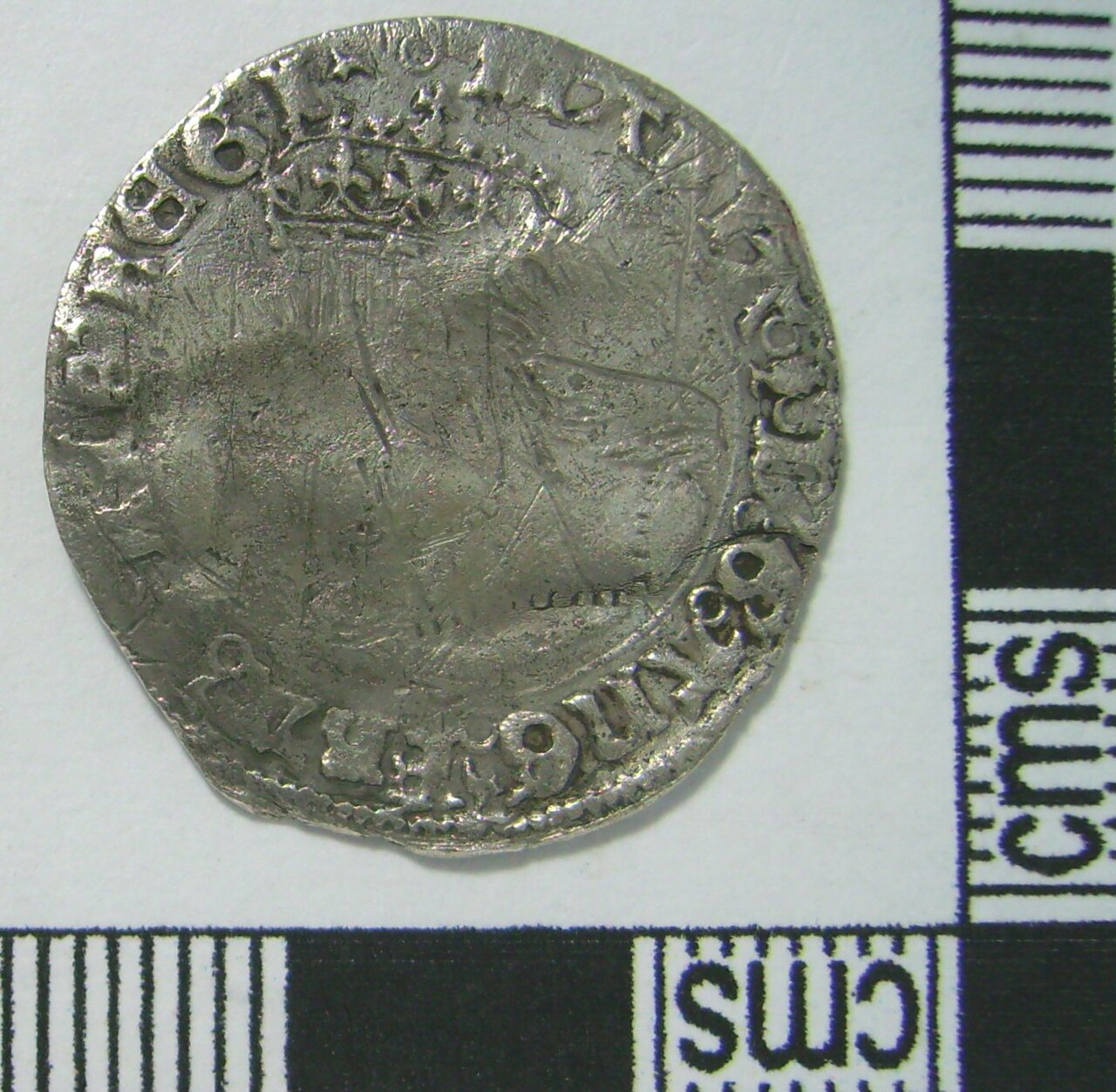
Post-medieval groat of Mary, obverse
Post-medieval (as catalogued)
A find photograph of the front of a worn silver groat from Mary's reign, showing the coinage she issued.
This groat from Mary's reign shows the coinage she issued, with a crowned portrait that represents her royal authority.
About this source
What it is
This is a photograph of the obverse, or front, of a silver groat from the post-medieval period. The coin is worn, and it shows a crowned portrait bust facing left with inscriptions around the rim, partly legible. The photograph was taken as a find record by the Portable Antiquities Scheme and includes a centimetre scale bar on a white background. The archive catalogues it as a groat of Mary's reign.
Why it matters
Coins from Mary's reign were produced in large numbers and used in everyday trade, so they carried royal images into ordinary hands. Finds like this one are useful because they survive in the ground rather than in a museum case, and they show what coins looked like when they were actually lost or used.
Look closer
- What parts of the portrait and the inscriptions can you see clearly, and what is missing because of wear?
- How does a coin carrying a ruler's image shape the way people think about that ruler?
- What might a single photograph of a worn coin fail to tell us about its history?
This artifact is part of the curated material that grounds the AI version of Mary I on Humy.ai — when students ask about related events, the AI can quote it and cite it.
More Mary I sources
Browse all 95 →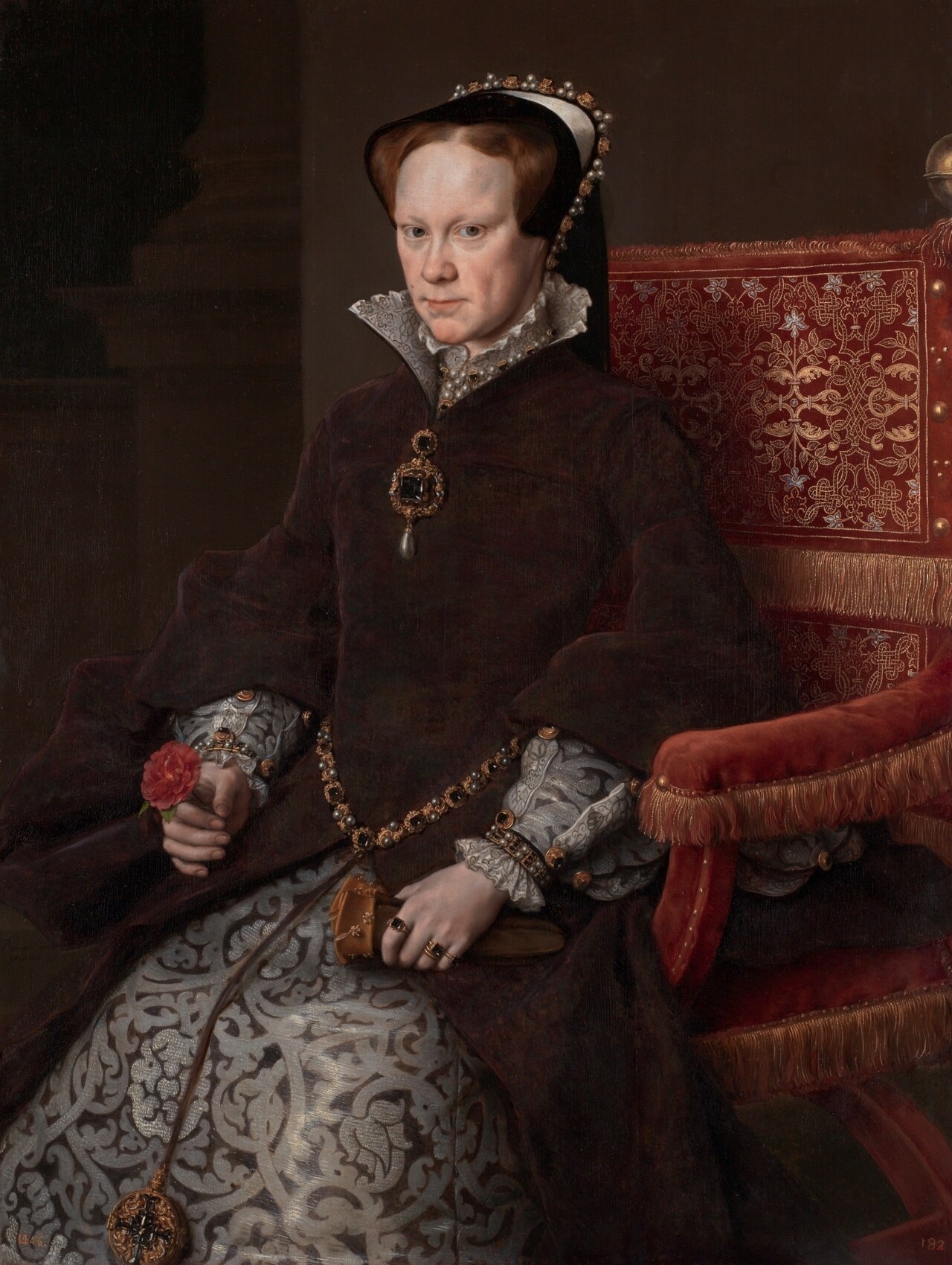 Painting
Primary source
Portrait of Mary Tudor
Antonis Mor · 1554
 Painting
Primary source
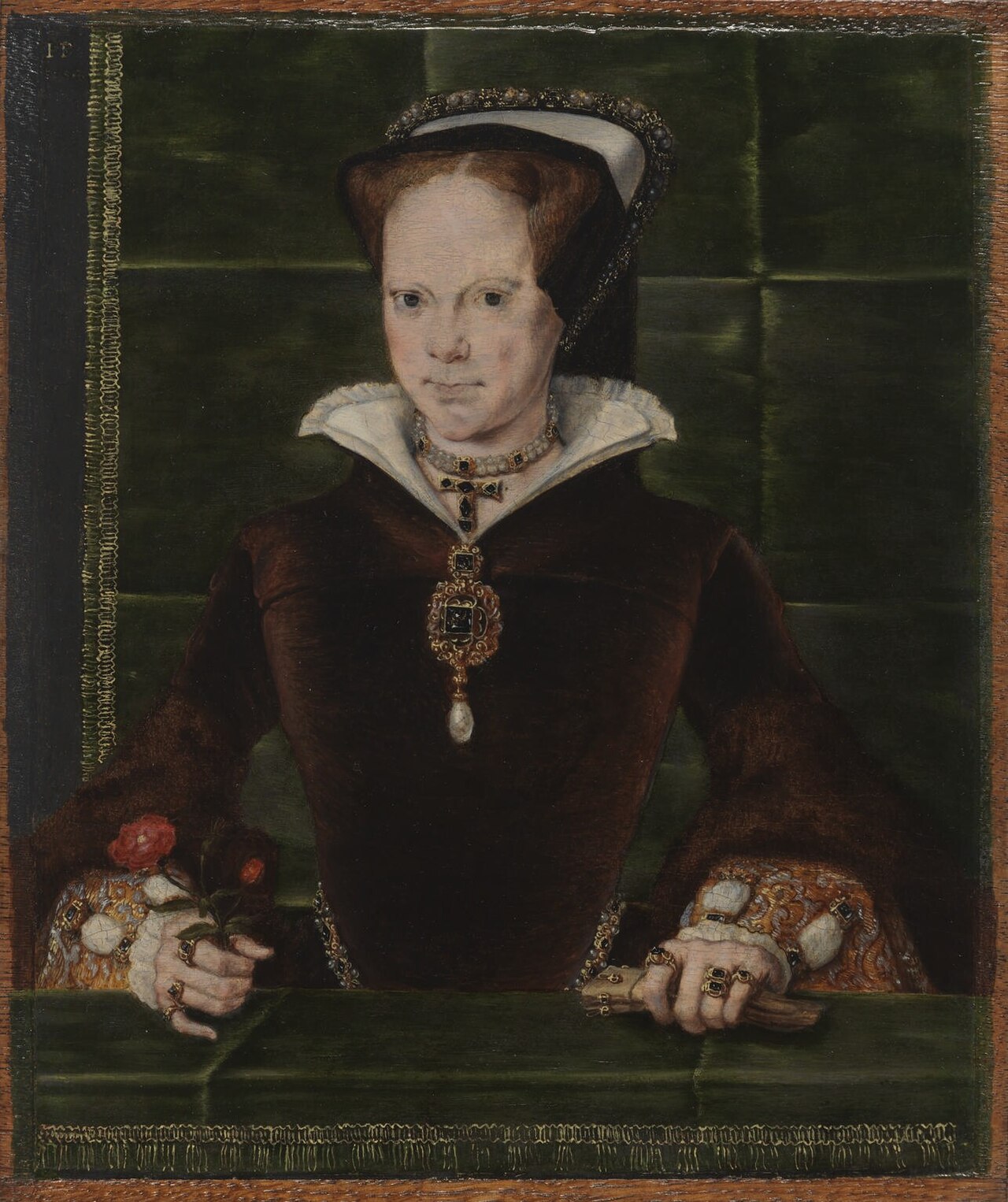
Queen Mary I
Hans Eworth · 1554
 Book
Primary source
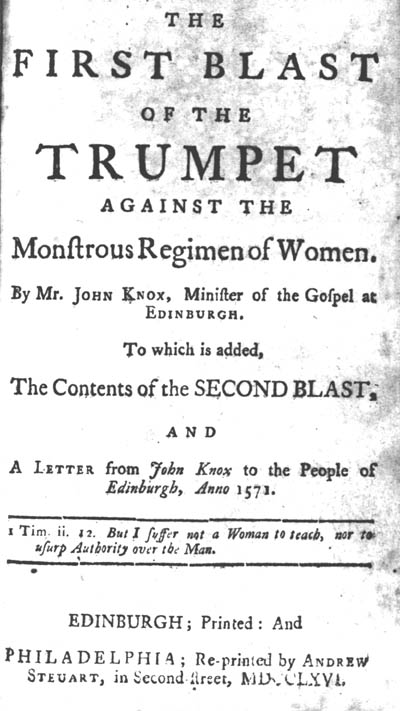
The First Blast of the Trumpet Against the Monstruous Regiment of Women
John Knox · 1558
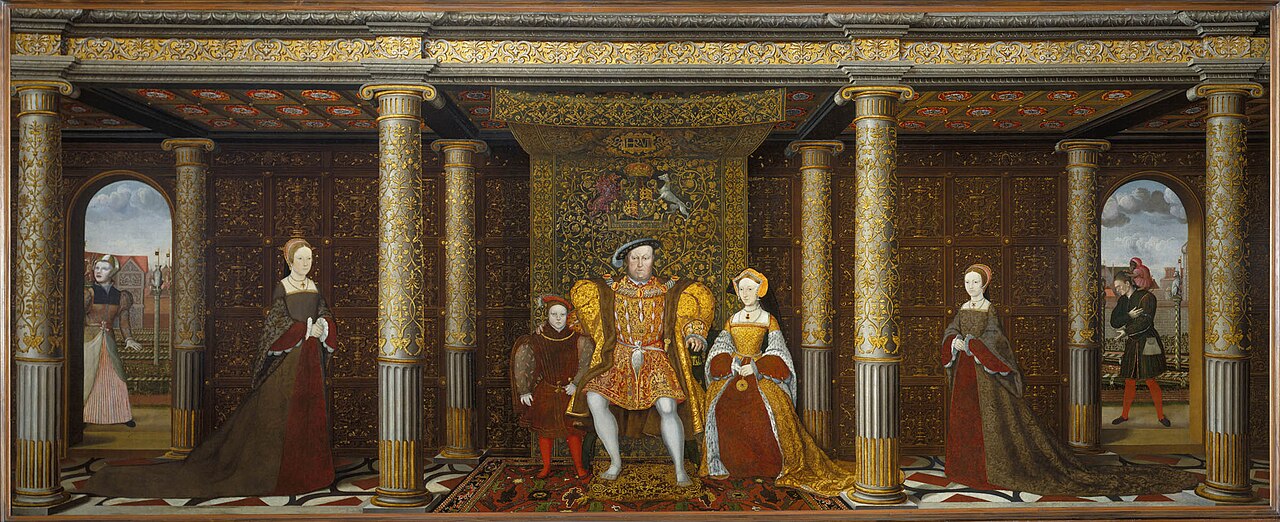 Painting
Primary source
The Family of Henry VIII
British School, 16th century · 1545
Free account
Read every Mary I source
Sign up free →
Ready when you are
Start chatting with Mary I now.
20 messages free · No credit card · Available in 50+ languages.