


Primary sourceArtifactfirst published 1922
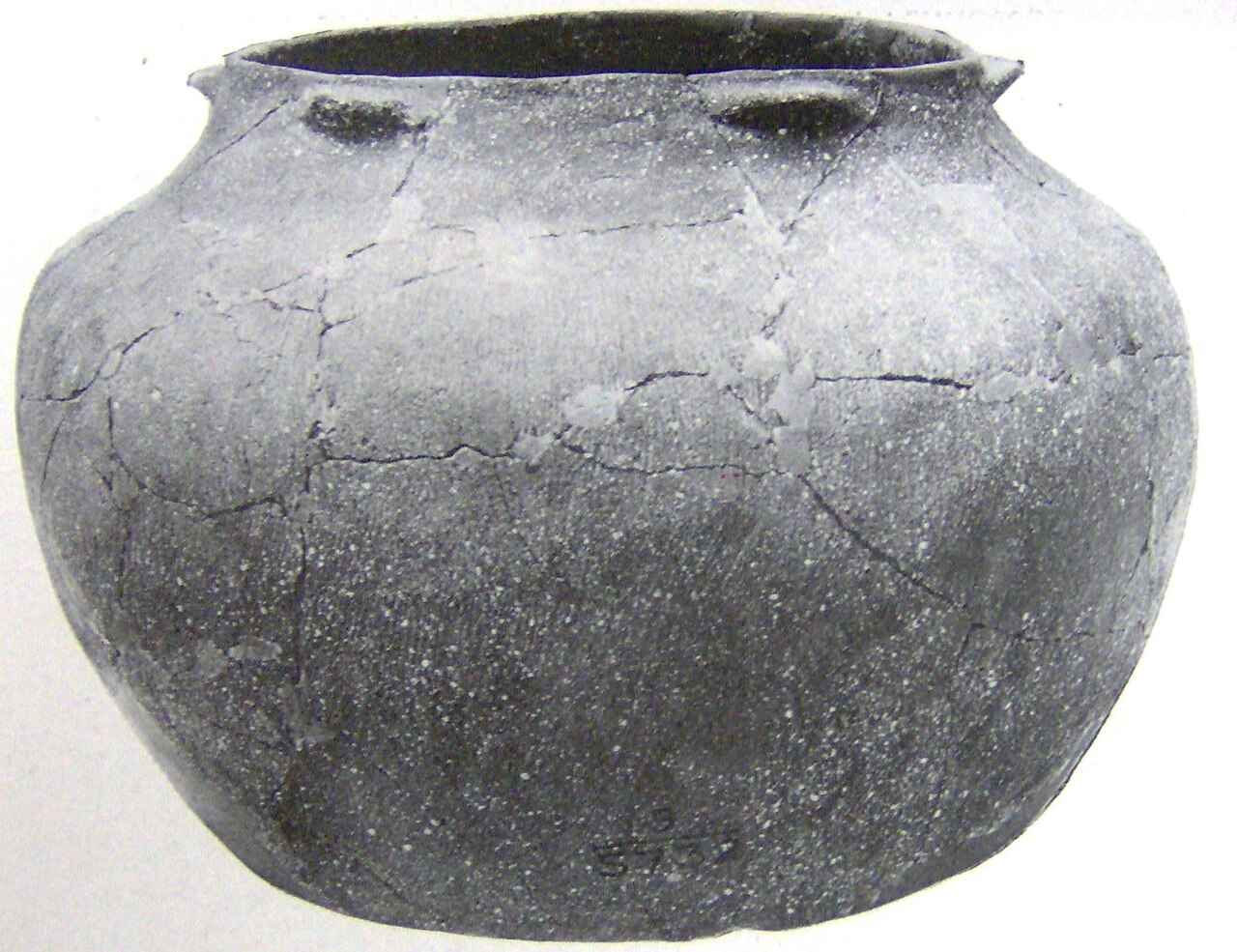
Pottery Vessel Excavated on Bussell Island
M.R. Harrington · first published 1922
A pottery vessel dug up in Tennessee in 1919, showing the Mississippian Native culture of the region Juan Pardo's expeditions passed through.
Shows the Mississippian Native culture of the interior Southeast that Pardo's expeditions moved through.
About this source
What it is
This is a black-and-white photograph of a pottery vessel, dark and globular with a wide mouth and small rim knobs. It was uncovered by archaeologist M.R. Harrington during excavations in 1919 on Bussell Island, at the mouth of the Little Tennessee River in Tennessee, and first published in 1922.
Why it matters
This vessel represents the Native American communities living in the interior Southeast around the time Juan Pardo led Spanish expeditions through the region. It gives students a glimpse of the material culture and daily life of the peoples the Spanish encountered, independent of any Spanish written account.
Look closer
- What can a pottery vessel tell us that a written document cannot?
- Why is it useful to look at archaeological evidence alongside Spanish documents like Bandera's account?
- What questions does this object leave unanswered about the people who made it?
This artifact is part of the curated material that grounds the AI version of Juan Pardo on Humy.ai — when students ask about related events, the AI can quote it and cite it.
Ready when you are
Start chatting with Juan Pardo now.
20 messages free · No credit card · Available in 50+ languages.