


Primary sourceDocument29 March 1830
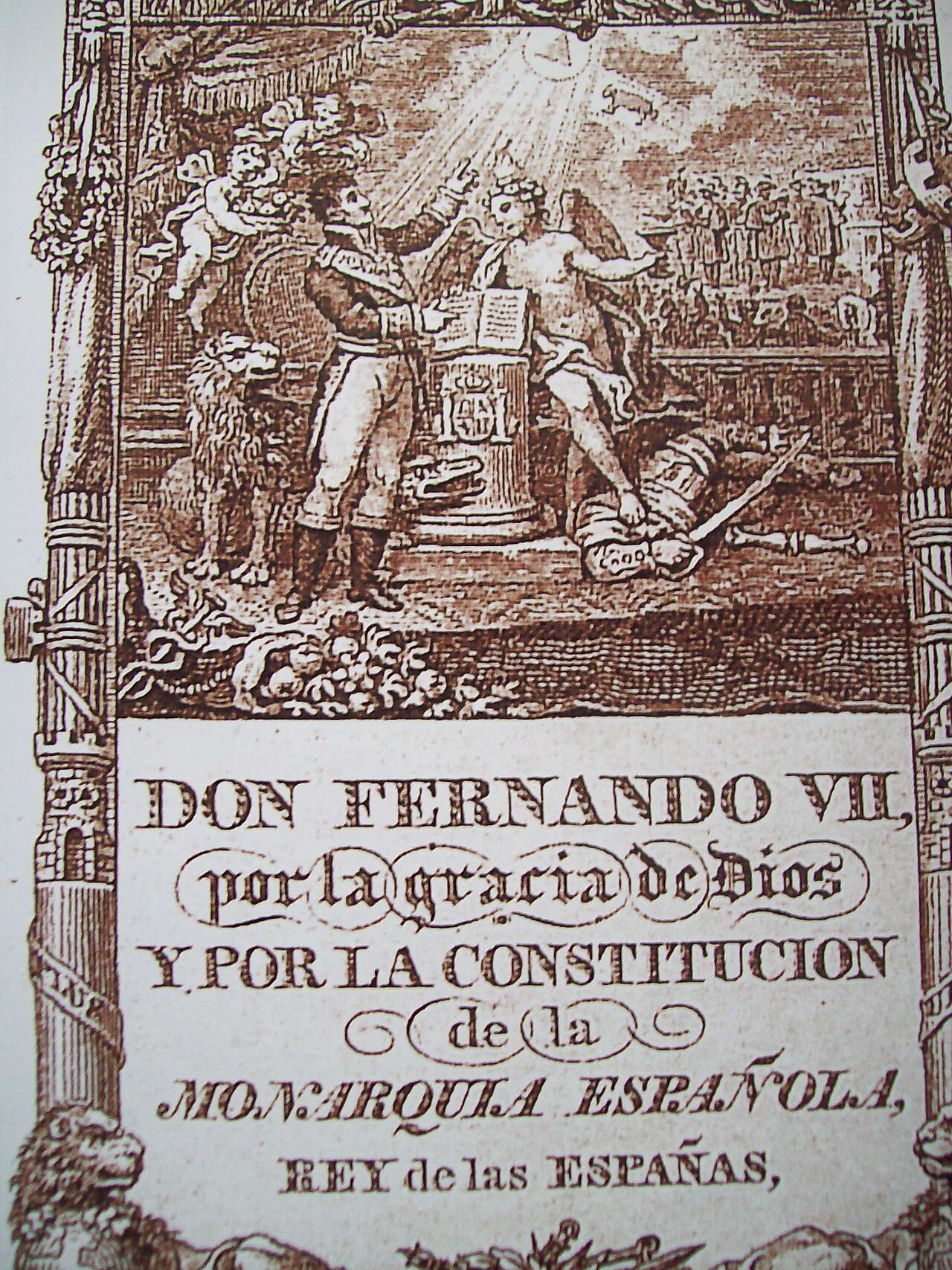
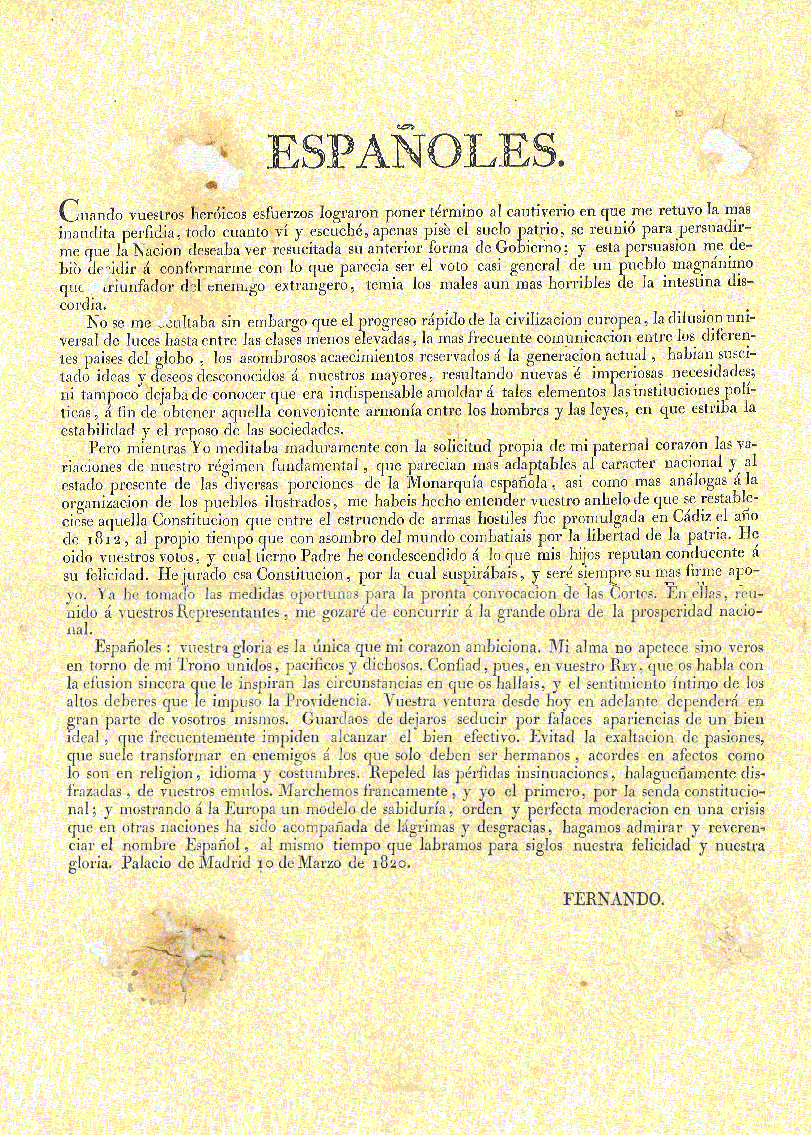
Pragmatic Sanction of 1830
Ferdinand VII of Spain · 29 March 1830
Ferdinand VII's 1830 decree allowing his daughter Isabella to inherit the Spanish throne, overturning Salic succession law.
Ferdinand VII issued this decree himself, naming his daughter Isabella as heir and triggering the succession crisis after his death.
Free Humy account · No credit card · 65,431 sources to read
About this source
What it is
Issued on 29 March 1830 by Ferdinand VII, this decree ratified an earlier 1789 law of Charles IV that replaced the male-only Salic succession rule brought by the Bourbons with the older mixed system allowing women to inherit the Spanish crown.
Why it matters
Because Ferdinand had only daughters, Isabella and Luisa Fernanda, this law meant his daughter Isabella rather than his brother Infante Carlos would succeed him. It provoked fierce opposition from Carlos's supporters and set off the Carlist Wars after Ferdinand's death in 1833, when Isabella was proclaimed queen under her mother's regency.
Look closer
- Why would changing a succession law cause a war?
- What does the decree's very long list of royal titles tell you about how the king saw his own power?
- Whose interests might have been harmed by this change, and how might they have reacted?
This document is part of the curated material that grounds the AI version of Ferdinand VII on Humy.ai — when students ask about related events, the AI can quote it and cite it.
More Ferdinand VII sources
Browse all 98 →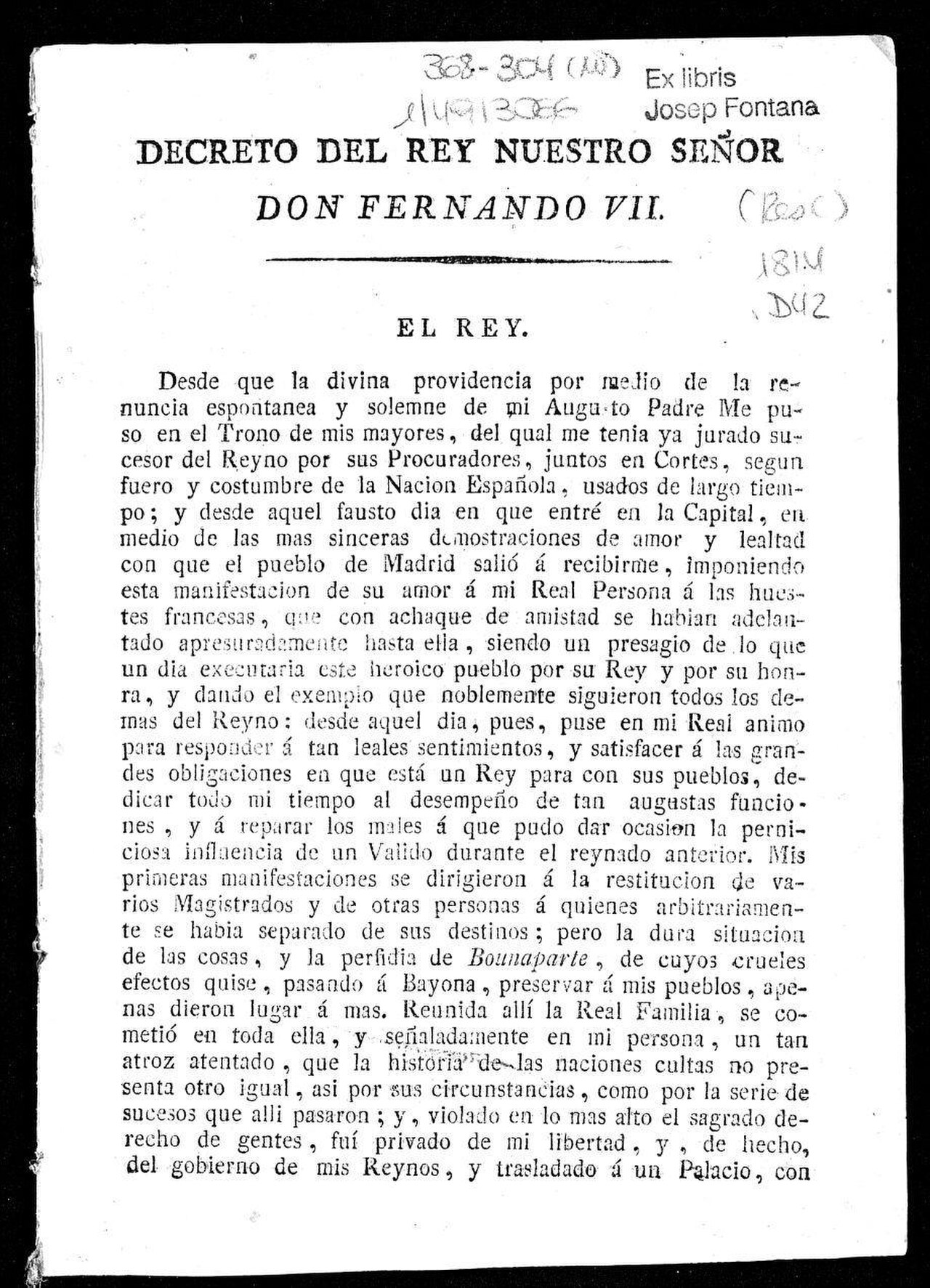 Document
Primary source
Decree Abolishing the Constitution of 1812
Ferdinand VII of Spain · 4 May 1814
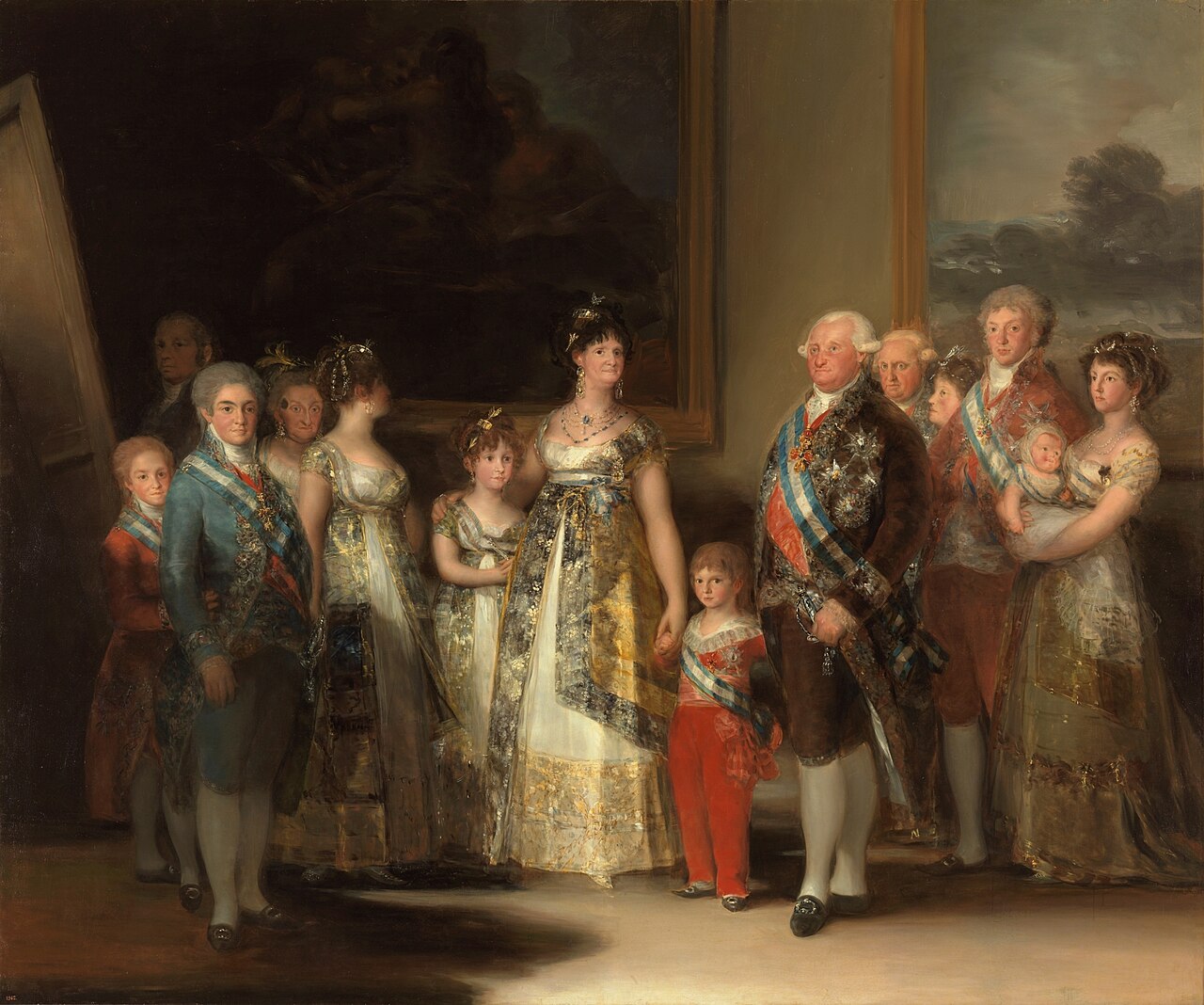 Painting
Primary source
Charles IV of Spain and His Family
Francisco Goya · 1800-1801
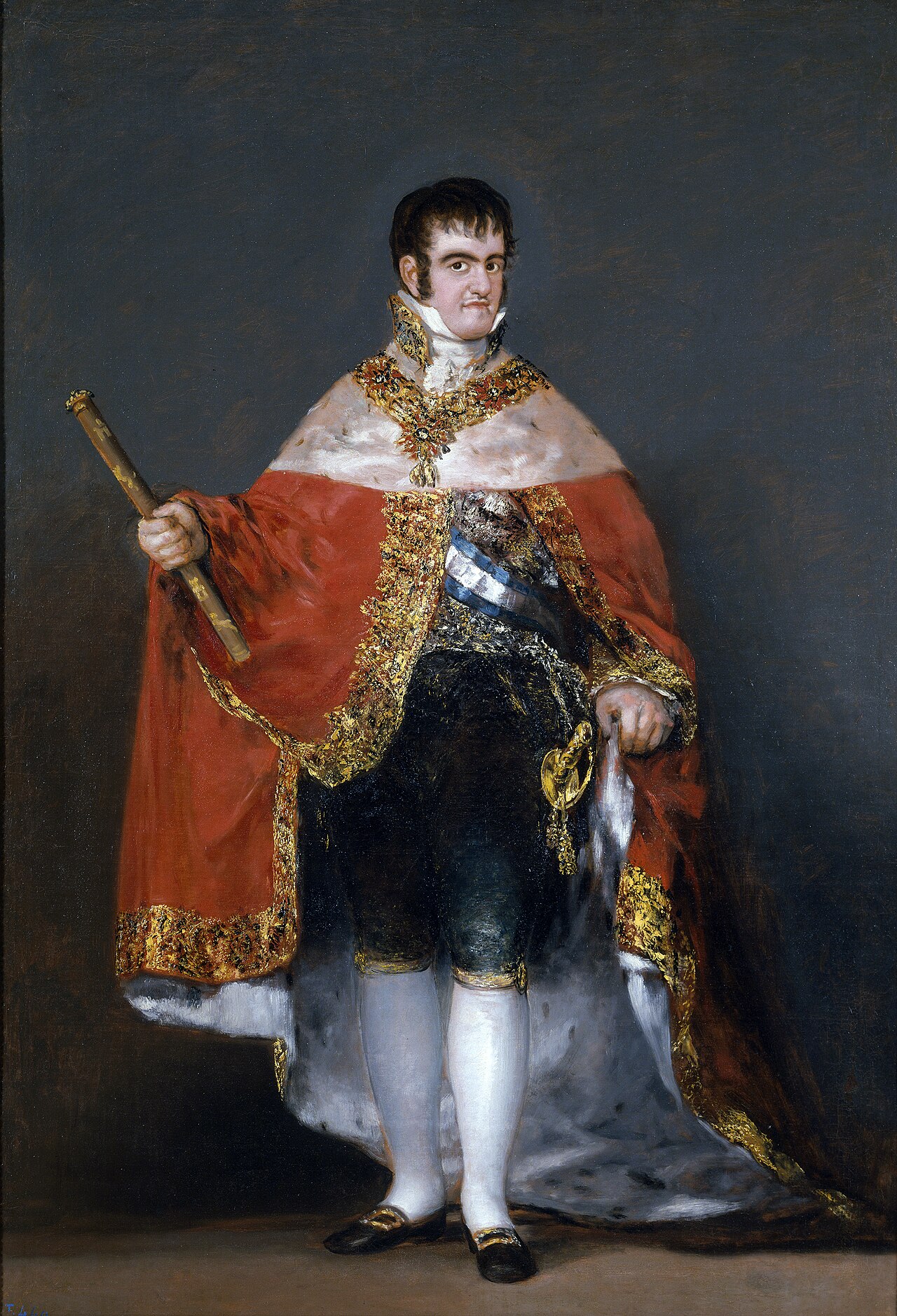 Painting
Primary source
Ferdinand VII in Court Dress
Francisco Goya · 1814-1815
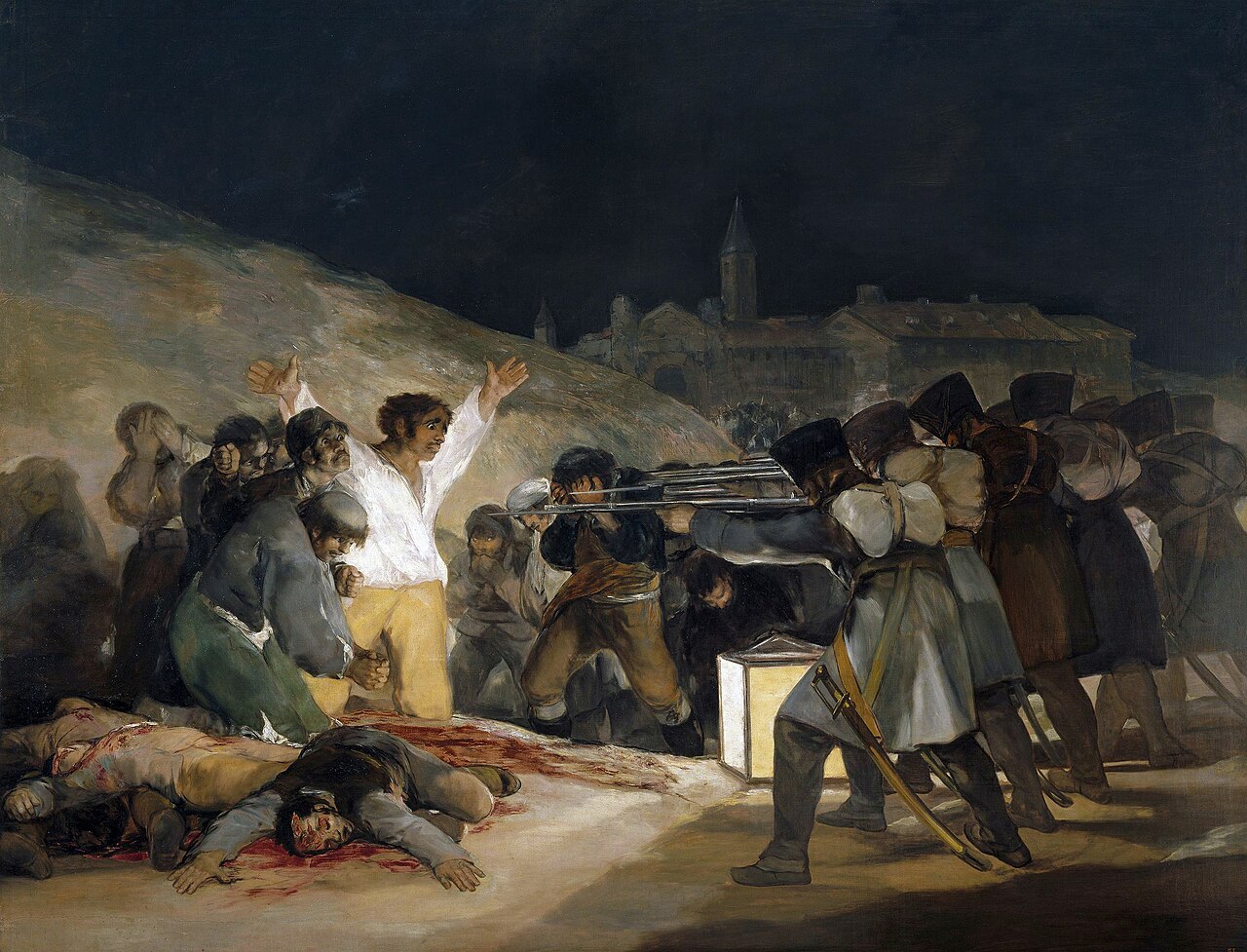 Painting
Secondary source
The Third of May 1808
Francisco Goya · 1814
Free account
Read every Ferdinand VII source
Sign up free →
Ready when you are
Start chatting with Ferdinand VII now.
20 messages free · No credit card · Available in 50+ languages.