


Primary sourceDocument7 May 1794 (this printing 30 May 1794)
Proclamation of Połaniec
Tadeusz Kościuszko · 7 May 1794 (this printing 30 May 1794)
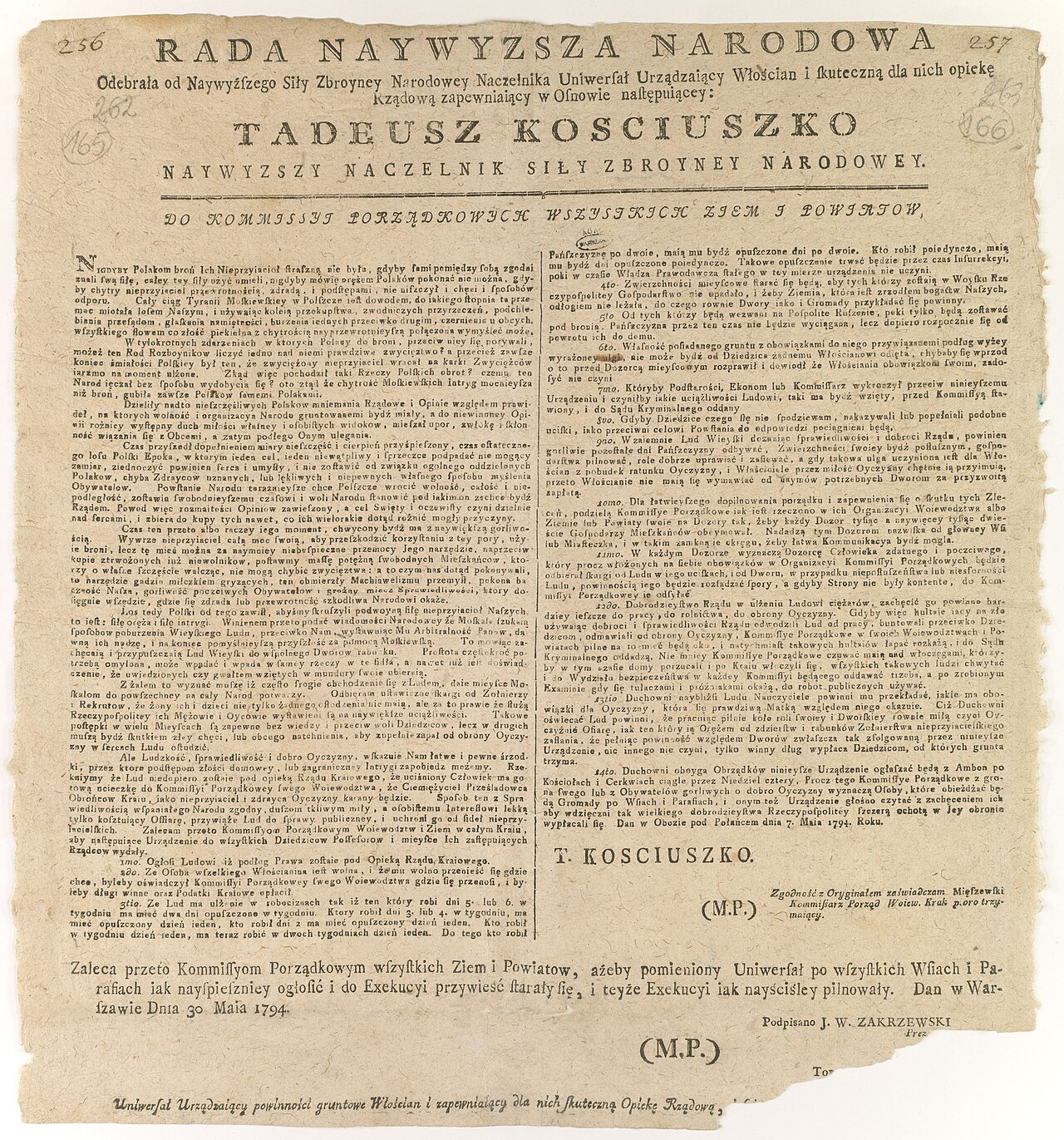
Kościuszko's 1794 decree gave Polish peasants personal freedom and reduced their labour duties, part of his bid to win them to the national uprising.
Kościuszko wrote and issued this decree himself as leader of the uprising, revealing his social and political aims.
About this source
What it is
This is a printed broadside of the Proclamation of Połaniec, issued by Tadeusz Kościuszko on 7 May 1794 near the town of Połaniec during the Kościuszko Uprising. The copy shown is a later printing from Warsaw, dated 30 May 1794.
Why it matters
The proclamation partly abolished serfdom, giving peasants personal freedom, protection from abuses by the nobility, and rights to the land they worked. It was the first Polish legal act to treat peasants as part of the nation, not just the nobility. Kościuszko hoped it would bring more recruits into the uprising, and it did help form peasant infantry units. Much of the nobility ignored it, and it had little lasting effect at the time, but it became a lasting symbol of Polish reform.
Look closer
- Why might Kościuszko have issued this proclamation during a war rather than in peacetime?
- What specific rights does the text promise peasants, and what limits are placed on those rights?
- Why did many nobles ignore a law issued by the country's highest military commander?
This document is part of the curated material that grounds the AI version of Tadeusz Kościuszko on Humy.ai — when students ask about related events, the AI can quote it and cite it.
More Tadeusz Kościuszko sources
Meet the AI Tadeusz Kościuszko →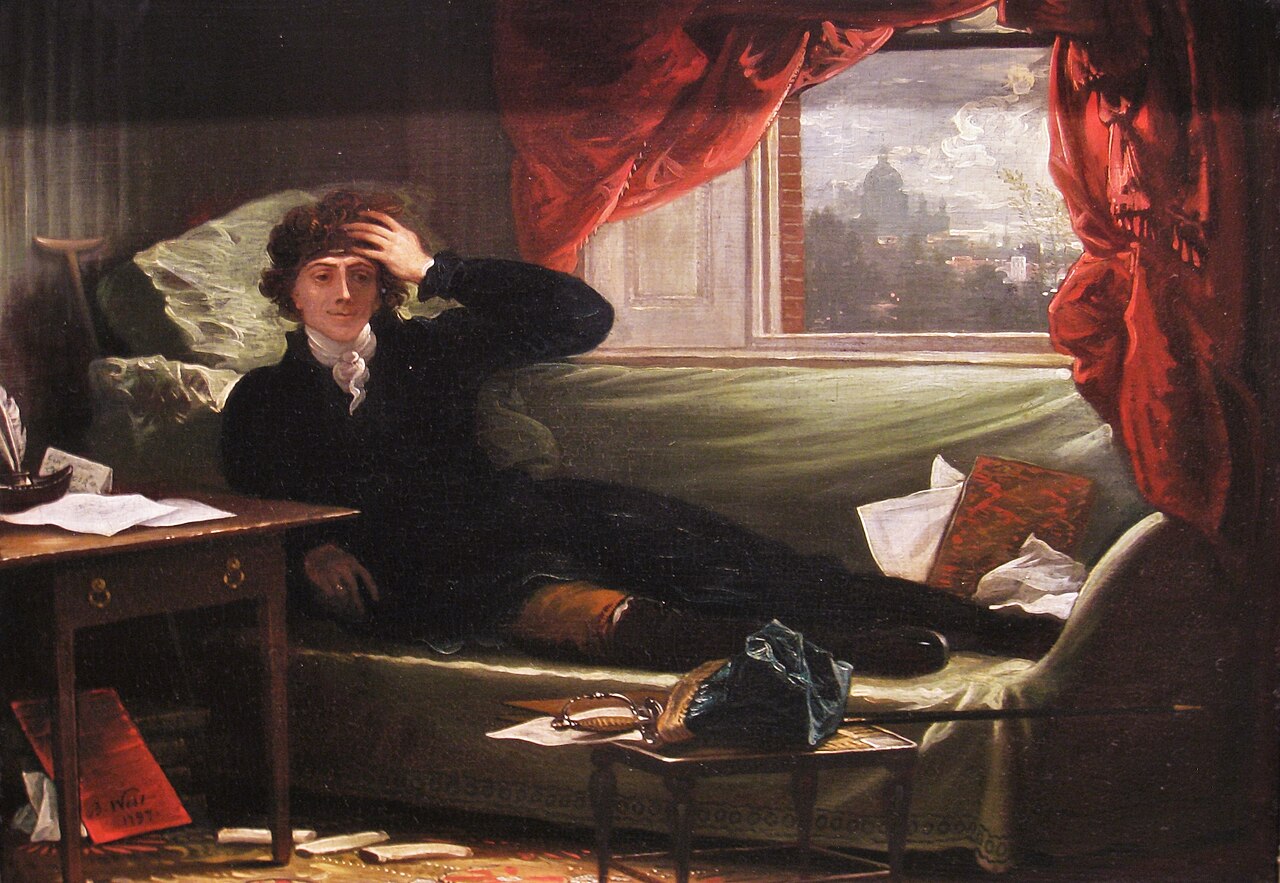 Painting
Primary source
General Thaddeus Kosciusko
Benjamin West · 1797
 Painting
Primary source
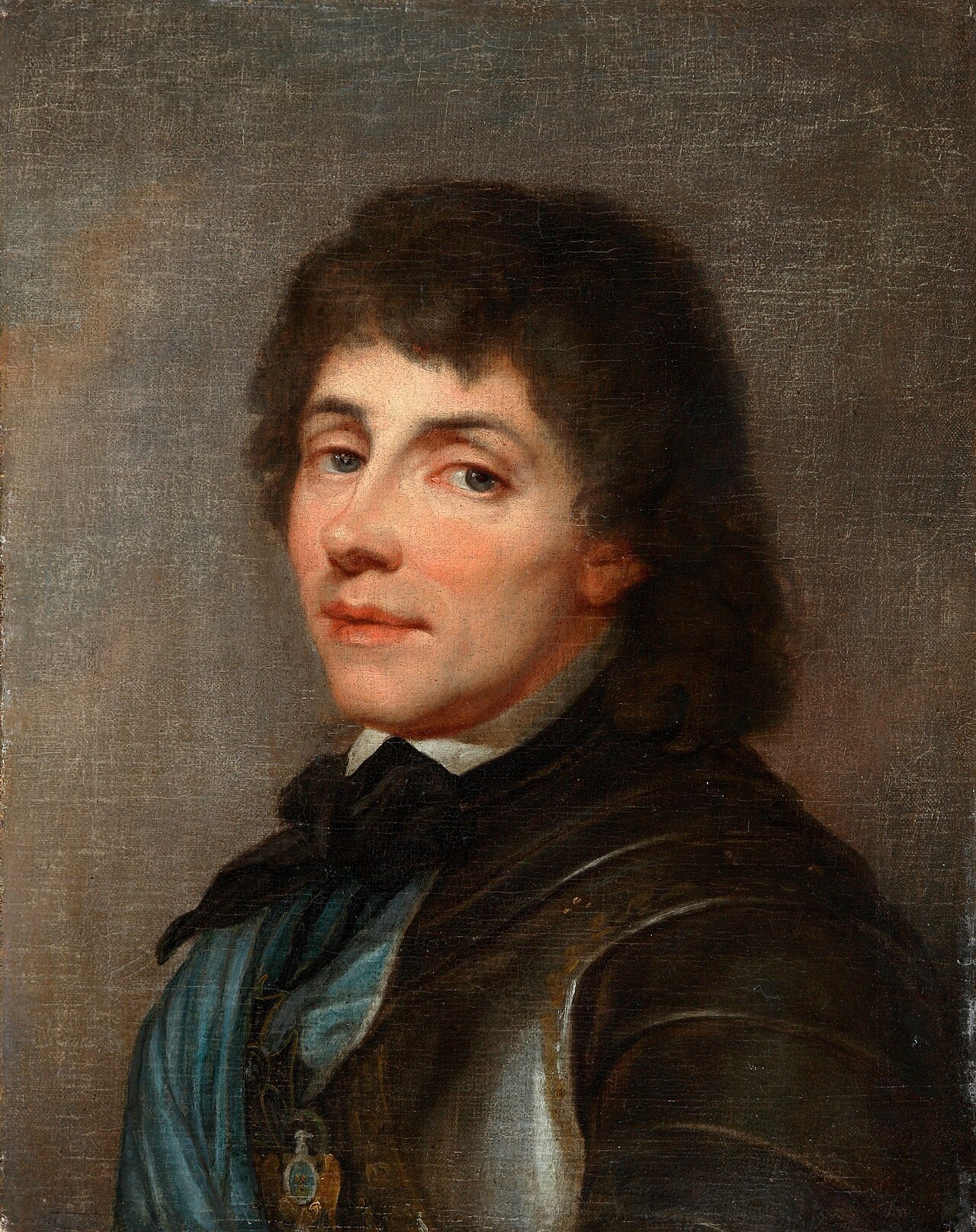
Portrait of Tadeusz Kościuszko
Józef Grassi · c. 1792
 Artifact
Primary source
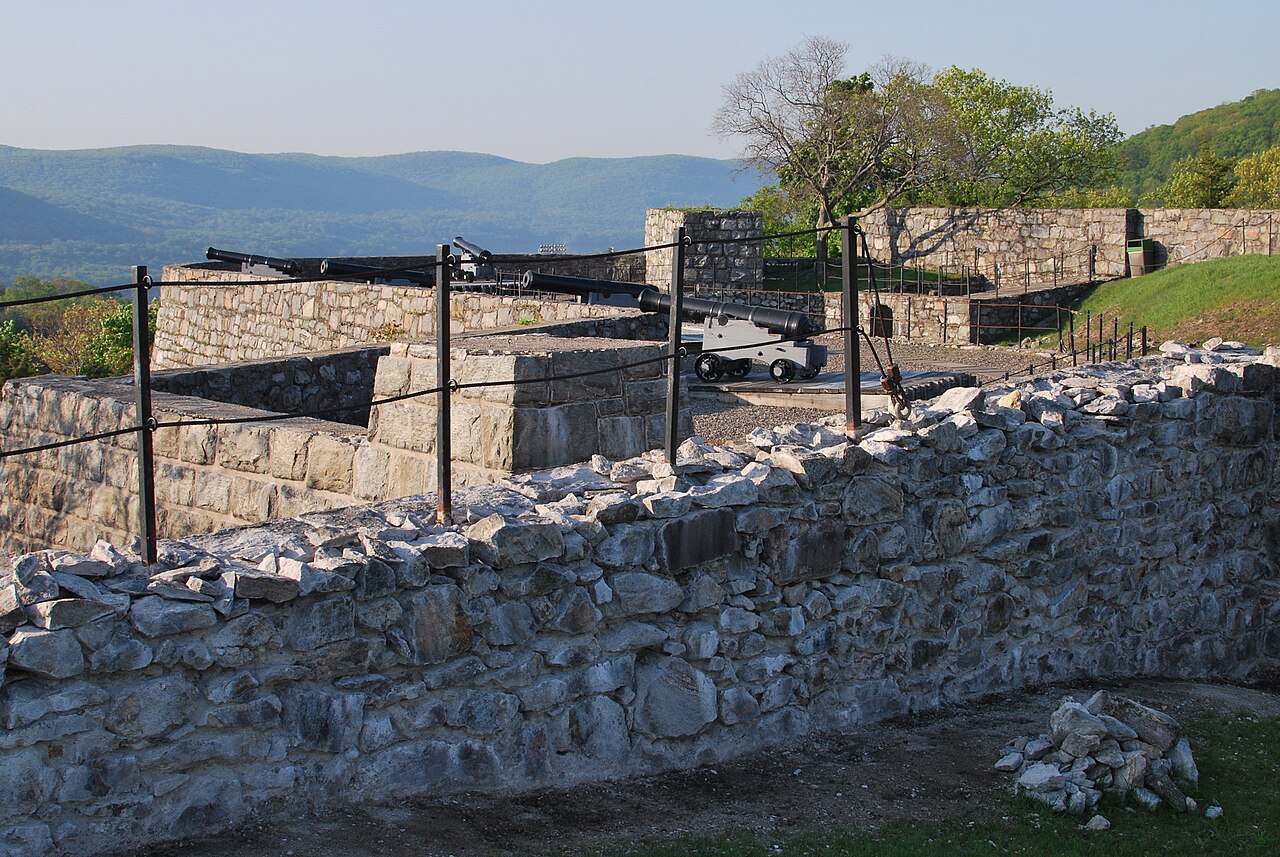
Fort Putnam
1778
 Document
Primary source
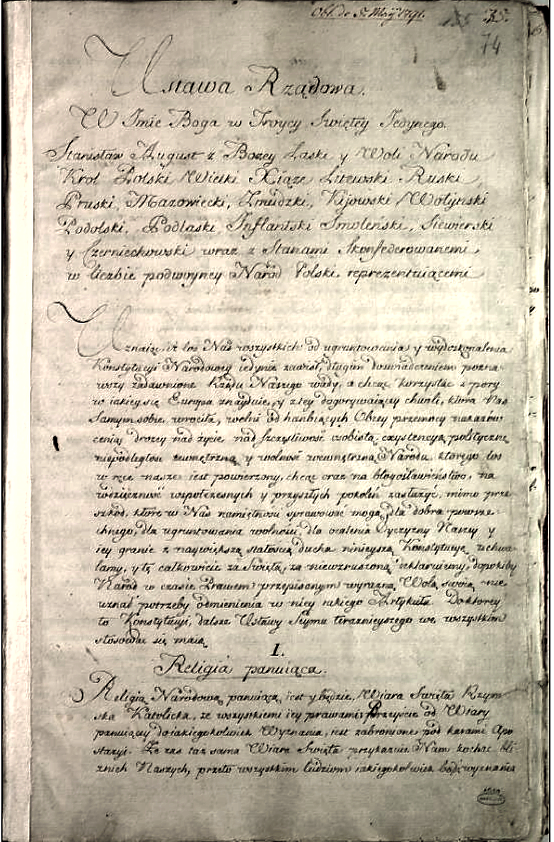
Constitution of May 3, 1791
3 May 1791
 Painting
Secondary source
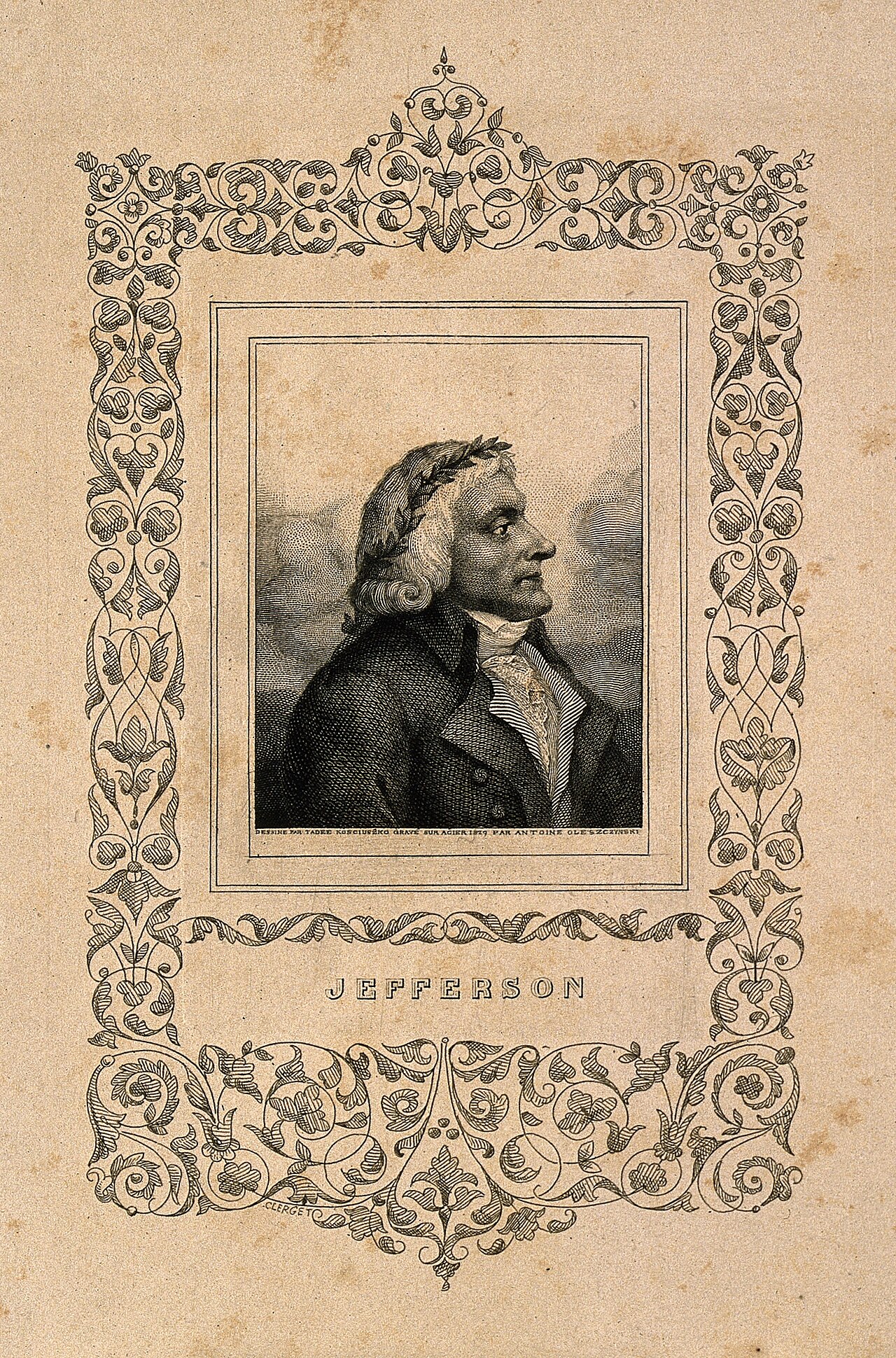
Thomas Jefferson, Line Engraving by A. Oleszczynsky after T. Kosciuszko
A. Oleszczynsky, after Tadeusz Kościuszko · 1829
Ready when you are
Start chatting with Tadeusz Kościuszko now.
20 messages free · No credit card · Available in 50+ languages.