


Primary sourceDocument10 December 1832
Proclamation to the People of South Carolina
Andrew Jackson · 10 December 1832
President Andrew Jackson's 1832 proclamation rejecting nullification and secession, directly answering the doctrine Calhoun had championed.
Jackson's proclamation directly confronted the nullification doctrine that Calhoun had authored and championed.
About this source
What it is
This document was issued by President Andrew Jackson on December 10, 1832, and is held by the U.S. National Archives. It responded to South Carolina's attempt to declare federal tariff laws void within the state.
Why it matters
Jackson's proclamation was a direct challenge to the nullification theory that John C. Calhoun had developed and defended. It shows how the federal government responded to the crisis Calhoun's ideas had helped create, warning that the Union could not survive if states could simply ignore federal law. The dispute brought the country close to armed conflict before Congress lowered the tariff and South Carolina backed down.
Look closer
- What arguments does Jackson use to defend the authority of the federal government?
- How does his tone compare to Calhoun's writings on the same subject?
- Why might a president feel the need to address the public directly in this way?
This document is part of the curated material that grounds the AI version of John C. Calhoun on Humy.ai — when students ask about related events, the AI can quote it and cite it.
More John C. Calhoun sources
Meet the AI John C. Calhoun →Primary source
South Carolina Exposition and Protest
John C. Calhoun · 1828
Primary source
Slavery a Positive Good
John C. Calhoun · 6 February 1837
 Book
Primary source
A Disquisition on Government
John C. Calhoun · 1851
Primary source
Ordinance of Nullification
24 November 1832
 Photograph
Primary source
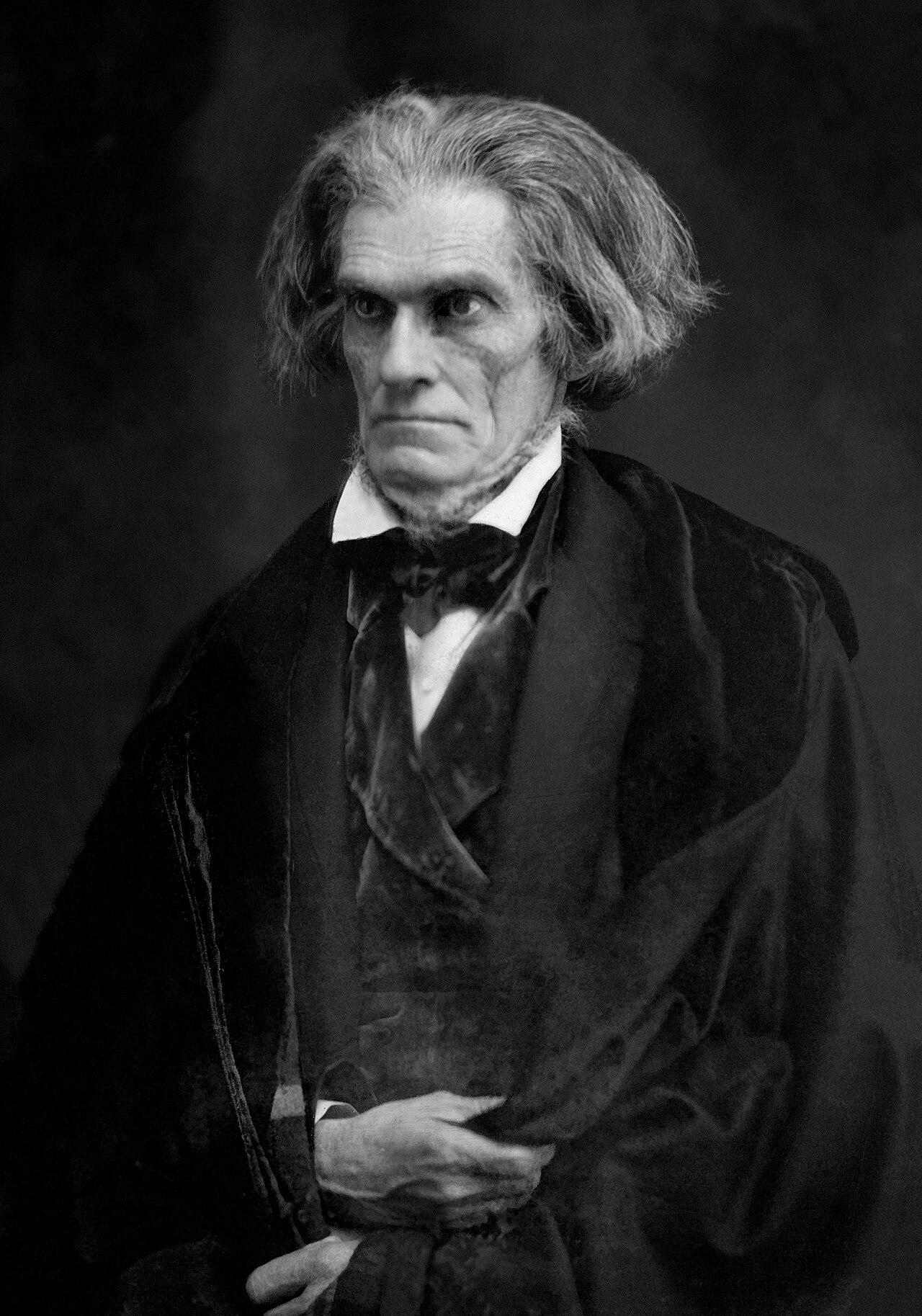
John C. Calhoun by Mathew Brady
Mathew Benjamin Brady · 1849
Ready when you are
Start chatting with John C. Calhoun now.
20 messages free · No credit card · Available in 50+ languages.