


Primary sourceBook1926
Proem
Langston Hughes · 1926
The opening poem of Langston Hughes's first poetry collection The Weary Blues, 1926, declaring his identity as a Black man through history.
The opening poem of Hughes's first published collection, stating his own identity and view of Black history.
About this source
What it is
"Proem" is a short poem by Langston Hughes, the opening piece of his first poetry collection, The Weary Blues, published in 1926.
Why it matters
In this poem, Hughes speaks as a Black man moving through history — as an enslaved person, a worker, a singer, and a victim of racial violence — connecting the African American experience to ancient Africa, slavery, labor, and lynching. Written near the start of his career, it set out themes of Black identity, history, and pride that would run through much of his later work during the Harlem Renaissance.
Look closer
- Why might Hughes have chosen to place this poem first in his collection?
- What different roles and experiences does the speaker claim, and what do they have in common?
- How does the poem connect personal identity to a much longer history?
This book is part of the curated material that grounds the AI version of Langston Hughes on Humy.ai — when students ask about related events, the AI can quote it and cite it.
More Langston Hughes sources
Meet the AI Langston Hughes →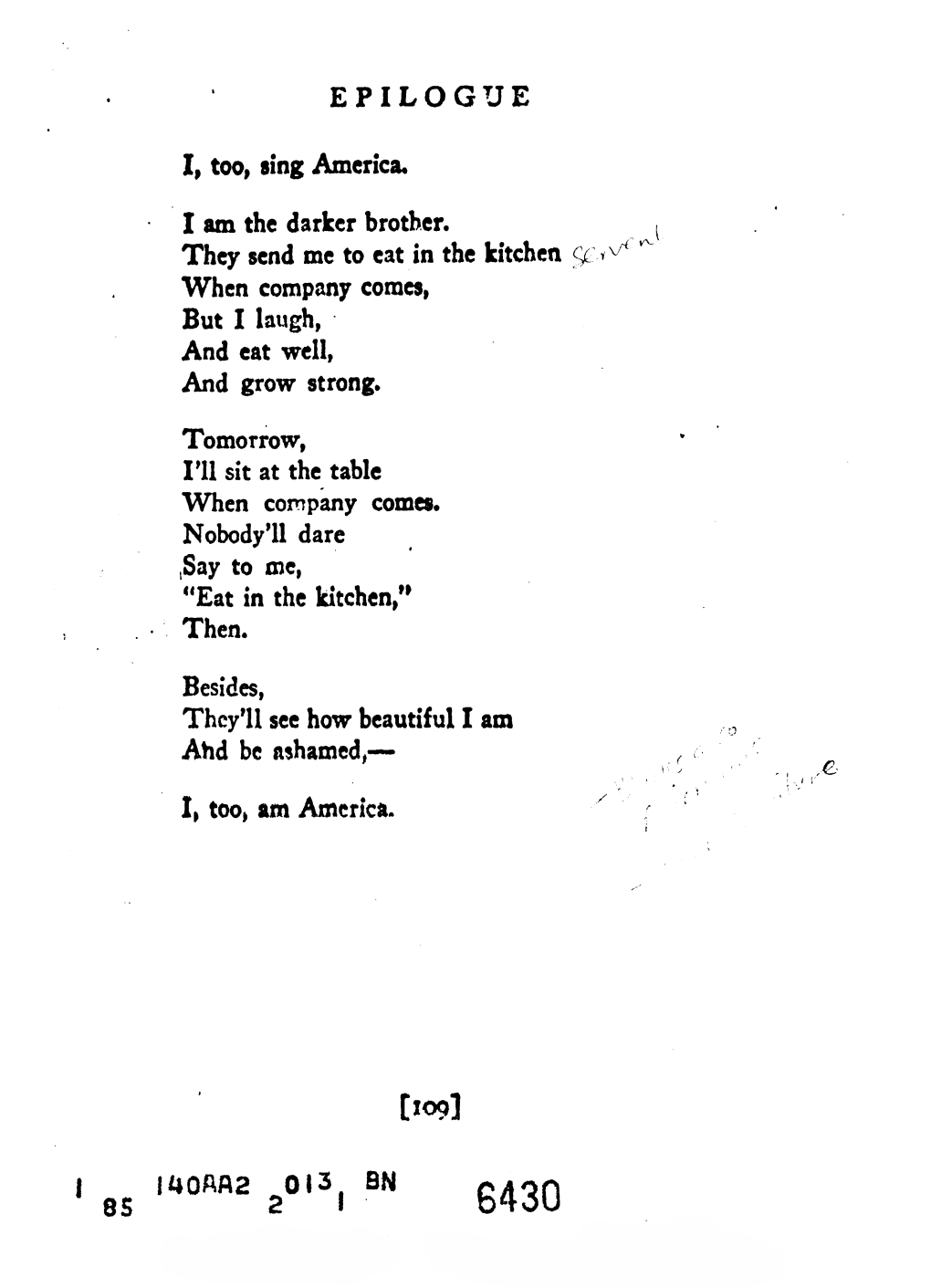
Ready when you are
Start chatting with Langston Hughes now.
20 messages free · No credit card · Available in 50+ languages.