


Secondary sourcePainting1797
Proposals of Gracchus
1797
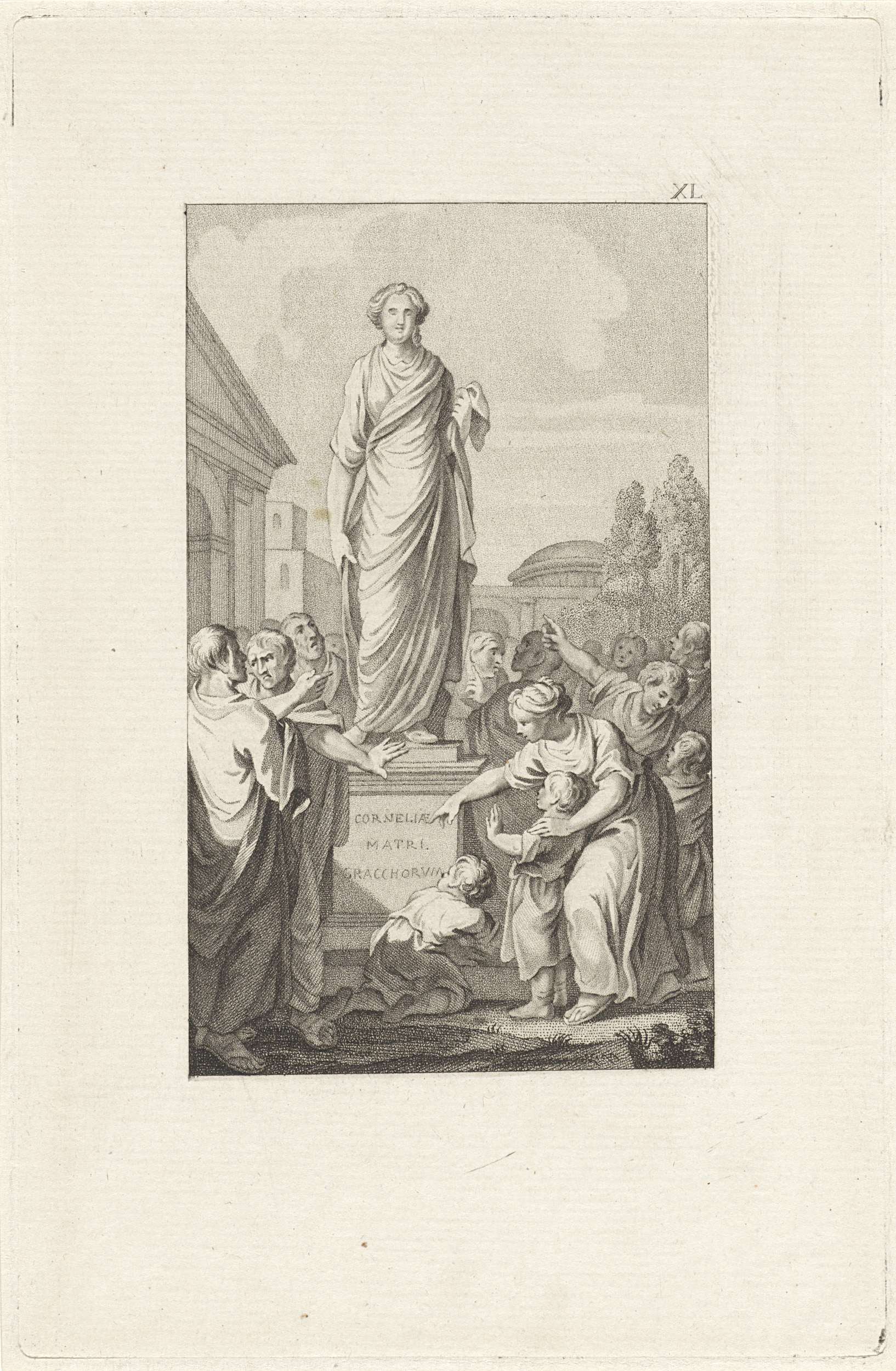
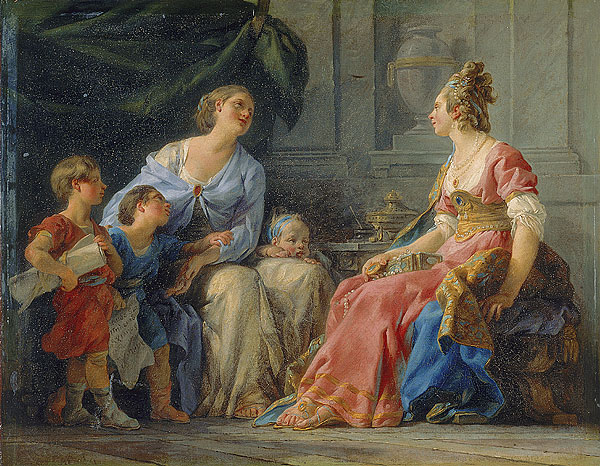
An 18th-century engraving imagining Tiberius Gracchus introducing a reform at his mother Cornelia's request, with a statue honoring her set up by a grateful crowd.
Depicts an imagined scene of Tiberius Gracchus proposing reform, created centuries after his life.
About this source
What it is
This is an engraving made in 1797, long after Tiberius Gracchus lived. It shows an imagined scene in which Tiberius introduces a reform at the urging of his mother Cornelia. The crowd is shown celebrating and setting up a statue in her honour, inscribed 'Cornelia, mother of the Gracchi'. The print is held by the Rijksmuseum in the Netherlands.
Why it matters
The print was made centuries after Tiberius Gracchus's death and reflects how later European artists imagined and celebrated Roman history, especially the idea of Cornelia as an ideal mother whose sons became famous reformers. It tells us more about 18th-century values than about the real events of Tiberius's life.
Look closer
- What does the crowd's reaction suggest about how the artist wanted viewers to feel about Tiberius's reform?
- Why might Cornelia be honoured with a statue rather than Tiberius himself?
- What does this image leave out about the real political conflict Tiberius faced?
This painting is part of the curated material that grounds the AI version of Tiberius Gracchus on Humy.ai — when students ask about related events, the AI can quote it and cite it.
More Tiberius Gracchus sources
Browse all 50 →
Ready when you are
Start chatting with Tiberius Gracchus now.
20 messages free · No credit card · Available in 50+ languages.