


Primary sourceDocument1858
Provisional Constitution
John Brown · 1858
Brown's handwritten plan for a new antislavery government, adopted at the 1858 Chatham Convention and used as evidence of treason at his trial.
Brown's own blueprint for a new antislavery state, written by him and used as evidence of treason at his trial.
About this source
What it is
Written by John Brown in February 1858 while staying at Frederick Douglass's house in Rochester, New York, this document laid out a provisional government and laws for a planned state of freed and escaped enslaved people in the Appalachian Mountains. It was adopted at a convention of mostly Black delegates in Chatham, Ontario, in May 1858.
Why it matters
The constitution shows Brown's raid on Harpers Ferry was meant to be the start of a political revolution, not just a raid. Hundreds of copies were found among his papers after his capture and used at his trial as evidence of sedition, though none were ever distributed, even to nearby enslaved people. Officers under the document included John Henry Kagi and others who joined Brown's raid.
Look closer
- Why might Brown have written a whole constitution instead of simply planning an attack?
- What does the preamble's language about the Declaration of Independence and the Dred Scott decision tell us about how Brown saw his cause?
- Why do you think the document was never distributed, even to the enslaved people it was meant for?
This document is part of the curated material that grounds the AI version of John Brown on Humy.ai — when students ask about related events, the AI can quote it and cite it.
More John Brown sources
Meet the AI John Brown →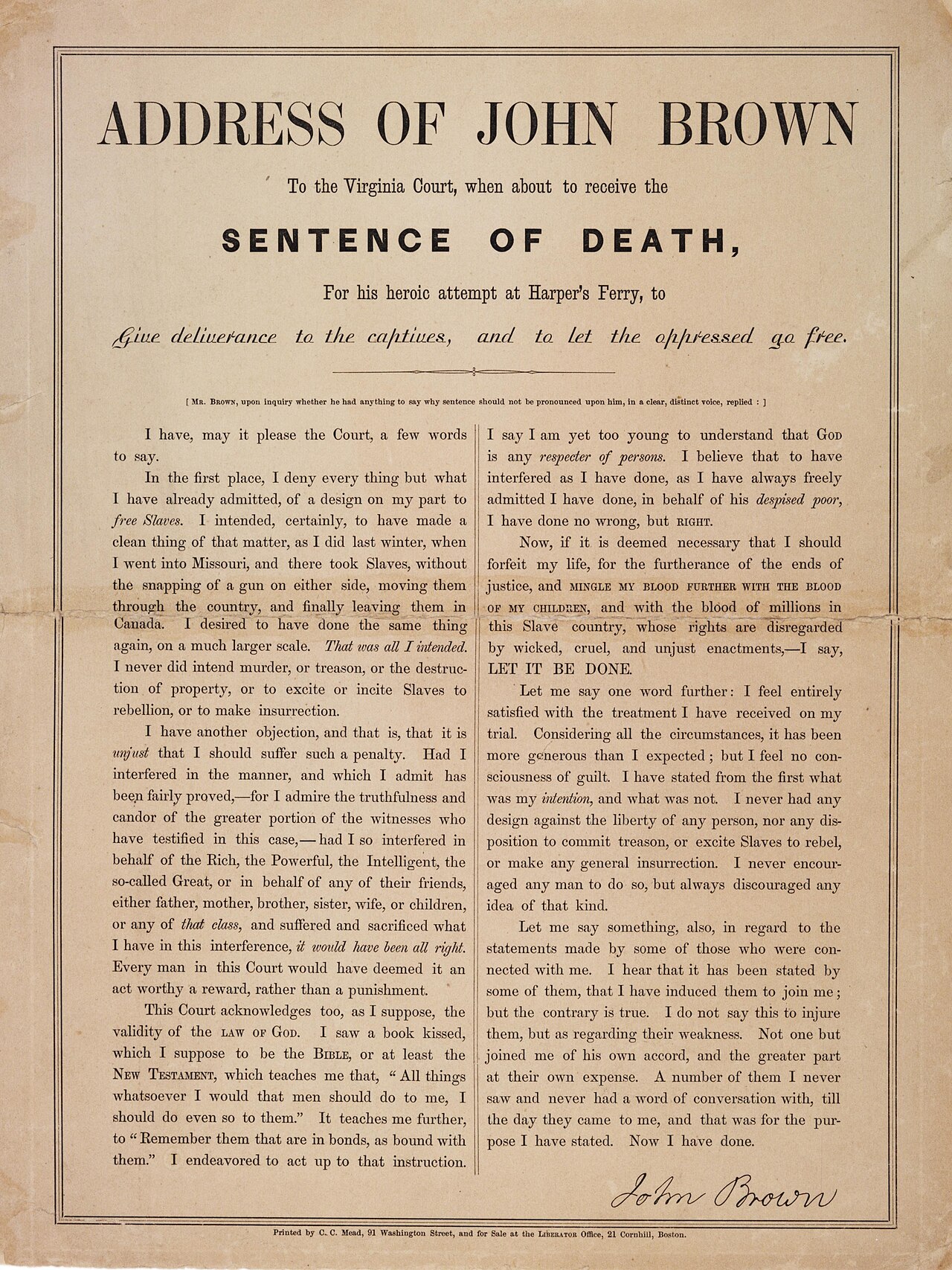 Speech
Primary source
John Brown's Last Speech to the Court
John Brown · 2 November 1859
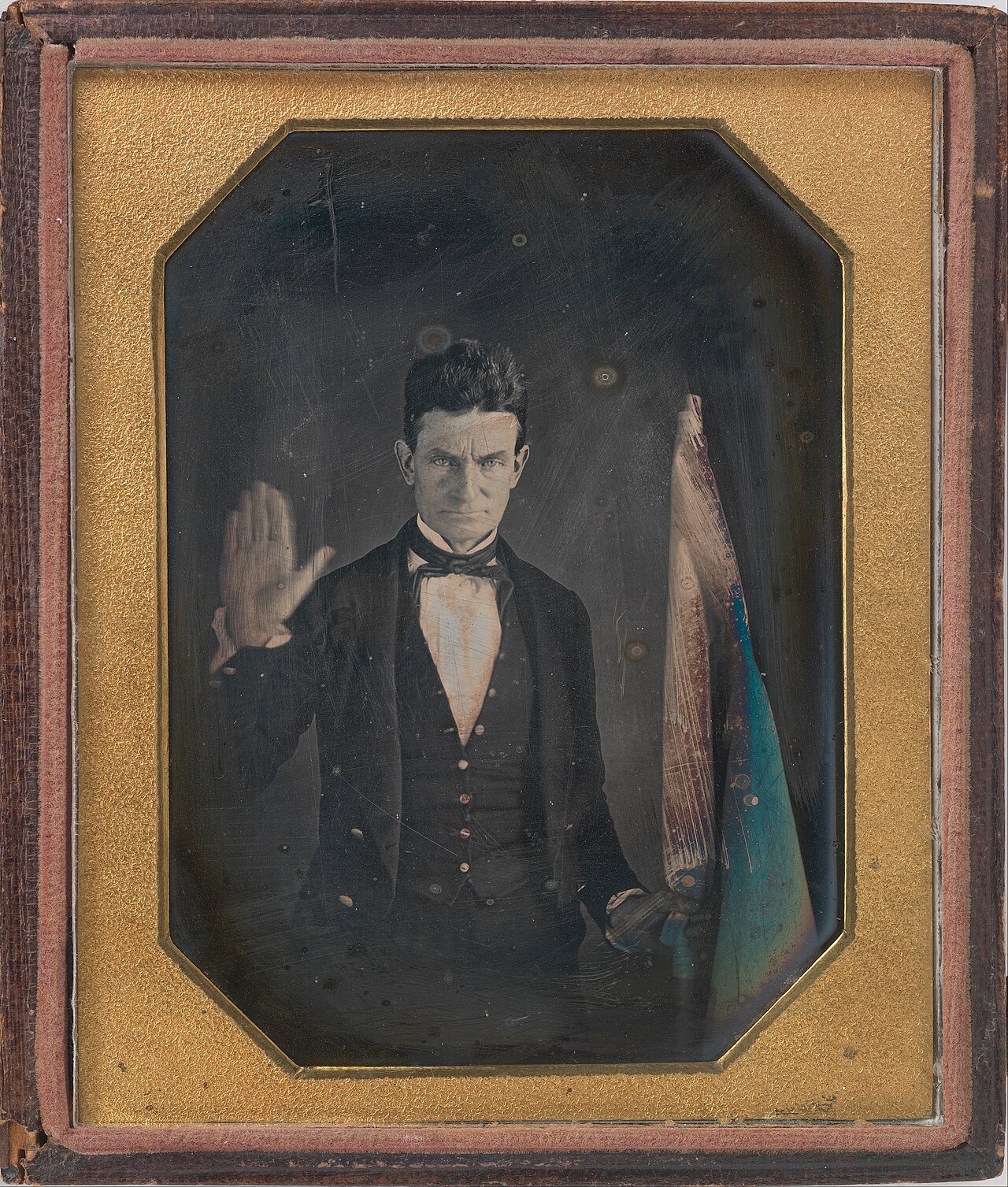 Photograph
Primary source
John Brown
Augustus Washington
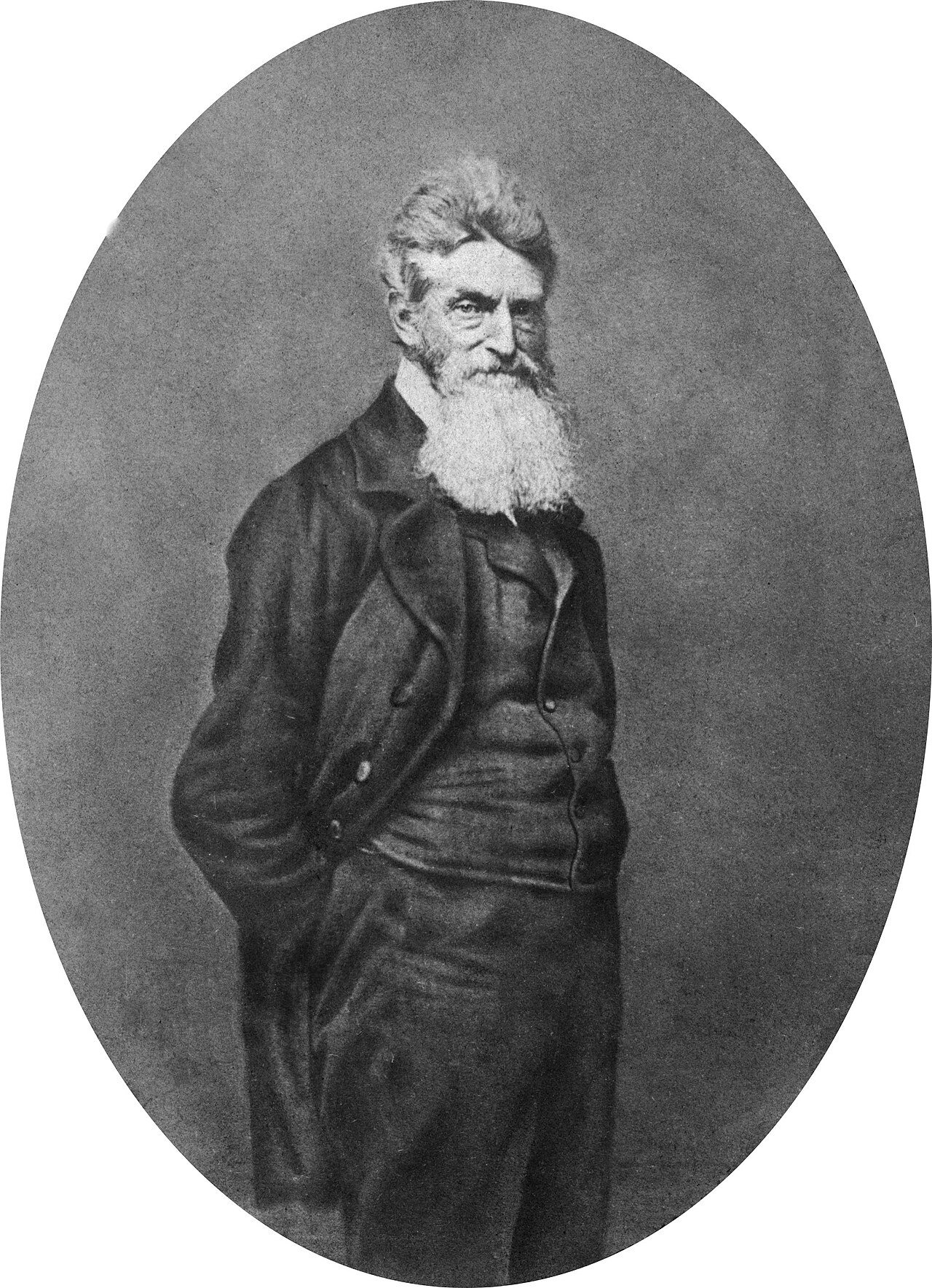 Photograph
Primary source
John Brown Portrait, 1859
Martin M. Lawrence · 1859
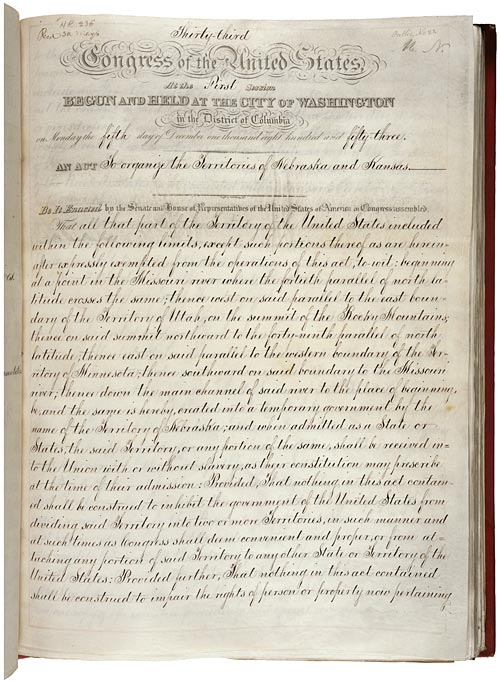 Document
Primary source
Kansas-Nebraska Act
United States Congress · 1854
 Document
Secondary source
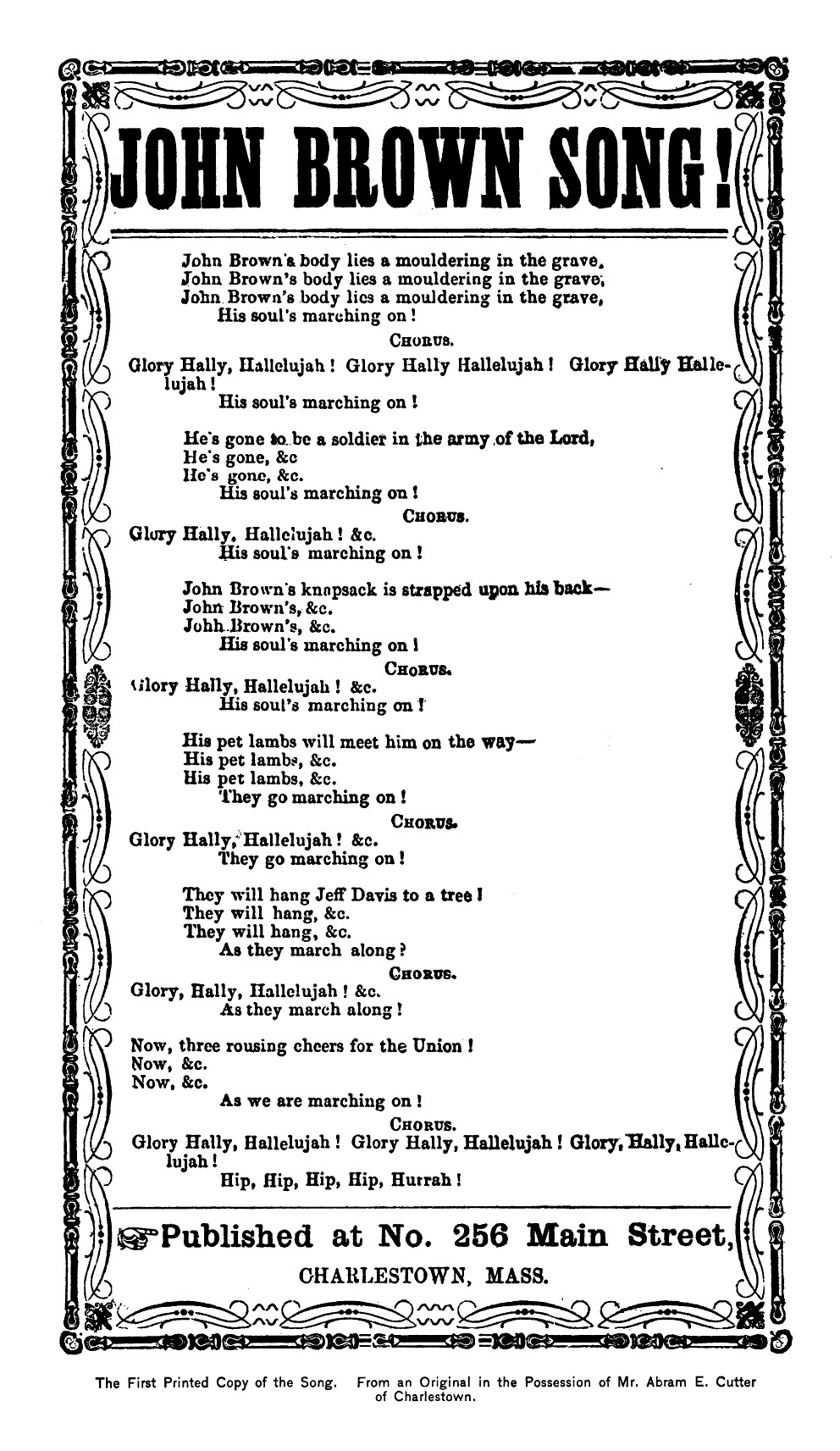
John Brown's Body
William Steffe · 1861
Ready when you are
Start chatting with John Brown now.
20 messages free · No credit card · Available in 50+ languages.