


Secondary sourceArtifact1493
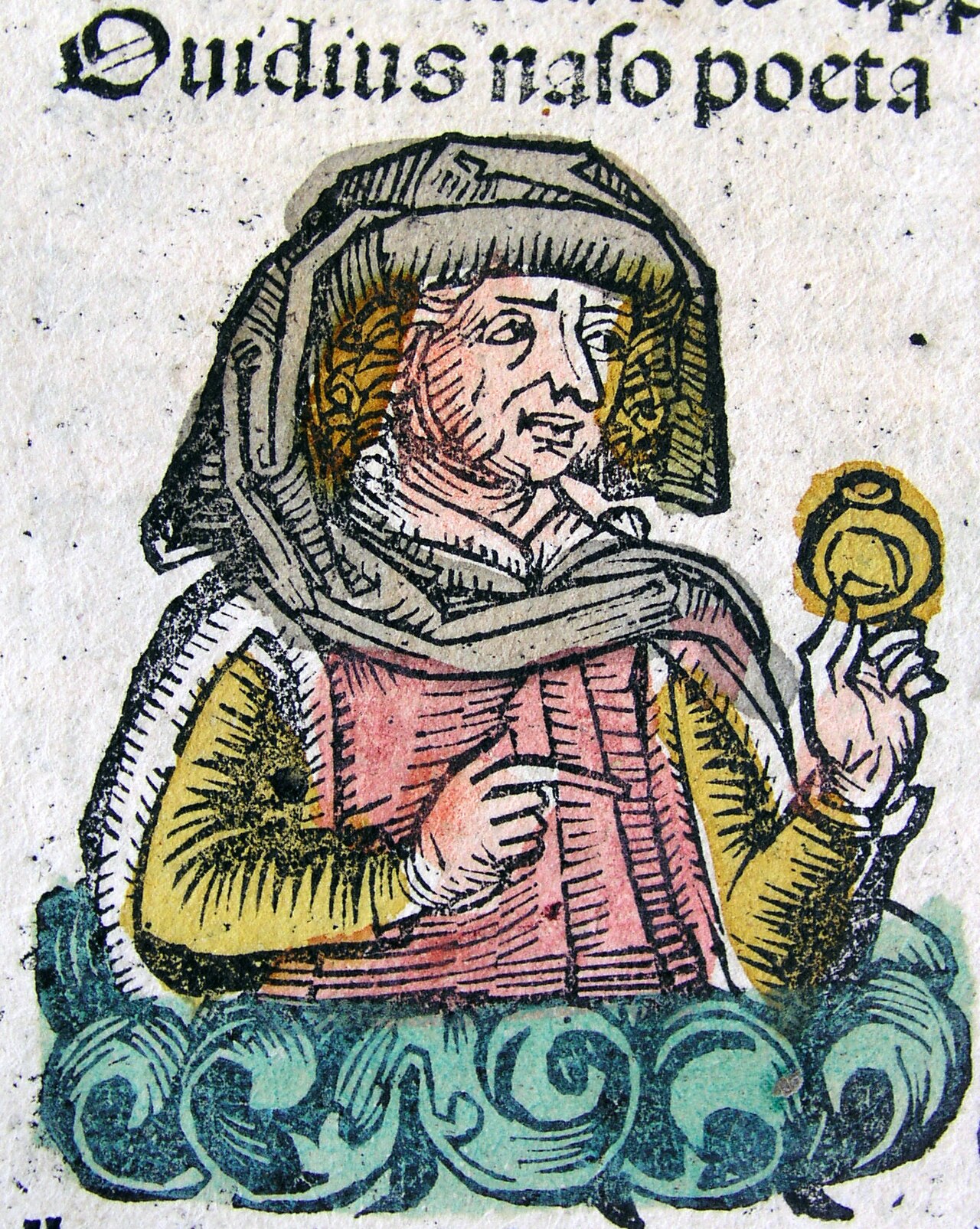
Publius Ovidius Naso woodcut, Nuremberg Chronicle
Michel Wolgemut, Wilhelm Pleydenwurff · 1493
A hand-coloured woodcut portrait of the Roman poet Ovid, printed in the 1493 Nuremberg Chronicle. It shows how a late medieval printer imagined him.
Shows how Ovid was pictured in a famous 1493 illustrated world history, long after his lifetime.
About this source
What it is
This is a hand-coloured woodcut portrait of the Roman poet Ovid, printed in the Nuremberg Chronicle in 1493. The printed label above the portrait reads 'Ovidius naso poeta'. The chronicle's text was written by Hartmann Schedel, and the woodcuts were made by Michel Wolgemut and Wilhelm Pleydenwurff.
Why it matters
The portrait was made about 1,500 years after Ovid died, so it shows how people in the late 1400s imagined him, not how he looked. The Nuremberg Chronicle was a famous illustrated book of world history. Its portraits show that printers and artists of that time already treated ancient writers as important authors worth remembering.
Look closer
- What clothing and objects does the artist give Ovid, and what might they suggest about a poet?
- Why might a book of world history include portraits of ancient writers?
- What could a person who knew Ovid have told us that this portrait does not show?
This artifact is part of the curated material that grounds the AI version of Ovid on Humy.ai — when students ask about related events, the AI can quote it and cite it.
Ready when you are
Start chatting with Ovid now.
20 messages free · No credit card · Available in 50+ languages.