


Primary sourceSculpture636-649 CE
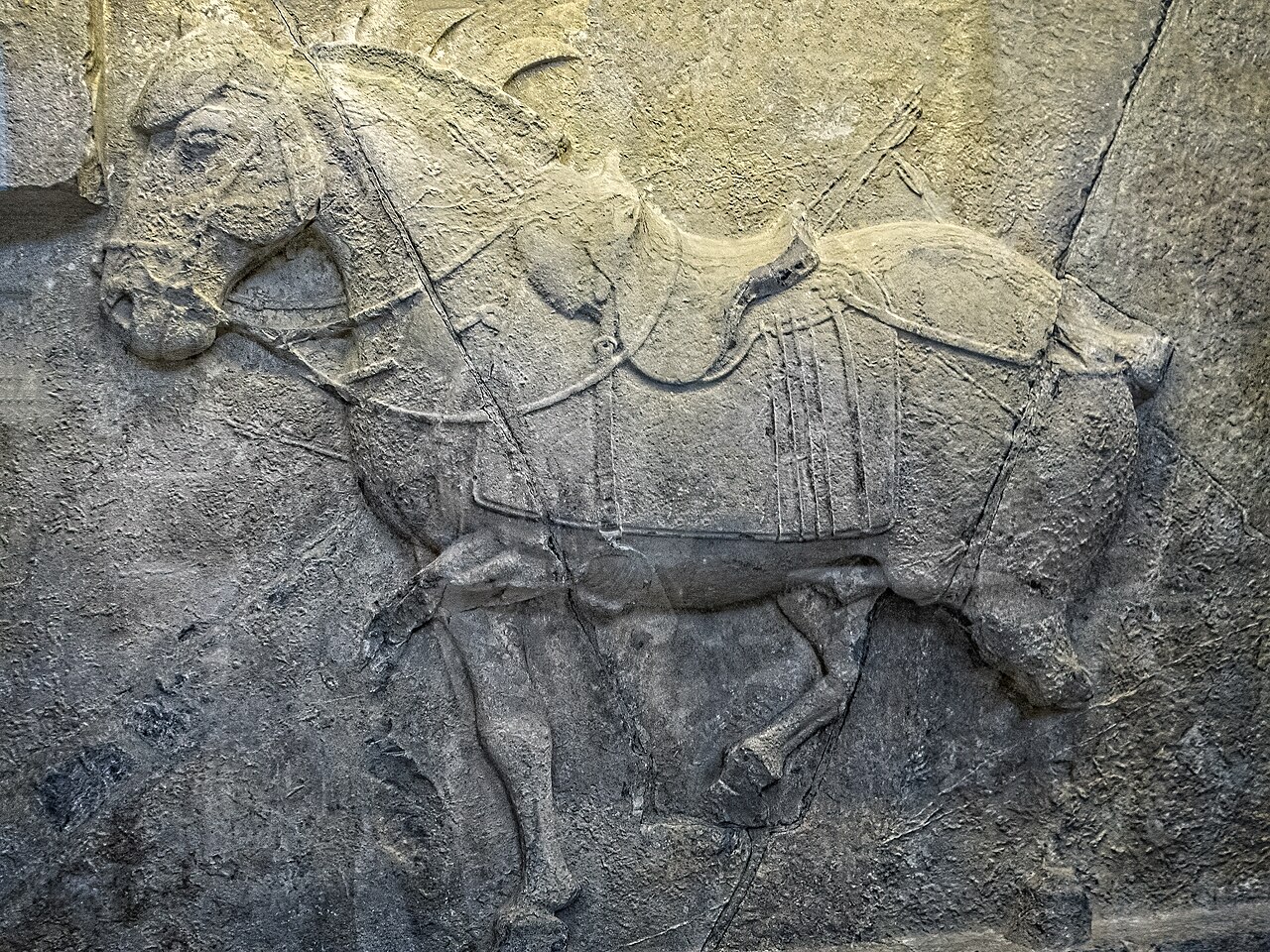
Quanmaogua Horse Relief
636-649 CE
A stone relief of a horse from Emperor Taizong's tomb, one of the famous Six Steeds carved to honor his war-horses.
One of the Six Steeds reliefs carved for Taizong's own tomb, honoring the war-horses he rode in battle.
About this source
What it is
This limestone relief, carved between 636 and 649 CE during the Tang Dynasty, depicts a horse named Quanmaogua in profile, complete with saddle blanket, harness, and bridle. It is one of the Six Steeds reliefs originally placed at Emperor Taizong's tomb in Shaanxi Province, and is now held at the Penn Museum.
Why it matters
The Six Steeds reliefs commemorated the actual war-horses Taizong rode during his military campaigns before becoming emperor. These carvings show how emperors used monumental art to honor their personal history and military achievements, turning animals into lasting symbols of imperial power.
Look closer
- Why might an emperor want his war-horses, rather than only himself, carved in stone at his tomb?
- What details in the carving - like the harness and saddle blanket - tell you about how horses were used and valued?
- How does this relief end up in a museum far from where it was originally placed, and what does that tell you about the artifact's later history?
This sculpture is part of the curated material that grounds the AI version of Taizong of Tang on Humy.ai — when students ask about related events, the AI can quote it and cite it.
More Taizong of Tang sources
Browse all 90 →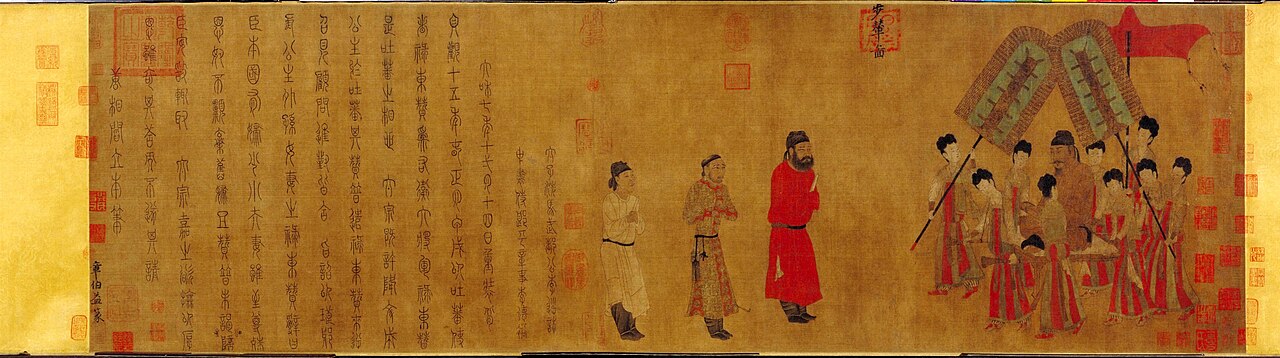 Painting
Secondary source
Bunian Tu
Yan Liben · c. 700 (possibly a later copy of an earlier original)
 Document
Primary source
Tang Code
624, revised 627 and 637
 Sculpture
Primary source
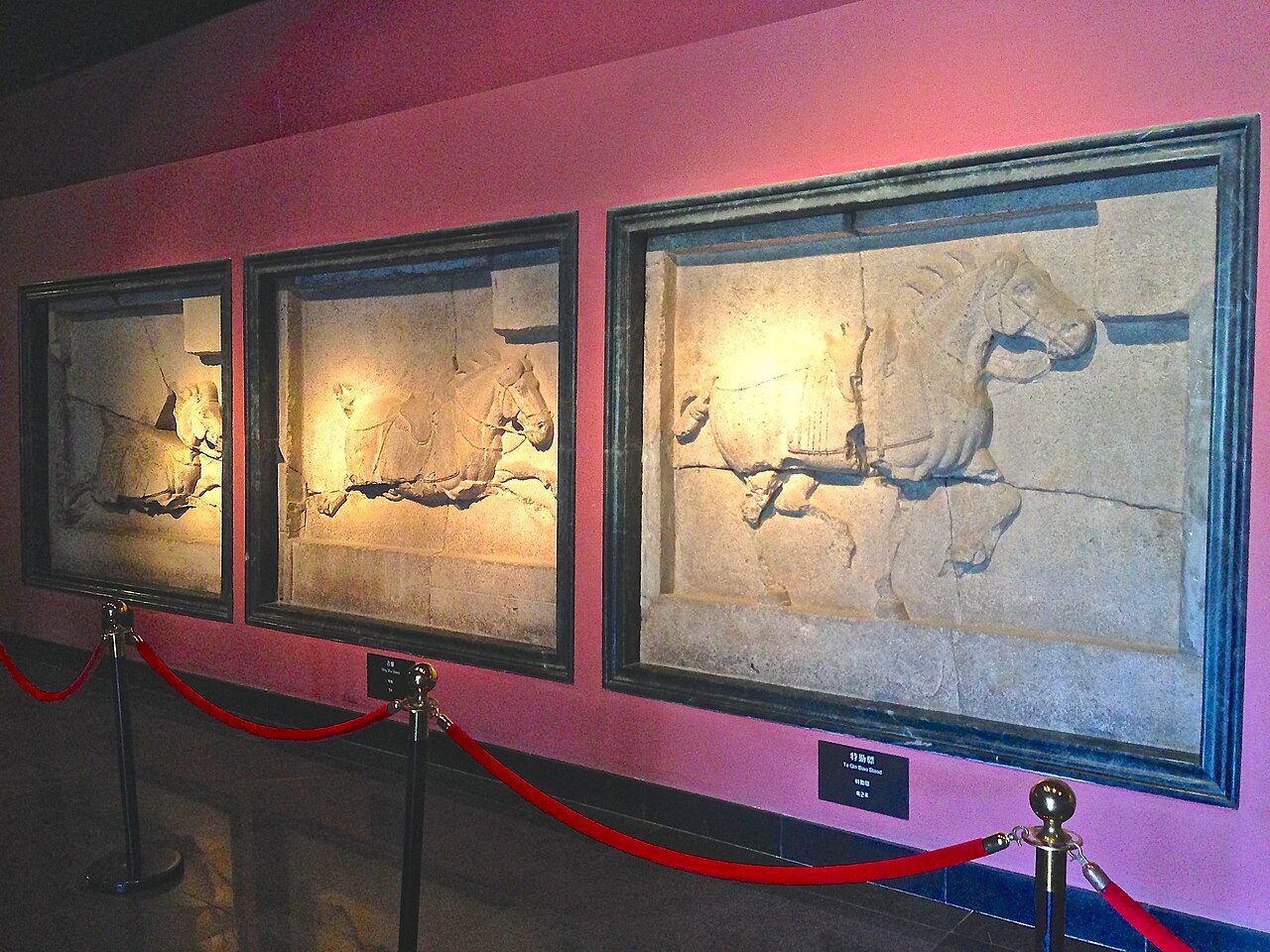
Six Steeds of Zhao Mausoleum
Yan Liben (attributed) · Tang dynasty (618-907)
Primary source
Difan
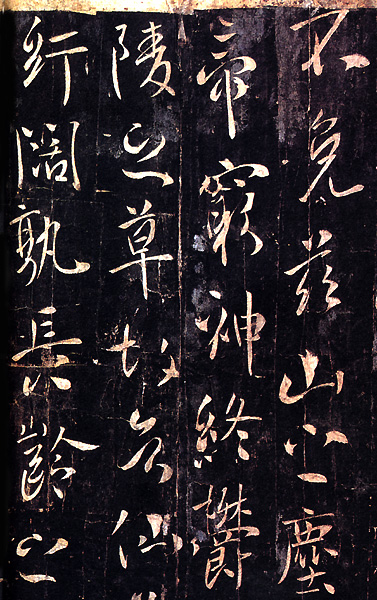
Emperor Taizong of Tang · 648
Free account
Read every Taizong of Tang source
Sign up free →
Ready when you are
Start chatting with Taizong of Tang now.
20 messages free · No credit card · Available in 50+ languages.