


Primary sourcePainting
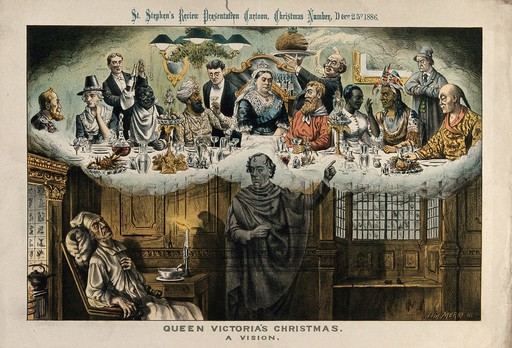
Queen Victoria's Christmas: A Vision
Tom Merry
A colour lithograph by Tom Merry in which Gladstone, as Dickens's Scrooge, is shown a Christmas vision by Disraeli, who appears as a ghost.
Shows Disraeli as a ghostly guide to Queen Victoria's Christmas, pictured in a rival's dream, reflecting his close ties with the Queen.
About this source
What it is
This is a colour lithograph titled 'Queen Victoria's Christmas: A Vision', drawn and printed by Tom Merry and held by the Wellcome Collection. Its banner reads 'St. Stephen's Review Presentation Cartoon, Christmas Number'. The collection record describes Gladstone as Charles Dickens's Scrooge, shown a vision by Benjamin Disraeli as one of the Christmas ghosts. The vision shows Queen Victoria sharing Christmas dinner with people from parts of the British Empire, including India, Africa, the Caribbean, Asia and North America. In the image, a sleeping elderly man sits in an armchair in the foreground.
Why it matters
The curator's note describes the cartoon as showing Disraeli's close ties with the Queen. It draws on Dickens's well-known story to make a political point about Gladstone and Disraeli. The cartoon also reflects how British imperial power was pictured in the press of the time. Its depiction of non-white guests is a caricature that students should read critically.
Look closer
- Who is shown as the dreamer, and who is shown as the ghost? What does that arrangement say about each man?
- How are the people from the Empire drawn at the dinner table, and what does the artist want the viewer to think of them?
- What does the cartoon leave out about the people it shows as guests?
This painting is part of the curated material that grounds the AI version of Benjamin Disraeli on Humy.ai — when students ask about related events, the AI can quote it and cite it.
More Benjamin Disraeli sources
Browse all 94 →Primary source
Crystal Palace speech
Benjamin Disraeli · 24 June 1872
Primary source
Free Trade Hall speech, Manchester
Benjamin Disraeli · 3 April 1872
 Book
Primary source
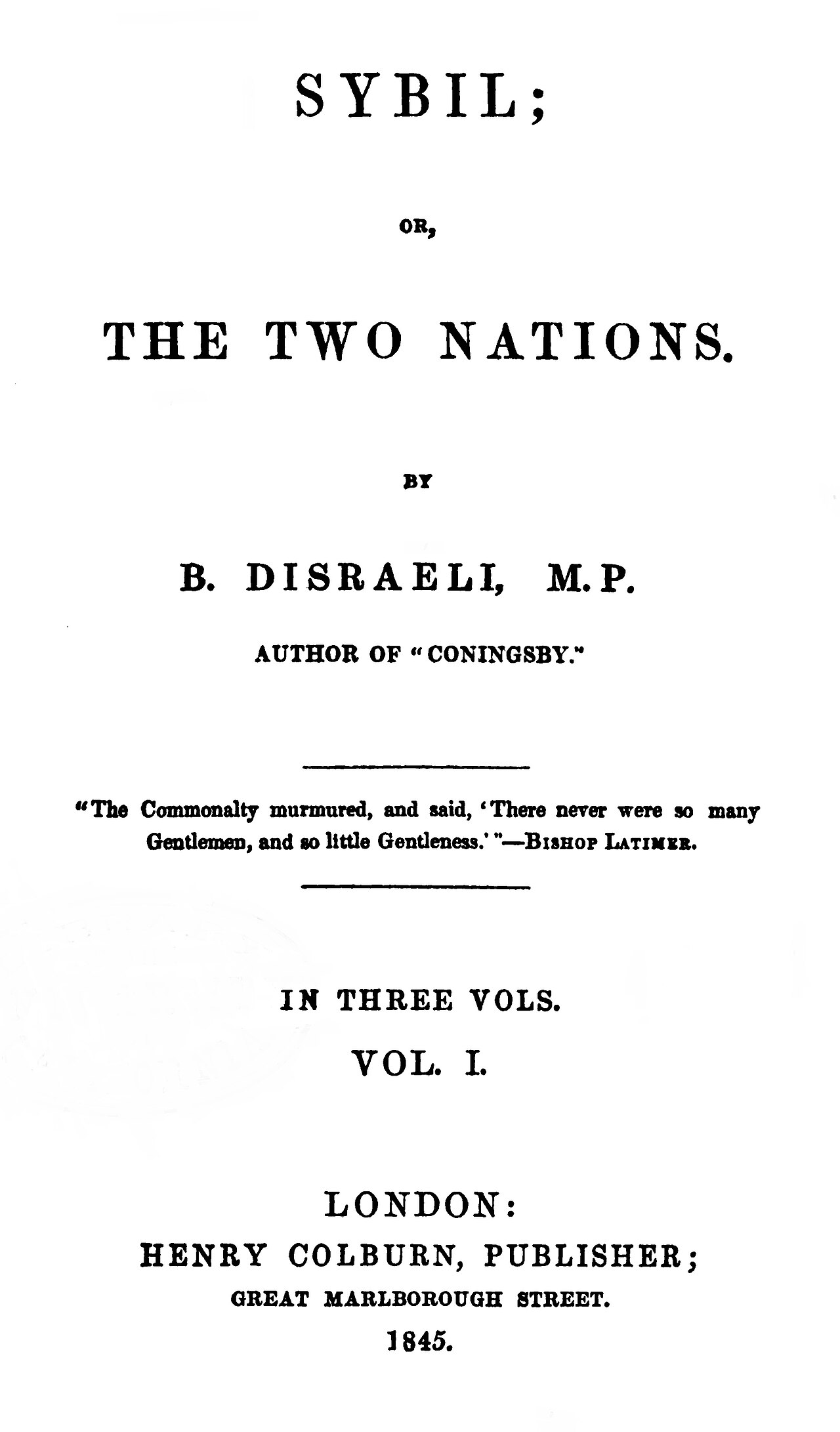
Sybil
Benjamin Disraeli · 1845
 Document
Primary source
Reform Act 1867
1867
Free account
Read every Benjamin Disraeli source
Sign up free →
Ready when you are
Start chatting with Benjamin Disraeli now.
20 messages free · No credit card · Available in 50+ languages.