


Primary sourceBook1926
Railroad Avenue
Langston Hughes · 1926
A short 1926 poem by Langston Hughes depicting a lively night street scene full of sound and laughter.
This is Hughes's own 1926 poem, showing his early poetic voice and style.
About this source
What it is
This is a poem written by Langston Hughes in 1926. It describes a scene on Railroad Avenue at dusk, filled with music, lights, and laughter spilling from fish joints and pool rooms.
Why it matters
The poem shows Hughes's early style, which captured everyday scenes of Black urban life with rhythm influenced by jazz and blues. It is an example of his contribution to the cultural movement known as the Harlem Renaissance, showing his skill in finding poetry in ordinary street life.
Look closer
- What sounds and images does Hughes use to bring the street to life?
- Why might he repeat the word "laughter" so many times?
- What does the poem suggest about the people living in this neighborhood?
This book is part of the curated material that grounds the AI version of Langston Hughes on Humy.ai — when students ask about related events, the AI can quote it and cite it.
More Langston Hughes sources
Meet the AI Langston Hughes →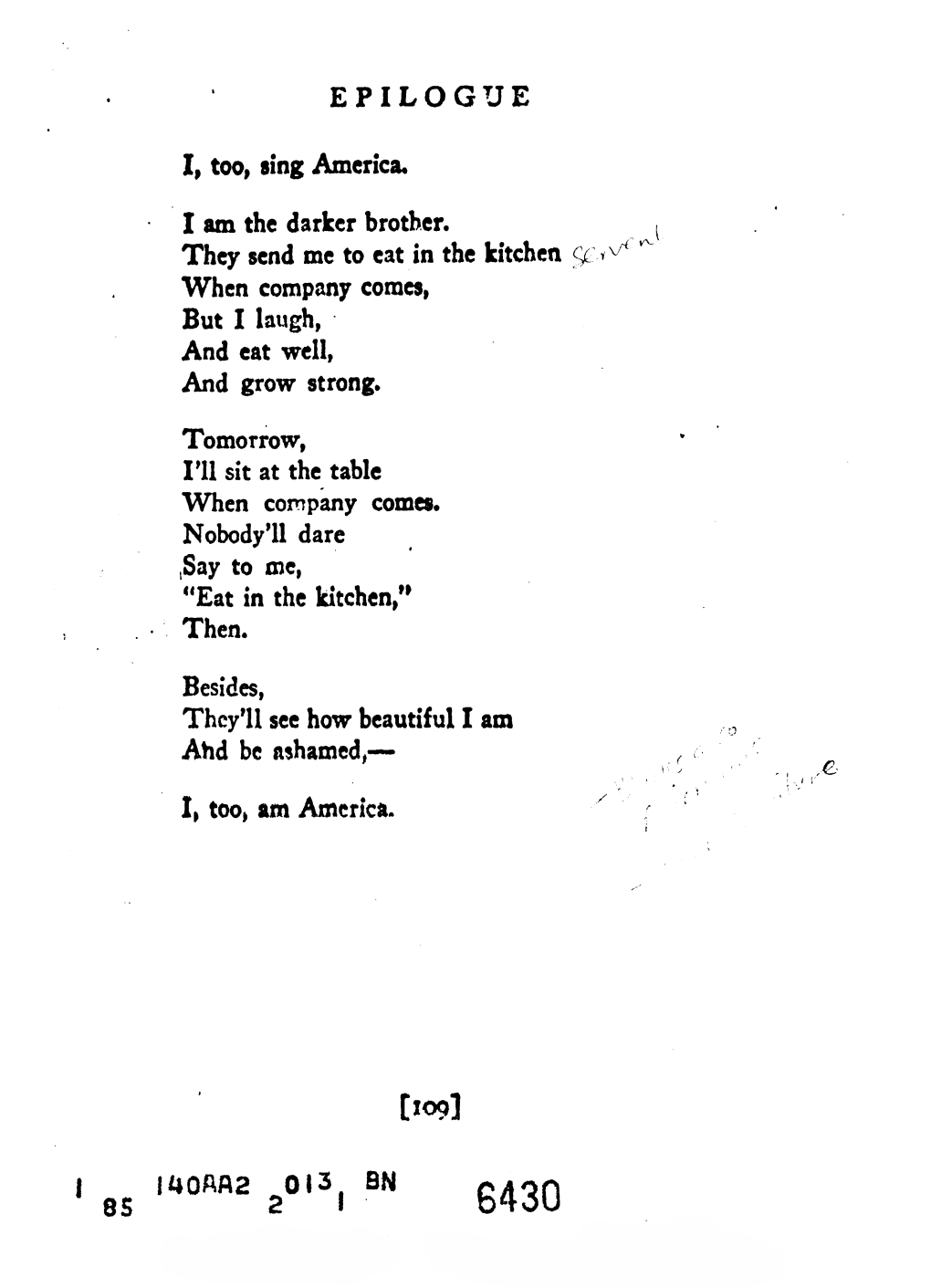
Ready when you are
Start chatting with Langston Hughes now.
20 messages free · No credit card · Available in 50+ languages.