


Primary sourcePaintingc. 1489-1490
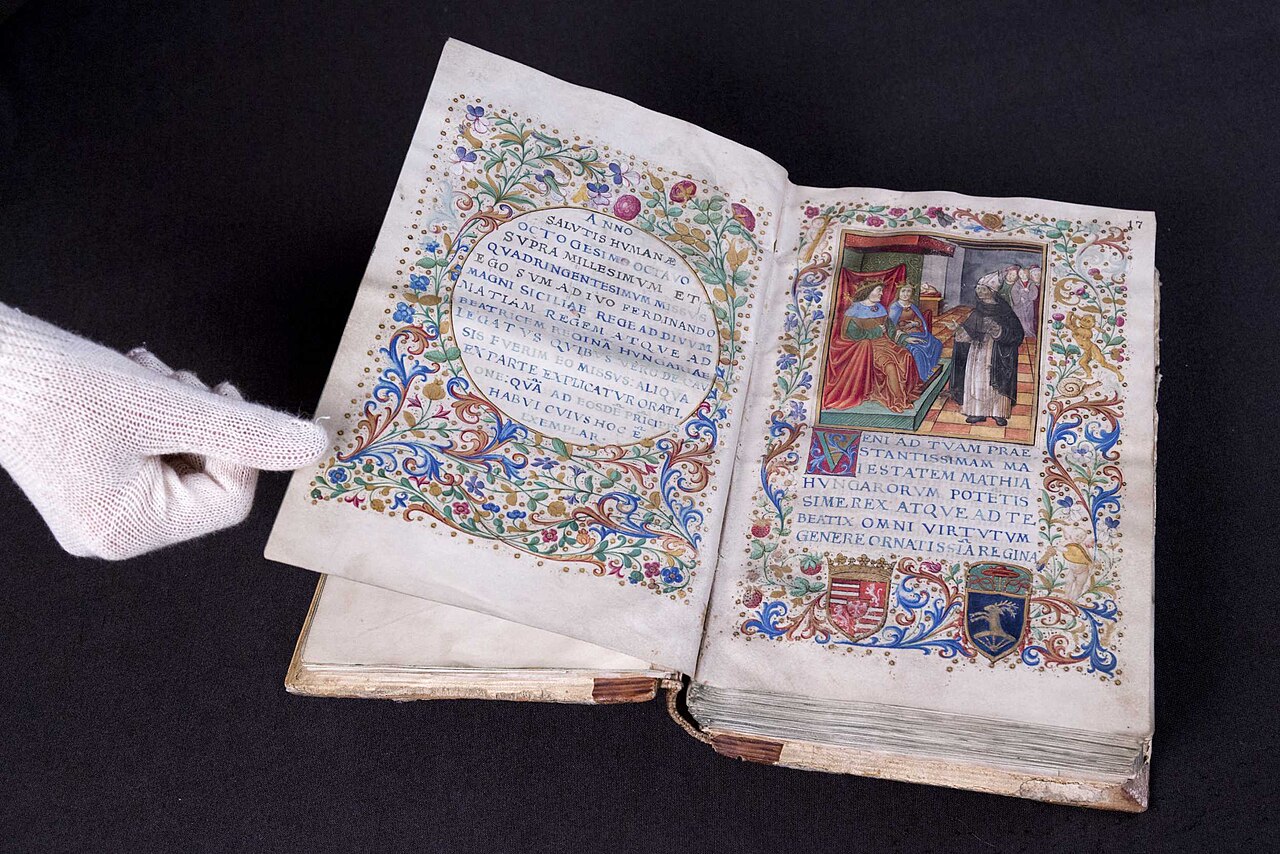
Ranzano Presenting the Epitome to Matthias Corvinus and Beatrice of Aragon
Pietro Ranzano · c. 1489-1490
An illuminated manuscript scene showing the Italian humanist Pietro Ranzano presenting his history of Hungary to King Matthias and Queen Beatrice.
Matthias is shown with Queen Beatrice receiving a history of Hungary dedicated to him, reflecting his patronage of scholars.
About this source
What it is
This miniature, from the Epitome rerum Hungarorum made around 1489-1490, shows Pietro Ranzano, an Italian humanist, kneeling before Matthias Corvinus and Queen Beatrice to present his history of Hungary. The coats of arms of King Vladislaus II and Archbishop Tamás Bakócz appear at the bottom, showing the manuscript's later history.
Why it matters
The scene captures Matthias's role as a patron of humanist scholarship, inviting Italian writers to compose histories of his kingdom. It also shows the close partnership between Matthias and Beatrice, who appear together receiving the work.
Look closer
- Why might a king want a foreign scholar to write the history of his own kingdom?
- What does the posture of the kneeling author tell you about court etiquette?
- Why do the arms of a later king appear on a manuscript dedicated to Matthias?
This painting is part of the curated material that grounds the AI version of Matthias Corvinus on Humy.ai — when students ask about related events, the AI can quote it and cite it.
More Matthias Corvinus sources
Browse all 83 →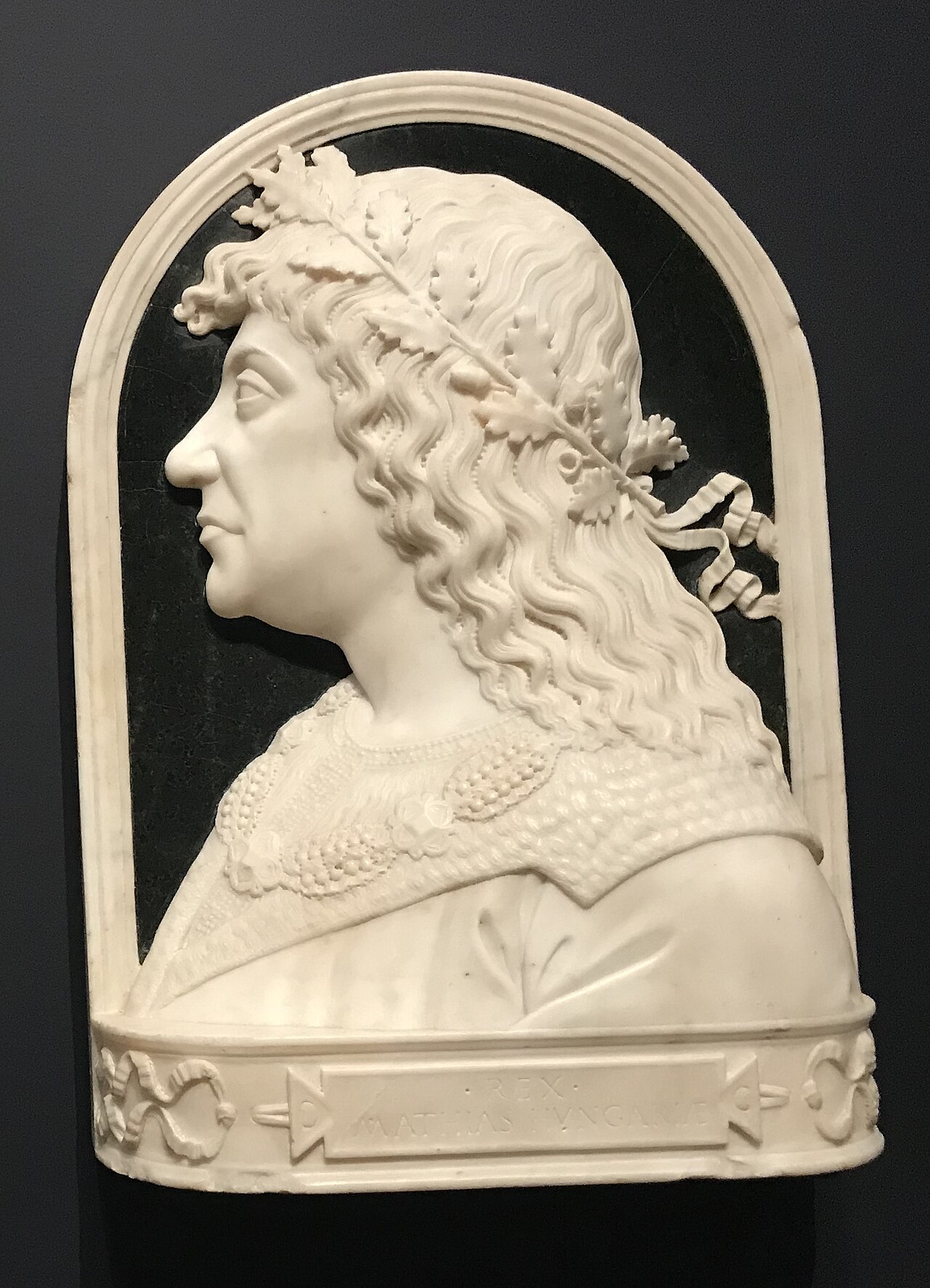 Sculpture
Primary source
Portrait of Matthias Corvinus, King of Hungary
Benedetto da Maiano · 1476
 Painting
Secondary source
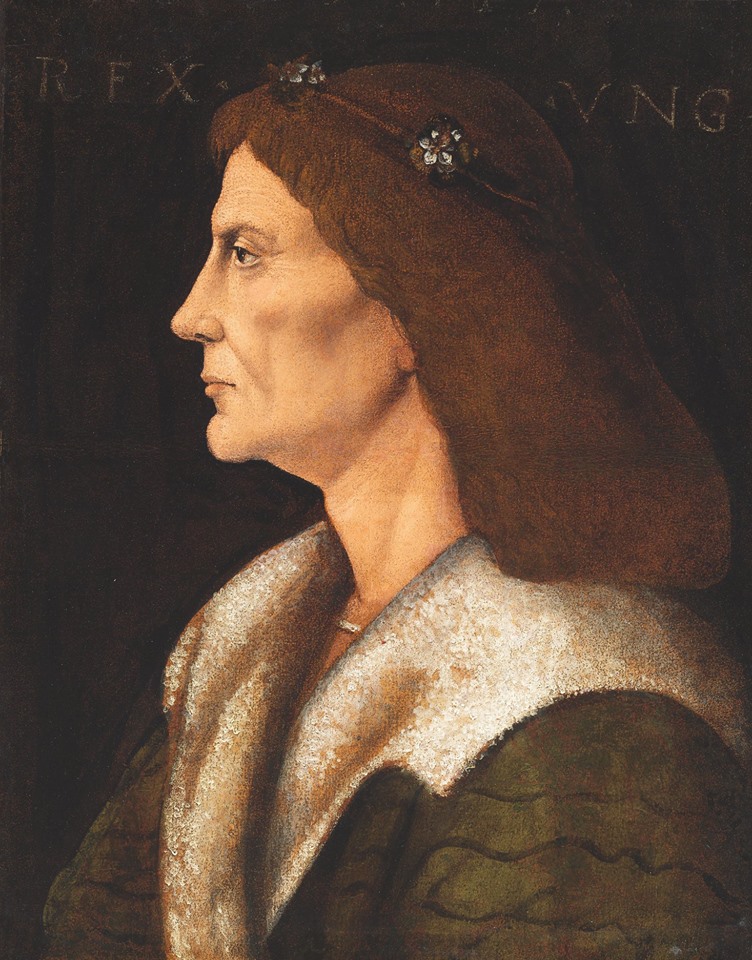
Portrait of Matthias Corvinus
Circle of Andrea Mantegna
 Artifact
Secondary source
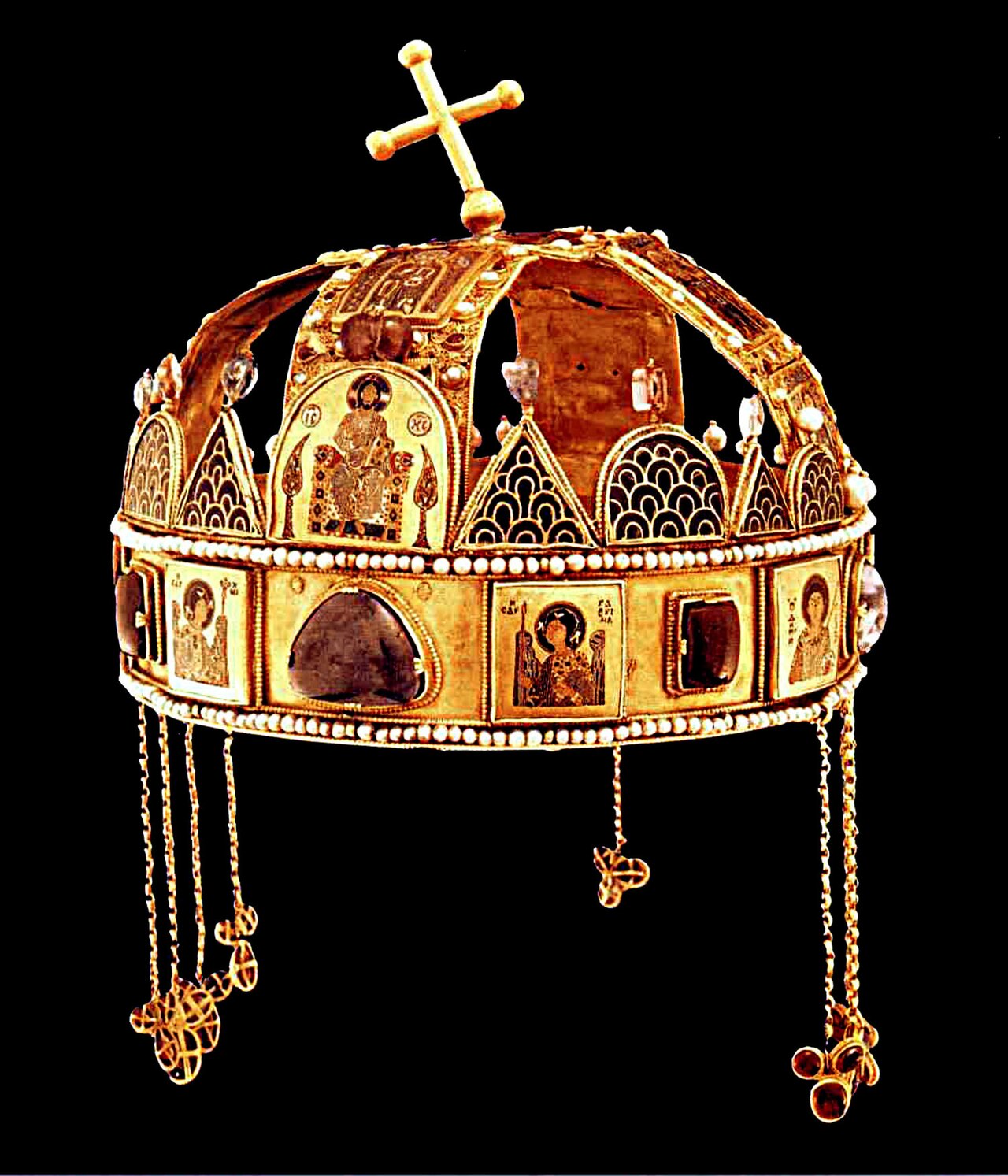
Holy Crown of Hungary
1070s, present form c. late 12th century
SculpturePrimary source
Marble Portrait Reliefs of Matthias Corvinus and Beatrice of Aragon
Italian sculptor in Matthias's service (workshop attribution debated) · c. 1476-1490

Free account
Read every Matthias Corvinus source
Sign up free →
Ready when you are
Start chatting with Matthias Corvinus now.
20 messages free · No credit card · Available in 50+ languages.