


Primary sourceArtifact1909
Reflection and transmission at a plane boundary
Max Planck · 1909
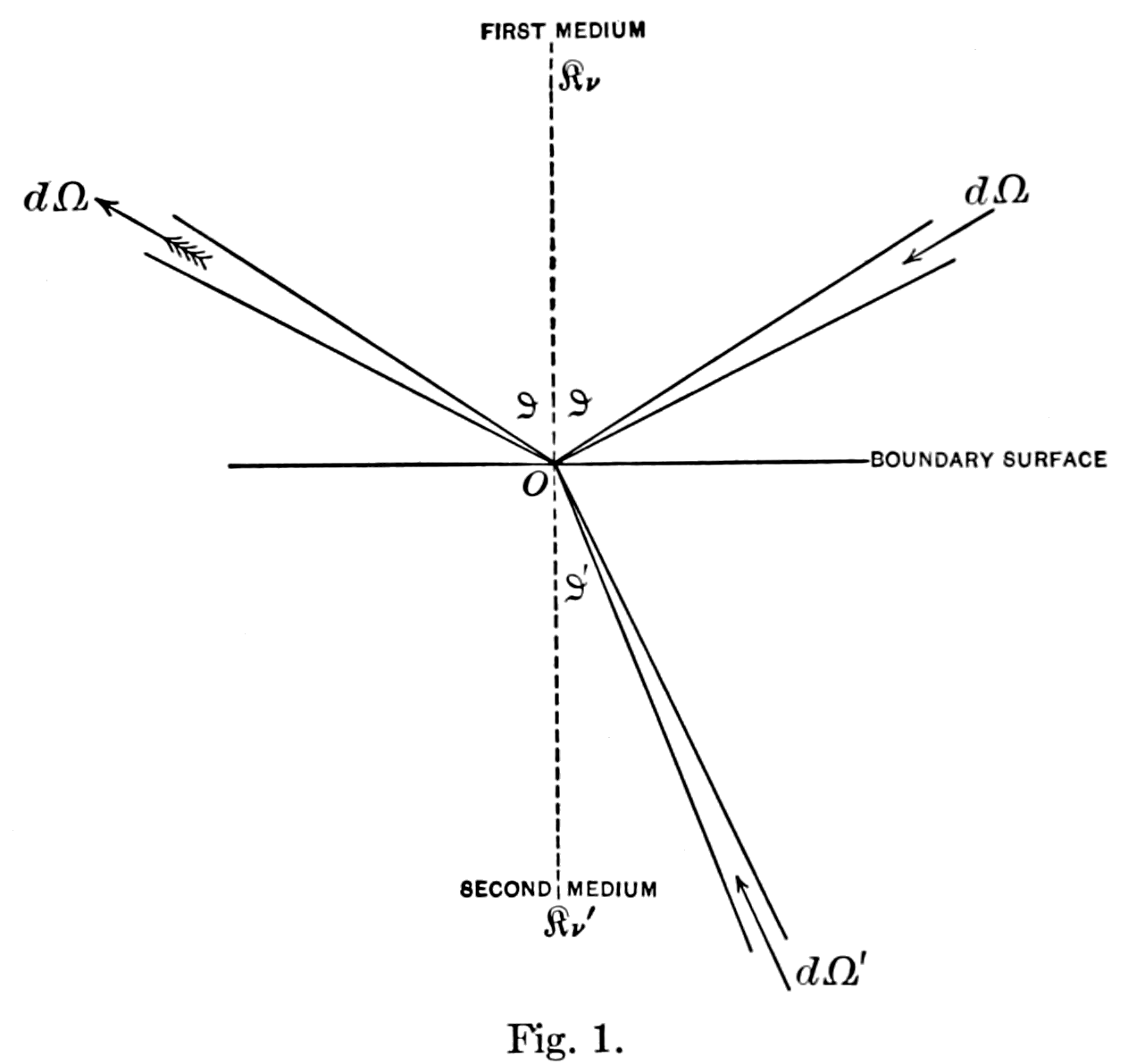
A line diagram from Max Planck's 1909 lectures on theoretical physics, showing light beams meeting a boundary between two media.
A teaching diagram drawn by Planck himself for his 1909 lectures, showing how he presented optics to students.
About this source
What it is
This is a teaching diagram from Max Planck's 1909 lectures on theoretical physics, published as Eight Lectures on Theoretical Physics. It shows light beams striking a flat boundary between a first medium and a second medium, with a dashed normal line at the point where they meet and angles marked on each side of it. The image is a line drawing, and its description records the labels and the beams shown.
Why it matters
Planck used diagrams like this to explain how light is reflected and transmitted when it passes from one material to another. The lectures were given during a period when physicists were working out how light behaves in matter and how it relates to electromagnetic theory. The drawing reveals Planck's method of teaching: he reduced a physical situation to a simple geometric picture that students could follow step by step.
Look closer
- What do the dashed lines and labelled angles tell you that the beams alone would not?
- Why do you think Planck chose to label the two sides of the boundary as separate media?
- What would a student need to know beyond this diagram to calculate the actual paths of the beams?
This artifact is part of the curated material that grounds the AI version of Max Planck on Humy.ai — when students ask about related events, the AI can quote it and cite it.
More Max Planck sources
Browse all 95 →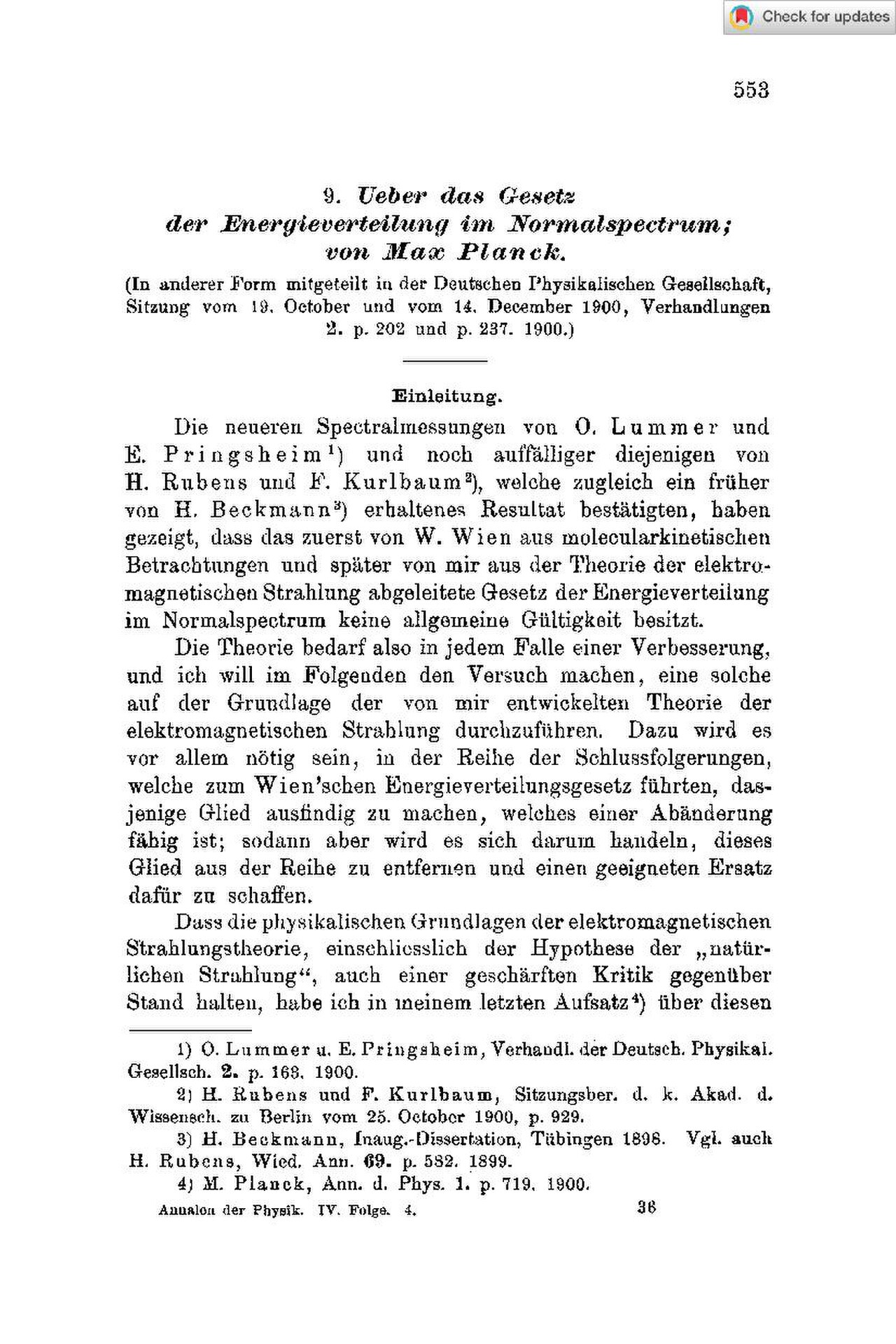 Document
Primary source
On the Law of Energy Distribution in the Normal Spectrum
Max Planck · 1901
Primary source
The Origin and Development of the Quantum Theory
Max Planck · 1920 (delivered); published 1922
 Photograph
Primary source
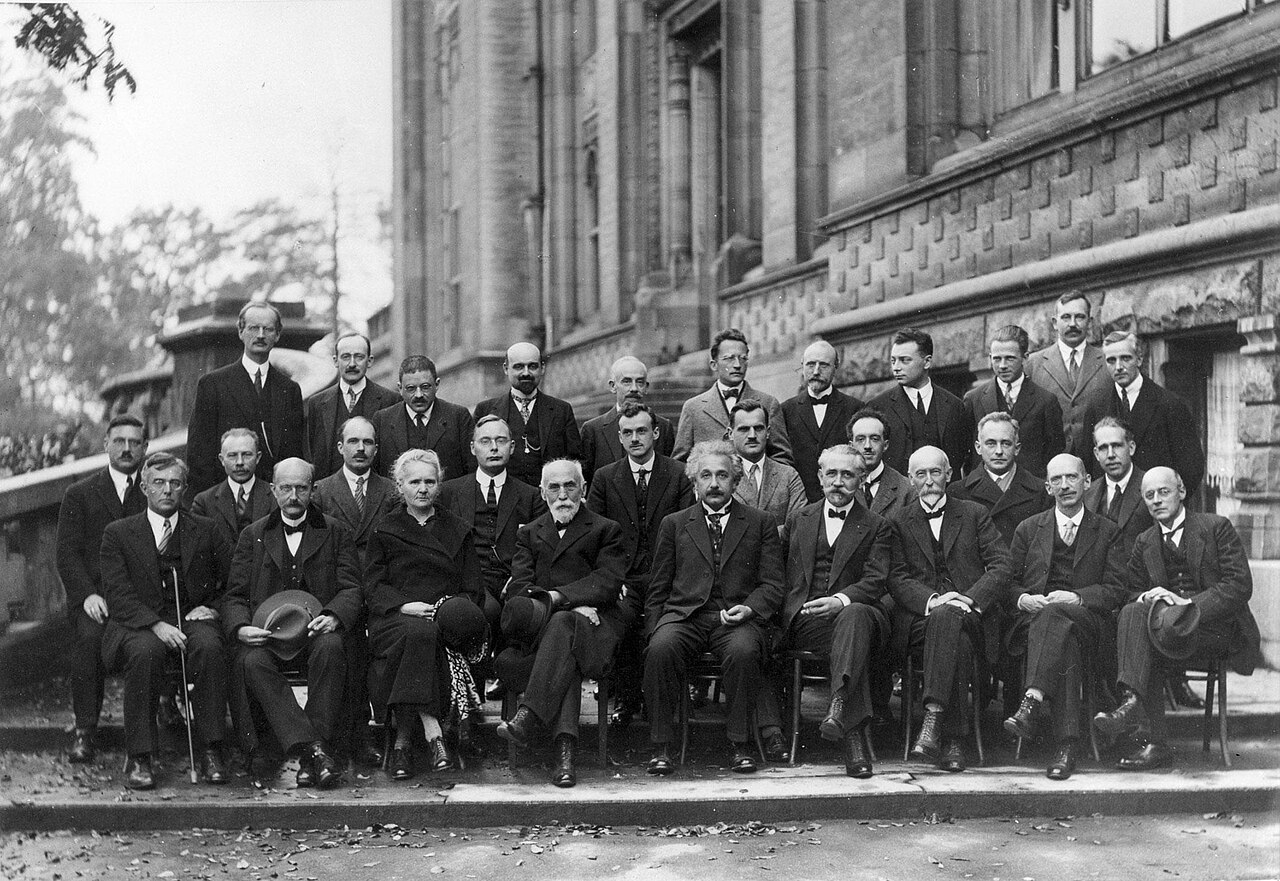
Solvay Conference 1927 Group Photograph
Benjamin Couprie · 1927
 Book
Primary source
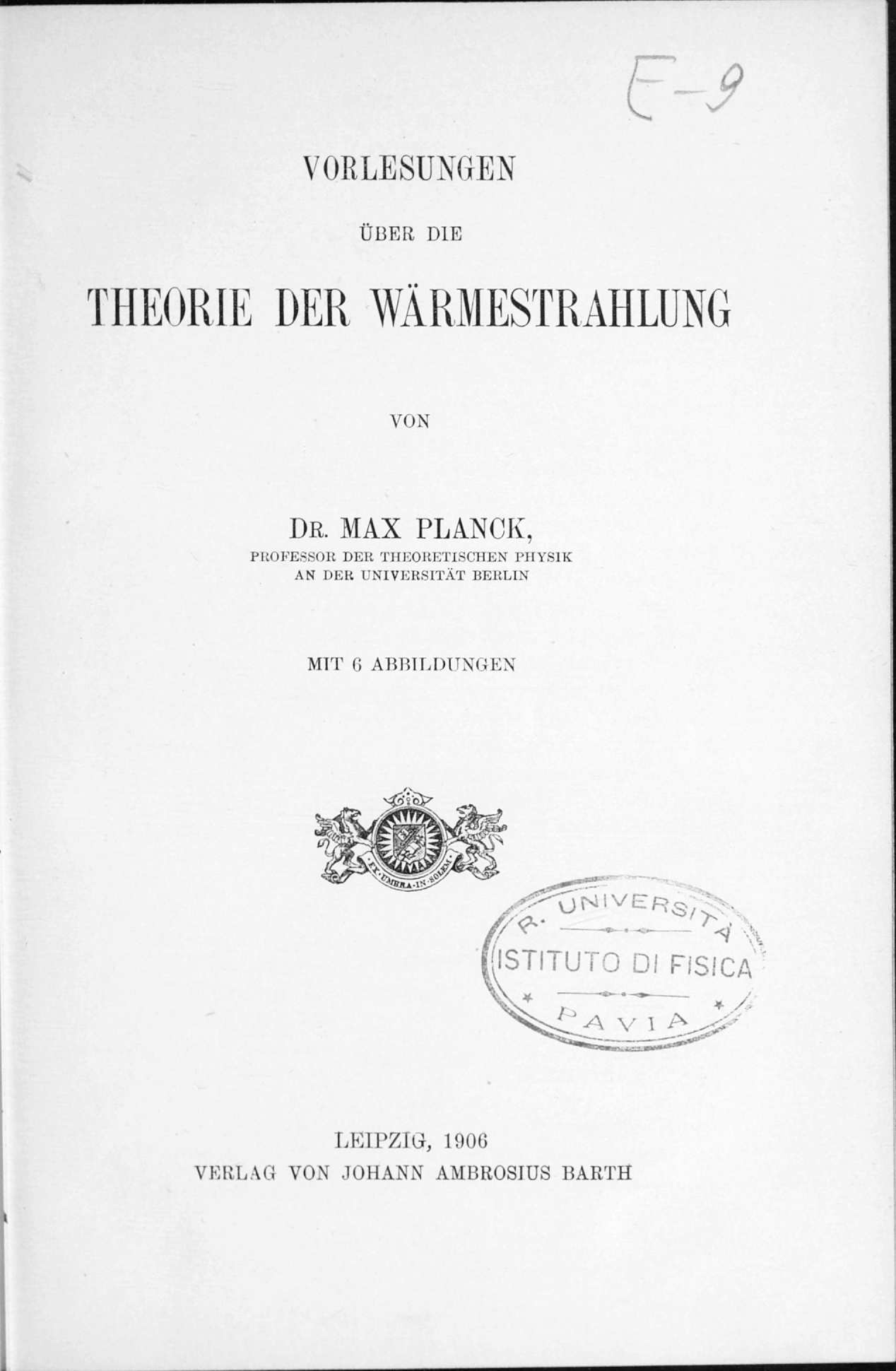
Vorlesungen über die Theorie der Wärmestrahlung
Max Planck · 1906
Free account
Read every Max Planck source
Sign up free →
Ready when you are
Start chatting with Max Planck now.
20 messages free · No credit card · Available in 50+ languages.