


Secondary sourceSculpture17th century
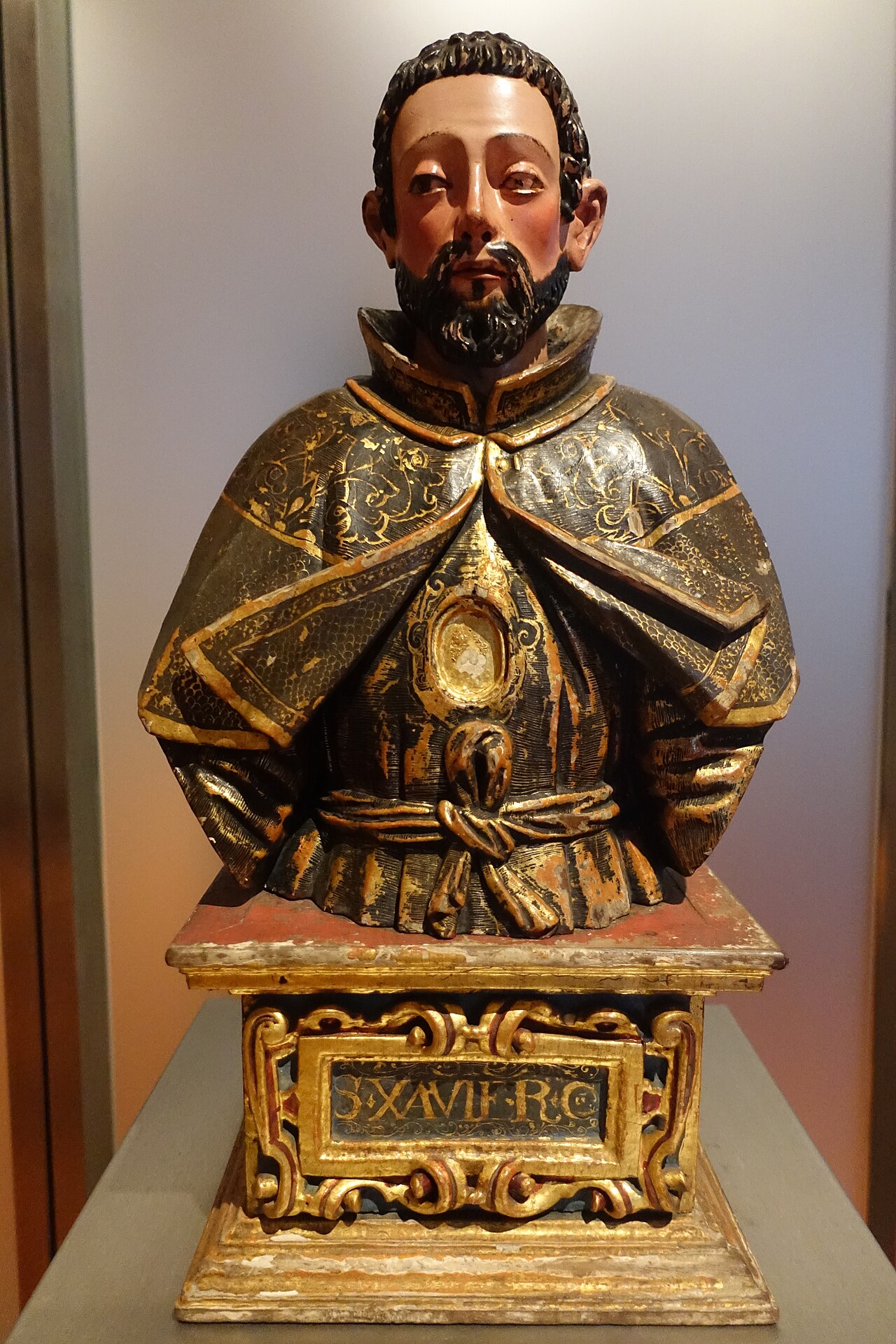
Reliquary bust of St Francis Xavier
17th century
A painted and gilded wooden reliquary bust of Francis Xavier, made of Madeira wood in the 17th century and now held in a Braga museum in Portugal. It shows how he was honoured after his death.
It shows how Xavier was venerated as a saint after his death, through a reliquary made to display sacred relics in his honour.
About this source
What it is
This is a reliquary bust, a carved wooden head and chest made to hold or display relics of a saint. It is made of Madeira wood and dates from the 17th century. It shows a bearded man with dark curly hair, wearing a black cloak decorated in gold, with an oval reliquary medallion on the chest. The bust sits on a gilded pedestal inscribed S XAVII R C. It is held in the Pius XII Museum in Braga, Portugal.
Why it matters
Francis Xavier was a Spanish Catholic missionary who died in 1552. Objects like this one show that, after his death, he was honoured as a saint. Reliquaries were made to hold sacred remains and to focus prayer. This bust is a secondary source: it was made long after Xavier lived, so it tells us about how people remembered him, not how he looked.
Look closer
- What details of the face, hair and clothing make this figure look holy or important?
- Why might a wooden bust have been made to display a saint, and who would have seen it?
- What does this object leave out about Xavier's own life and words?
This sculpture is part of the curated material that grounds the AI version of Francis Xavier on Humy.ai — when students ask about related events, the AI can quote it and cite it.
More Francis Xavier sources
Browse all 85 →
Ready when you are
Start chatting with Francis Xavier now.
20 messages free · No credit card · Available in 50+ languages.