


Primary sourceArtifact1913
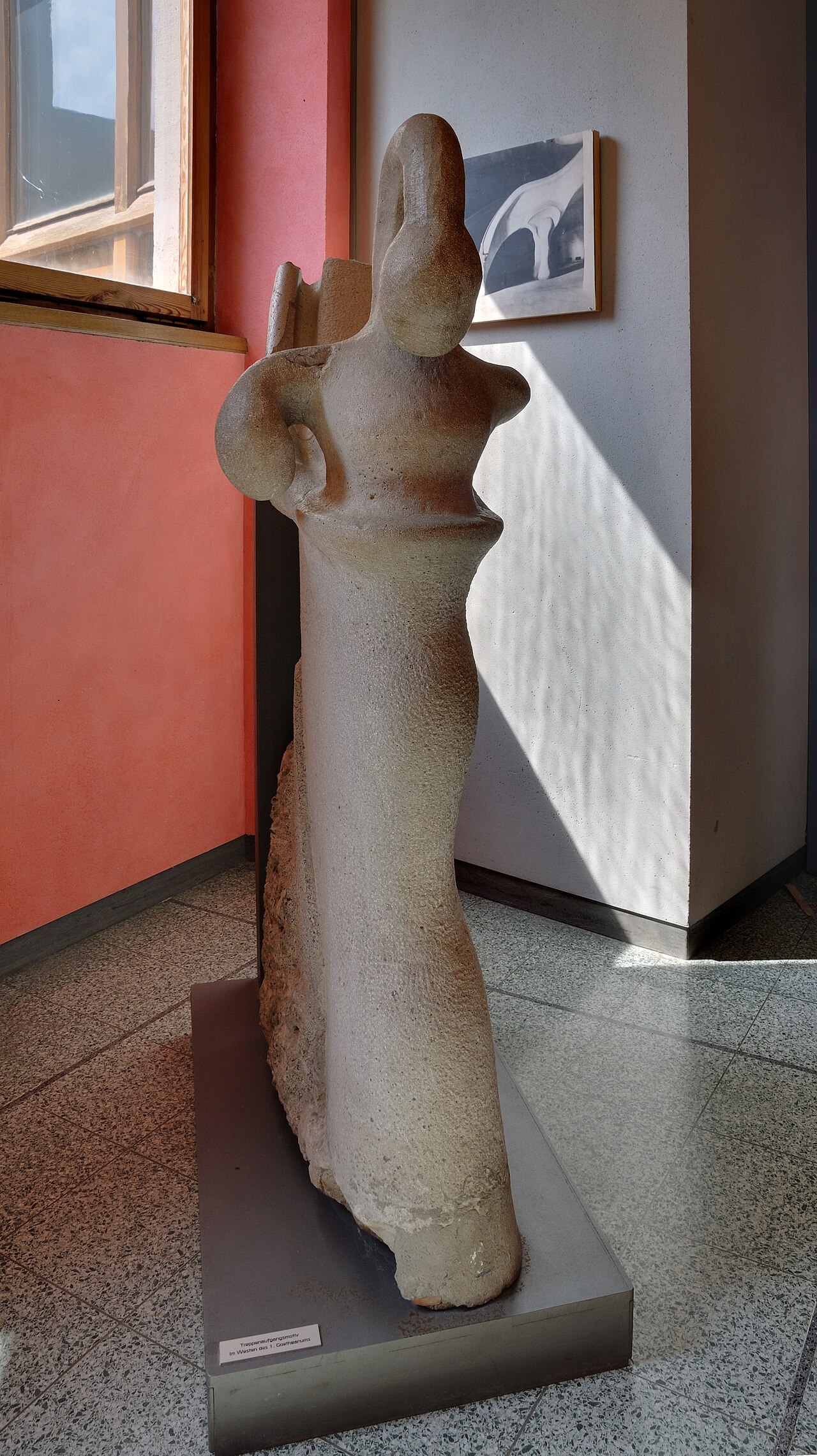
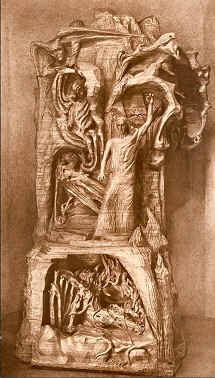
Remaining newel of the first Goetheanum
1913
A surviving stone fragment of the first Goetheanum, the 1913 building Steiner commissioned and designed, now shown in a museum.
A surviving fragment of the first Goetheanum, the building Steiner commissioned and designed.
About this source
What it is
This is a photograph of a surviving fragment of the first Goetheanum, the building Rudolf Steiner commissioned and designed in 1913. The fragment is a tall, pale stone sculpture on a dark base, with a rounded, bulbous upper form and a curving column tapering downward. In the photograph it stands in a museum corner, with a framed black-and-white photo on the wall behind and a red wall to the left.
Why it matters
The first Goetheanum was the building Steiner made as the home of anthroposophy. Only a small piece of it has survived, so this stone fragment is one of the few remains of the original design. It shows the sculptural, organic style Steiner favoured, and it links his ideas to the people who built and worked in the building.
Look closer
- What shapes does the stone form take, and how might they suggest a living or natural form?
- Why might a museum keep a single fragment of a building, and who decides what is saved?
- What does one piece of stone leave out about the whole building and the people who used it?
This artifact is part of the curated material that grounds the AI version of Rudolf Steiner on Humy.ai — when students ask about related events, the AI can quote it and cite it.
More Rudolf Steiner sources
Browse all 96 →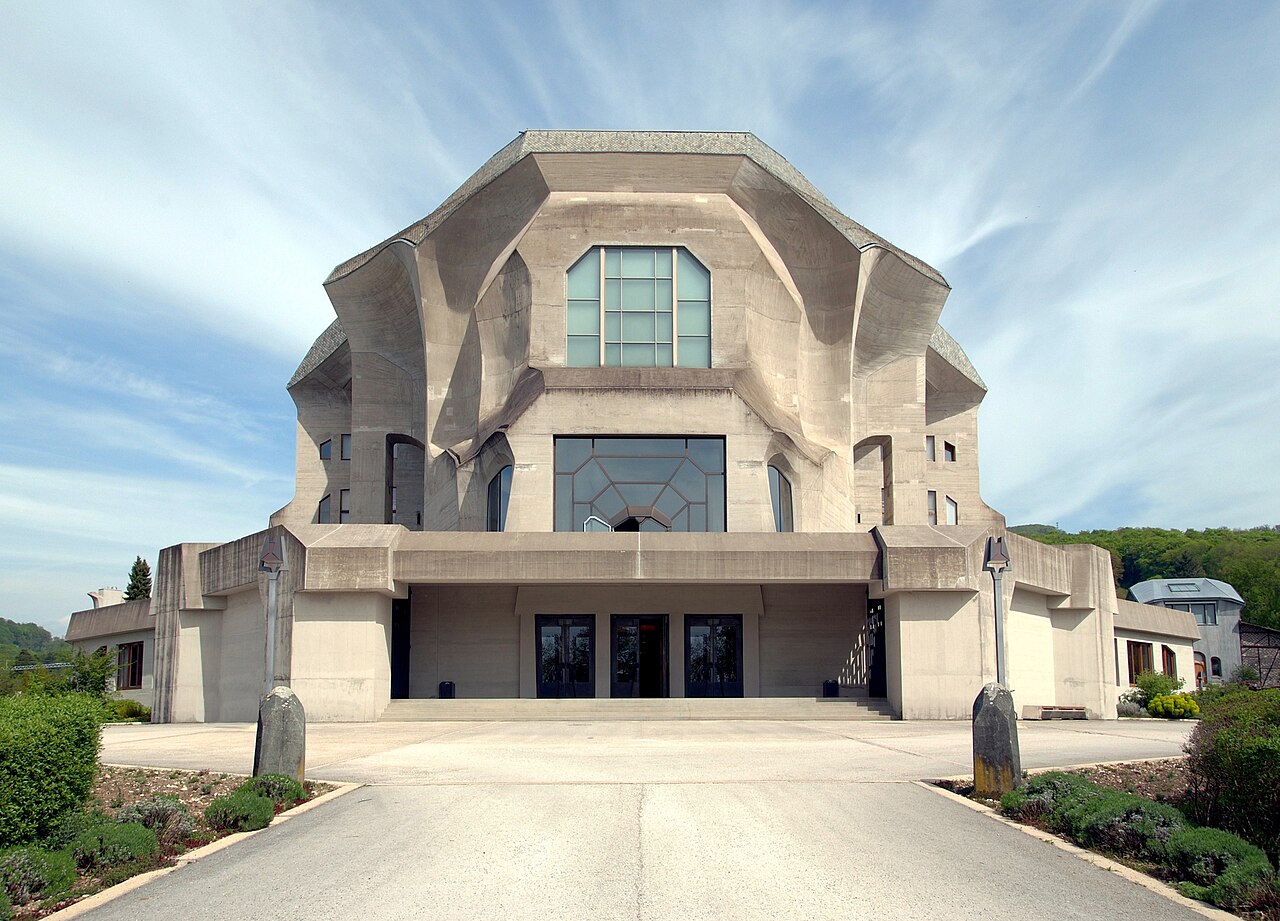 Artifact
Primary source
Goetheanum
Rudolf Steiner · 1925-1928
 Book
Primary source
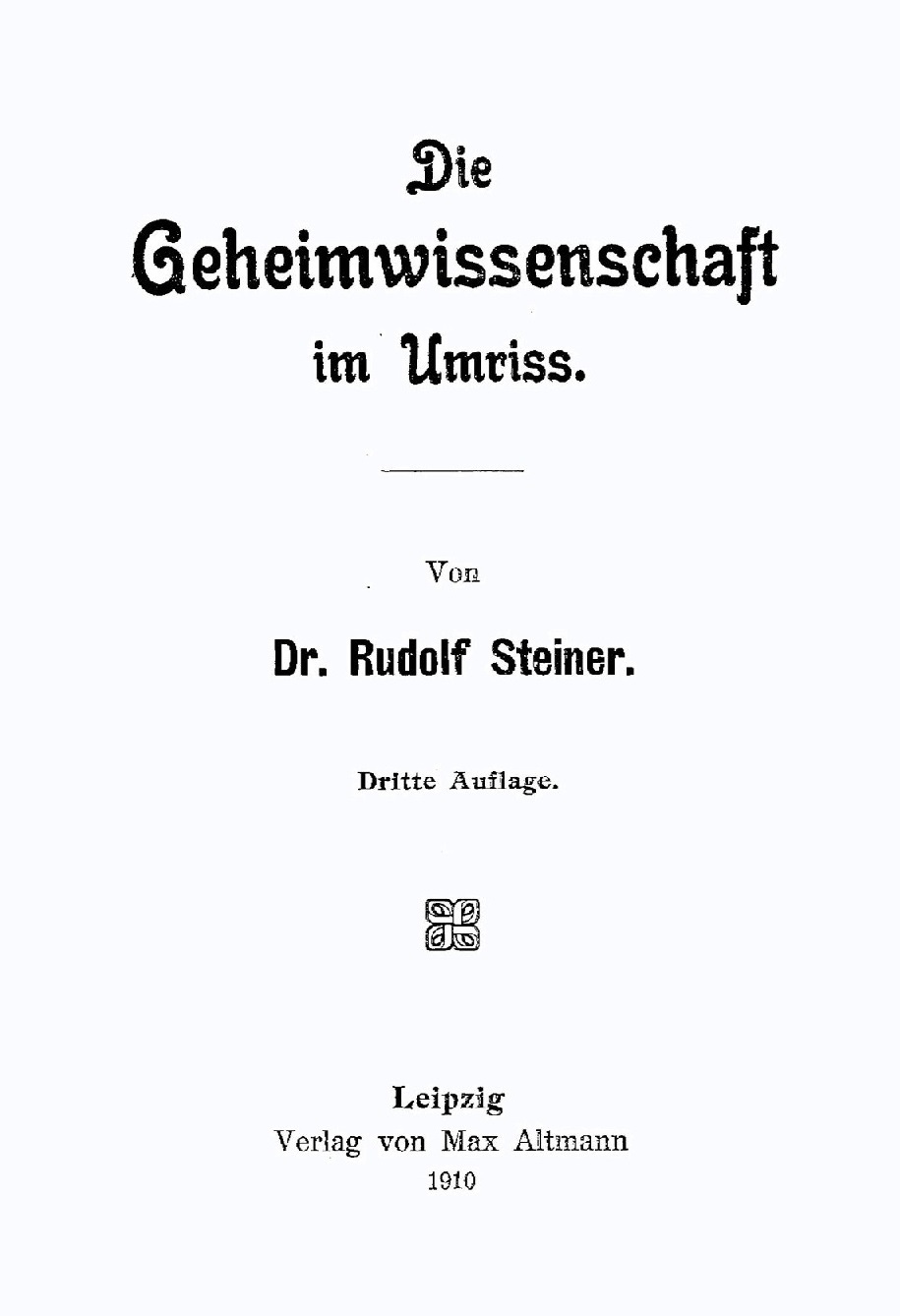
Occult Science: An Outline
Rudolf Steiner · 1910
 Artifact
Primary source
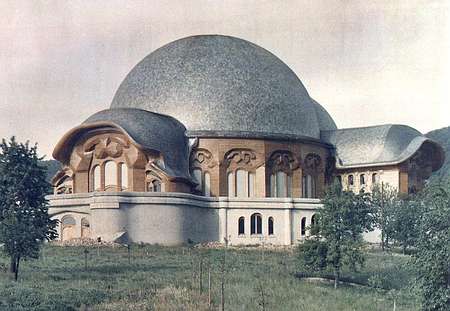
First Goetheanum
Rudolf Steiner · 1913-1920, destroyed 1922-1923
 Photograph
Primary source
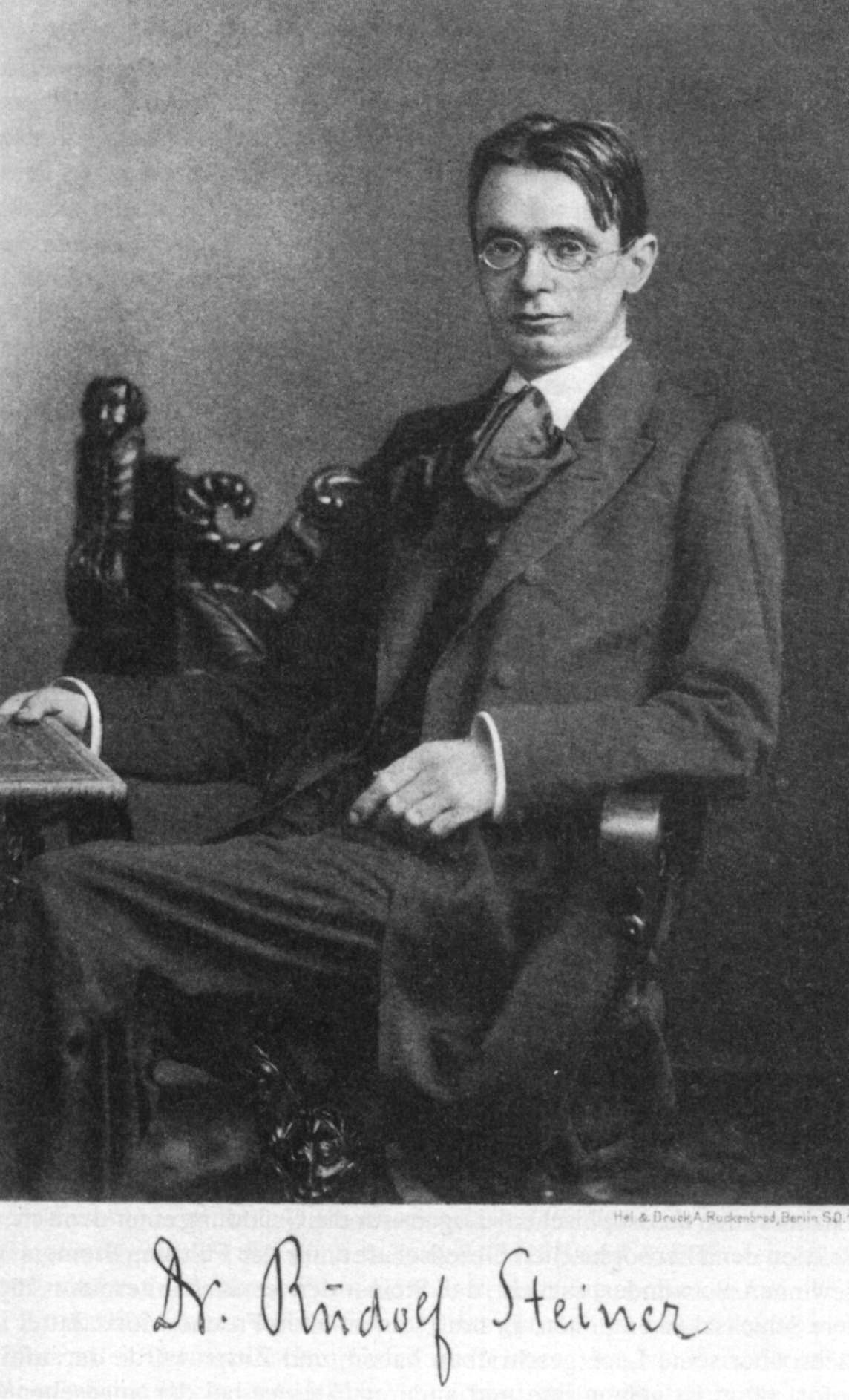
Rudolf Steiner in Berlin, 1900
1900
Free account
Read every Rudolf Steiner source
Sign up free →
Ready when you are
Start chatting with Rudolf Steiner now.
20 messages free · No credit card · Available in 50+ languages.