


Secondary sourcePainting
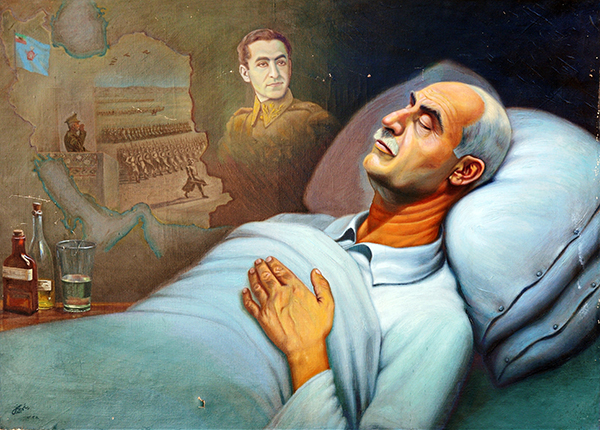
Reza Shah on his deathbed
Abbas Rassam Arjangi
A later painting by Abbas Rassam Arjangi showing the death scene of Reza Shah. It shows how his death was remembered.
It shows the death of Reza Shah as later artists remembered it, linking his final years in exile to his legacy.
About this source
What it is
This is a painting by Abbas Rassam Arjangi. It shows an elderly man with white mustache and gray hair lying in a bed with light blue sheets, eyes closed and one hand resting on his chest. Behind him are a framed portrait of a uniformed man and a map with troop imagery. A bottle and glass sit on a table at left. The painting is undated in the facts. It is a later artistic work, not a record made at the death itself.
Why it matters
Reza Shah died in 1944 while in exile. Paintings like this one reflect how later artists and audiences imagined his final moments, and the framed portrait and map point to his military rule and to his role as a national leader. Because the artist was not present, the scene should be read as an interpretation.
Look closer
- Which objects in the room, such as the portrait and the map, suggest who this man was?
- Why might a later painter choose to show a ruler's death in such a quiet, private scene?
- What might a painting like this leave out about the circumstances of his exile and death?
This painting is part of the curated material that grounds the AI version of Reza Shah on Humy.ai — when students ask about related events, the AI can quote it and cite it.
More Reza Shah sources
Browse all 94 →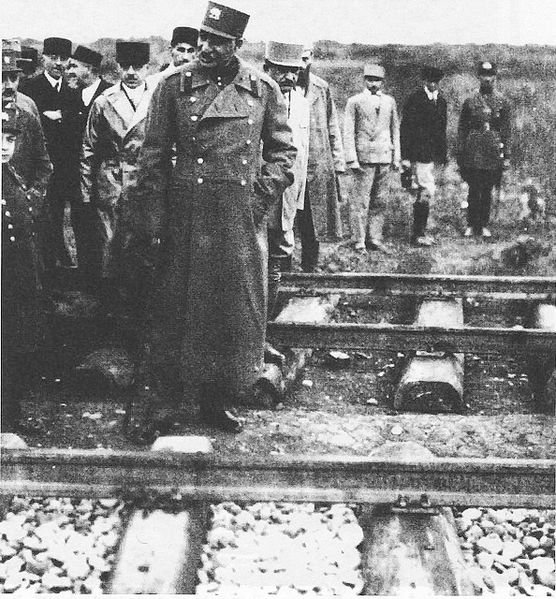 Photograph
Primary source
Trans-Iranian Railway
Kampsax and Government of Iran · 1927–1938
 Artifact
Primary source
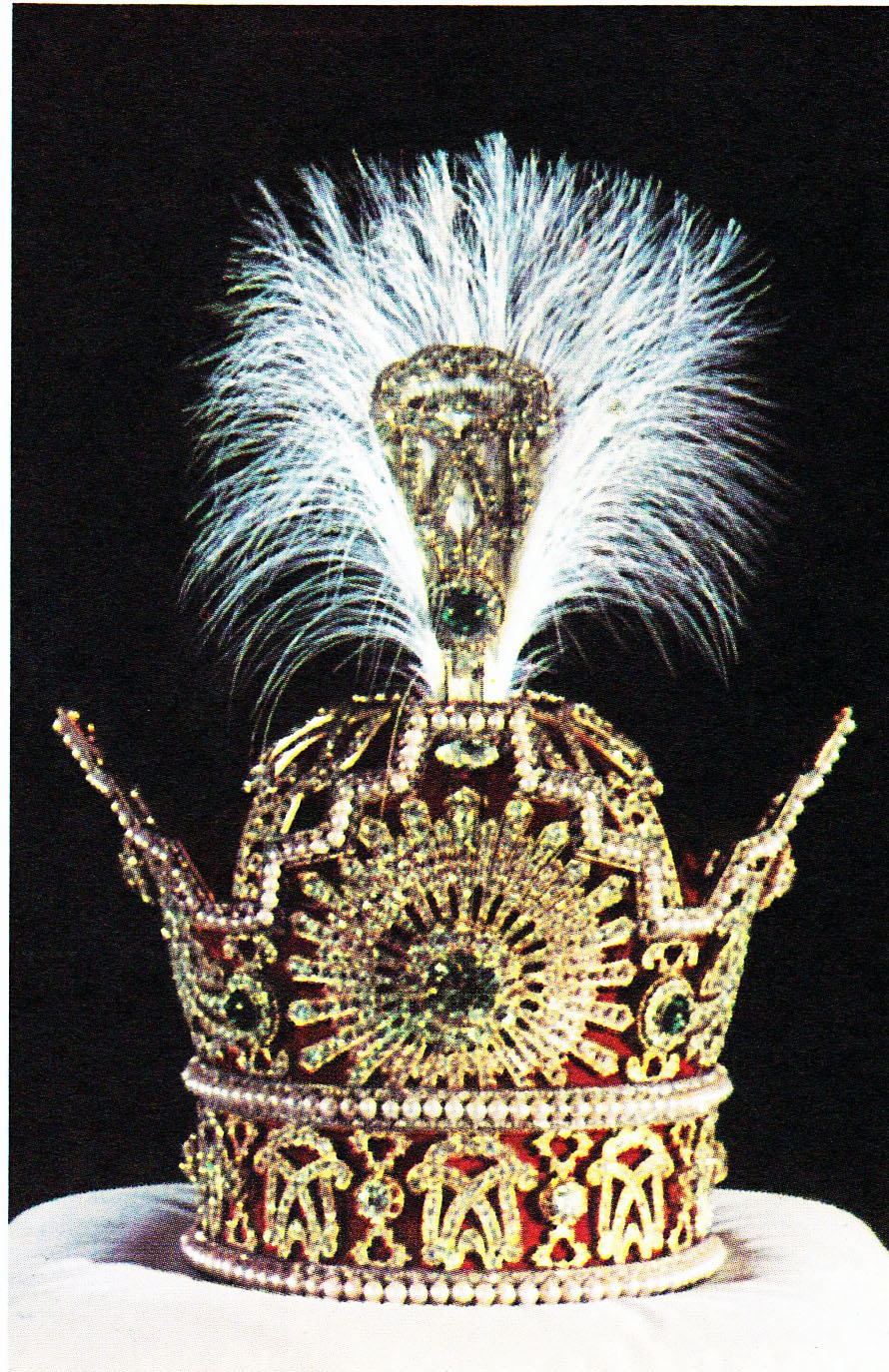
Pahlavi Crown
1925 (used by Mohammad Reza Pahlavi in 1967)
 Photograph
Primary source
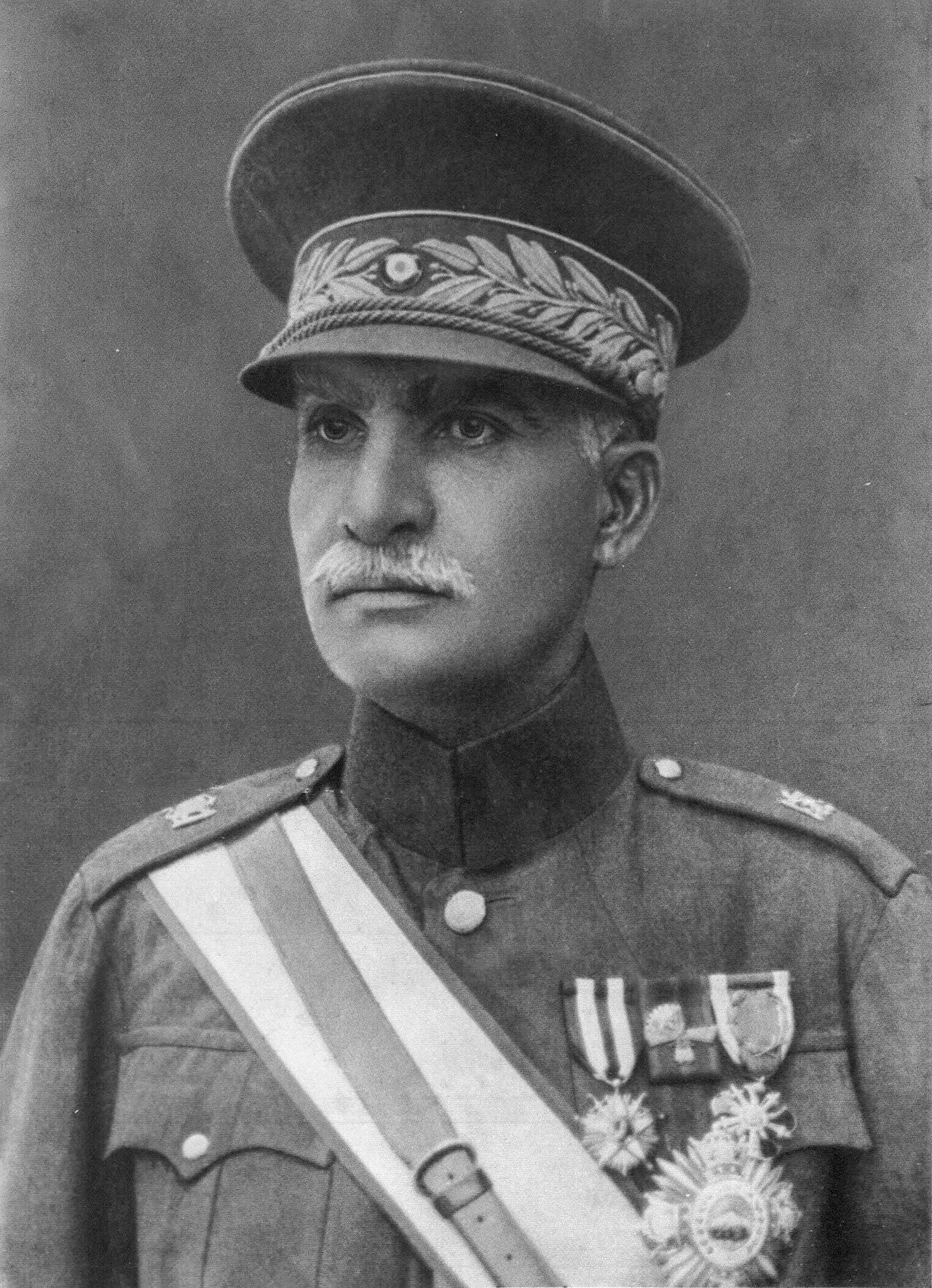
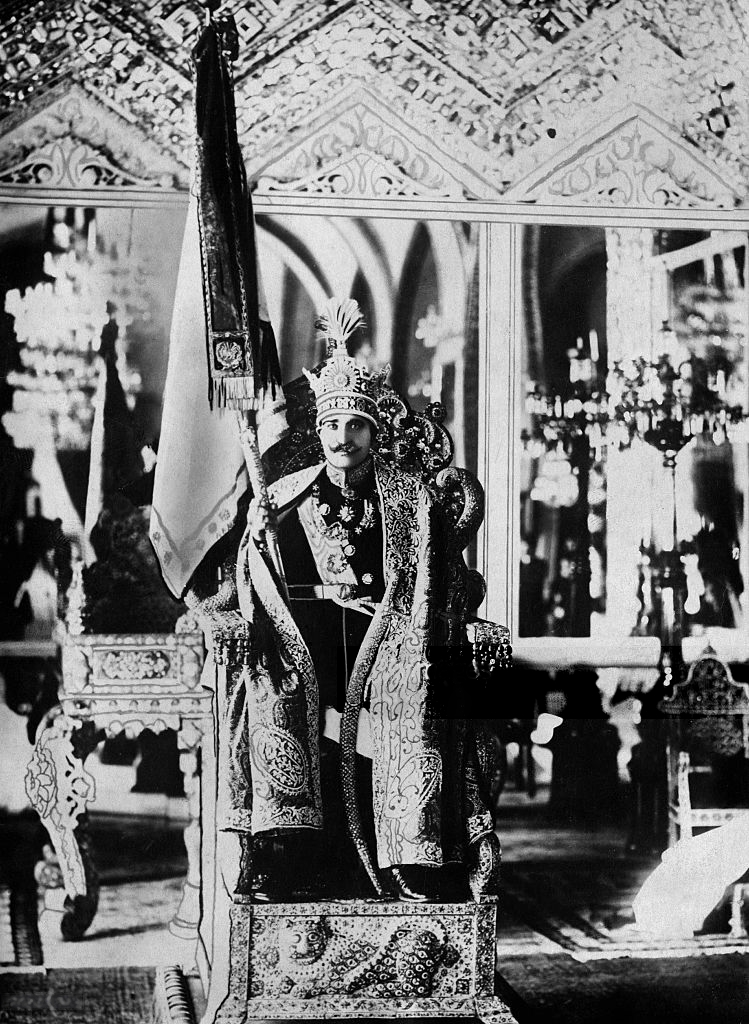
Portrait of Reza Shah
early 1930s
 Photograph
Primary source
Photographs of the coronation of Reza Shah
Unknown court photographers · 25 April 1926
Free account
Read every Reza Shah source
Sign up free →
Ready when you are
Start chatting with Reza Shah now.
20 messages free · No credit card · Available in 50+ languages.