


Primary sourceDocument1850
Rhenish Symphony, Symphony No. 3 Op. 97 (Opening)
Robert Schumann · 1850
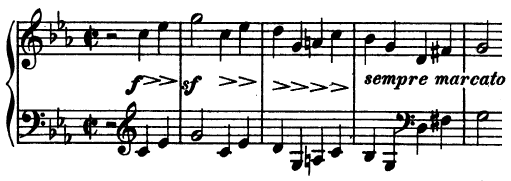
The opening of Schumann's Symphony No. 3 in E-flat major, Op. 97, the Rhenish Symphony, composed in 1850.
Shows Schumann as the composer of his Symphony No. 3, Op. 97, written in 1850 during his years in Düsseldorf.

About this source
What it is
This is the opening (incipit) of Robert Schumann's Symphony No. 3 in E-flat major, Op. 97, often called the Rhenish Symphony. The source is an image of an orchestral score marked 'Lebhaft' (lively), in 3/4 time with three flats in the key signature. It shows half notes, quarter notes and dotted rhythms, with a dynamic marking f under the first chord. The symphony was composed in 1850.
Why it matters
In 1850 Schumann was living in Düsseldorf, where he became music director. The nickname 'Rhenish' links the work to the Rhine region. A symphony is a large work for a full orchestra, so this page shows how Schumann wrote for many instruments at once, and how the first bars set the character of the whole piece.
Look closer
- Which instruments do you think play the first chord, and how can you tell from the score?
- Why might a composer begin a symphony with a loud chord marked f?
- What is missing from a single opening excerpt that would help you understand the whole symphony?
This document is part of the curated material that grounds the AI version of Robert Schumann on Humy.ai — when students ask about related events, the AI can quote it and cite it.
More Robert Schumann sources
Browse all 94 → Document
Primary source
Kinderszenen
Robert Schumann · 1838
 Artifact
Secondary source
Dichterliebe
Robert Schumann · 1840
 Document
Primary source
Piano Concerto in A minor
Robert Schumann · 1841–1845
Primary source
Neue Bahnen
Robert Schumann · 28 October 1853
Free account
Read every Robert Schumann source
Sign up free →
Ready when you are
Start chatting with Robert Schumann now.
20 messages free · No credit card · Available in 50+ languages.