


Primary sourceDocument1663
Rhode Island Royal Charter of 1663
Charles II · 1663
The 1663 charter from King Charles II recognizing the Colony of Rhode Island and Providence Plantations, naming Roger Williams among its inhabitants.
This charter formally recognized the colony founded by Williams and named him among its inhabitants.
About this source
What it is
This document, granted by King Charles II in 1663 and obtained through the petition of John Clarke, gave royal recognition to the Colony of Rhode Island and Providence Plantations. It is held by the Rhode Island State Archives and names Roger Williams among the inhabitants on whose behalf it was granted.
Why it matters
The charter confirmed what was later called a 'lively experiment' in religious liberty, building on the colony Williams had founded on principles of freedom of conscience. It shows how the small, often persecuted settlement Williams helped establish gained formal royal recognition, securing its unusual toleration within the English colonial system.
Look closer
- Why would a colony founded on dissent seek approval from the king it had, in some ways, fled?
- What does the list of named petitioners tell you about who held power in early Rhode Island?
- How might 'religious liberty' as described in a royal charter differ from liberty of conscience as Williams had argued for it?
This document is part of the curated material that grounds the AI version of Roger Williams on Humy.ai — when students ask about related events, the AI can quote it and cite it.
More Roger Williams sources
Meet the AI Roger Williams →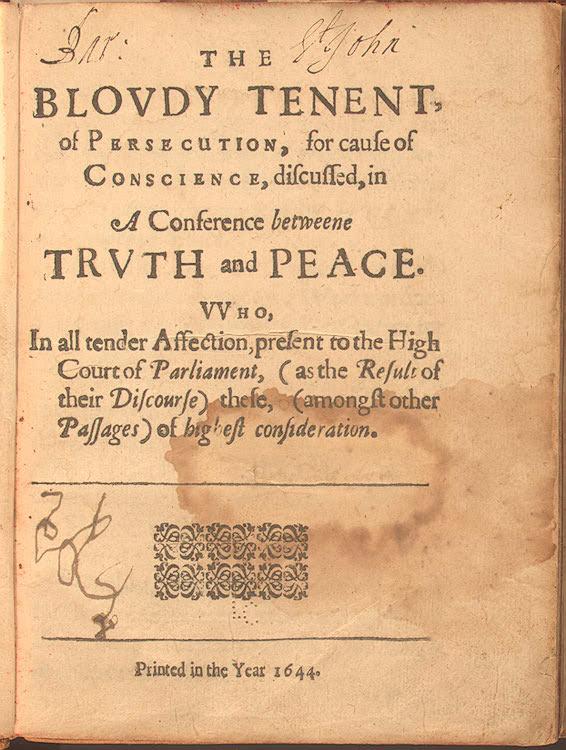 Book
Primary source
The Bloudy Tenent of Persecution for Cause of Conscience
Roger Williams · 1644
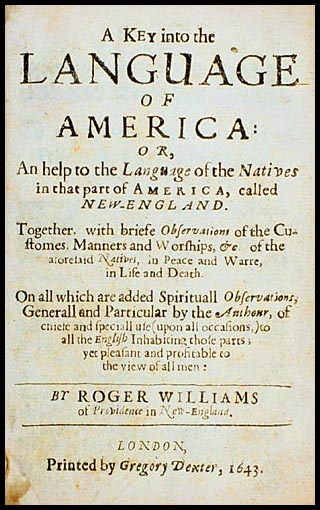 Book
Primary source
A Key Into the Language of America
Roger Williams · 1643
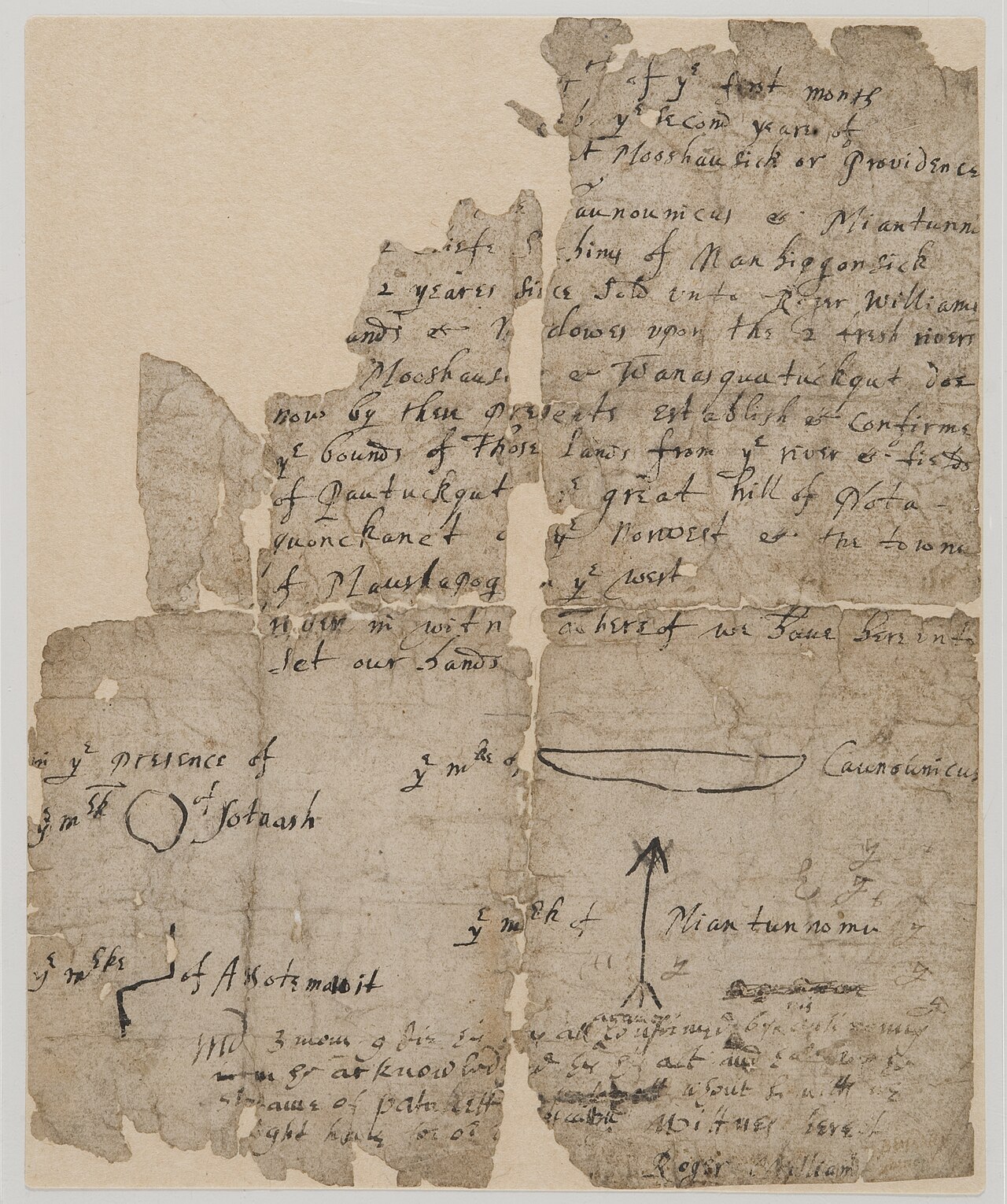 Document
Primary source
Providence, Rhode Island Original Deed
1636
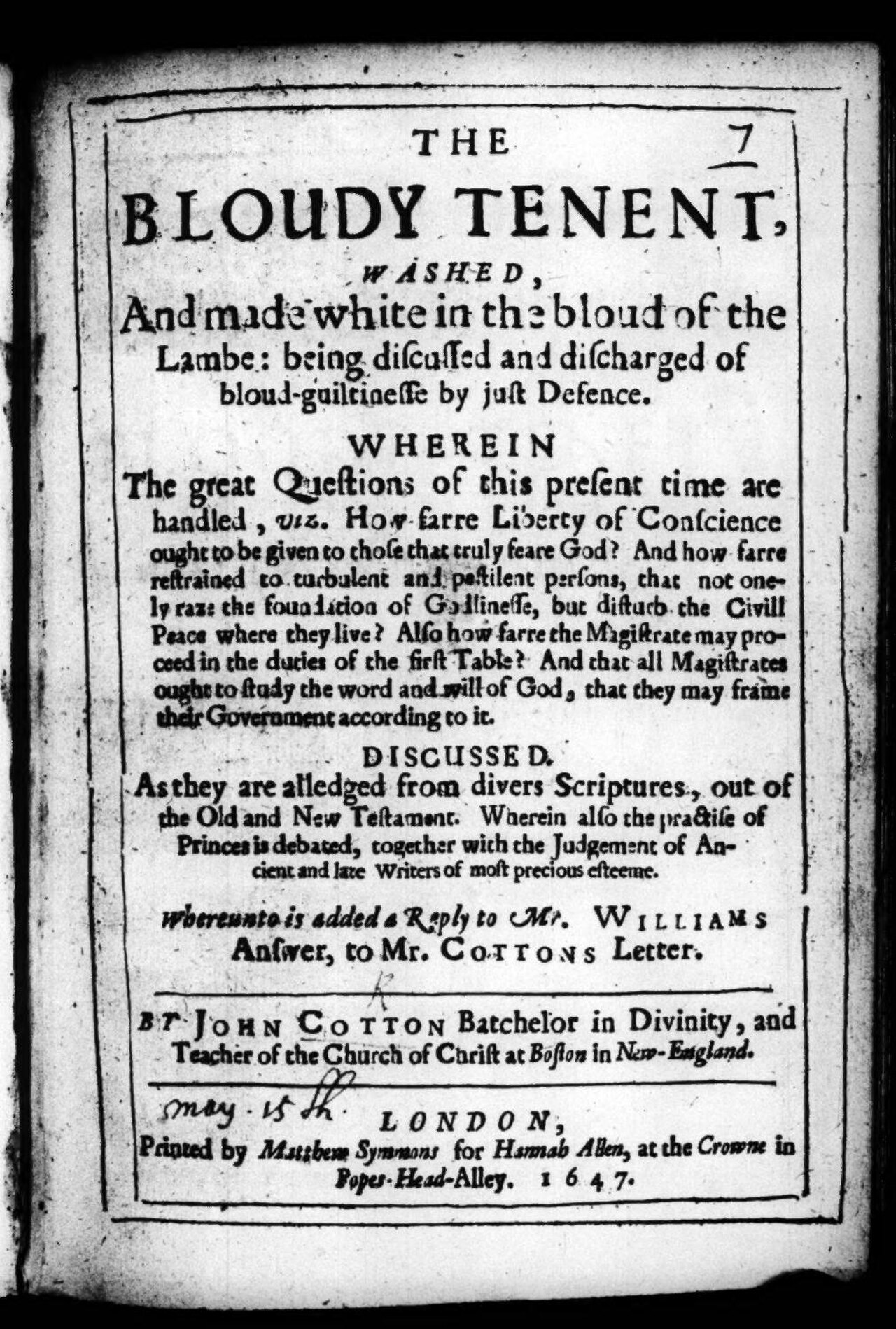 Book
Primary source
The Bloudy Tenent, Washed and Made White in the Bloud of the Lambe
John Cotton · 1647
 Letter
Primary source
Letters of Roger Williams to John Winthrop
Roger Williams · 1636–1640s
Ready when you are
Start chatting with Roger Williams now.
20 messages free · No credit card · Available in 50+ languages.