


Secondary sourcePainting
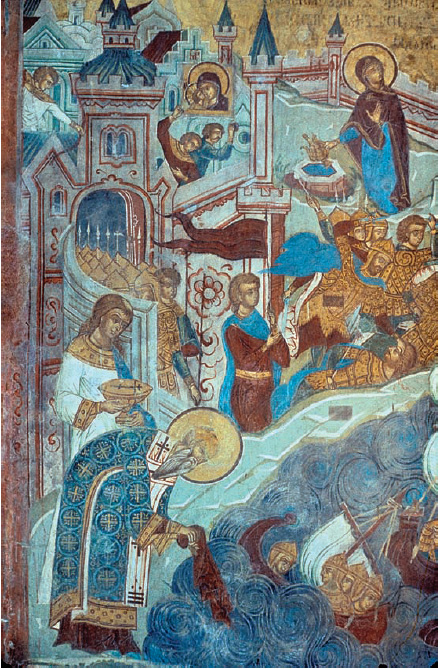
Riza Fresco: Photios and the Robe of the Theotokos
Anonymous
A later Russian fresco depicting the legend of Photios dipping the Virgin's robe into the sea during the Rus' attack of 860.
The fresco depicts the legendary act of Photios using the Virgin's veil to turn back the Rus' attack of 860.
About this source
What it is
This fresco, by an unknown artist, shows a bearded figure in blue vestments holding a golden circular object over a stormy sea filled with overturned boats, with armored figures and a haloed Virgin above. It illustrates events connected to the Rus'-Byzantine War of 860.
Why it matters
According to the legend, Patriarch Photios and Emperor Michael placed the veil of the Theotokos (Virgin Mary) into the sea, and a storm arose that scattered the attacking Rus' boats. This story shows how Photios's role as patriarch became woven into legends of divine protection for Constantinople, and reveals how later Christian communities remembered him as a spiritual defender of the city.
Look closer
- What does the storm and the overturned boats tell you about how the artist wanted viewers to see this event?
- Why might this legend have been important to tell and retell in later centuries?
- What is left out of this image that a historian might want to know, such as exact dates or sources?
This painting is part of the curated material that grounds the AI version of Photios I of Constantinople on Humy.ai — when students ask about related events, the AI can quote it and cite it.
More Photios I of Constantinople sources
Browse all 31 →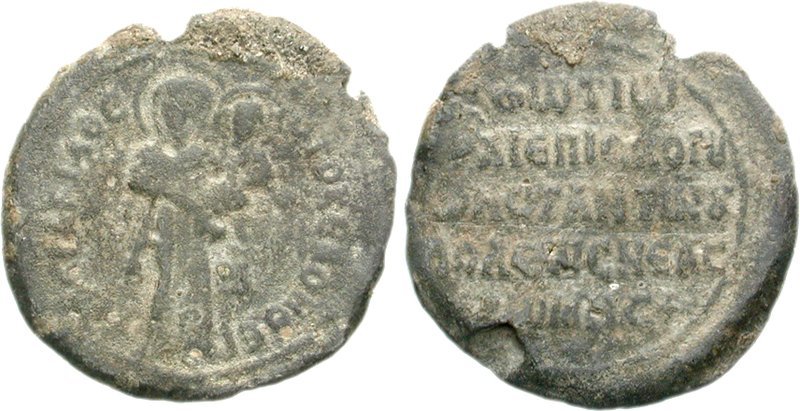 Artifact
Primary source
Lead Seal of Photios, Patriarch of Constantinople
9th century
 Artifact
Secondary source
Hagia Sophia
Isidore of Miletus and Anthemius of Tralles · 532-537 CE
 Painting
Secondary source
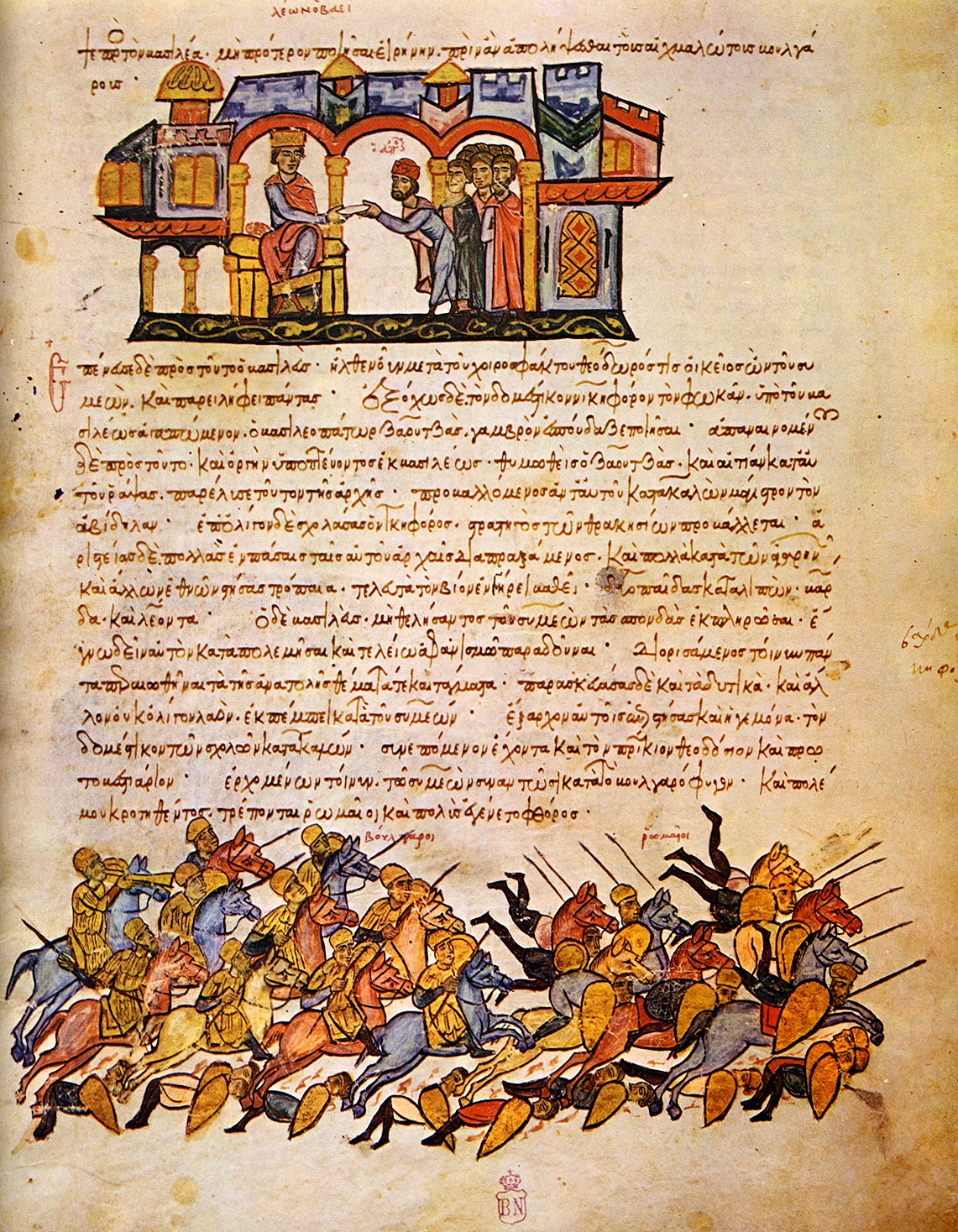
Madrid Skylitzes
John Skylitzes · 12th century
 Painting
Secondary source
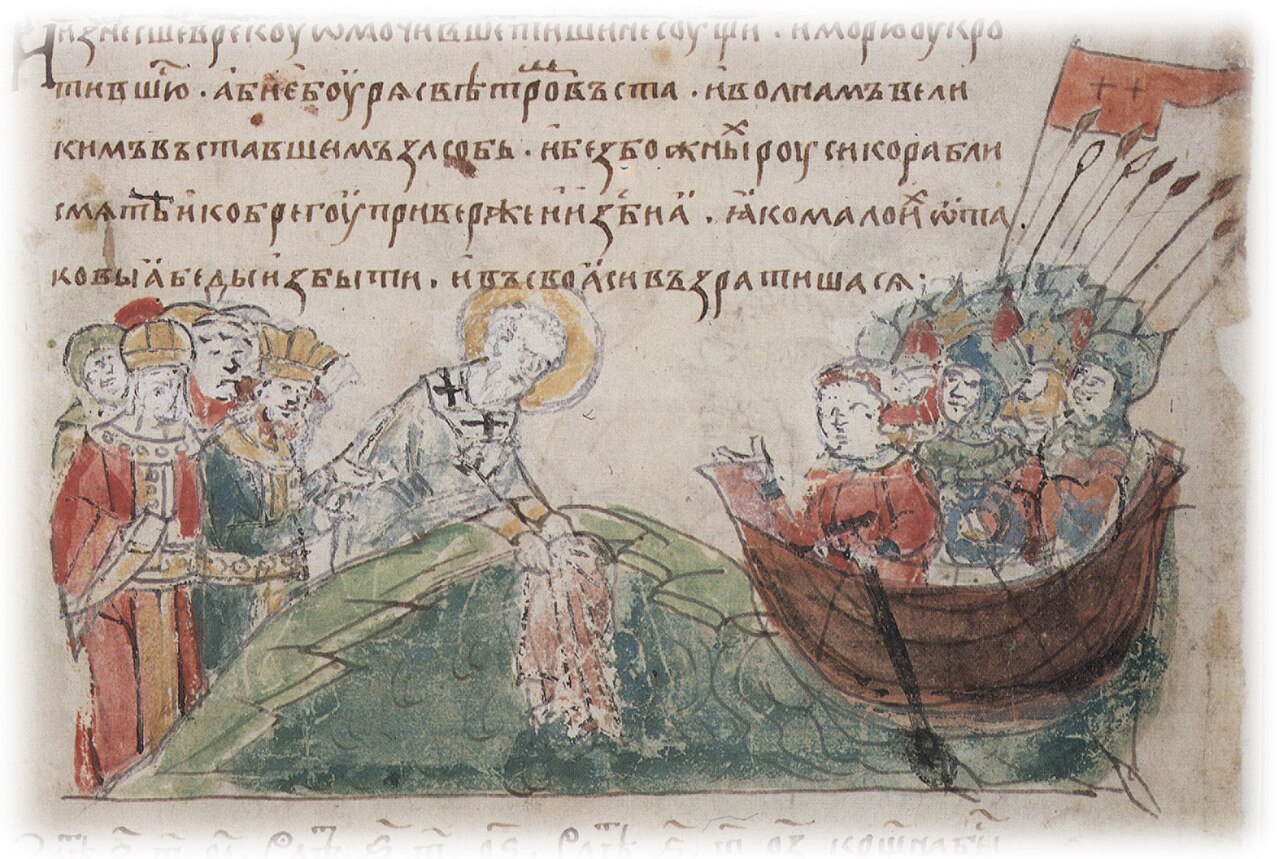
Photios Dipping the Virgin's Robe into the Sea
late 15th century
Free account
Read every Photios I of Constantinople source
Sign up free →
Ready when you are
Start chatting with Photios I of Constantinople now.
20 messages free · No credit card · Available in 50+ languages.