


Secondary sourcePainting1633
Robert the Bruce
George Jamesone · 1633
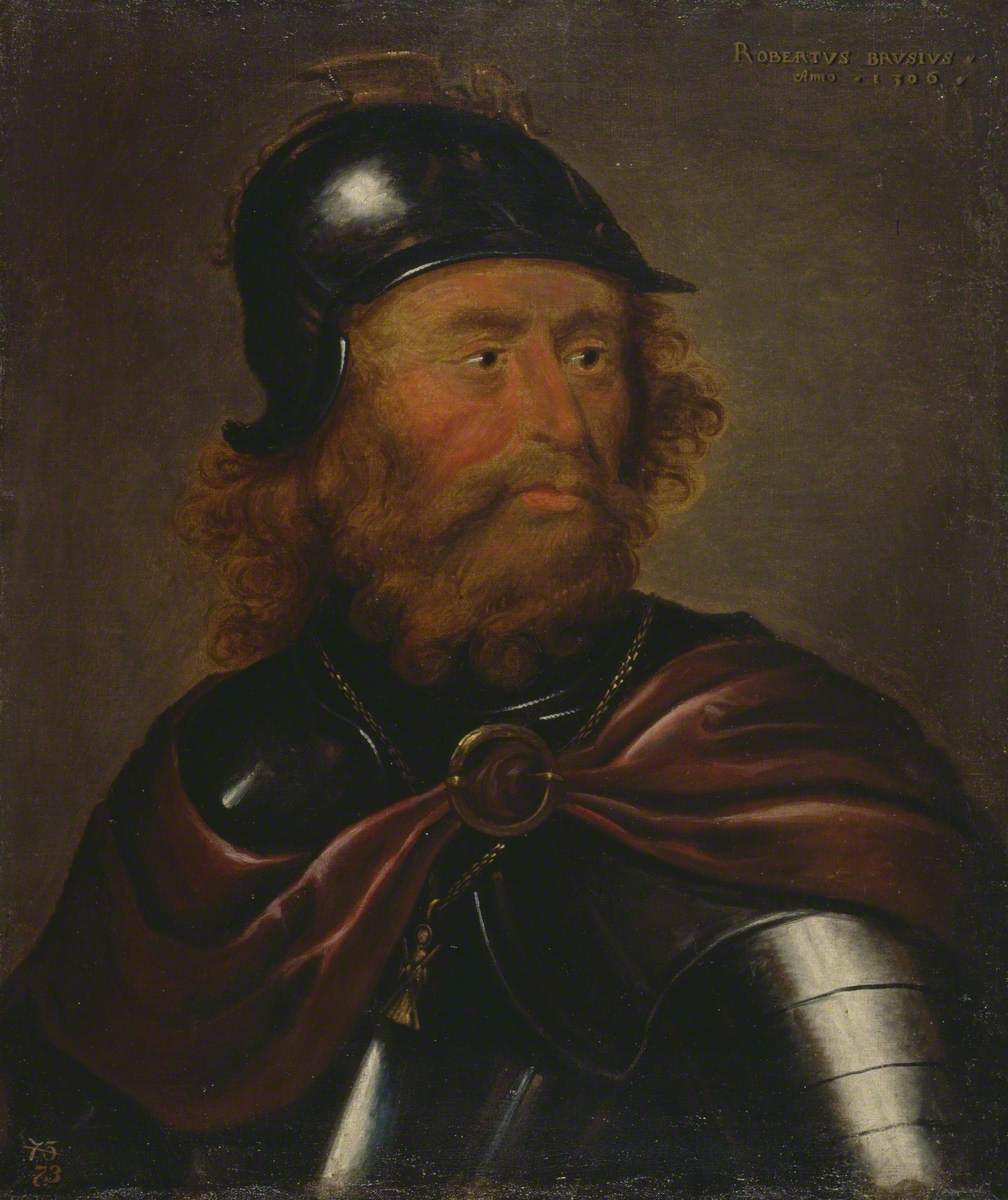
A 17th-century imagined portrait of Robert the Bruce painted for Charles I's ceremonial entry into Edinburgh.
An imagined portrait of Robert made for Charles I's 1633 ceremonial entry into Edinburgh.
About this source
What it is
This oil portrait was painted by George Jamesone in 1633 for Charles I's royal entry to Edinburgh, and is held by the Fleming Collection. It shows a bearded man with curly red hair in a black helmet and steel armour, a dark red cape, and a gold chain, inscribed with Robert's name and the year 1306.
Why it matters
Painted over three centuries after Robert's death, this portrait reflects how early modern Scotland imagined its medieval kings to celebrate royal continuity. It shows how Robert's image was used to connect the Stuart dynasty to Scotland's independence story.
Look closer
- What was the occasion for which this portrait was made, and how might that have shaped the image?
- What clues tell you this is an invented likeness rather than a portrait from life?
- Why might rulers want to display images of earlier kings during public ceremonies?
This painting is part of the curated material that grounds the AI version of Robert the Bruce on Humy.ai — when students ask about related events, the AI can quote it and cite it.
More Robert the Bruce sources
Browse all 83 →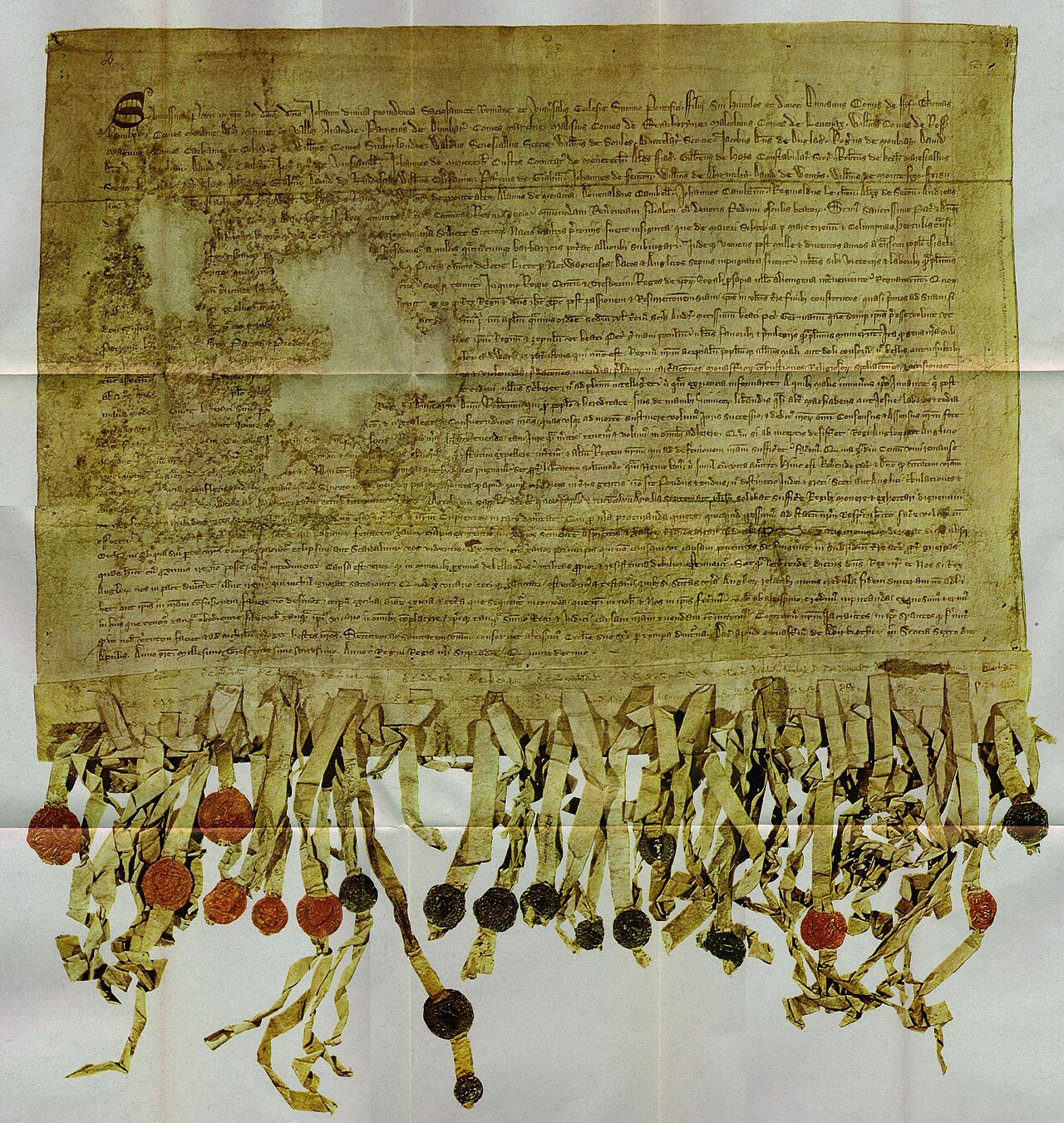 Document
Primary source
Declaration of Arbroath
Bernard of Kilwinning (attributed) · 6 April 1320
 Artifact
Primary source
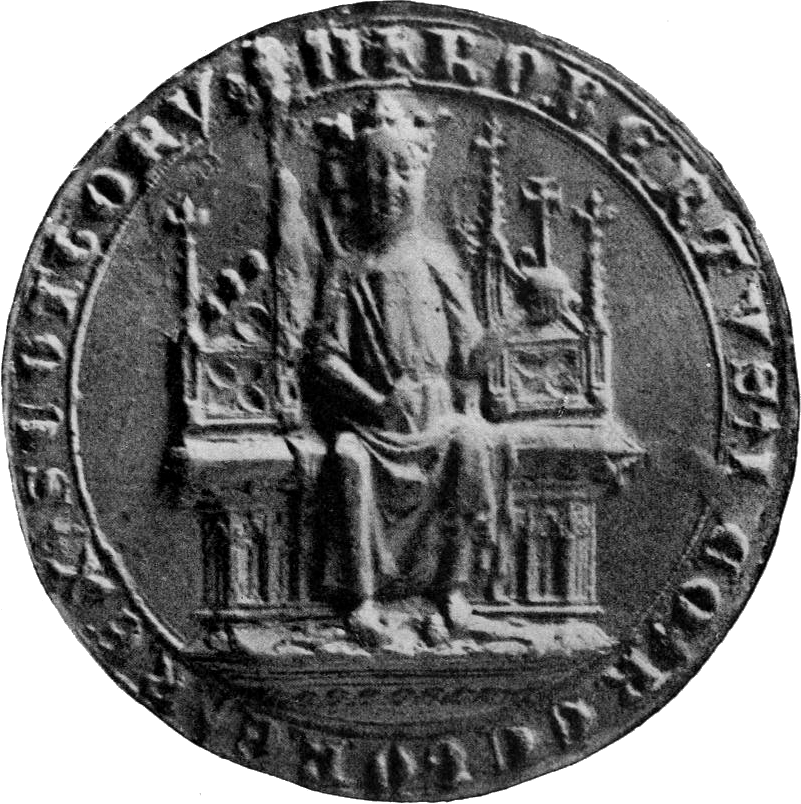
Great Seal of Robert I, King of Scotland
1306-1329
Primary source
Treaty of Edinburgh–Northampton
1328
 Document
Primary source
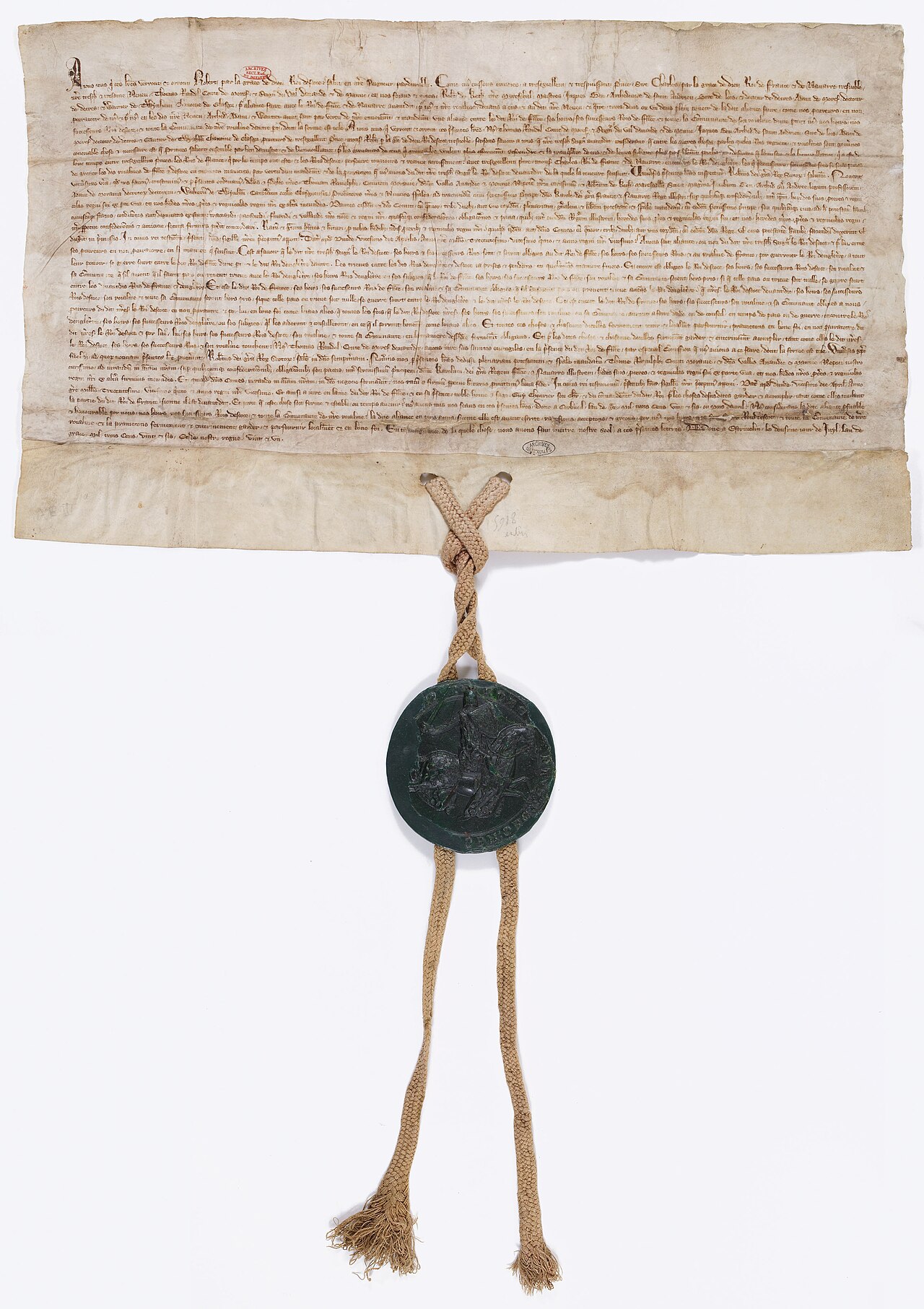
Ratification of the Treaty of Corbeil
12 July 1326
Free account
Read every Robert the Bruce source
Sign up free →
Ready when you are
Start chatting with Robert the Bruce now.
20 messages free · No credit card · Available in 50+ languages.